The Trillion-Dollar Blind Spot: Why Indonesia’s Deforestation Plan is a Systemic Risk for Global Finance
In the intricate world of global finance, risk is a multifaceted beast. We meticulously model market volatility, credit defaults, and geopolitical tremors. Yet, one of the most significant emerging threats to the stability of our economy and investment portfolios isn’t found in stock market charts or central banking reports; it’s hidden in the dense, humid rainforests of Indonesia. A recent letter to the Financial Times from Gemma Hoskins, UK Director of Mighty Earth, fired a critical warning shot that the financial world cannot afford to ignore. The letter highlights a glaring contradiction in Indonesia’s climate policy that could have profound consequences for investors, banks, and the global economy.
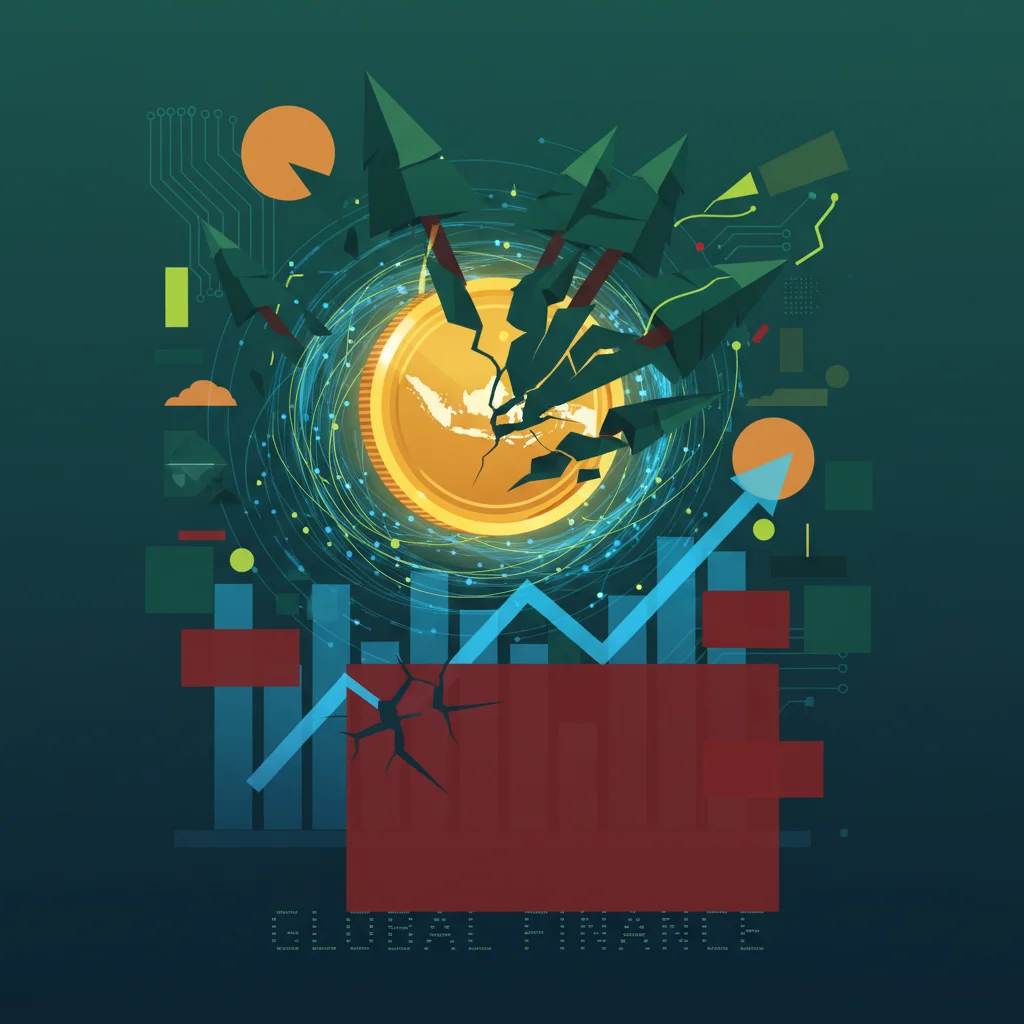
At the heart of the issue is Indonesia’s “Forestry and Other Land Use (FOLU) Net Sink 2030” plan—a policy designed to position the nation as a climate leader. On the surface, the goal is commendable: to transform Indonesia’s vast forests from a source of carbon emissions into a net carbon sink by the end of the decade. However, a closer look reveals a deeply troubling paradox. The plan, while touting ambitious climate goals, simultaneously sanctions the clearing of millions of hectares of pristine rainforest, an area potentially as large as the Netherlands. This isn’t just an environmental tragedy in the making; it’s a ticking time bomb for the financial sector.
Decoding the Contradiction: A Climate Plan that Sanctions Deforestation?
To understand the risk, we must first understand the policy. The FOLU Net Sink 2030 plan is Indonesia’s roadmap for reducing emissions from forestry and land use. The government aims to achieve this through measures like reducing deforestation and forest degradation, managing peatlands, and promoting reforestation. However, the plan’s own operational document contains a critical loophole.
As pointed out in the letter by Mighty Earth, the plan still permits a baseline deforestation rate that could lead to the destruction of up to 7.5 million hectares of forest by 2030. This allowance for “planned deforestation” is earmarked for development projects, including infrastructure and, crucially, the expansion of commodity plantations like palm oil, pulp, and paper—industries historically linked to severe environmental degradation. This creates a direct conflict between stated climate ambitions and on-the-ground policy, a classic case of “greenwashing” at a national level that has significant implications for international finance.
The global financial community has poured billions into Indonesia, attracted by its growing economy and rich natural resources. But when a country’s foundational climate policy contains such a fundamental flaw, it introduces a level of sovereign and operational risk that cannot be overlooked. The economics of this plan simply don’t add up in a world increasingly focused on sustainability.
Alpha in the Archives: Mining Unconventional Data for Investment Gold
The Financial Fallout: A Cascade of Risk for Investors and Banks
The consequences of this policy extend far beyond Indonesia’s borders, sending shockwaves through the interconnected systems of global finance, investing, and banking.
1. ESG Investing and Stranded Assets
For the rapidly growing Environmental, Social, and Governance (ESG) investing community, this is a red flag of the highest order. Companies operating in or sourcing from Indonesia’s agribusiness sector are now tainted with a heightened risk of being linked to new deforestation. This jeopardizes their ESG scores, potentially leading to divestment from major funds. Assets tied to newly deforested land—such as plantations, mills, and processing facilities—could become “stranded assets,” worthless in a global market that is increasingly legislating against deforestation-linked products, such as the EU’s Deforestation Regulation (EUDR).
2. Banking Sector Exposure and Reputational Damage
Major international banks that provide corporate loans, trade finance, and investment banking services to companies involved in Indonesia’s forest-risk commodity sectors are directly exposed. Continuing to finance clients engaged in deforestation, even if “legally” sanctioned by a flawed national plan, is a direct contradiction of the climate pledges made by nearly every major financial institution under frameworks like the Net-Zero Banking Alliance. The reputational damage from being linked to the destruction of critical ecosystems can erode consumer trust and attract regulatory scrutiny, impacting the bank’s own stock market performance.
3. Supply Chain Disruption and the Stock Market
Countless multinational corporations in the food, cosmetic, and consumer goods industries rely on Indonesian palm oil and other commodities. The risk of deforestation embedded in their supply chains is a material threat. A single investigative report linking a popular brand to illegal or unethical land clearing can trigger consumer boycotts, share price drops, and costly overhauls of their entire procurement strategy. The uncertainty created by Indonesia’s policy makes long-term supply chain planning a high-stakes gamble.
The Economics of Conservation: A Data-Driven Perspective
The argument for continued exploitation often centers on economic development. However, this view is increasingly outdated. The long-term economic value of preserving ecosystems often outweighs the short-term gains from their destruction. Indonesia’s rainforests are not just timber and land; they are vital carbon sinks, biodiversity hotspots, and sources of livelihood for indigenous communities. Their destruction carries enormous negative externalities that the traditional economic models fail to capture.
Below is a simplified comparison of the stakeholders and their competing interests, illustrating the complex economic and financial dynamics at play.
| Stakeholder Group | Primary Financial Interest in Deforestation | Primary Financial Risk from Deforestation |
|---|---|---|
| Agribusiness & Commodity Traders | Short-term profit from plantation expansion and increased commodity trading volume. | Market access restrictions (e.g., EUDR), stranded assets, loss of “sustainable” certification. |
| International Banks & Lenders | Interest and fees from loans for infrastructure and plantation development. | Loan defaults from stranded assets, reputational damage, regulatory fines for financing non-compliant activities. |
| Global Consumer Brands | Access to cheap raw materials (e.g., palm oil) for manufacturing. | Brand damage, consumer boycotts, stock market devaluation, supply chain instability. |
| Institutional Investors & ESG Funds | Returns from investments in the Indonesian economy and related corporations. | Portfolio devaluation due to ESG downgrades, divestment pressure, reputational risk of holdings. |
This table demonstrates that while short-term profits are a powerful driver, the long-term financial risks are systemic and affect every layer of the global economy. According to the World Bank, investing in sustainable land use and natural capital is not a cost but a driver of resilient long-term growth.
Scotland's Final Frontier: Charting the Investment Trajectory of a New Space Economy
A Technological Lifeline: Can Fintech and Blockchain Force Transparency?
While the policy landscape is fraught with risk, advancements in financial technology offer a path toward greater accountability. The fight for Indonesia’s forests could be a watershed moment for the application of fintech and blockchain in sustainable finance.
Fintech for Green Finance: Financial technology platforms can democratize green investing, allowing capital to flow directly to verified sustainable projects on the ground. This could involve funding for community-led conservation efforts or supporting smallholder farmers who adopt sustainable, deforestation-free practices, bypassing traditional financial structures that may be slower to adapt.
Blockchain for Supply Chain Integrity: The greatest challenge in combating deforestation is a lack of transparency. Blockchain technology offers a powerful solution. By creating a decentralized, immutable ledger, a blockchain can track a commodity like palm oil from the specific plantation where it was harvested, through the mill, across the ocean, to the final product on a supermarket shelf. This provides an incorruptible proof of origin, enabling companies to confidently label their products “deforestation-free” and allowing regulators and investors to verify these claims in real-time. This transforms supply chain management and commodity trading from a system based on trust to one based on cryptographic truth.
A Call for Responsible Finance: The Path Forward
Indonesia stands at a crossroads, and so does the global financial community. Allowing this paradoxical policy to proceed without challenge would undermine the integrity of global climate goals and set a dangerous precedent. The financial sector, as the ultimate enabler of economic activity, has a unique responsibility and a powerful leverage point.
Investors must intensify their engagement with companies exposed to Indonesian forest-risk commodities, demanding full supply chain transparency and time-bound commitments to deforestation-free sourcing, backed by technological verification.
Banks must align their lending policies with their public climate commitments. This means implementing rigorous due diligence that goes beyond national laws to assess a project’s true environmental impact. Financing the destruction of primary rainforests, legal or not, is incompatible with a net-zero future.
Business Leaders must recognize that sustainable sourcing is no longer a matter of corporate social responsibility, but a core business imperative essential for mitigating risk and ensuring long-term profitability in a changing global economy.
The Hundred Billion Dollar Question: Is Big Tech Building AI's Future on an Outdated Blueprint?
Ultimately, the fate of millions of hectares of Indonesian rainforest is a barometer for the seriousness of our global commitment to sustainable finance. Ignoring the warning signs is not merely an ethical lapse; it is a profound failure of financial risk management. The capital markets must send a clear, unequivocal signal: the future of finance is green, and there is no room for a business model that profits from the destruction of our planet’s most vital ecosystems.