Greenland’s Price Tag: How a Diplomatic Spat Threatens to Derail a US-EU Trade Deal and Rattle Global Markets
An Unprecedented Offer, An Unforeseen Crisis
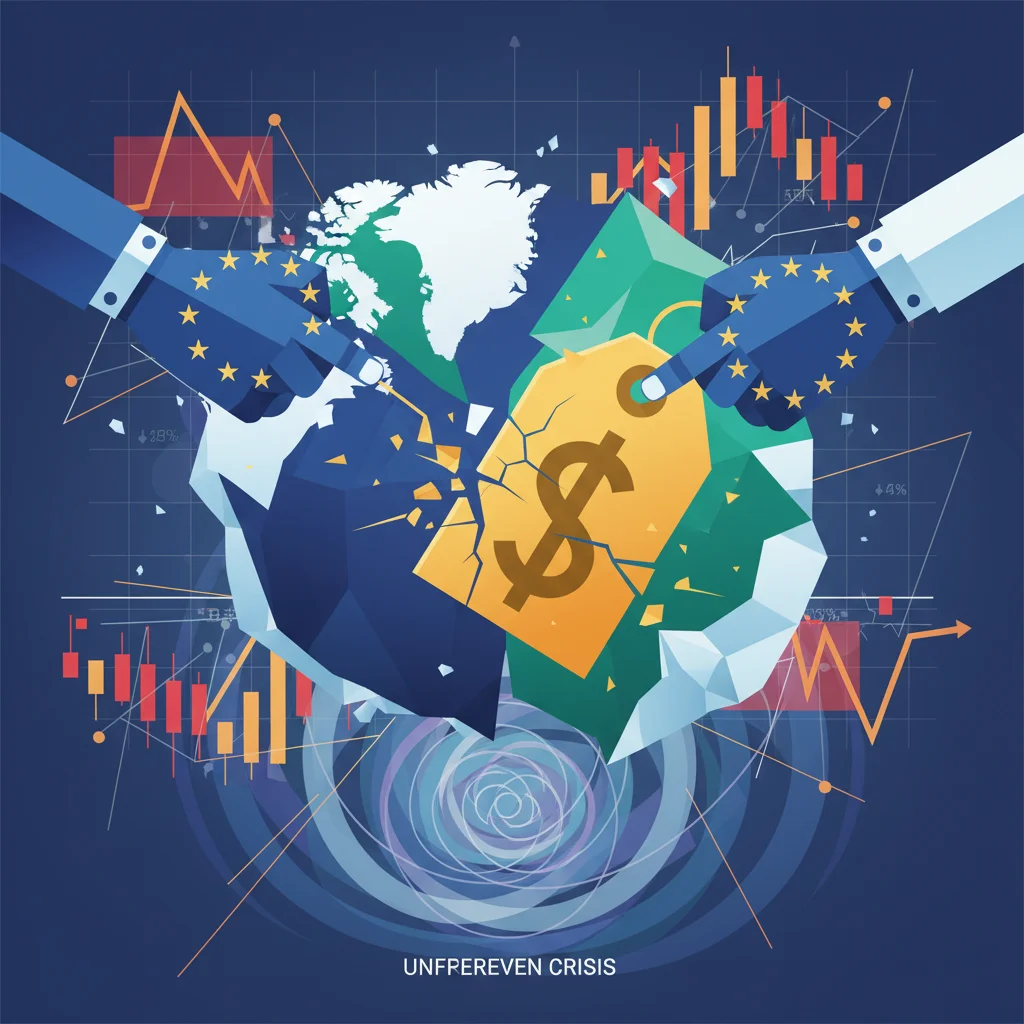
In the grand theater of global geopolitics, some plot twists are so unexpected they border on the absurd. The recent news that the United States has expressed a serious interest in acquiring Greenland from Denmark is one such moment. What might have been dismissed as a historical curiosity has rapidly escalated into a full-blown diplomatic incident, sending tremors through the foundations of the transatlantic alliance. The latest casualty? A pivotal US-EU trade deal, which Europe is now threatening to suspend, putting global markets on high alert. According to breaking news reports, this drastic move is a direct response to the “renewed tensions” stemming from the Greenland affair (source). This single development has morphed from a quirky headline into a significant threat to the global economy, with profound implications for investing, international trading, and the future of Western alliances.
For investors, finance professionals, and business leaders, this is far more than a distant diplomatic squabble. It is a stark reminder that in today’s interconnected world, geopolitical risk can materialize from the most unexpected quarters, demanding a reassessment of market stability and investment strategies. Let’s dissect this multifaceted crisis, exploring the strategic importance of Greenland, the precarious state of US-EU trade, and the potential economic fallout that could ripple across the globe.
The Greenland Gambit: More Than Just Ice
To understand the European Union’s strong reaction, one must first grasp why Greenland has suddenly been thrust into the international spotlight. The US interest, championed by President Donald Trump, is not a whimsical fantasy. It is a calculated move rooted in deep strategic and economic considerations.
A Geopolitical Chessboard
Greenland, an autonomous territory of the Kingdom of Denmark, holds a commanding position on the world map. Its location provides strategic dominance over the Arctic, a region of growing military and commercial importance as melting ice caps open up new shipping lanes and access to untapped resources. For the United States, a stronger foothold in the Arctic is a direct counter to the increasing influence of Russia and China in the region. The Thule Air Base, a US military installation in Greenland, has been a cornerstone of North American defense for decades, but outright ownership would grant unparalleled control.
A Treasure Trove of Resources
Beneath the ice lies a wealth of natural resources that are critical to the future of technology and industry. Greenland is believed to hold some of the world’s largest deposits of rare earth minerals, essential components in everything from smartphones and electric vehicles to advanced defense systems. As the global supply chain for these minerals is currently dominated by China, securing an alternative source is a matter of long-term economic and national security for the US. The potential value of these resources is estimated to be in the hundreds of billions, if not trillions, of dollars (source). However, the Danish and Greenlandic governments have dismissed the idea of a sale outright, with Denmark’s Prime Minister calling the discussion “absurd.” This sharp rebuke has set the stage for the current diplomatic fallout.
Transatlantic Trade on Thin Ice
The EU’s threat to suspend the approval of a landmark US trade deal is not merely a petulant reaction; it is a signal that patience with the current US administration’s transactional and often unpredictable foreign policy is wearing thin. The proposed deal was intended to de-escalate ongoing trade disputes, particularly concerning tariffs on automobiles and agricultural products, which have strained relations and created economic uncertainty.
The US-EU trade relationship is the largest in the world, with goods and services traded daily totaling billions of dollars. A comprehensive deal aimed to smooth over frictions and foster growth. The suspension of this deal would not only eliminate potential gains but would actively inject new uncertainty into the market, potentially reigniting tariff wars that have previously damaged sectors on both sides of the Atlantic. The EU’s message is clear: diplomatic respect and alliance stability are preconditions for economic partnership. They will not compartmentalize a perceived affront to a member state’s sovereignty (Denmark) while simultaneously negotiating a deal based on mutual trust and benefit.
Economic Fallout: Bracing for Market Volatility
The moment geopolitics intersects with trade, the world of finance holds its breath. The threat of a suspended trade deal introduces a significant “geopolitical risk premium” into the market. This means investors will demand higher returns to compensate for the increased uncertainty, which can depress asset prices and increase volatility in the stock market.
Here’s a breakdown of the sectors and markets most at risk from this escalating dispute:
| Affected Area | Potential Impact on the United States | Potential Impact on the European Union |
|---|---|---|
| Automotive Sector | Risk of retaliatory EU tariffs on US-made cars, impacting manufacturers like Ford, GM, and Tesla’s European exports. | Renewed threat of US tariffs on European cars (e.g., Volkswagen, BMW, Mercedes), a major contributor to the German economy. |
| Agriculture | US farmers, already hit by the trade war with China, could lose preferential access to the vast European market for products like soybeans and beef. | European agricultural exporters (e.g., French wine, Italian cheese) could face new US tariffs, disrupting established supply chains. |
| Technology & Services | Major US tech firms could face a more difficult regulatory environment in Europe as goodwill evaporates. | The EU’s burgeoning financial technology sector could see reduced access to US capital and markets. |
| Currency Markets | Increased volatility in the EUR/USD pair. A “risk-off” sentiment could strengthen the USD as a safe haven, but a weakened US trade position could hurt it long-term. | The Euro could face downward pressure due to the economic uncertainty and potential for a slowdown, particularly in export-dependent nations. |
For the average investor, this translates into a period of choppy waters. Portfolios with heavy exposure to multinational industrial or automotive stocks may face headwinds. The broader indices, such as the S&P 500 and the Euro Stoxx 50, are likely to react negatively to any formal confirmation of the deal’s suspension. The core principles of economics dictate that uncertainty is a tax on activity; businesses will delay investment, and consumers may curb spending, creating a drag on GDP growth.
The Bigger Picture: Shifting Alliances and the Future of Finance
This episode is a microcosm of larger shifts occurring in the global order. The convergence of unpredictable politics and entrenched economic ties is forcing a rethink of how international commerce and finance are conducted.
The Weaponization of Economic Policy
We are witnessing the increasing use of trade deals, tariffs, and sanctions as tools of foreign policy. This environment challenges the traditional models of global banking and finance, which were built on a framework of predictable rules and stable alliances. When trade agreements can be derailed by diplomatic spats, businesses and nations may begin to seek alternative systems that are less vulnerable to the political whims of a single dominant power.
A Catalyst for Fintech and Blockchain?
In the long run, persistent geopolitical friction could accelerate innovation in financial technology (fintech). There is growing discourse around creating international payment and settlement systems that are not solely reliant on the US dollar or US-controlled networks. While still in its nascent stages, blockchain technology offers a theoretical framework for decentralized, transparent, and censorship-resistant cross-border transactions. A prolonged period of trade instability could provide a powerful incentive for nations and blocs like the EU to invest heavily in developing such alternatives, fundamentally reshaping the landscape of international finance.
A recent analyst report highlighted this very possibility, stating, “The more traditional financial pathways are used as political weapons, the faster the world will build new ones that are immune to them” (source). This highlights a critical trend for anyone involved in the future of money and technology.
Trust Under Scrutiny: Unpacking the DOJ's Probe into Fed Chair Jerome Powell and its Aftermath
Conclusion: A Wake-Up Call for Investors
What began with an audacious real estate proposition for an Arctic island has spiraled into a serious threat to the global economy. The potential suspension of the US-EU trade deal over the Greenland affair is a stark wake-up call. It underscores the fragility of our globalized world and demonstrates how quickly political posturing can translate into tangible market risk.
For business leaders and investors, the key takeaway is the necessity of building resilience. This means diversifying supply chains, hedging against currency fluctuations, and, most importantly, paying close attention to geopolitical undercurrents that can shift the tides of international trading and investing. The Greenland spat may eventually fade, but the era of unpredictable political risk impacting the stock market and the broader economy is here to stay. Navigating it successfully will be the defining challenge for the foreseeable future.