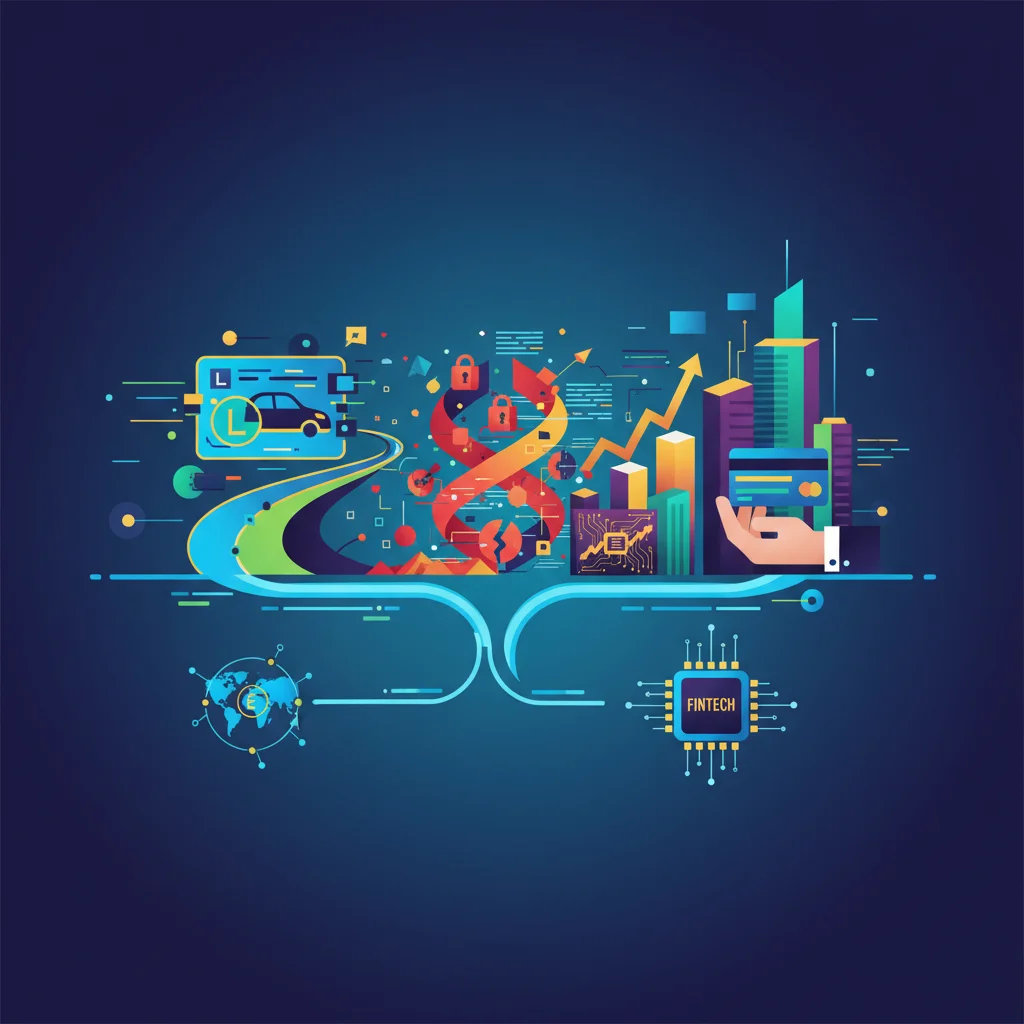
From Driving Tests to Trading Floors: What a Surge in Fraud Reveals About Our Economy and the Future of Fintech
In the intricate tapestry of our global economy, the most telling threads are often found in the most unexpected places. While analysts dissect stock market fluctuations and central banking policies, a recent report from the United Kingdom offers a startlingly clear signal about economic pressure, technological vulnerabilities, and the future of identity verification. The subject? A dramatic surge in cheating on practical driving tests.
At first glance, this might seem like a trivial local issue. However, for astute investors, finance professionals, and business leaders, it serves as a powerful case study—a microcosm of broader trends shaping our world. The story of individuals using Bluetooth headsets and impersonators to pass a driving test is not just about breaking the law; it’s a narrative about supply and demand imbalances, the real-world impact of economic desperation, and the urgent need for the kind of robust identity solutions being pioneered in financial technology.
This analysis will dissect the phenomenon, moving beyond the headlines to explore the profound connections between this grassroots fraud and the high-stakes worlds of finance, investing, and the digital economy. We will examine the economic drivers, the parallels with financial crime, and the investment opportunities that emerge when a system is pushed to its breaking point.
The Anatomy of a System Under Duress
The core of the issue stems from a classic economic imbalance. In the UK, the demand for practical driving tests has vastly outstripped the available supply, leading to persistently long wait times. This bottleneck has created a fertile ground for illicit activities. According to a report by the BBC, the number of people caught cheating on driving tests has more than tripled since 2018. The Driver and Vehicle Standards Agency (DVSA) recorded over 2,000 cases of fraud in the past five years, with methods growing in sophistication.
The cheating manifests in two primary forms:
- Technological Exploitation: Candidates use concealed Bluetooth headsets to receive real-time instructions from a third party. This is a low-cost, high-reward method that exploits the limitations of human supervision.
- Impersonation: So-called “driving test ringers” are hired to take the test on behalf of the actual candidate. This is a more audacious form of fraud that strikes at the heart of identity verification.
The DVSA’s data highlights a concerning trend, with the number of test results being revoked due to fraud climbing significantly. While the agency attributes the rise to better detection methods, industry experts point to the systemic pressures as the primary catalyst.
To visualize the scale of this escalation, consider the reported figures for cancelled tests due to suspected impersonation:
| Period | Tests Cancelled for Suspected Impersonation |
|---|---|
| 2022-23 | 627 (source) |
| 2018-19 | 171 (source) |
This more than 260% increase in just a few years is a stark indicator that the problem is not merely statistical noise but a systemic failure. This failure has created a shadow market where a guaranteed pass, obtained illegally, is seen as a viable, if risky, financial transaction.
Ethereum's Defining Moment: Decoding the Bullish Pattern That Could Shape Its Future
The Economic Engine Behind the Deception
Why would someone risk a criminal record for a driver’s license? The answer lies not in a simple desire to bend the rules, but in powerful economic incentives. For a growing segment of the population, a driver’s license is not a luxury but a critical tool for economic survival. It’s a prerequisite for participation in the gig economy—delivery drivers, ride-share operators, and mobile tradespeople all depend on it.
When wait times for a test stretch for months, the opportunity cost becomes immense. An individual is effectively locked out of a significant portion of the labor market. The financial calculation becomes brutally simple: the cost of waiting (lost income) and the risk of failing (additional lesson fees, rebooking costs) can outweigh the perceived risk and cost of cheating. This is a clear signal of economic distress at the individual level, a micro-indicator of macro pressures like wage stagnation and the rising cost of living. In this context, the fraud is less an act of malice and more an act of economic desperation. This is a crucial data point for anyone analyzing the health of the consumer economy.
A Familiar Challenge for the Financial Sector
The problem of impersonation is something the banking and finance industries have been battling for decades. The methods may differ—a “ringer” in a car versus a fraudster with stolen credentials online—but the fundamental challenge is the same: verifying that a person is who they claim to be. The financial sector’s response has been the development of sophisticated Know Your Customer (KYC) and Anti-Money Laundering (AML) protocols.
This is where the world of financial technology, or fintech, offers a roadmap for a solution. While the DVSA relies on human examiners checking physical ID cards, the banking world has moved on to multi-factor authentication, biometric verification (fingerprints, facial recognition), and AI-powered behavioral analysis. A bank can often detect a fraudulent transaction in milliseconds by analyzing deviations from a user’s normal spending patterns. The same principles could be applied to identity verification in other critical sectors.
The driving test scandal underscores a universal truth: any system that relies on legacy, easily forgeable identity verification methods is a system waiting to be exploited. The financial services industry learned this lesson the hard way, and the solutions it has built are now part of a booming sector known as “RegTech” (Regulatory Technology), a key area for savvy investing.
Bitcoin's Holding Pattern: Why the Crypto Market is Coiling for a Major Breakout
The Fintech and Blockchain Solution Set
How do we move beyond a game of cat-and-mouse between fraudsters and authorities? The answer lies in leveraging the very technology that has revolutionized banking and trading. The future of secure identity isn’t a plastic card; it’s a digital, cryptographically-secured credential.
One of the most promising technologies in this space is blockchain. A blockchain-based digital identity could create an immutable, verifiable record of an individual’s credentials. Imagine a future where a driving examiner doesn’t look at a plastic license but instead scans a QR code on the candidate’s phone. This code would link to a secure, decentralized ledger that confirms the person’s identity using biometrics stored on their device. Impersonation would become virtually impossible.
Beyond blockchain, other fintech innovations offer immediate potential:
- On-site Biometrics: A simple fingerprint or facial scan at the test center, matched against the initial application data, would eliminate impersonation overnight.
- AI Proctoring: For theory tests, AI-powered software can monitor for suspicious behavior, such as looking away from the screen or speaking, flagging potential cheating in real-time.
- Secure Digital Certificates: Issuing digital, rather than physical, pass certificates would make forgery significantly more difficult and verification instantaneous.
These are not futuristic fantasies; they are existing technologies that form the backbone of modern digital banking. Their application to government services is the next logical step in building a more secure and efficient public infrastructure.
Investment Implications and Market Signals
For the investor and business leader, this situation is more than an academic exercise. It reveals tangible opportunities and risks.
The most direct implication is the growth potential of the identity verification market. Companies specializing in biometrics, digital identity, and RegTech are positioned to benefit as governments and corporations are forced to upgrade their legacy systems. The driving test fraud is a marketing campaign for their services, demonstrating a clear and present need. Investing in this sector is a bet on the increasing digitization and security requirements of our global economy.
Furthermore, this trend is a valuable, if unconventional, economic indicator. It signals a level of desperation and a willingness to engage in the black market that can have broader implications. It suggests that a segment of the workforce is under significant financial pressure, which could impact consumer spending, loan defaults, and overall economic stability. For analysts building models of the economy, data points like the 2,015 reported incidents of theory test cheating since 2018 are not trivial; they are qualitative inputs that paint a richer picture than unemployment statistics alone.
Finally, there’s a parallel to the psychology of trading. The decision to cheat on a driving test is a risk/reward calculation made under pressure. The candidate weighs the probability of getting caught against the potential reward of immediate employment. This is not dissimilar to a high-risk trade on the stock market, where a trader might ignore fundamentals in the hope of a quick, speculative gain. Understanding this human element—how people behave when systems are stressed—is crucial for anyone managing risk, whether in a government agency or on a trading floor.
Conclusion: Reading the Signals
The surge in UK driving test fraud is a compelling reminder that the most significant trends often begin at the margins. What starts as a flaw in one system—long wait times for a public service—reverberates outwards, revealing deep-seated economic pressures, highlighting technological vulnerabilities, and ultimately, pointing the way toward innovative solutions pioneered in sectors like fintech.
For those in finance, business, and investing, the lesson is clear: pay attention to the anomalies. The data that doesn’t fit the neat-and-tidy economic models often tells the most important story. The intersection of human desperation, systemic bottlenecks, and technological loopholes is a space ripe with both risk and opportunity. The story of the driving test cheater is, in essence, a story about the modern economy itself—a complex, interconnected system where a problem in one area can provide invaluable insight into the future of another.

Related Posts
Cracks in Confidence: How a Nuclear Scandal Shakes Japan’s Economy and Investor Trust
Bitcoin at a Crossroads: Is a Final Price Shakeout the Launchpad for New All-Time Highs?