One Year In: How Trump’s Return Forged a New, Unlikely Alliance with Big Tech
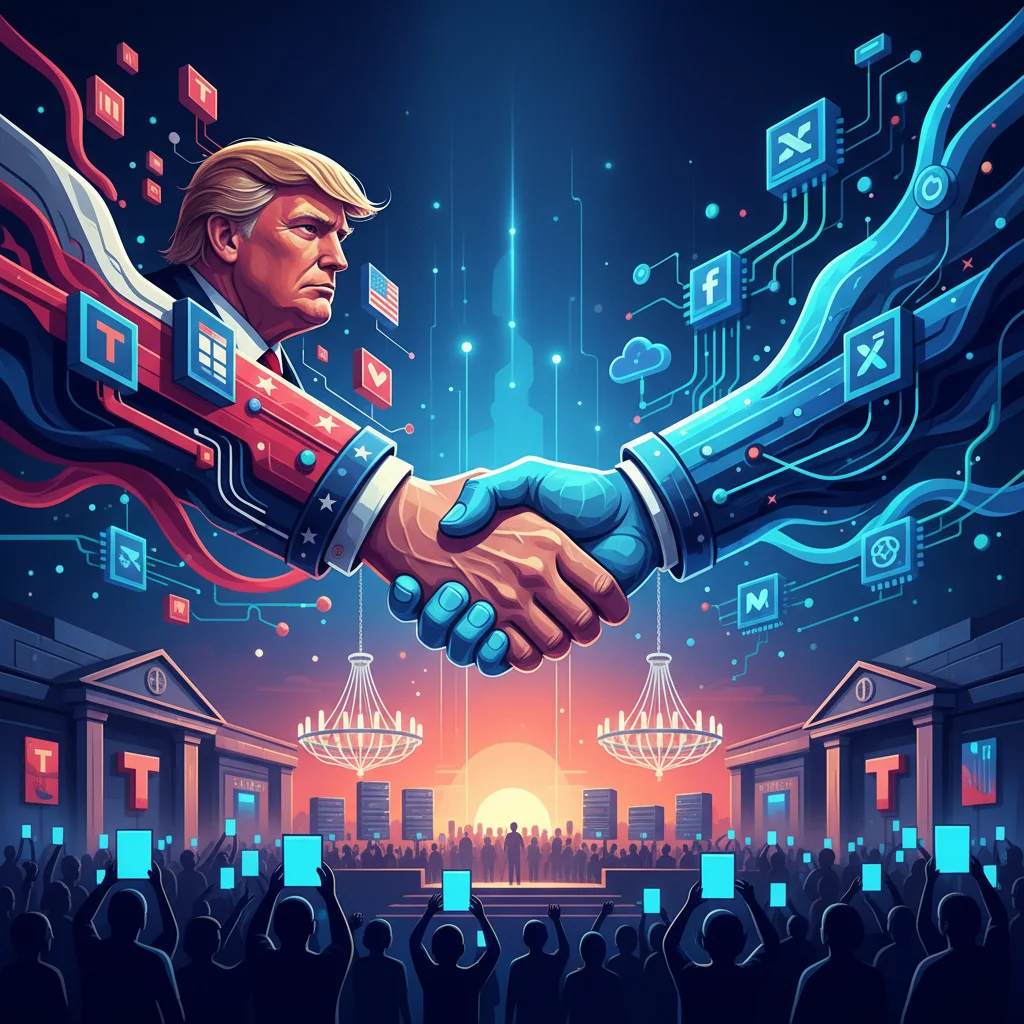
It’s a scene few would have predicted just a couple of years ago. At a lavish gala just outside Washington D.C., the biggest names in Silicon Valley aren’t just in attendance; they’re on stage, shaking hands and smiling alongside a president they once publicly opposed. One year into Donald Trump’s second term, the tech landscape has been radically reshaped. The once-frosty relationship between the Oval Office and the West Coast’s tech titans has thawed into a surprisingly lucrative, if complex, alliance. The result? A sector-wide boom that has left investors cheering and critics deeply concerned.
For those of us who have followed the industry for decades, this realignment is nothing short of seismic. The narrative has shifted from resistance to a pragmatic, profit-driven partnership. But how did we get here? It wasn’t a single policy or a sudden change of heart. It was a calculated convergence of deregulation, nationalistic industrial policy, and a strategic pivot by tech leaders who chose a seat at the table over a spot on the sidelines. Let’s break down the key factors driving this new gold rush and explore what it means for everyone from enterprise CEOs to the individual developer writing code.
The Great Realignment: From Public Feud to Private Partnership
To understand the present, we must remember the past. During Trump’s first term, the relationship was often adversarial, marked by public spats over immigration, content moderation, and antitrust scrutiny. So, what changed? The simple answer is pragmatism. A handful of influential tech leaders, seeing the political winds shifting, made a strategic decision to engage directly with the new administration. Their bet was that proactive collaboration could shape policy in their favor, unlocking growth opportunities that would be impossible in an antagonistic environment.
This engagement led to the formation of a new “Tech Advisory Council,” a body that has had a direct line to the White House on key issues. The focus was clear: slash red tape, bolster domestic tech leadership, and prioritize American innovation above all else. The administration, in turn, found willing partners to execute its “America First” technology agenda. This symbiotic relationship has become the bedrock of the sector’s recent prosperity.
Unleashed by Deregulation: A Bonanza for AI and Automation
The single most significant driver of the tech boom has been the administration’s aggressive deregulatory agenda. Almost immediately, policies perceived as stifling to rapid innovation were rolled back, particularly in the burgeoning fields of artificial intelligence and automation.
Regulations concerning data privacy and AI ethics, which were gaining traction in previous years, were either paused or reframed to be “pro-innovation.” This created a veritable sandbox for companies to deploy cutting-edge machine learning models with fewer constraints. The effect was immediate. Companies in sectors from logistics to finance accelerated their adoption of AI-driven software, leading to massive efficiency gains and, consequently, soaring stock prices. According to a report from the Financial Times, investment in AI-focused startups has increased by a staggering 60% in the last year alone.
Below is a look at how a curated index of tech companies aligned with the administration has performed against the broader market over the past 12 months.
| Company/Index | Sector Focus | 12-Month Stock Performance |
|---|---|---|
| “Patriot Tech” Index (Hypothetical) | Defense AI, Cybersecurity, Domestic Cloud | +42% |
| S&P 500 | Broad Market Index | +11% |
| Nasdaq 100 | Technology Sector Index | +18% |
The data clearly shows a significant outperformance by companies positioned to benefit from the new policy environment. This isn’t just about market sentiment; it’s a direct reflection of new contracts, reduced compliance costs, and a clearer path to profitability.
Two Heads, One Throne: Why the Co-CEO Model is Tech's New Power Play
The New Arms Race: Cybersecurity and Government Contracts
A central pillar of the administration’s platform is national security, and this has translated into a firehose of government spending on defense technology. The focus on countering geopolitical rivals has ignited an arms race in cyberspace, creating unprecedented opportunities for cybersecurity firms. The government is no longer just a client; it’s the largest and most demanding customer in the world.
Multi-billion dollar contracts have been awarded to companies specializing in everything from secure cloud infrastructure to AI-powered threat detection. This has been a particular boon for established defense contractors with robust tech divisions and a new generation of nimble startups that build solutions specifically for government and military applications. The Department of Defense’s budget for “Next-Generation AI Warfare Systems” reportedly swelled to over $50 billion this fiscal year (source), a figure that has sent shockwaves through the venture capital community.
“America’s Cloud”: The Push for Digital Infrastructure Dominance
The “America First” doctrine has extended deep into the digital realm. A major, albeit quiet, policy shift has been the push to onshore digital infrastructure. This involves strong incentives and implicit mandates for government agencies and critical private industries to use US-domiciled cloud computing services. The goal is twofold: enhance national cybersecurity by keeping sensitive data within US borders and ensure that American companies dominate the next generation of computing.
This has been a massive windfall for the big three cloud providers and has supercharged the SaaS (Software as a Service) ecosystem that builds upon them. Companies offering enterprise software solutions on these preferred cloud platforms have seen their sales cycles shorten and their deal sizes grow. A recent federal directive mandating the “migration of 90% of non-essential federal data to a certified American cloud provider by the end of next year” (source) is a perfect example of this protectionist, yet highly effective, industrial policy.
The Dishwasher Dilemma: Why Your Robot Butler is Still Stuck in the Lab
The Developer Impact: New Demands, New Opportunities
For tech professionals and developers on the ground, this new landscape has created a significant shift in the job market. While consumer tech roles have seen modest growth, the demand for specialized skills in certain areas has exploded. What does this mean for your career?
- Cybersecurity is King: The demand for cybersecurity professionals, from ethical hackers to compliance experts, has never been higher. Government and private sector demand is far outstripping supply.
- The Rise of “Cleared” Programming: Developers with the security clearances needed to work on sensitive government and defense projects are commanding premium salaries. Expertise in secure programming languages and architectures is a golden ticket.
- AI/ML with a Purpose: The most sought-after artificial intelligence and machine learning engineers are those who can apply their skills to defense, logistics, and industrial automation. Think drone navigation, predictive maintenance for military hardware, and threat analysis algorithms.
This specialization is reshaping university curricula and corporate training programs. The era of the generalist full-stack developer is giving way to an age of deep specialization aligned with national priorities.
The Uncaged AI: Why Ofcom's Investigation into Musk's Grok is a Watershed Moment for Tech
Conclusion: A Gilded Age with an Uncertain Future
There’s no denying it: the first year of Trump’s second term has been incredibly prosperous for a significant portion of the tech industry. The combination of strategic alignment, targeted deregulation, and massive government spending has created a boom environment. Tech titans who bet on collaboration have seen their wealth and influence grow to unprecedented levels.
But this gilded age rests on a precarious foundation. The focus on a handful of favored sectors and companies could create a fragile, top-heavy industry. The disregard for ethical guardrails may lead to a public backlash that could trigger even harsher regulations in the future. And the intensely nationalistic focus risks balkanizing the global tech ecosystem, potentially cutting American companies off from international talent and markets.
For now, the party is in full swing in Silicon Valley. The question on everyone’s mind is not whether the boom is real, but how long it can possibly last—and what the bill will look like when it finally comes due.