Netflix Goes All-In: The All-Cash Gambit to Conquer Warner Bros. Discovery and Reshape Hollywood
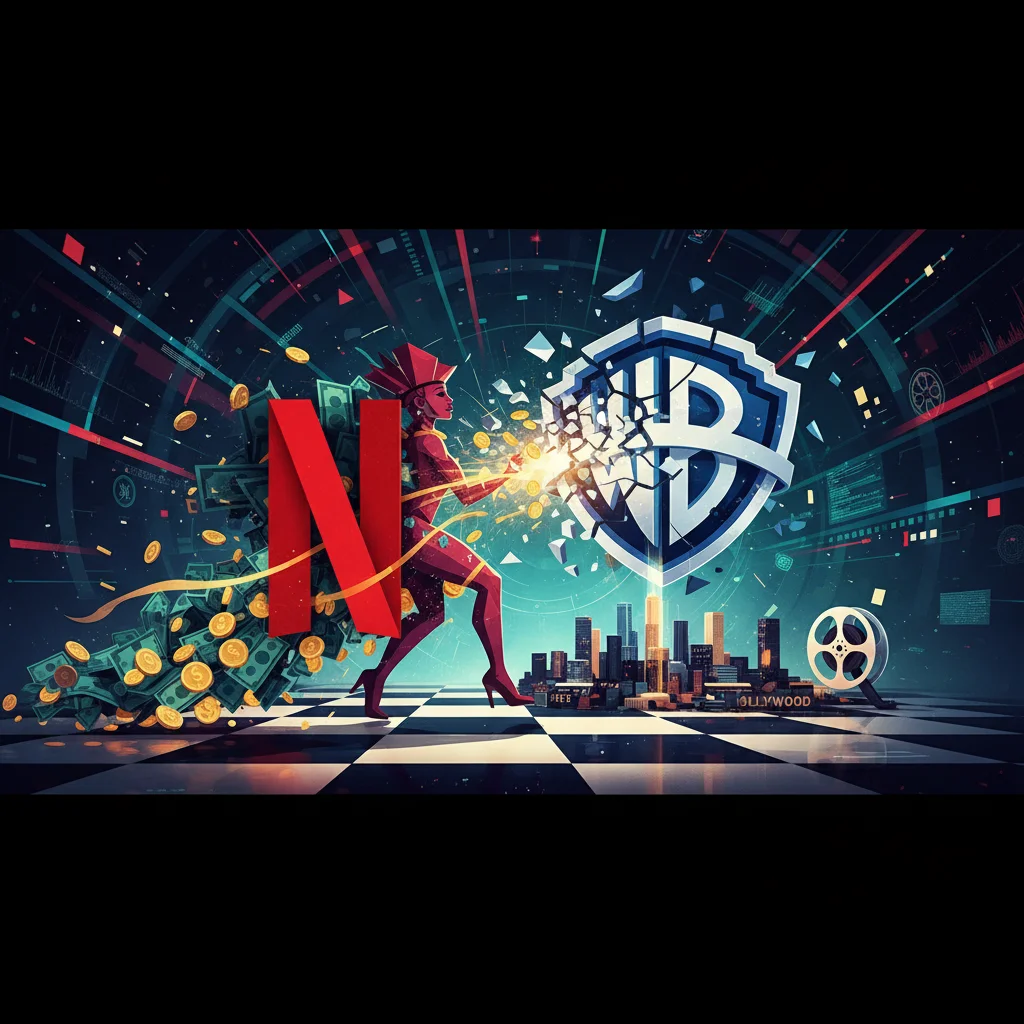
The chess board of global media has just seen a queen sacrifice. In a move that has sent shockwaves from Wall Street to Hollywood, Netflix has reportedly escalated its bid for Warner Bros. Discovery (WBD), transforming its offer into an all-cash proposition. This audacious maneuver, first reported by the BBC, is more than just a financial transaction; it’s a declaration of war in the high-stakes battle for content supremacy. With rival suitor Paramount Skydance still in the running, Netflix’s all-cash gambit is a calculated power play designed to deliver a knockout blow and fundamentally reshape the future of entertainment.
This isn’t merely another corporate skirmish. It’s the potential culmination of the streaming wars, a conflict that has defined the last decade of media consumption. The outcome will have profound implications for the **stock market**, consumer choice, and the very structure of the creative industry. For investors, finance professionals, and business leaders, understanding the nuances of this deal is critical to navigating the evolving economic landscape.
The All-Cash Advantage: Why Money Talks Loudest in M&A
In the complex world of mergers and acquisitions, not all offers are created equal. An “all-cash” offer is the M&A equivalent of putting a royal flush on the table. It provides immediate and undeniable value to the seller’s shareholders, eliminating the uncertainties and volatility associated with stock-based transactions.
Here’s why Netflix’s move is so strategically potent:
- Certainty in a Volatile Market: A stock-for-stock or cash-and-stock deal’s value fluctuates with the acquirer’s share price. In today’s turbulent **economy**, where market sentiment can shift overnight, WBD’s board and shareholders would face significant risk. An all-cash offer removes that risk entirely. The price is the price, locked in and guaranteed.
- Speed and Simplicity: Cash deals are often faster to close. They bypass the need for a shareholder vote on the acquirer’s side (since no new shares are being issued), streamlining a notoriously complex regulatory and approval process.
- A Show of Financial Force: An all-cash bid for a company the size of WBD, which carries a significant debt load of over $40 billion (source), is a testament to Netflix’s financial health and confidence. It signals to the market, and to their rival Paramount, that they have the liquidity and borrowing power to see this monumental transaction through. This is a masterstroke in corporate **finance**.
This move puts immense pressure on the Paramount Skydance consortium. Their bid is widely expected to be a more complex, stock-heavy arrangement. They must now convince WBD shareholders that the potential upside of owning stock in a combined Paramount-WBD entity is worth more than the guaranteed cash in hand from Netflix. It’s a difficult argument to make in a nervous market. The Unseen ROI: Why a Local Baby Bank is a Masterclass in Economic Resilience and Smart Investing
The Crown Jewel: Sizing Up the Warner Bros. Discovery Empire
To understand why two media titans are willing to wage a multi-billion dollar war, one must appreciate the sheer scale and quality of the assets at stake. Warner Bros. Discovery is not just a content producer; it is a century-old cultural institution holding some of the most valuable intellectual property (IP) on the planet.
A successful acquisition would instantly transform Netflix from a streaming-first technology company into a fully diversified, vertically integrated media conglomerate on par with Disney. Below is a snapshot of the immense value locked within WBD:
| Asset Category | Key Properties & Franchises | Strategic Value for Netflix |
|---|---|---|
| Film & Television Studios | Warner Bros. Pictures, New Line Cinema, HBO, Warner Bros. Television | Control over a legendary production pipeline, reducing content acquisition costs and securing exclusive access to new films and series. |
| Iconic IP & Franchises | DC Comics (Batman, Superman, Wonder Woman), Harry Potter (Wizarding World), Game of Thrones, Lord of the Rings (film rights) | Unlocks endless opportunities for films, series, spin-offs, and merchandise, creating a powerful “flywheel” effect similar to Disney’s Marvel and Star Wars. |
| Cable & Streaming Networks | HBO/Max, CNN, TNT, TBS, Discovery Channel, Food Network, HGTV | Massive global reach, diverse audience demographics, and stable revenue streams from linear television to supplement streaming income. |
| Global News Operation | CNN Worldwide | Entry into the highly influential global news market, adding a new dimension of prestige and public relevance. |
For Netflix, this is the holy grail. Owning this library and production engine would end its reliance on licensing content from rivals and provide a formidable moat against competitors like Disney+, Amazon Prime Video, and Apple TV+. The potential synergies in distribution, marketing, and content creation are staggering.
The Ripple Effect: What This Means for Your Portfolio and the Market
A mega-merger of this magnitude doesn’t happen in a vacuum. The shockwaves will be felt across the financial ecosystem, impacting everything from individual stock prices to broader market sentiment. Investors and those involved in **trading** should be paying close attention to several key areas:
- WBD Stock (WBD): As the target, WBD’s stock is likely to trade at a premium, buoyed by the bidding war. M&A arbitrage specialists will be actively **trading** the stock, betting on the final acquisition price.
- Netflix Stock (NFLX): The market’s reaction here could be mixed. While the strategic upside is clear, investors may be spooked by the sheer cost of the all-cash offer and the amount of debt Netflix would have to take on. A dip in its stock price is a distinct possibility as the market digests the financial burden. According to recent filings, Netflix’s balance sheet is strong, but this would be a transformative level of leverage (source).
- Paramount Stock (PARA): Paramount’s fate is also in the balance. If they lose the bid, they remain a sub-scale player in a land of giants, making them a potential future acquisition target themselves. If they win, they face the monumental task of integration. The uncertainty will likely lead to volatility.
- The Broader Media Sector: This deal would trigger a wave of “what’s next?” speculation. Will other mid-sized players like AMC Networks or Lionsgate be forced to merge to survive? It could accelerate consolidation across the entire industry.
From Scrapped Plans to a New Economic Artery: The Birmingham-Manchester Rail Link Reimagined
Fintech, Blockchain, and the Future of Media Mega-Deals
While the headlines focus on Hollywood glamour, the backbone of a deal this size is pure **financial technology** and sophisticated **banking**. The process of raising tens of billions of dollars in cash involves complex instruments, global syndicates of banks, and cutting-edge financial modeling. The role of **fintech** in streamlining due diligence, managing escrow, and ensuring secure, rapid transfer of funds is more critical than ever.
Looking beyond the transaction, the integration of these two giants could pioneer new applications of technology in media management. Consider the challenge of managing WBD’s vast IP library. This is where emerging technologies like **blockchain** could play a transformative role. A distributed ledger could be used to create an immutable, transparent record of IP rights, royalty agreements, and licensing deals across the globe. This would drastically simplify a historically convoluted process, reducing disputes and ensuring creators are compensated fairly and efficiently—a true revolution in the **economics** of content.
This forward-thinking approach to post-merger integration, leveraging the best of **financial technology**, will be crucial for unlocking the true value of this potential media empire. Beyond Charity: The High-Yield Economics of a Warm Home
The Final Act: A New King of Content?
Netflix’s all-cash offer for Warner Bros. Discovery is a defining moment in the streaming wars. It’s a bold, aggressive move designed to end the debate and crown a new, undisputed king of global entertainment. The company that started by mailing DVDs is now on the verge of owning Batman, Harry Potter, and the entire world of Westeros. The implications for the **finance** world, the broader **economy**, and how we consume stories are immense.
The coming weeks will be filled with intense negotiations, regulatory scrutiny, and market speculation. Whether Netflix succeeds or is outmaneuvered by Paramount Skydance, one thing is certain: the Hollywood landscape is about to be permanently redrawn. The final credits on this blockbuster deal have yet to roll, and everyone has a vested interest in watching how it ends.

Related Posts

The Elephant in the Market: Is Reliance Jio’s IPO Set to Redefine India’s Economic Landscape?

The Billion-Dollar Loophole: How Venture Global’s Legal Win Over Repsol Is Shaking the Global Energy Market