The No-Free-Lunch Economy: What a Simple Seat Upgrade Teaches Us About Inflation, Investing, and the Stock Market
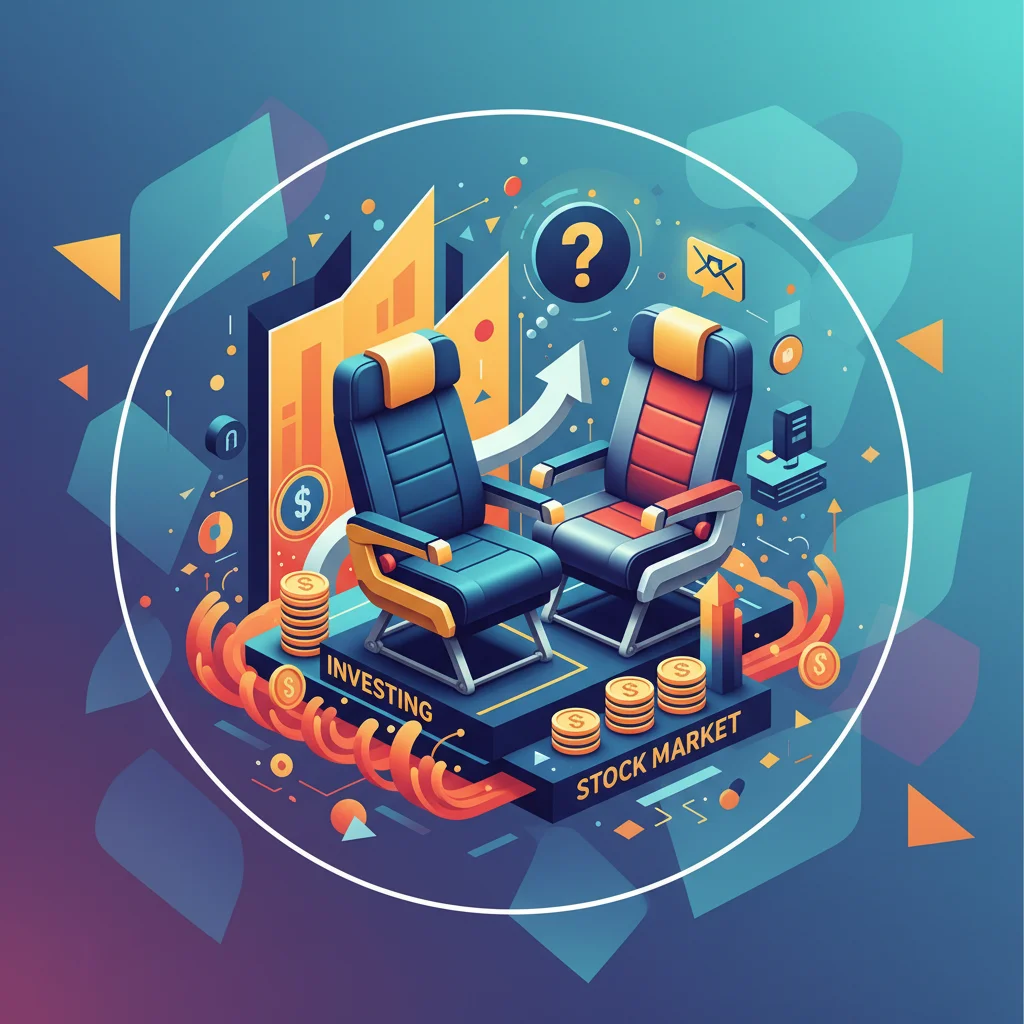
It starts with a simple, hopeful question familiar to any frequent traveler: “Any chance of an upgrade?” This seemingly innocuous request, as highlighted in a thoughtful letter to the Financial Times by Willem Thorbecke of the Research Institute of Economy, Trade and Industry, serves as a powerful microcosm for the entire global economy. On a full flight, one person’s free upgrade is another’s lost opportunity or a cost absorbed by the system. This simple observation unlocks a profound truth about modern finance: there is no such thing as a free lunch, or in this case, a free seat.
For the past several years, governments and central banks have been handing out “free upgrades” on an unprecedented scale. In response to the global pandemic, they injected trillions of dollars into the financial system through stimulus checks, business loans, and quantitative easing. The intention was noble—to prevent a catastrophic economic collapse. The plane was, in effect, in a nosedive, and emergency measures were required. However, the flight has since leveled off, and we are now collectively facing the bill. The “cost” of these upgrades has manifested as persistent, global inflation, a force that is reshaping the landscape of investing, banking, and personal finance.
This isn’t just an academic exercise. Understanding this core principle—the “no-free-lunch” theorem—is critical for investors, business leaders, and anyone navigating today’s complex economic environment. It explains why your savings are buying less, why the stock market is so volatile, and why the era of easy money has come to an abrupt end.
The “TANSTAAFL” Principle: From Airlines to Global Economics
In economics, the “no-free-lunch” theorem is often abbreviated as TANSTAAFL (“There Ain’t No Such Thing As A Free Lunch”). It’s a fundamental concept asserting that any good or service provided has a cost that must be borne by someone, even if it’s not immediately apparent to the recipient. On the airplane, a “free” upgrade for one passenger means the airline forgoes revenue it could have earned from a paying customer, or it devalues the loyalty points a different passenger painstakingly saved. Ultimately, these costs are socialized across all passengers through higher average ticket prices.
Now, let’s scale this up to the global economy. The massive fiscal and monetary stimulus deployed since 2020 was the equivalent of upgrading every passenger on the plane. The U.S. government alone enacted stimulus measures totaling over $5 trillion. This “free money” wasn’t created out of thin air without consequence. It was financed in two primary ways:
- Government Debt: A significant portion was borrowed, adding trillions to the national debt. This is a cost passed on to future generations through taxes or reduced future government services.
- Money Creation (Monetary Easing): Central banks, like the Federal Reserve, expanded the money supply to purchase government bonds and other assets, effectively printing money to facilitate the spending.
This combination created a classic inflationary scenario: a massive surge in demand (everyone suddenly has more money to spend) colliding with a heavily constrained supply chain (factories were closed, shipping was snarled). The result was predictable: too much money chasing too few goods, leading to the highest inflation rates seen in four decades.
The Investor's Overload: Why a Financial Digital Detox is Your Best Asset
The following table illustrates the dramatic shift in key economic indicators, showcasing the environment created by these policies.
| Indicator | Pre-Pandemic (Dec 2019) | Post-Stimulus Peak | Source |
|---|---|---|---|
| U.S. CPI Inflation (Annual) | 2.3% | 9.1% (June 2022) | U.S. Bureau of Labor Statistics |
| M2 Money Supply (USD) | $15.3 Trillion | $21.7 Trillion (April 2022) | St. Louis Fed (FRED) |
| U.S. Federal Debt Held by the Public | $17.2 Trillion | $24.5 Trillion (Q2 2023) | St. Louis Fed (FRED) |
The Devaluation Effect: When Your Savings Buy a Worse Seat
Returning to Thorbecke’s analogy, giving away upgrades devalues the currency of loyalty points. In the broader economy, printing money devalues the currency in your bank account. This is the insidious nature of inflation—it’s not just that prices go up; it’s that the value of your savings and your wages goes down. Every dollar you diligently saved now buys a smaller fraction of a house, a car, or a stock portfolio.
This has profound implications for every facet of finance and investing:
- Savers vs. Debtors: Inflation punishes savers, especially those holding cash or fixed-income assets like bonds. Conversely, it benefits debtors, as they can repay their fixed-rate loans with currency that is worth less than when they borrowed it.
- Stock Market Dynamics: The stock market becomes a battleground for pricing power. Companies that can pass on rising costs to consumers (e.g., consumer staples, energy) tend to outperform. Companies with high fixed costs and low pricing power get their margins squeezed. This forces a shift in trading and investment strategies towards inflation-resilient assets.
- The Role of Banking: For the banking sector, rapid interest rate hikes—the primary tool to fight inflation—create immense stress. We saw this with the regional banking crisis in 2023, where banks holding long-duration, low-yield bonds faced massive unrealized losses as rates soared.
The “free” stimulus, therefore, wasn’t a simple wealth transfer but a radical reshuffling of economic outcomes, creating a new set of winners and losers. The person who saved their loyalty points for years suddenly finds they can’t even get the seat they planned for.
London's Gilded Cage: Why the Capital's Property Market Is Leading in Losses
Financial Technology: The Accelerator on the Inflationary Fire
The speed and efficiency of modern financial technology played a crucial, often overlooked, role in this economic story. When the government decided to issue stimulus, fintech and modern banking infrastructure made it possible to deposit funds directly into millions of accounts almost overnight.
While this efficiency is a marvel of technological progress, it also dramatically increased the “velocity of money”—the rate at which money is spent in the economy. This acted as an accelerant. In previous eras, distributing government aid was a slower, paper-based process. The delay between policy decision and consumer spending provided a buffer. Today, the digital pipeline from the Treasury to a consumer’s shopping cart is nearly instantaneous. This meant the demand shock from the stimulus hit the supply-constrained economy with full force, almost immediately.
This highlights a new paradigm for economics in the digital age. The tools of financial technology, from digital banking to blockchain-based systems, mean that the consequences of monetary and fiscal policy—both good and bad—will likely be felt much faster and more intensely than ever before.
Conclusion: A Return to Economic First Principles
The journey from a simple request for a seat upgrade to the complexities of global inflation reveals an inescapable truth: economic principles are not just theories in a textbook. They are active forces that govern our financial lives. The allure of the “free lunch” is powerful, but its bill always comes due.
For investors, traders, and business leaders, the lesson is clear. The economic environment of the coming decade will be defined by the consequences of the “free upgrades” of the last few years. It will be an era that rewards a deep understanding of fundamental economics, a focus on real value, and a healthy skepticism of anything that seems too good to be true. The next time you’re tempted by a “free” offer, whether it’s a seat upgrade or a new investment fad, it’s worth asking the critical question: Who is really paying for this?