Greenland’s Ice Is Melting, Revealing a Trillion-Dollar Geopolitical Prize
The Arctic’s New Great Game: Why a UK Base in Greenland is a Financial Masterstroke
In the quiet letters section of the Financial Times, a concise yet potent suggestion emerged: a British military presence on Greenland would be a “win-win” scenario. Penned by John Barstow of West Sussex, the idea might seem, at first glance, like a relic of colonial-era thinking. However, a deeper dive reveals a proposal rooted firmly in the geopolitical and economic realities of the 21st century. This isn’t just about military posturing; it’s about securing the future of global trade, technology, and finance in an increasingly contested Arctic.
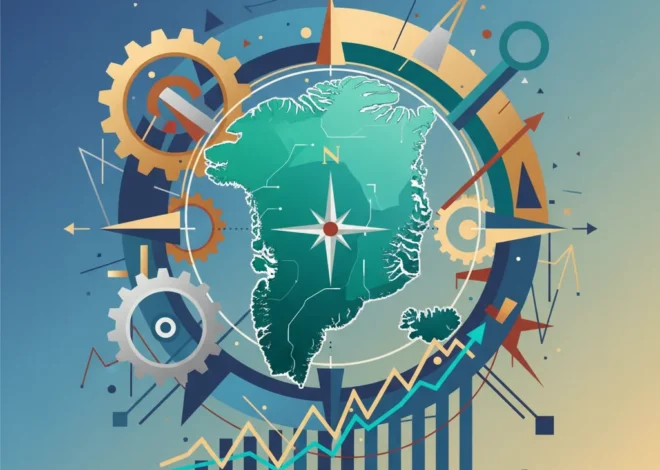
As climate change thaws the Arctic at an alarming rate, it’s uncovering not just new shipping lanes but also a treasure trove of critical resources. Greenland, the world’s largest island, sits at the epicenter of this transformation. For investors, finance professionals, and business leaders, the strategic implications are immense. The question is no longer *if* the Arctic will become a new economic frontier, but *who* will write the rules of engagement. A stable, Western-aligned security presence could be the single most important factor in de-risking the colossal investment opportunities that lie beneath the ice.
The Geopolitical Chessboard: More Than Just Ice and Snow
For decades, the Arctic was a frozen backwater in global affairs. Today, it is a hotbed of strategic competition. Russia has been aggressively remilitarizing its northern coast, reopening Soviet-era bases and testing new hypersonic weapons in the region. China, a self-proclaimed “near-Arctic state,” has been making significant economic and diplomatic inroads, viewing the region as a crucial “Polar Silk Road.” According to a report by the Council on Foreign Relations, Beijing’s ambitions include gaining access to natural resources and new sea routes that could shave weeks off shipping times between Asia and Europe.
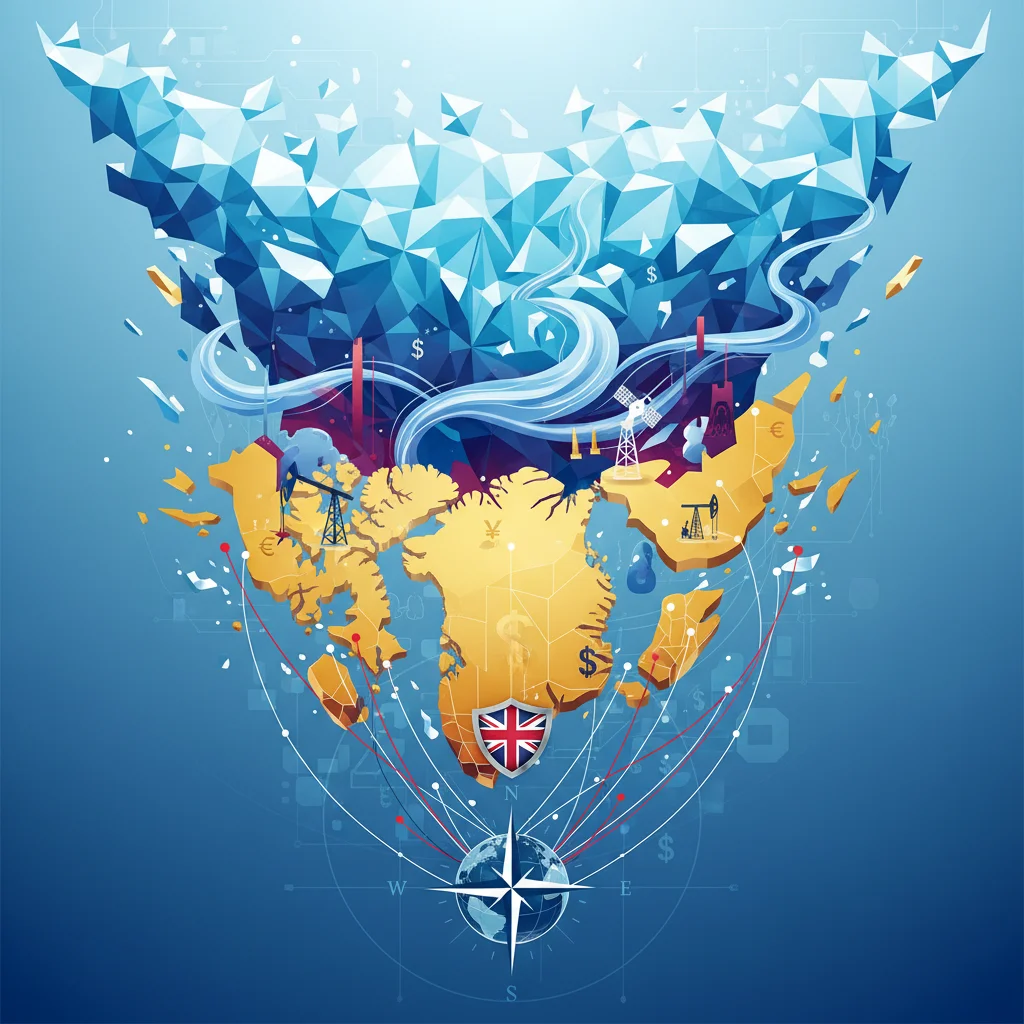
A British base in Greenland, operating in co-operation with Denmark and the local Greenlandic government, would serve as a powerful strategic anchor for the West. It would reinforce the crucial Greenland-Iceland-UK (GIUK) Gap, a naval chokepoint vital for monitoring submarine activity and protecting transatlantic sea lanes. For the financial markets, this stability is paramount. The global **economy** is built on the security of these trade routes, and any disruption in the North Atlantic could send shockwaves through the **stock market** and commodity prices.
Unlocking a Trillion-Dollar Treasure: Greenland’s Economic Potential
Beneath Greenland’s vast ice sheet lies one of the world’s most significant untapped reserves of minerals. This includes not only iron ore, lead, zinc, and diamonds but, most critically, a vast quantity of Rare Earth Elements (REEs). REEs are the essential building blocks of the modern digital **economy** and green energy transition. They are in your smartphone, the electric vehicle you drive, the wind turbines generating clean power, and sophisticated defense systems.
Currently, China dominates the global REE market, controlling an estimated 70% of global mining and 90% of processing. This monopoly gives Beijing immense leverage over global supply chains. Diversifying this supply is not just good business; it’s a matter of economic security for the West. Greenland offers a path to that diversification. A stable security environment, underwritten by a NATO ally like the UK, would dramatically lower the political risk for mining corporations, unlocking billions in private sector **investing**.
The table below outlines some of Greenland’s key mineral resources and their critical importance to the modern economy.
| Mineral/Element | Primary Applications | Strategic Importance & Financial Impact |
|---|---|---|
| Rare Earth Elements (Neodymium, Dysprosium) | High-strength magnets for EV motors, wind turbines, consumer electronics, defense systems. | Reduces reliance on Chinese supply chains, critical for Green Tech and Defense sectors, potential for high-value commodity trading. |
| Zinc & Lead | Galvanizing steel, batteries, construction materials. | Fundamental industrial metals; prices are a key indicator of global economic health. |
| Uranium | Nuclear power generation. | Key to energy independence and the shift away from fossil fuels, highly sensitive to geopolitical stability. |
| Iron Ore | Steel production for infrastructure and manufacturing. | A cornerstone of the global industrial economy; new sources can impact global prices. |
Building the Financial Architecture for an Arctic Future
A military presence is merely the foundational layer. To truly capitalize on this opportunity, a sophisticated financial ecosystem must be developed, one that leverages cutting-edge **financial technology** to manage the unique challenges of the Arctic.
The scale of investment required for infrastructure—ports, airfields, housing, and energy grids—will be immense, running into the hundreds of billions. This will necessitate complex financing structures involving international investment **banking**, public-private partnerships, and sovereign wealth funds. The stability provided by a UK/NATO presence makes these large-scale projects bankable, attracting the kind of patient capital needed for long-term development.
This is where modern **fintech** and even **blockchain** technology can play a transformative role. Consider the challenge of sourcing minerals ethically. Investors and consumers are increasingly demanding transparency in supply chains. By leveraging a **blockchain** ledger, every ton of REEs mined in Greenland could be tracked from source to final product. This would create a “Greenland Premium,” guaranteeing ethically and sustainably sourced materials, a powerful differentiator in the ESG-conscious **investing** landscape.
Furthermore, **fintech** platforms could democratize investment, allowing for crowdfunding of smaller infrastructure projects or offering specialized digital **banking** services to the growing international workforce. The goal would be to create a seamless financial environment that is as robust and resilient as the physical infrastructure it supports.
Beyond the Headlines: Why London's Falling Crime Rate is a Bullish Signal for Investors
A Post-Brexit Pivot: The UK’s Strategic Imperative
For the United Kingdom, this represents a unique opportunity to redefine its role on the world stage. A post-Brexit “Global Britain” requires tangible strategic initiatives that demonstrate its continued relevance and capability. A forward-operating base in Greenland is not about nostalgia for empire; it is a shrewd move that anchors the UK at the nexus of security, technology, and **economics** for the next century.
It strengthens the UK’s “special relationship” with the United States, supports a key NATO ally in Denmark, and provides a platform for projecting British soft power through scientific research and environmental monitoring. According to a RUSI analysis, a more defined Arctic strategy is critical for the UK’s security. This move would provide that definition, with clear economic and financial benefits that would resonate in the City of London and beyond.
The Price of a Typo: Why a Single Correction Matters More Than a Thousand Reports in Modern Finance
Conclusion: Securing the Future, From the High North
The simple proposition from a reader in West Sussex opens a window into one of the most significant, yet under-reported, strategic shifts of our time. A British military presence in Greenland is far more than a military calculation. It is the catalyst for a new economic chapter, a move that provides the security and stability necessary to unlock immense resource wealth, secure vital supply chains, and pioneer new, faster global trade routes.
For Greenland, it offers a path toward economic independence through a partnership that respects its autonomy and environment. For the UK, it is a powerful strategic pivot that enhances its global standing. And for the wider Western world, it secures a vital foothold in the coming “Great Game” in the High North. It is, in essence, a masterstroke of geopolitical **investing**—a win-win-win scenario built on the understanding that in the 21st century, economic security and national security are two sides of the same coin.