The Pig and the Chicken: The Only Metaphor You Need for Success in Investing, Finance, and Business
In the world of finance and business, we are inundated with complex models, dense jargon, and sophisticated analytics. Yet, sometimes the most profound insights come from the simplest of stories. A recent letter to the Financial Times by Mano Manoharan, titled “The chicken metaphor that keeps on giving,” serves as a powerful reminder of this truth. It alludes to a classic fable that every investor, entrepreneur, and business leader should deeply consider: the story of the pig and the chicken.
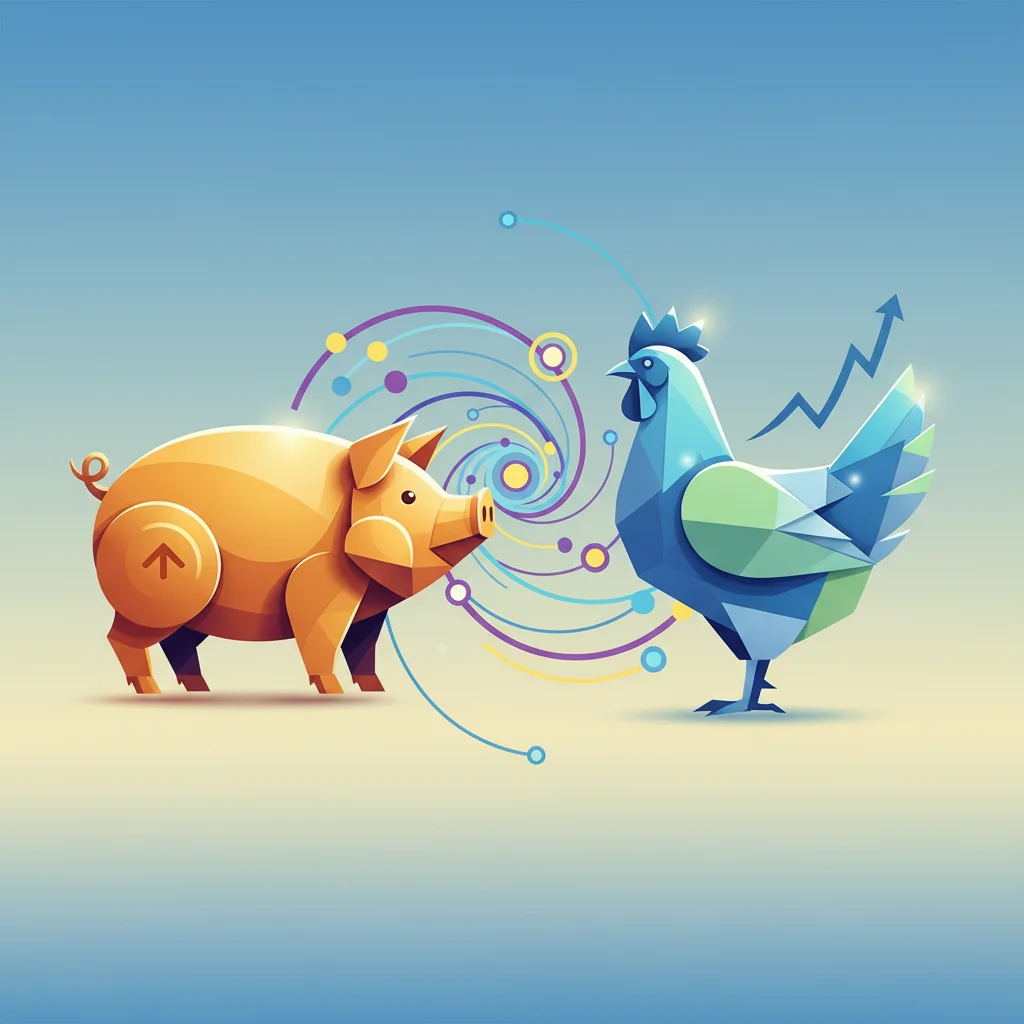
The tale goes like this: A pig and a chicken are discussing opening a restaurant. The chicken suggests, “Let’s open a restaurant called ‘Ham and Eggs’!” The pig thinks for a moment and replies, “I’m not so sure. For you, it’s a contribution. For me, it’s a total commitment.”
In this simple exchange lies a universe of meaning. The chicken is involved; it provides the eggs, a renewable resource, without sacrificing its life. The pig, however, is committed; it provides the ham, an act that requires the ultimate sacrifice. This distinction between involvement and commitment is not just a quaint piece of farmyard philosophy—it is the central, often unspoken, dynamic that dictates success and failure across the entire economic landscape, from the stock market to the latest fintech startup.
The Investor’s Dilemma: Are You Providing the Egg or the Bacon?
Nowhere is this metaphor more potent than in the world of investing. Every participant in the market, from the day trader to the long-term value investor, falls somewhere on the spectrum between the chicken and the pig. Understanding your position is the first step toward aligning your strategy with your goals.
The “Chicken” Investor: Involved but not Committed
The chicken investor is characterized by their ability to enter and exit positions with relative ease. They are involved in the market, contributing capital and liquidity, but their commitment is fleeting. This category includes:
- Day Traders: Focused on short-term price fluctuations, they are the quintessential chickens, laying “eggs” of capital in dozens of positions a day without a long-term commitment to any single company.
- Momentum Traders: They ride the wave of market sentiment, involved only as long as the trend is favorable. Once the momentum shifts, they are gone.
- Algorithmic and High-Frequency Trading (HFT) Firms: These are institutional chickens, using sophisticated financial technology to execute thousands of trades per second. Their involvement is crucial for market liquidity, but their commitment to any individual asset is measured in milliseconds.
The chicken’s approach offers flexibility and the potential for quick profits. However, it is a high-stress, high-turnover strategy that often falls prey to market volatility and emotional decision-making. They provide the eggs, but they rarely get to taste the savory rewards of long-term value creation.
The “Pig” Investor: The Power of Total Commitment
The pig investor, on the other hand, makes a profound commitment. Their capital is not just a contribution; it’s a declaration of belief in the fundamental, long-term value of an asset. Think of Warren Buffett, who famously said, “Our favorite holding period is forever.” This mindset is defined by:
- Deep Research: Before committing, the pig does extensive due diligence, understanding the business, its management, and its competitive landscape.
- Long-Term Horizon: They are not swayed by quarterly earnings reports or market noise. Their focus is on the value the business will generate over years, even decades.
- Conviction: When the market panics, the pig investor often sees a buying opportunity, doubling down on their commitment when others are fleeing.
This approach requires patience and fortitude. The risk is immense; if the chosen investment fails, the loss can be substantial, much like the pig’s ultimate sacrifice. But the rewards can be life-changing, built on the power of compounding and genuine business growth.
To better illustrate these contrasting philosophies, consider the following breakdown:
| Characteristic | The “Chicken” Investor (Involved) | The “Pig” Investor (Committed) |
|---|---|---|
| Time Horizon | Minutes to Months | Years to Decades |
| Primary Goal | Capitalize on price volatility | Participate in long-term value creation |
| Source of Returns | Market timing and sentiment | Business fundamentals and compounding |
| Reaction to Downturn | Sell to cut losses (flight) | Hold or buy more (conviction) |
| Key Metric | Price Chart | Intrinsic Value |
The £4 Million Ghost Prison: A Stark Lesson in Asset Mismanagement and Public Finance
The Startup Ecosystem: A Barnyard of Pigs, Chickens, and Hybrids
The chicken and pig metaphor finds its most dramatic expression in the high-stakes world of venture capital and startups. The economy of innovation is built on the interplay between different levels of commitment.
The founder is, without question, the pig. They have wagered their career, their personal finances, and countless sleepless nights on their vision. For them, failure is not just a line item in a portfolio; it’s an existential crisis. This total commitment is a prerequisite for the grueling journey of building something from nothing. The statistics are daunting; according to data from the U.S. Bureau of Labor Statistics, about 20% of new businesses fail during the first two years, and 65% fail during the first 10 years (source). Only a pig would willingly face those odds.
The Venture Capitalist (VC) occupies a more complex role. They are deeply involved, providing crucial capital, strategic guidance, and network access. They perform rigorous due diligence and often take board seats. In this sense, they are far more than a simple chicken. However, their fundamental model is one of portfolio diversification. A VC firm invests in dozens of startups, fully expecting that most will fail. They rely on one or two massive successes to generate their returns. If a single startup goes bankrupt, the founder loses everything. The VC firm loses one of its many bets and moves on. They are, perhaps, a “super-chicken”—laying golden eggs but always able to fly to another nest.
Early employees, especially those taking significant pay cuts for equity, are also making a pig-like commitment of their time and talent, betting a crucial part of their career on the venture’s success.
Commitment in the Age of Fintech and Blockchain
The metaphor remains profoundly relevant as we navigate the disruptions of modern financial technology. The world of blockchain and cryptocurrencies is a perfect case study.
The space is filled with “chicken” speculators, drawn by volatility and the promise of quick riches. They trade tokens based on hype and social media trends, contributing to the market’s infamous price swings. Their involvement provides liquidity but also fuels instability.
Meanwhile, the “pigs” are the core developers building the protocols, the entrepreneurs creating decentralized applications (dApps), and the long-term holders who genuinely believe in the technology’s power to reshape finance. These are the individuals and teams committed to a vision beyond the next price chart, who continue to build and innovate through bull and bear markets alike. The tension between these two groups defines much of the crypto landscape, highlighting the ongoing battle between short-term speculation and long-term technological progress.
Trump's Venezuelan Oil Gambit: A Deep Dive for Investors and Business Leaders
Fostering a Culture of Commitment
For business leaders, the ultimate goal is to transform a company of chickens into a team of pigs. An employee who is merely “involved” works for a paycheck. An employee who is “committed” works for a shared mission. How can leaders foster this sense of ownership and commitment?
- Skin in the Game: Employee Stock Ownership Plans (ESOPs) and equity grants are powerful tools. When employees own a piece of the company, their mindset shifts from contribution to commitment. Their personal success becomes directly tied to the company’s success.
- Transparency and Mission: A clear, compelling mission that goes beyond profit can inspire deep commitment. When people believe in *why* they are doing something, they are more willing to go the extra mile. Leaders must communicate the company’s vision and strategy with radical transparency.
- Empowerment and Autonomy: Commitment cannot be mandated; it must be volunteered. Giving employees the autonomy to make decisions and take ownership of their work fosters a sense of responsibility. As a Harvard Business Review article points out, committed employees are more likely to solve problems proactively and collaborate effectively.
By building this culture, leaders can create an organization where everyone, from the C-suite to the front lines, feels like a pig—fully invested in the collective success of the enterprise.
The Investor's Crossword: Decoding the Clues of Today's Complex Economy
The Final Question: Your Role in the Story
The fable of the pig and the chicken, brought to our attention again by a simple letter, is more than a metaphor; it’s a diagnostic tool. It forces us to ask uncomfortable but necessary questions about our own roles in our financial and professional lives.
When you buy a stock, are you laying an egg or providing the bacon? When you lead a team, are you asking for involvement or inspiring commitment? When you embark on a new venture, are you prepared for the ultimate sacrifice that separates the truly committed from the merely involved?
The world needs both contributions and commitments. But enduring value, the kind that builds fortunes and changes industries, is almost always the product of the pig. In your next major decision, ask yourself: Will I be the chicken, or will I be the pig?

Related Posts
Beyond Pura Vida: Unpacking the Investment Risk of an Assassination Plot in Costa Rica

The New Guard: Why David Gross’s Solo Leadership at Bain Capital Signals a New Era for Private Equity