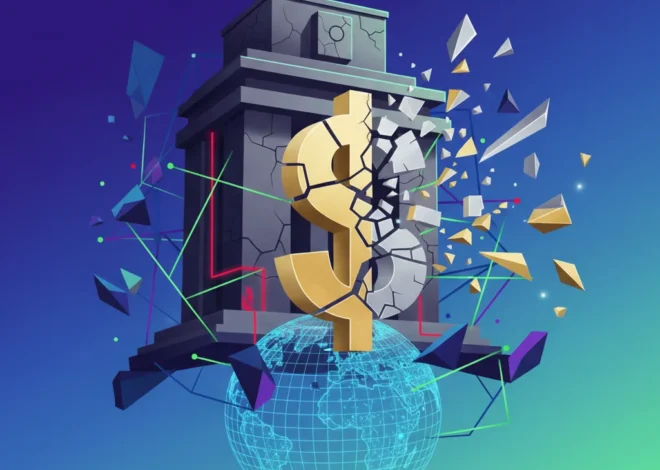
A Line in the Sand: Why Global Central Banks Are Rallying Behind the US Fed
In a move that sent shockwaves through the global financial community, an unprecedented alliance of eleven of the world’s most powerful central banks has publicly declared its “unwavering solidarity” with U.S. Federal Reserve Chair Jerome Powell. This extraordinary statement comes on the heels of breaking news that the U.S. government has launched a criminal investigation into the Federal Reserve, an institution long considered the untouchable bedrock of the global economy.
The BBC first reported on the unified front presented by the central banks, a development that signals far more than just professional courtesy. It represents a coordinated defense of a principle that underpins the entire modern financial system: central bank independence. When the guardians of the world’s major currencies feel compelled to draw a collective line in the sand, investors, business leaders, and the general public must pay close attention. This is not merely a political spat; it is a fundamental stress test of the architecture that supports global finance, with profound implications for everything from the stock market to the future of financial technology.
What does this challenge to the Fed’s authority mean for global markets? Why are institutions from Tokyo to Frankfurt so quick to defend their American counterpart? And what are the potential consequences for your investments, the stability of the U.S. dollar, and the ongoing evolution of the banking industry? We will delve into the core of this crisis, exploring the critical importance of central bank autonomy and the new era of uncertainty this investigation may unleash.
The Bedrock of Modern Economics Under Siege
To understand the gravity of the situation, one must first grasp the sacrosanct role of an independent central bank. The U.S. Federal Reserve, like its counterparts worldwide, operates under a mandate to maintain economic stability, typically by controlling inflation and striving for maximum sustainable employment. The key to its effectiveness lies in its independence from short-term political pressures.
History is replete with examples of what happens when governments gain direct control over the money supply. Political incentives often favor short-term gains—such as printing money to fund popular projects or cutting interest rates just before an election—which almost inevitably lead to disastrous long-term consequences like hyperinflation and economic collapse. Central bank independence acts as a crucial “firewall,” allowing technocrats to make difficult, often unpopular, decisions for the greater good of the economy. According to the International Monetary Fund, there is a wide consensus that “central bank independence is a key ingredient for effective monetary policy” (source).
The launch of a “criminal investigation” against the Fed represents a dramatic and dangerous escalation beyond the typical political criticisms. It threatens to pierce this firewall, suggesting that the institution’s monetary policy decisions could be subject to legal—and therefore political—retribution. This is the alarm bell that has roused the world’s financial leaders.
The Billion-Pound Information Gap: How Overlooked Social Benefits Impact the Broader Economy
The Global “Guardians of Finance” Circle the Wagons
The coordinated support from eleven major central banks is a testament to how seriously this threat is being taken on the world stage. While the full list has not been officially published, it is understood to include pillars of the global financial system such as the European Central Bank (ECB), the Bank of England (BoE), the Bank of Japan (BoJ), and the Bank of Canada (BoC). Their message is clear: an attack on the Fed’s independence is an attack on the principles that govern them all.
These institutions understand that financial markets are built on confidence. The U.S. dollar is the world’s primary reserve currency, and U.S. Treasury bonds are the benchmark “risk-free” asset precisely because the Federal Reserve is trusted to be a stable, independent, and predictable steward of the world’s largest economy. Any erosion of that trust could trigger a cascade of instability across the globe.
Below is a brief overview of some of the key central banks and their core mandates, illustrating the shared principles they are now defending.
| Central Bank | Jurisdiction | Primary Mandate(s) |
|---|---|---|
| Federal Reserve (Fed) | United States | Price stability and maximum sustainable employment. |
| European Central Bank (ECB) | Eurozone | Maintain price stability (inflation ~2% over the medium term). |
| Bank of England (BoE) | United Kingdom | Maintain monetary and financial stability. |
| Bank of Japan (BoJ) | Japan | Price stability and ensuring the stability of the financial system. |
| Swiss National Bank (SNB) | Switzerland | Ensuring price stability, while taking due account of economic developments. |
Implications for Investors, Markets, and the Future of Money
For those involved in investing and trading, the immediate consequence of this news is a single, unwelcome word: uncertainty. Markets abhor uncertainty, and a challenge to the world’s most important central bank is the ultimate source of it.
- Increased Market Volatility: The stock market is likely to experience heightened volatility as traders try to price in this new political risk. The “Fed put”—the implicit belief that the Fed will always step in to support markets during a crisis—is now in question.
- Pressure on the U.S. Dollar: The dollar’s status as the global reserve currency is predicated on trust in U.S. institutions. This event provides ammunition for countries looking to diversify their reserves, potentially weakening the dollar over the long term. Research from the Federal Reserve itself has noted a gradual decline in the dollar’s share of global reserves over the past two decades (source); this could accelerate that trend.
- Rethinking “Risk-Free” Assets: If the Fed’s independence is compromised, can U.S. Treasuries truly be considered the world’s safest asset? While there is no immediate replacement, sovereign wealth funds and other major investors may begin to allocate capital differently, which could impact interest rates.
- A Catalyst for Fintech and Crypto: The narrative powering the rise of fintech and digital assets like Bitcoin has always been the fallibility of centralized human institutions. An event like this provides a powerful real-world example, potentially driving more interest and investment into decentralized alternatives built on blockchain technology.
Venezuela's Black Gold: The Ultimate High-Risk, High-Reward Investment?
A Dangerous Echo of the Past
While a criminal investigation is a new frontier, political pressure on the Federal Reserve is not. In the early 1970s, President Richard Nixon famously pressured Fed Chair Arthur Burns to keep interest rates low to boost his re-election chances. The period that followed is now known as “The Great Inflation,” a painful era of economic stagflation that took nearly a decade to tame. Federal Reserve History documents show this period as a cautionary tale of what happens when monetary policy succumbs to political will.
More recently, former President Donald Trump frequently and publicly criticized Chair Powell’s decisions to raise interest rates, breaking a long-standing tradition of presidential deference to the Fed’s independence. However, verbal criticism is leagues away from the threat of a criminal probe. This latest move crosses a Rubicon, transforming political pressure into a direct institutional threat.
The EV Price War: Why Steep Discounts Signal a Red Light for the Economy
Navigating the New Frontier of Financial Uncertainty
The united front of eleven central banks is a defensive maneuver in a battle that is just beginning. This is a landmark moment in modern economics, one that will be studied for years to come. The immediate outcome of the investigation is almost secondary to the damage already done by its announcement. The mere suggestion that the Federal Reserve can be subjected to political prosecution has introduced a new, systemic risk into the global financial system.
For investors and business leaders, the key takeaway is that the landscape is shifting. The old assumptions about the stability and predictability of our core financial institutions are being tested. Now, more than ever, a deep understanding of the interplay between politics and finance is essential. Vigilance, diversification, and an awareness of the emerging alternatives in financial technology will be the cornerstones of navigating this new and uncertain era.