Crude Politics: The Financial Fallout of a US-Cuba-Venezuela Showdown
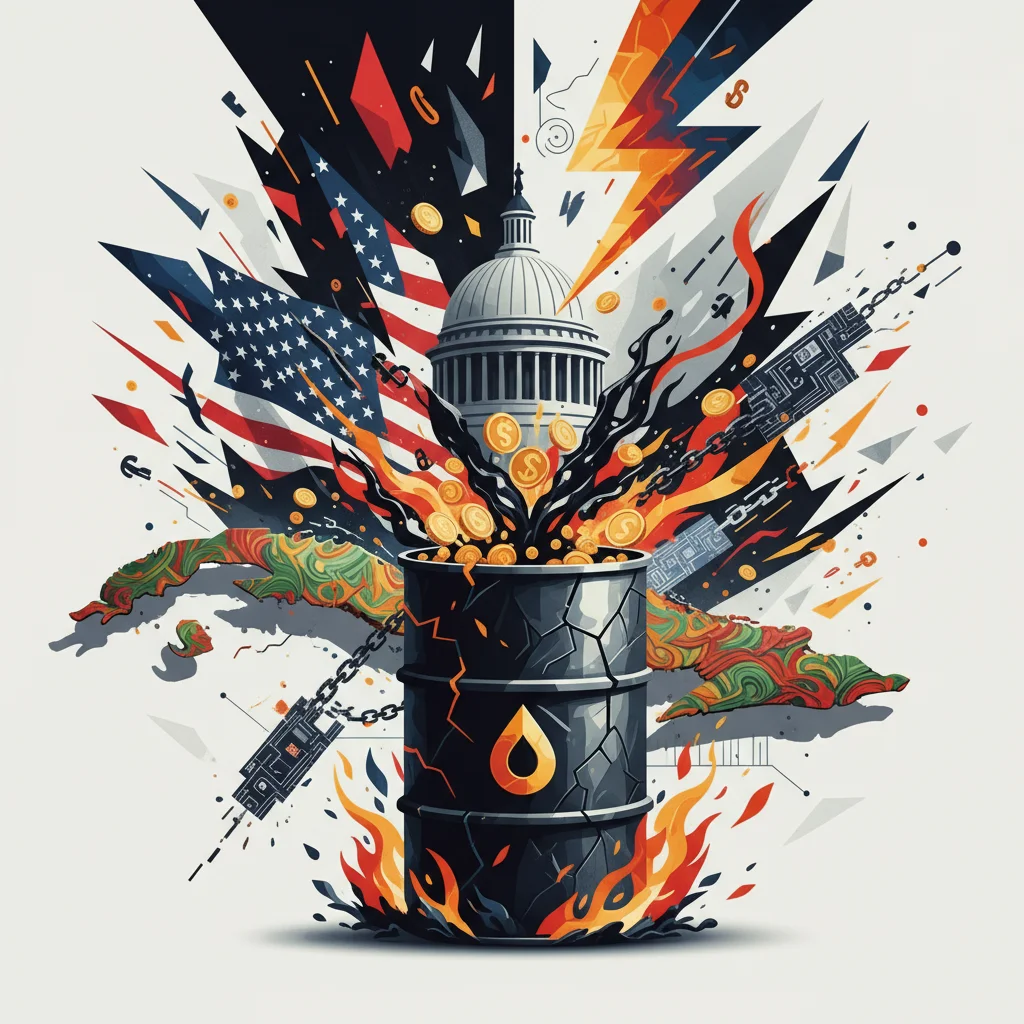
In the high-stakes world of international relations, words from a political leader can move markets, redraw supply chains, and create significant geopolitical risk. A recent vow by former President Donald Trump to sever the oil lifeline between Venezuela and Cuba is more than just campaign rhetoric; it’s a signal of a potential escalation in US foreign policy that could have profound implications for the global economy, energy markets, and the international finance system.
During a recent address, Trump declared his intention to halt all Venezuelan oil shipments to Cuba, a move aimed at collapsing the communist government in Havana. While the Cuban government has struck a defiant pose, the threat highlights the fragile interdependence of these two sanctioned nations and the powerful economic levers the United States can pull. For investors, finance professionals, and business leaders, understanding the mechanics, potential consequences, and broader economic context of this threat is essential for navigating the turbulent waters of modern geopolitics.
The Axis of Oil: A Symbiotic and Sanctioned Alliance
The relationship between Venezuela and Cuba is not a recent development. For decades, it has been built on a foundation of ideological alignment and economic necessity. Under the late Hugo Chávez, Venezuela, then a wealthy oil powerhouse, began supplying Cuba with crude oil on highly preferential terms. In return, Cuba dispatched thousands of doctors, teachers, and intelligence advisors to Venezuela in a unique “oil-for-professionals” barter system.
This arrangement has been a critical lifeline for both nations. For Cuba, it has provided a significant portion of its energy needs, keeping the lights on and industry running in the face of a decades-long US embargo. For Venezuela, it has provided crucial human capital and a staunch political ally in the region. However, the collapse of Venezuela’s state-owned oil company, PDVSA, under years of mismanagement and punishing US sanctions, has dramatically reduced these shipments. According to data from shipping trackers, while shipments have fluctuated, they remain a vital energy source for the island.
The United States has long viewed this alliance as a prop for two adversarial regimes. The Trump administration previously took aggressive steps to curtail this trade, sanctioning dozens of tankers and shipping companies involved in the transport of Venezuelan crude. A renewed push to cut off the supply entirely would represent a significant tightening of the economic noose.
The Deal That Saved the Olympics: A Masterclass in Financial Innovation
The Sanctions Playbook: A Financial War, Not a Naval Blockade
How would the U.S. enforce such a policy? The strategy wouldn’t involve a physical blockade but rather a sophisticated deployment of economic and financial weaponry. This is where the worlds of geopolitics and international banking collide.
The primary tool would be secondary sanctions. These measures target third-party entities—not just Cuban or Venezuelan ones—that facilitate the sanctioned activity. This could include:
- Shipping Companies: Any vessel, regardless of its flag, involved in transporting the oil could be added to the Specially Designated Nationals (SDN) List by the U.S. Treasury’s Office of Foreign Assets Control (OFAC). This effectively blacklists the vessel from the global financial system.
- Insurance Providers: The vast majority of global maritime insurance is underwritten by firms in London and Europe. The U.S. could pressure these insurers to deny coverage to any tanker even suspected of engaging in this trade, making such voyages prohibitively risky.
- Financial Institutions: Any bank that processes payments, provides letters of credit, or offers financing for these shipments could face enormous fines and be cut off from the U.S. dollar system—a death sentence in modern finance.
This demonstrates the immense power the U.S. wields through its control over the global financial architecture. The enforcement of these policies relies heavily on advanced financial technology (fintech) and compliance systems within banks to track and flag illicit transactions. In response, sanctioned states are constantly exploring alternative methods, including shadowy ship-to-ship transfers and, increasingly, the potential use of cryptocurrencies and blockchain technology to bypass traditional banking channels.
Economic Shockwaves and Market Implications
A complete halt of Venezuelan oil to Cuba would trigger significant economic consequences, particularly for the island nation, which is already grappling with its worst economic crisis in decades. The original Financial Times article notes that Havana’s government has projected an air of defiance, but the reality on the ground would be grim.
To quantify the reliance, let’s look at the estimated energy landscape for Cuba.
| Energy Metric | Estimated Figure / Status |
|---|---|
| Daily Oil Consumption | Approx. 130,000-140,000 barrels per day (bpd) |
| Domestic Oil Production | Approx. 40,000-50,000 bpd (mostly heavy crude) |
| Venezuelan Imports (2023 Avg.) | Approx. 57,000 bpd (source: CSIS) |
| Resulting Energy Deficit | Significant; covered by other imports (e.g., from Russia) or results in shortages |
Losing the Venezuelan supply would force Cuba to seek more expensive oil on the open market, likely from allies like Russia or Iran, further draining its scarce foreign currency reserves. This would almost certainly lead to:
- Widespread and prolonged power blackouts.
- Severe fuel shortages, crippling transportation and agriculture.
- A deeper economic contraction, potentially fueling social unrest and migration.
For the broader markets, the direct impact on global oil prices would be negligible. Venezuela’s sanctioned oil is already largely outside the mainstream market. However, the indirect effects on the stock market and commodity trading could be more significant. Such an aggressive move would increase the geopolitical risk premium in the Caribbean, potentially affecting tourism, shipping, and supply chains in the region. It signals a more confrontational U.S. posture, which can create broader market uncertainty—a key factor for any investing strategy.
Greenland's Geopolitical Price Tag: Why a Seemingly Absurd Proposal Reveals a New Economic Frontier
The Investor’s Compass: Navigating Sanctions and Geopolitical Risk
For finance professionals and business leaders, this scenario is a case study in the importance of integrating geopolitical risk analysis into economic forecasting and investment decisions. The key takeaways are clear:
- Compliance is Paramount: Businesses in the maritime, insurance, and finance sectors must have robust compliance programs. The reach of U.S. secondary sanctions is long, and the penalties for violations are severe. This is a major driver in the growth of the regulatory technology (RegTech) sub-sector of fintech.
- Supply Chain Vulnerability: Companies with supply chains that touch the Caribbean need to assess their exposure. While direct impact might be low, regional instability can have cascading effects on logistics and operational costs.
- Monitor Political Rhetoric: Campaign promises can and do become official policy. Investors should monitor U.S. foreign policy debates closely, as shifts can create both risk and opportunity. For example, a hardline policy might negatively impact some sectors while potentially benefiting U.S. energy producers if it contributes to broader market instability.
The study of economics is often focused on models and data, but events like these remind us that political decisions can be one of the most powerful—and unpredictable—variables. A change in leadership or policy in Washington can have a more immediate impact on certain assets than any shift in inflation or interest rates.
Framing Your Financial Future: Lessons in Strategic Investing from Architectural Design
Conclusion: More Than Just Oil
The threat to cut off Cuba’s oil supply from Venezuela is a stark reminder that energy is not just a commodity; it is a tool of statecraft. While the focus is on two struggling Latin American nations, the implications ripple outward, touching everything from global shipping insurance and the SWIFT banking system to the development of sanctions-resistant financial technology.
For the international community and especially for investors, this is a developing story that underscores the interconnectedness of geopolitics, energy, and finance. Whether this policy is ultimately implemented or remains a threat, it has already illuminated the fault lines of a fragile global economy where a single political decision can disrupt decades-old alliances and create new economic realities overnight.

Related Posts
Fed Under Siege: Powell Faces Criminal Probe in Unprecedented Challenge to Central Bank Independence

Fed Under Fire: Unpacking the “Unprecedented” Criminal Probe into Jerome Powell