The Unseen Tax: How Soaring Energy Prices Are Reshaping the American Economy and Your Portfolio
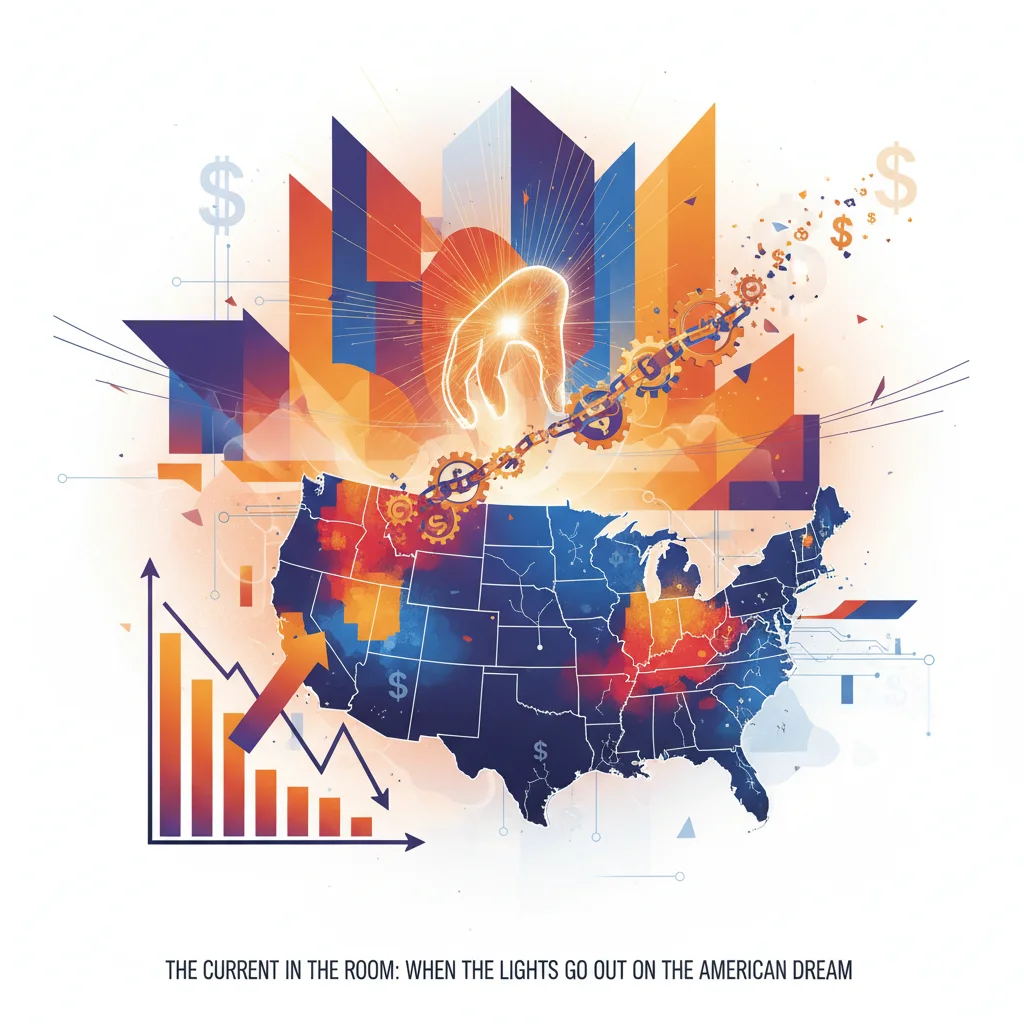
The Current in the Room: When the Lights Go Out on the American Dream
For many, the hum of a refrigerator or the flick of a light switch is an unnoticed, mundane part of daily life. But for a growing number of American families, these simple sounds represent a financial precipice. Imagine living without electricity for six months, a reality faced by individuals like Helen, a Pennsylvania resident whose story was recently highlighted by the BBC. Her struggle is not an isolated incident; it’s a symptom of a deeper, more pervasive crisis boiling beneath the surface of the U.S. economy: energy poverty. As utility bills skyrocket, they are becoming an unseen tax on households and businesses, with profound implications for personal finance, the broader stock market, and the future of investing.
This isn’t just a story about utility costs. It’s a critical economic indicator that touches every facet of our financial lives. It influences consumer spending, corporate profits, inflation rates, and the very stability of the banking sector. For investors, business leaders, and finance professionals, understanding the depth and breadth of this energy crisis is no longer optional—it’s essential for navigating the volatile economic landscape ahead.
Anatomy of a Crisis: The Macro Forces Driving Micro Hardship
The surge in electricity prices is not a random event. It’s the result of a confluence of powerful macroeconomic and geopolitical factors that have created a perfect storm for consumers. To truly grasp the situation, we must look beyond the monthly bill and examine the core drivers.
First, the cost of natural gas, a primary fuel for electricity generation in the U.S., has been notoriously volatile due to global supply chain disruptions and geopolitical tensions. Second, America’s energy infrastructure is aging. Decades of underinvestment mean that significant capital is now required to modernize the grid, and these costs are inevitably passed on to consumers. Finally, the increasing frequency of extreme weather events—from brutal heatwaves to severe winter storms—places immense strain on the grid, leading to price spikes during periods of peak demand. According to the U.S. Energy Information Administration (EIA), the nominal retail price of electricity has seen a significant climb, putting unprecedented pressure on household budgets.
This data illustrates a clear and concerning trend. The steady increase in cost per kilowatt-hour directly translates to higher bills, eroding disposable income for millions.
| Year | Average Price (Cents/kWh) | Year-over-Year Change |
|---|---|---|
| 2020 | 13.15 | – |
| 2021 | 13.69 | +4.1% |
| 2022 | 15.12 | +10.4% |
| 2023 | 15.97 | +5.6% |
Source: Adapted from U.S. Energy Information Administration (EIA) data.
The scale of the resulting financial distress is staggering. The National Energy Assistance Directors’ Association (NEADA) has reported that an estimated one in six American households are behind on their utility bills. This isn’t just a statistic; it’s a massive pool of consumer debt that poses a systemic risk to utility companies and, by extension, the financial system that underpins them.
The Plushie Portfolio: How a UK Toy Brand Became an Unlikely Economic Indicator in China
The Economic Ripple Effect: From Kitchen Tables to Trading Floors
The impact of high energy costs extends far beyond the households struggling to pay their bills. It creates powerful ripples that travel through the entire economy, affecting everything from Main Street businesses to Wall Street trading desks.
- Inflation and Consumer Spending: Energy is a core component of the Consumer Price Index (CPI). When energy costs rise, it fuels inflation, diminishing the purchasing power of every dollar. Consumers are forced to make difficult choices, cutting back on discretionary spending in areas like retail, dining, and entertainment to cover essential utility payments. This pullback in spending can slow economic growth.
- Corporate Profitability: Businesses, particularly in manufacturing and heavy industry, are massive consumers of energy. Soaring electricity costs directly impact their operating margins, reducing profitability. This can lead to hiring freezes, delayed investments, and, in some cases, price hikes for their own goods and services, further fueling inflation.
- Credit and Banking Sector Risk: A surge in utility arrears represents a growing mountain of bad debt on the balance sheets of energy providers. This can strain their financial health, making them a riskier proposition for lenders and investors. The banking sector must then account for increased default risk among both corporate and consumer clients whose finances are stretched thin by energy costs.
Navigating the Volatility: An Investor’s Guide to the New Energy Economy
For those engaged in investing and market analysis, this challenging environment presents both significant risks and unique opportunities. A passive approach is no longer sufficient; a nuanced understanding of the shifting energy landscape is crucial for portfolio construction.
Re-evaluating Traditional Utility Stocks
Utility stocks have long been considered a bastion of stability—a “safe haven” for conservative investors seeking reliable dividends. However, the current climate challenges this thesis. While utilities can pass on higher fuel costs, they face regulatory hurdles and public backlash. More importantly, rising consumer defaults pose a direct threat to their revenue streams. Investors must now look deeper, favoring utilities with strong balance sheets, diversified energy sources (especially renewables), and operations in regions with constructive regulatory frameworks.
Beyond the Wrapper: Analyzing the Financial Fallout of the UK's Junk Food Ad Ban
The Growth Engine of Renewables and Grid Tech
High fossil fuel prices make the economics of renewable energy more compelling than ever. Every dollar increase in the price of natural gas makes solar, wind, and battery storage more competitive. This accelerates a transition that was already underway. Investment opportunities abound in:
- Renewable energy producers and developers.
- Manufacturers of solar panels, wind turbines, and battery technology.
- Companies specializing in grid modernization, smart meters, and energy efficiency solutions.
- Exchange-Traded Funds (ETFs) that provide diversified exposure to the clean energy sector.
A look at sector performance can be illustrative. While past performance is not indicative of future results, comparing a traditional utility ETF with a clean energy ETF reveals shifting market sentiment.
| Investment Sector | Potential Drivers | Potential Risks |
|---|---|---|
| Traditional Utilities (e.g., XLU) | Regulated monopoly status, consistent dividends. | Rising fuel costs, consumer defaults, regulatory pressure. |
| Clean Energy (e.g., ICLN) | Favorable policy/subsidies, falling production costs, ESG mandates. | Supply chain issues, interest rate sensitivity, project financing. |
The Rise of Energy-Focused Fintech
Perhaps the most exciting and under-the-radar opportunity lies at the intersection of energy and financial technology. As consumers and businesses grapple with volatile energy bills, a new generation of fintech companies is emerging to provide solutions. These platforms offer services like:
- AI-powered bill management and prediction tools.
- Micro-lending and flexible payment plans for utility bills.
- Platforms for investing in community solar projects.
- Software that helps businesses optimize energy consumption to reduce costs.
These companies are building the essential financial infrastructure for a more complex and consumer-driven energy future.
The Billion-Dollar Diet: Decoding the Financial Fallout of the UK's Junk Food Ad Ban
The Path Forward: A Synthesis of Policy, Technology, and Finance
Solving the energy cost crisis requires more than just waiting for commodity prices to fall. It demands a coordinated, multi-pronged approach that leverages innovation across sectors. Policymakers must ensure that assistance programs like the Low Income Home Energy Assistance Program (LIHEAP) are adequately funded to provide a safety net for the most vulnerable. At the same time, they must create incentives for investment in a more resilient and efficient energy grid.
From a technological standpoint, the future is decentralized. Smart grids, IoT-enabled appliances, and residential battery storage will give consumers more control over their energy usage. This is where concepts like blockchain could move from theory to practice, creating transparent, secure ledgers for energy credits and peer-to-peer trading.
Ultimately, the challenge of high energy costs is a reflection of a global economy in transition. It underscores the urgent need to build a more sustainable, efficient, and equitable energy system. For individuals, it’s a painful strain on personal finance. For leaders in business and investing, it is a defining economic trend of our time—one that will create both winners and losers, rewarding those who can see past the immediate crisis to the opportunities that lie beyond.

Related Posts

The Pothole Economy: Why Cracks in the Road Signal Deeper Fissures in UK Public Finance and Investment
The Venezuelan Wildcard: How a Geopolitical Shift Could Fuel a Bonanza for Indian Oil Refiners