The X Factor: How Musk’s Standoff with Regulators Could Trigger a Stock Market Shockwave
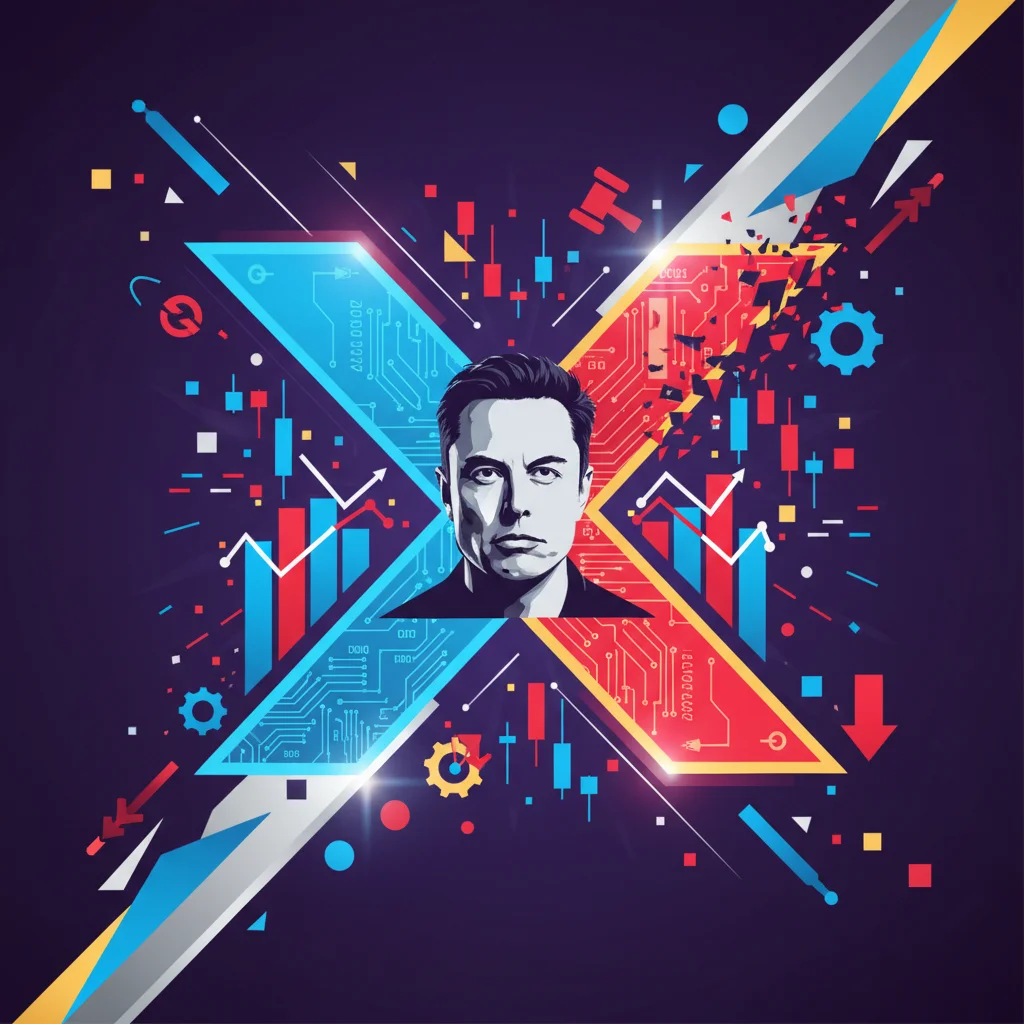
In the high-stakes world where technology, finance, and politics collide, few figures loom as large as Elon Musk. His acquisition of Twitter, rebranded as X, was not merely a business transaction; it was a declaration of intent. Musk envisioned a global “town square,” a bastion of free speech in an increasingly censored digital world. Today, that vision is on a direct collision course with sovereign governments, and the fallout could extend far beyond the realm of social media, sending ripples through the global economy and rattling the foundations of the stock market.
The latest flashpoint comes from the United Kingdom, where the government is publicly urging its communications regulator, Ofcom, to deploy its full arsenal of powers against X. This includes the ultimate corporate sanction: an effective ban of the platform within the country. The move follows a rising tide of criticism against X for its content moderation policies, or perceived lack thereof. Musk, in his characteristic style, has dismissed the outcry as a thinly veiled “excuse for censorship”. This isn’t just a war of words; it’s a fundamental conflict that pits the libertarian ethos of Silicon Valley against the regulatory might of a G7 nation. For investors, business leaders, and anyone involved in finance, the critical question is: what does this mean for the bottom line?
The Regulatory Gauntlet: Understanding the Online Safety Act
To grasp the gravity of the situation, one must understand the legislative teeth behind the UK government’s threat. The power comes from the recently enacted Online Safety Act, a landmark piece of legislation designed to make the UK “the safest place in the world to be online.” As the appointed enforcer, Ofcom has been granted sweeping new powers. According to the official Ofcom framework, the regulator can issue fines of up to £18 million or 10% of a company’s global annual revenue, whichever is higher. For a company the size of X, this could translate into hundreds of millions of dollars.
Crucially, the Act also grants Ofcom the authority to pursue criminal action against senior managers who fail to cooperate and, in the most extreme cases of non-compliance, require internet service providers to block access to a service. This is the “effective ban” the government is encouraging. The battle lines are drawn over how platforms should handle content deemed “legal but harmful,” a notoriously ambiguous category that Musk argues is a slippery slope to politically motivated censorship.
This regulatory framework represents a significant shift in the global digital economy. For decades, tech platforms operated under a relatively light-touch regulatory environment, particularly in the United States. The UK’s approach, similar to the EU’s Digital Services Act (DSA), signals a new era of accountability that has profound implications for the business models of social media giants.
The Avios Economy: How Fintech and Investing are Redefining Loyalty in 2026
The Financial Fallout: A Domino Effect for Tech Investments?
For X, the immediate financial stakes are monumental. The company, which Musk took private for $44 billion, has already faced significant headwinds. Advertising revenue, the lifeblood of the platform, has been volatile as brands grapple with the platform’s content moderation policies and brand safety concerns. A potential ban in a major market like the UK would not only eliminate a key revenue stream but also send a chilling message to advertisers globally. The financial viability of Musk’s “everything app” ambition hinges on user trust and scale; regulatory battles that threaten to splinter its user base are an existential threat.
However, the impact isn’t confined to X. Investors in the broader tech sector should be paying close attention. This situation creates a precedent. If the UK successfully brings a platform like X to heel, who is next? Meta, TikTok, and Google could all face similar pressures. This introduces a new, potent variable into investment analysis: sovereign regulatory risk. The stock market abhors uncertainty, and the prospect of major platforms being fined billions or blocked from entire countries could lead to a sector-wide re-evaluation of tech stock valuations.
This is where the principles of investing and economics intersect. The cost-benefit analysis for these companies is becoming incredibly complex. Do they invest billions in sophisticated, AI-driven content moderation systems that might be accused of bias and censorship? Or do they risk catastrophic fines and market access restrictions? This is a new, significant operational cost that will directly impact profit margins and, consequently, shareholder returns.
From Town Square to “Everything App”: The Fintech Ambition at Risk
Musk’s ultimate vision for X extends far beyond social media. He has repeatedly stated his goal to transform the platform into an “everything app,” a digital Swiss Army knife that integrates communication, content, and commerce. A cornerstone of this strategy is the integration of advanced financial technology (fintech) services, including peer-to-peer payments, savings accounts, and other banking functionalities.
This ambition puts X in direct competition with established players in banking and a new generation of fintech startups. However, the financial services industry is one of the most heavily regulated sectors in the world. To operate, X would need licenses, partnerships with established financial institutions, and the unwavering trust of both regulators and users. A reputation as a platform unwilling or unable to control the flow of harmful content, scams, and financial misinformation is toxic to these ambitions. No reputable banking partner would risk its charter and reputation to partner with a platform engaged in open warfare with its own regulators. A recent report from Reuters highlighted that X has been securing money-transmitter licenses across the U.S., but a major regulatory showdown in the UK or Europe could halt that progress in its tracks.
This regulatory battle could inadvertently cede the future of social commerce and integrated financial technology to competitors who are perceived as more compliant and stable, even if they are less innovative. The dream of a decentralized, free-wheeling platform that also handles your money is crashing against the hard reality of financial regulation.
Beyond the Pitch Deck: 5 Critical Red Flags in the .7 Trillion Private Credit Market
To contextualize the UK’s position, it’s helpful to compare its regulatory approach to that of other major economic blocs. Each has its own philosophy on balancing innovation, free expression, and user safety.
| Region/Legislation | Core Philosophy | Key Powers | Potential Impact on Platforms |
|---|---|---|---|
| United Kingdom (Online Safety Act) | Duty of care; platforms are responsible for protecting users, especially children, from harmful content. | Massive fines (up to 10% of global revenue), criminal liability for executives, and power to block services. | High compliance costs; pressure to actively police “legal but harmful” content; significant business risk. |
| European Union (Digital Services Act – DSA) | Harmonized rules for a safe, transparent digital space; focus on illegal content, transparent advertising, and algorithmic accountability. | Fines up to 6% of global turnover, enhanced scrutiny for “Very Large Online Platforms,” mandatory risk assessments. | Requires significant investment in transparency tools and content moderation infrastructure across the bloc. |
| United States (Section 230) | Platform immunity; providers of “interactive computer services” are not treated as the publisher of third-party content. | Largely shields platforms from liability for user-generated content, encouraging open platforms. | Low direct liability risk, but facing intense political pressure for reform from both sides of the aisle. |
The Path Forward: A Precarious Balance
The confrontation between Elon Musk’s X and the UK government is more than just a headline-grabbing feud. It is a microcosm of a larger global struggle to define the rules of the 21st-century digital public square. The outcome will have lasting consequences for the future of free expression, the business models of the world’s most powerful technology companies, and the stability of tech-heavy investment portfolios.
For business leaders and finance professionals, this is a moment to reassess risk. The political and regulatory landscape is now as critical to a tech company’s success as its product roadmap or market strategy. The potential for a single piece of legislation to wipe billions off a company’s valuation or cut it off from a major market is real and growing.
Whether Musk’s defiant stance is a principled defense of free speech or a reckless gamble remains to be seen. What is certain is that the world is watching. The precedents set in the coming months will shape the digital economy, redefine the boundaries of corporate responsibility, and influence trading decisions on the stock market for years to come. The era of self-regulation is over; the age of the sovereign showdown has begun.