The Reassuring Hum of the Economy: What Snow Ploughs Can Teach Us About Financial Stability
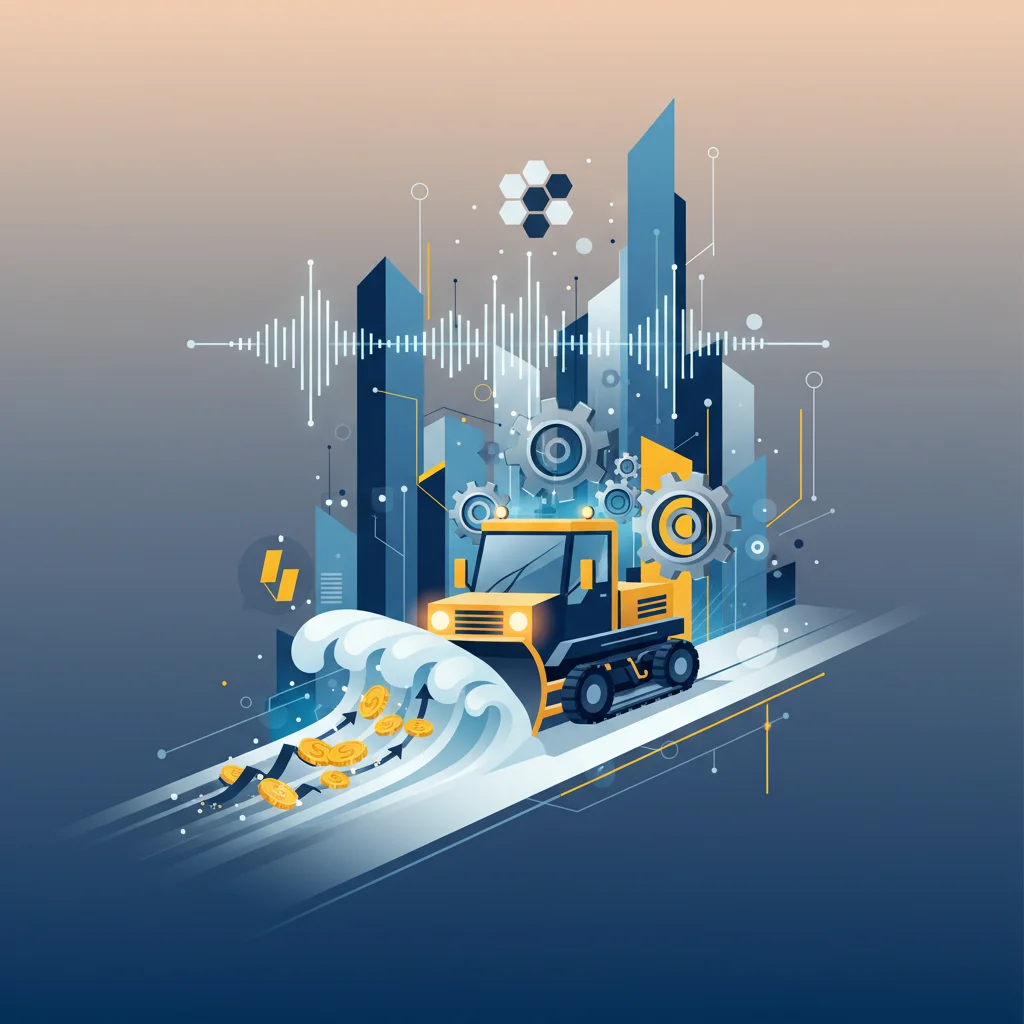
In the quiet, pre-dawn hours of a city blanketed by a heavy winter storm, a distinct sound cuts through the silence: the low, grinding rumble of a snow plough. For many, as noted in a succinct letter to the Financial Times by Gillian Fenwick of Toronto, this is a “reassuring sound.” It’s the sound of order being restored, of pathways being cleared, and of society preparing to function despite the disruption. It signifies that a powerful, coordinated system is at work, ensuring that commerce and daily life can soon resume.
This evocative image serves as a powerful metaphor for the global financial system. To the average investor or business leader, the daily fluctuations of the stock market can feel like a chaotic, unpredictable blizzard. News headlines flash, tickers scroll with dizzying speed, and market sentiment can shift in an instant. Yet, beneath this surface-level turbulence, a similar set of powerful, often unseen “snow ploughs” are constantly working to clear the way, manage risk, and maintain the fundamental infrastructure of our economy.
These are the mechanisms of central banking, the frameworks of financial regulation, and the innovations in financial technology that prevent market squalls from turning into catastrophic economic ice ages. Understanding these systems is not just an academic exercise; it is crucial for anyone involved in investing, finance, or business. It provides the context and confidence needed to navigate volatility and build long-term value, recognizing that the reassuring hum of a functioning market is no accident.
The Economic Blizzard: Understanding Systemic Risk
Before we can appreciate the ploughs, we must first understand the storm. In financial terms, a blizzard isn’t just a bad day of trading; it’s a systemic crisis. This is a situation where the failure of one or a few institutions triggers a cascading chain reaction across the entire financial system. The 2008 Global Financial Crisis was a textbook example—a blizzard that started in the U.S. subprime mortgage market but quickly engulfed the entire world, freezing credit markets and burying economies in a deep recession.
The danger lies in the interconnectedness of modern finance. Banks lend to each other, investment funds rely on market liquidity, and global supply chains depend on a seamless flow of capital. When one major artery gets blocked, the entire system can seize up. The International Monetary Fund (IMF) has estimated that the cumulative output loss from the 2008 crisis, relative to the pre-crisis trend, was a staggering “25 percent of world GDP” (source). This is the catastrophic potential that our economic ploughs are designed to prevent.
The Ghost in the Machine: Are Modern Trading Apps Just 1920s Bucket Shops in Disguise?
The Heavy Machinery: Central Banks and Fiscal Policy
When a true economic blizzard hits, the first and most powerful responders are the central banks and national governments. They operate the heavy machinery designed to clear the most significant blockages and restore mobility to the market.
Central Banks, like the U.S. Federal Reserve or the European Central Bank, act as the primary ploughs and salt spreaders. Their primary tools include:
- Monetary Policy: By raising or lowering interest rates, they can either slow down a dangerously overheating economy (like setting a lower speed limit on icy roads) or encourage borrowing and spending to thaw a frozen one.
- Quantitative Easing (QE): During severe crises, central banks can purchase government bonds and other financial assets to inject massive amounts of liquidity directly into the financial system. This is the equivalent of deploying an entire fleet of ploughs to clear every major highway simultaneously, ensuring that capital can move freely.
- Lender of Last Resort: They provide emergency loans to solvent but illiquid banks, preventing bank runs and panics that could otherwise cause a systemic collapse.
Government Fiscal Policy is the other piece of heavy equipment. While central banks manage the money supply, governments can use direct spending and taxation to influence the economy. During the COVID-19 pandemic, governments worldwide deployed massive fiscal stimulus packages, such as the CARES Act in the United States. These measures, which included direct payments to citizens and loans to businesses, were akin to an emergency airlift of supplies, bypassing the blocked roads entirely to support households and companies directly.
The Rules of the Road: Regulation and Financial Oversight
Clearing the snow is only half the battle. To prevent future accidents, you need rules of the road—speed limits, mandatory snow tires, and robust vehicle inspections. In the financial world, this is the role of regulatory oversight.
In the wake of the 2008 crisis, regulators implemented sweeping new rules designed to make the financial system more resilient. The Dodd-Frank Act in the U.S. and the Basel III international accords were landmark pieces of legislation that fundamentally reshaped the landscape of global banking. These regulations act as preventative safety measures.
Below is a simplified comparison of key regulatory focuses before and after the 2008 crisis, illustrating the shift towards a more robust framework.
| Regulatory Area | Pre-2008 Approach (Simplified) | Post-2008 (Dodd-Frank/Basel III) Approach |
|---|---|---|
| Bank Capital Requirements | Lower capital reserves required, allowing for higher leverage. | Significantly higher and better-quality capital requirements to absorb potential losses. |
| Systemic Risk Oversight | Limited focus on the interconnectedness of large “too big to fail” institutions. | Creation of oversight councils (e.g., FSOC) to monitor and regulate systemically important financial institutions (SIFIs). |
| Derivatives Trading | Largely unregulated, traded “over-the-counter” (OTC) with little transparency. | Mandatory clearing of standardized derivatives through central clearinghouses, increasing transparency and reducing counterparty risk. |
| Consumer Protection | Fragmented oversight, leading to predatory lending practices in the mortgage market. | Establishment of dedicated agencies like the Consumer Financial Protection Bureau (CFPB) to enforce clearer rules. |
These rules, while sometimes criticized for stifling innovation or increasing compliance costs, are the guardrails and safety systems that help the economy weather storms more effectively. According to a study from the Yale School of Management, post-crisis regulations have made the banking system substantially safer, with major banks holding much more loss-absorbing capital than before the crisis (source).
The Unseen Infrastructure: Fintech, Blockchain, and the Future of Stability
Beyond the headline-grabbing actions of central banks, there is a vast and complex infrastructure—the “plumbing” of the financial system—that works silently in the background. This includes payment systems, clearinghouses, and settlement networks that process trillions of dollars in transactions every day. They are the meticulously designed and maintained road grid that everything else runs on.
Now, this infrastructure is undergoing a radical transformation, thanks to fintech and technologies like blockchain. These innovations represent a new fleet of “ploughs”—smaller, faster, more transparent, and potentially autonomous.
- Financial Technology (Fintech): Digital payment platforms, algorithmic trading systems, and AI-powered risk assessment tools are dramatically increasing the efficiency of the financial system. They can clear smaller “snowdrifts”—like transaction friction and information asymmetry—before they become major problems.
- Blockchain and Distributed Ledger Technology (DLT): This technology offers the potential for a paradigm shift. By creating a decentralized, transparent, and immutable ledger for transactions, blockchain could eliminate the need for many traditional intermediaries. In theory, this could lead to near-instantaneous settlement of trades, dramatically reducing counterparty risk—the risk that the other party in a deal will default before it is settled.
While still in its early stages, the integration of this new financial technology could make the entire system more resilient. However, it also introduces new risks. The speed of algorithmic trading can cause “flash crashes,” and the regulatory framework for decentralized finance (DeFi) is still being built. These new tools need to be rigorously tested to ensure they can withstand a true economic blizzard.
The Great Myth of the Maverick CEO: Are Capitalists Innovators or Just Accumulators?
An Investor’s Guide to a Ploughed Market
So, what does this mean for the average investor or business leader? Recognizing the existence of these powerful stabilizing forces should not lead to complacency, but to a more informed and resilient strategy.
- Trust in the System, Not the Day: The market will always have volatile days, weeks, or even years. However, a long-term investment strategy is built on the confidence that the underlying economic infrastructure is robust and designed to recover. The ploughs will eventually clear the roads.
- Look for the Hum: Pay attention to the language and actions of central banks and regulators. Their policies provide crucial signals about the health of the broader economy and the direction of the market.
- Diversify Your Fleet: Just as a city uses different types of ploughs for highways and side streets, a smart investor uses a diversified portfolio. Some assets perform better during periods of stability, while others (like government bonds or gold) can provide shelter during a storm.
Ultimately, the “reassuring sound” is one of competence and control in the face of chaos. It’s the knowledge that while storms are inevitable, the systems in place are strong enough to manage them. For those navigating the complexities of the global economy, listening for that hum—the quiet, steady work of stabilization—is the key to looking past the short-term forecast and focusing on the long-term journey.