Beyond the Balance Sheet: What Photography of “Home” Teaches Us About the Global Economy and Investing
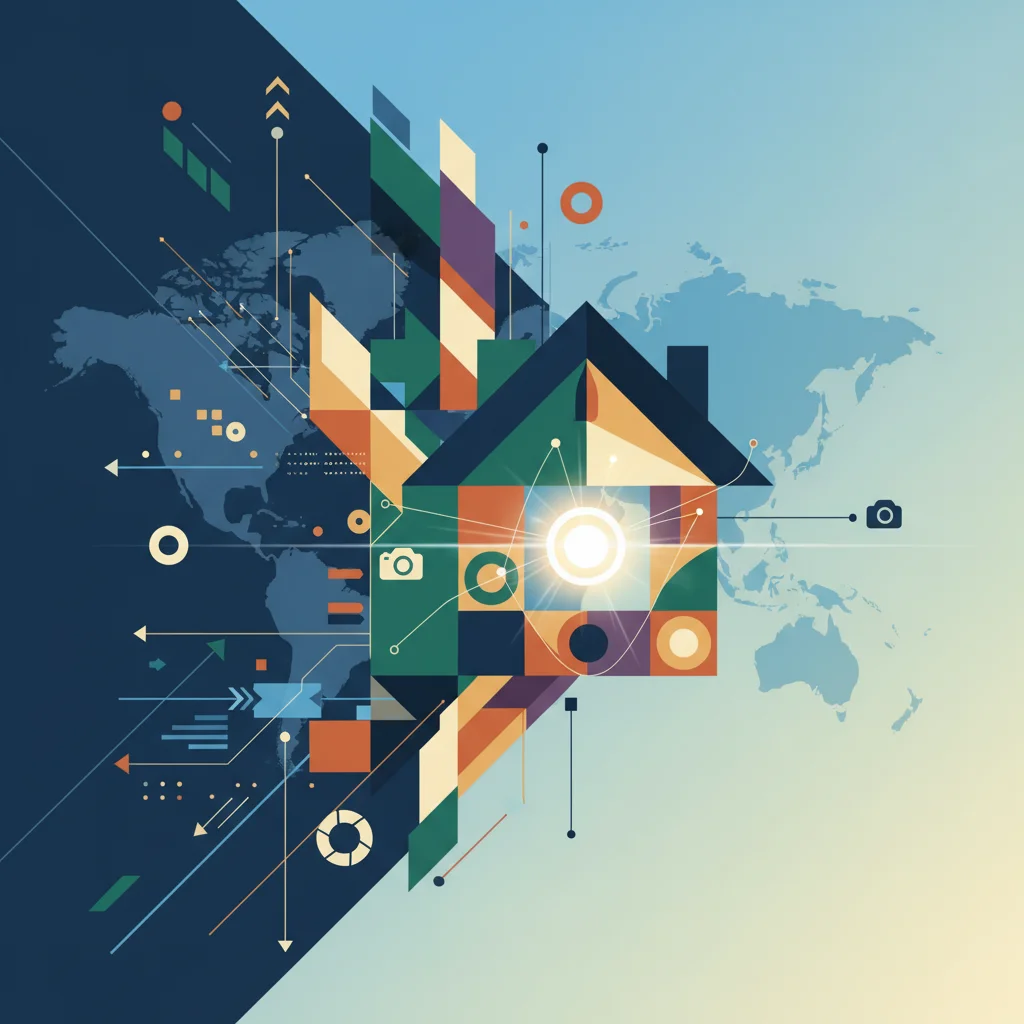
The concept of “home” is universally understood, yet deeply personal. It’s a sanctuary, a symbol of stability, and the center of our lives. But in the world of finance and economics, “home” is something more: it is the single largest asset class on the planet, the bedrock of personal wealth, and a powerful barometer for the health of the global economy. A recent photography special from the Financial Times powerfully illustrates this duality. By juxtaposing images of Elvis Presley’s Graceland with bombed-out apartments in Ukraine and refugee camps in Jordan, the collection forces us to look beyond the architecture and see the profound financial narratives embedded within these spaces.
For investors, business leaders, and finance professionals, these images are more than just art; they are a raw, visual representation of economic principles in action. They depict asset appreciation, catastrophic loss, geopolitical risk, and the desperate need for financial innovation. By exploring the multifaceted nature of “home” through this artistic lens, we can uncover crucial insights into market dynamics, risk management, and the future of financial technology.
Home as the Ultimate Asset: Stability, Wealth, and Economic Foundation
The images of established, iconic homes like Graceland represent the ideal of property ownership. They are tangible symbols of security, legacy, and, most importantly, wealth accumulation. Real estate is the foundation upon which countless fortunes are built. It is often the largest component of a household’s net worth and serves as a primary vehicle for intergenerational wealth transfer. On a macroeconomic scale, the housing market is a critical pillar of the economy. Its performance influences consumer spending, construction activity, and the stability of the entire banking sector.
The global real estate market’s value is staggering, estimated to be worth approximately $379.7 trillion in 2022, dwarfing the global stock and bond markets combined (source). This immense scale underscores why fluctuations in housing have such far-reaching consequences. A booming housing market can fuel economic growth, while a downturn, as we saw in 2008, can trigger a global financial crisis. For the average investor, understanding the dynamics of real estate is as crucial as understanding the fluctuations of the stock market. While stocks offer liquidity and diversification, property provides a physical asset that can generate rental income and offer a hedge against inflation.
This traditional view of real estate investing—buy, hold, and leverage—is the financial story behind every stable, well-maintained home. It’s a strategy built on presumptions of political stability, the rule of law, and predictable economic cycles. The photographs of serene and established homes serve as a powerful reminder of the conditions necessary for wealth creation and the immense value locked within the concept of a secure home.
London's New Gridlock: Inside the High-Stakes Robotaxi Race Between US and China
The Economic Cataclysm of Displacement: When an Asset Becomes a Liability
In stark contrast, the photographs of bombed apartments in Ukraine and sprawling refugee camps tell a different, more brutal economic story. They illustrate the concept of catastrophic risk and the instantaneous destruction of wealth. When a home is destroyed or abandoned due to conflict, it represents a complete and often unrecoverable loss of a family’s primary asset. This is not merely a humanitarian tragedy; it is an economic cataclysm with devastating long-term consequences.
The economic impact of such displacement is multifaceted:
- Destruction of Capital: The physical loss of homes and infrastructure erases trillions in value from a nation’s balance sheet. The Kyiv School of Economics estimated that as of September 2023, the total damage to Ukraine’s infrastructure from the war reached nearly $151.2 billion (source), with housing being a significant component.
- Disruption of Economic Activity: Displacement halts local commerce, shatters supply chains, and leads to mass unemployment. The tax base evaporates, crippling the government’s ability to provide essential services.
- Generational Wealth Annihilation: For families who have spent decades paying off a mortgage, forced displacement wipes out their life’s savings and the financial legacy they hoped to pass on to their children.
For those in the world of finance and trading, these images are a visceral lesson in geopolitical risk. They demonstrate how quickly political instability can override any traditional market analysis. A company’s strong earnings report or a country’s positive GDP forecast becomes meaningless when its physical assets are at risk of being destroyed. This is why sophisticated investors are increasingly incorporating geopolitical risk analysis into their models, understanding that the stability underpinning a “home” is a prerequisite for any successful investment.
Rebuilding with Innovation: The Role of FinTech and Blockchain
Where there is destruction, there is also the need to rebuild. The aftermath of conflict and displacement creates immense challenges that traditional financial systems are often ill-equipped to handle. This is where modern financial technology, or fintech, can play a transformative role. The future of securing and financing homes, especially in vulnerable regions, lies in innovation.
Consider the challenges: refugees often lack identification and cannot access traditional banking services. Property records can be destroyed, leading to disputes over ownership for decades. Remittances from abroad are slow and expensive. This is a fertile ground for technological solutions.
One of the most promising technologies is blockchain. By creating a decentralized, immutable ledger for property titles, blockchain can secure land ownership rights even if central government records are lost. This could prevent land grabs and provide the legal certainty needed for individuals and investors to rebuild. In a post-conflict scenario, a secure, digital property registry could accelerate recovery by years, unlocking capital and enabling a functioning mortgage market to re-emerge.
The following table compares traditional financial approaches with emerging fintech solutions in the context of housing and displacement:
| Challenge | Traditional Approach | Fintech & Blockchain Solution |
|---|---|---|
| Identity Verification | Requires physical government-issued documents, often lost during displacement. | Digital identity solutions using biometrics, stored on a blockchain, accessible anywhere. |
| Cross-Border Payments | Slow wire transfers with high fees (e.g., SWIFT, Western Union). | Near-instant, low-cost remittances using stablecoins or other digital currencies. |
| Property Titles | Centralized, paper-based land registries vulnerable to destruction or corruption. | Decentralized, immutable property ledgers on a blockchain, ensuring secure ownership records. |
| Access to Credit | Requires extensive credit history and physical bank presence, impossible for most refugees. | Micro-lending platforms using alternative data (e.g., mobile phone usage) for credit scoring. |
These innovations are not theoretical. Organizations are already using fintech to deliver aid more efficiently and provide financial services to the unbanked. As these technologies mature, they will become integral to the economics of recovery, offering new models for investing in rebuilding efforts and ensuring that the concept of “home” can be re-established on a more secure and transparent foundation.
The Cola Wars Reignited: A Financial Deep Dive into Ambani's Challenge to Coke and Pepsi
A New Perspective on Economic Realities
The journey from Graceland to a Ukrainian apartment block is a journey through the core principles of modern economics and finance. The FT’s photography special is a powerful catalyst, prompting us to consider the tangible, human realities that underpin our financial systems. “Home” is simultaneously an emotional sanctuary and a hard asset, a source of stability and a subject of immense risk.
For the modern investor, the lesson is clear: a holistic understanding of the world is essential. Analyzing the stock market is not enough. One must also understand the geopolitical forces that can destabilize nations, the social fabric that holds communities together, and the technological innovations that will shape our future. By looking at the world through a wider lens—one that encompasses both the art of humanity and the science of finance—we can make more informed, resilient, and ultimately more successful decisions in a complex and ever-changing global economy.
Beyond the Generational War: Why Your Birth Year is a Terrible Financial Indicator