The Silent Debt Trap: Why Martin Lewis Calls Overdrafts the UK’s Most Dangerous Debt
The Hidden Peril in Your Current Account
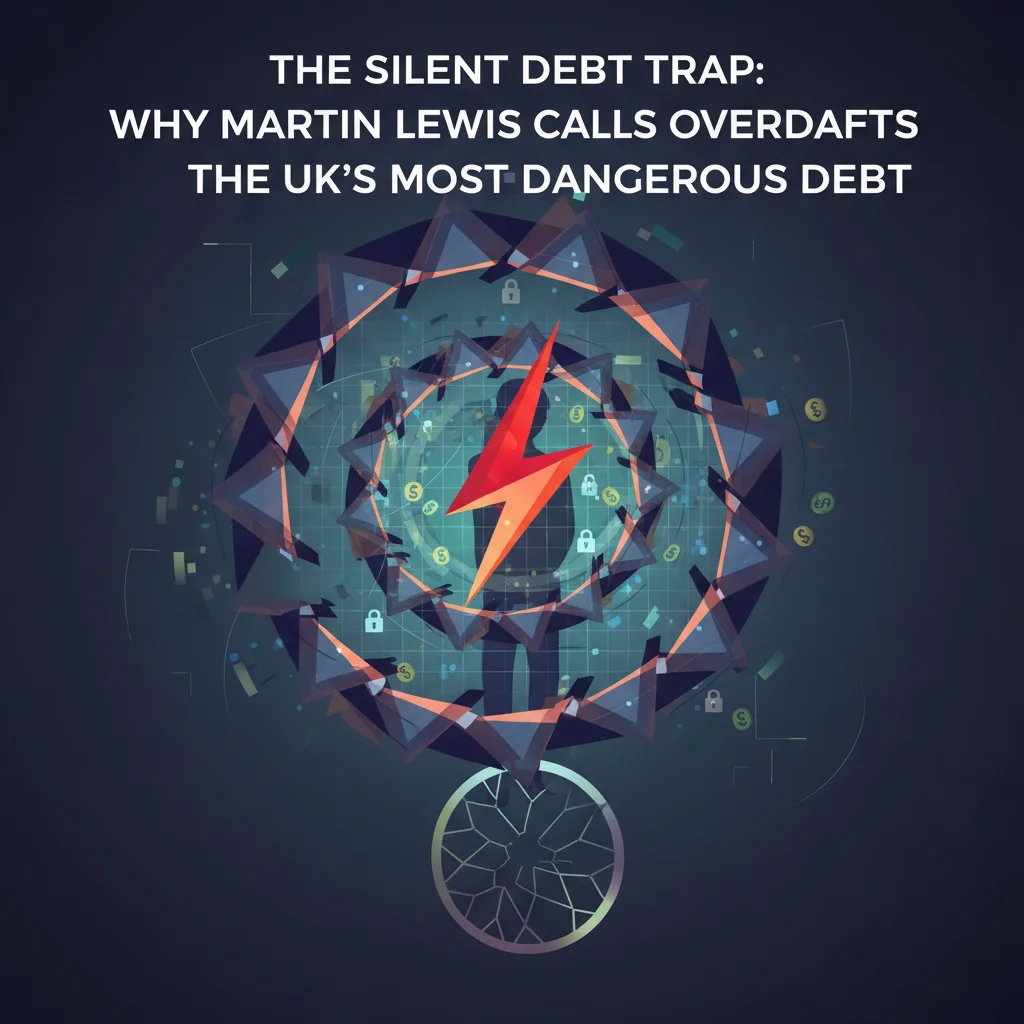
For millions, an overdraft is a financial safety net—a convenient buffer that kicks in when a direct debit lands a day before payday. It feels less like a loan and more like a minor extension of your own money. However, according to renowned consumer finance expert Martin Lewis, this seemingly benign banking feature is, in fact, “the most dangerous form of mainstream debt in the UK.” This stark warning, delivered with his characteristic urgency, forces us to look beyond the convenience and confront the underlying risks that make overdrafts a uniquely treacherous financial product.
While high-interest credit cards and payday loans often dominate headlines about consumer debt, the overdraft operates with a dangerous subtlety. Its integration into our daily banking makes it almost invisible, lulling users into a cycle of dependency that can be incredibly difficult, and expensive, to break. In this comprehensive analysis, we will dissect Martin Lewis’s claim, explore the intricate economics of overdrafts versus other forms of credit, examine the role of modern financial technology in both exacerbating and solving the problem, and provide actionable strategies for individuals, investors, and business leaders navigating this complex landscape.
The Psychology of a “Stealth Debt”
The core of Martin Lewis’s argument, as he explained in a recent BBC segment, lies in the psychology of how we perceive overdrafts. When you use a credit card, there is a distinct, physical or digital action. You decide to make a purchase on credit, you use the card, and you receive a separate bill at the end of the month. This process creates a clear mental separation between your money and the lender’s money.
Overdrafts erase this distinction. The debt is incurred within your primary current account, the same place your salary is paid. When you look at your balance, an available overdraft of £500 might make a balance of -£200 feel less alarming than it should. It’s a debt that doesn’t require a separate application or a conscious decision to borrow for each transaction; it simply happens. This seamless integration makes it a “stealth debt,” one that slowly grows without the same psychological warning bells that other forms of borrowing trigger. This is the primary reason it can become a permanent fixture in a person’s financial life, rather than a temporary solution.
FTSE 100 Shatters 10,000: A New Era for UK Markets or a Precarious Peak?
The Brutal Economics: Overdrafts vs. Credit Cards
Before 2020, comparing the cost of overdrafts was a notoriously complex affair, involving a confusing mix of daily fees, monthly charges, and interest rates. Regulatory changes by the Financial Conduct Authority (FCA) aimed to simplify this, mandating that all banks charge for overdrafts with a single annual percentage rate (APR). While this increased transparency, it also revealed a shocking truth: the standard APR for an arranged overdraft at most major UK banks is now around 40%. (source)
To put that figure in context, it’s often double the interest rate of a standard credit card. How do these two common debt products stack up against each other? The following table breaks down their key characteristics:
| Feature | Arranged Bank Overdraft | Standard Credit Card |
|---|---|---|
| Typical APR | 39.9% (Can vary but this is a common rate) | 21-25% (Purchase rate, can be higher for cash advances) |
| How Interest is Charged | Immediately, on a daily basis for the overdrawn amount. | Typically after a grace period (up to 56 days) if the balance is not paid in full. |
| Minimum Repayments | No formal minimum repayment structure. The debt is reduced only when the account returns to credit. | A structured minimum monthly payment is required (e.g., 1% of balance + interest). |
| Psychological Barrier | Low. Feels like an extension of your own funds. | Higher. A conscious decision to borrow on a separate account. |
| Credit Score Impact | Heavy and consistent use can negatively impact your credit score, showing reliance on short-term debt. | Can positively impact score if managed well. High utilization (over 30% of limit) can have a negative effect. |
The lack of a structured repayment plan is a critical flaw. With a credit card, the minimum payment, however small, forces you to acknowledge and address the debt each month. An overdraft has no such mechanism. You can theoretically remain overdrawn for years, servicing the high interest costs without ever reducing the principal debt, as long as you stay within your arranged limit. This is the mechanism that creates the debt trap.
The Fintech Paradox: Is Technology Helping or Hurting?
The rise of digital banking and financial technology (fintech) has fundamentally reshaped our relationship with money. On one hand, fintech innovations offer powerful tools to combat overdraft dependency. Budgeting apps like Yolt or Emma can provide real-time spending analysis and predict when you might be at risk of going overdrawn. Challenger banks have also experimented with different models; some offer small, fee-free overdraft buffers or send instant notifications the moment you dip into the red.
On the other hand, the very seamlessness of digital banking can make it easier to slip into an overdraft. With frictionless payments and “tap-to-pay” culture, it’s easy to lose track of a balance that is updated in real-time. The “out of sight, out of mind” nature of a digital balance is less tangible than a shrinking pile of cash in a wallet. Therefore, while fintech provides the cure, it may also be amplifying the disease by making spending and borrowing an invisible, effortless process. The responsibility ultimately falls on the consumer to leverage these new tools for financial discipline.
The Price of Noise: Why Incomprehensible Politics is a Hidden Tax on Your Investments
Navigating the Escape Route: A Strategy to Clear Overdraft Debt
For those caught in the overdraft cycle, escape can seem daunting, but it is achievable with a clear strategy. The goal is to move the high-cost debt to a more manageable, lower-cost alternative and break the cycle of reliance.
- Assess and Acknowledge: The first step is to treat your overdraft like any other loan. Acknowledge the full amount and the punishing interest rate you are paying. Use your banking app to track exactly how much you paid in interest and fees over the last year; the total will likely be a powerful motivator.
- Budget for a Surplus: You cannot clear a debt without freeing up cash. Create a detailed budget to identify areas where you can cut back. The goal is to end each month with a surplus, even a small one, that can be used to chip away at the negative balance.
- Consider a 0% Money Transfer: One of the most effective tools is a 0% money transfer credit card. This allows you to request a cash transfer from the card directly into your current account, clearing the overdraft instantly. You then owe the money to the credit card company at 0% interest for a promotional period (typically 12-24 months). This strategy buys you valuable, interest-free time to pay off the debt, but be aware there is usually a one-off transfer fee of 3-4%.
- Explore Low-Rate Personal Loans: For larger overdrafts, a personal loan may offer a lower interest rate (typically 5-10%) and, crucially, a fixed monthly repayment schedule. This enforces the discipline needed to clear the debt over a set term.
- Talk to Your Bank: As reported by debt charities like StepChange, banks are now more obligated to help customers in persistent debt. (source) You can speak to them about a structured payment plan or request a reduction in your overdraft limit over time to help wean yourself off it.
The Macro View for Investors and Business Leaders
The prevalence of overdraft debt is more than a personal finance issue; it’s a key indicator for those monitoring the health of the UK economy. For investors, particularly those focused on the banking and retail sectors, high levels of consumer reliance on overdrafts can signal financial fragility. It represents a risk of future defaults for banks and suggests that consumer spending power, a key driver of the stock market and economy, is being propped up by high-cost debt rather than rising incomes.
For business leaders, the implications are related to workforce productivity and wellness. An employee struggling with persistent debt is likely to be stressed and less focused, impacting their performance. Forward-thinking companies are increasingly recognizing the importance of financial wellness programs, offering everything from basic budgeting workshops to payroll-linked savings tools. Understanding that an employee’s financial health is linked to the company’s health is a crucial aspect of modern corporate governance.
The Dunning-Kruger Effect in Your Portfolio: Why What You Don't Know Can Cost You Everything
Conclusion: Heeding the Warning
Martin Lewis’s declaration of overdrafts as the UK’s most dangerous debt is not hyperbole; it is a carefully considered warning based on the unique and insidious nature of the product. Its psychological subtlety, combined with punishingly high interest rates and a lack of structured repayments, creates a perfect storm for a debt trap that can last for decades. As the worlds of banking and financial technology continue to evolve, the onus is on consumers to remain vigilant, on regulators to ensure fairness, and on the finance industry to innovate responsibly.
Ignoring a persistent overdraft is akin to ignoring a slow leak in the foundation of your financial house. It may not cause an immediate collapse, but over time, the damage can be catastrophic. By understanding the danger, utilizing modern tools, and implementing a clear strategy for repayment, you can turn this hidden peril back into what it was always meant to be: a rarely used, short-term safety net.