The Investor’s Crossword: Decoding the Puzzles of the Modern Economy
The Ultimate Mental Workout: Why Top Investors Think Like Crossword Solvers
Every morning, millions of people begin their day with a familiar ritual: a cup of coffee and a crossword puzzle. For many, it’s a simple pleasure, a way to sharpen the mind before the day’s demands. But for those navigating the intricate world of finance, the humble grid of black and white squares holds a deeper meaning. The daily Financial Times crossword, in particular, is more than just a pastime; it’s a perfect metaphor for the complex, interconnected, and often cryptic puzzle of the global economy.
Successful investing isn’t just about numbers and charts; it’s about pattern recognition, lateral thinking, and the ability to connect seemingly disparate pieces of information to reveal a coherent picture. These are precisely the skills a seasoned cruciverbalist hones with every clue they solve. In this analysis, we’ll explore how adopting the mindset of a master puzzle solver can provide a powerful framework for understanding the stock market, evaluating emerging technologies like fintech and blockchain, and ultimately, making smarter financial decisions.
The Grid as the Global Economy: An Interconnected System
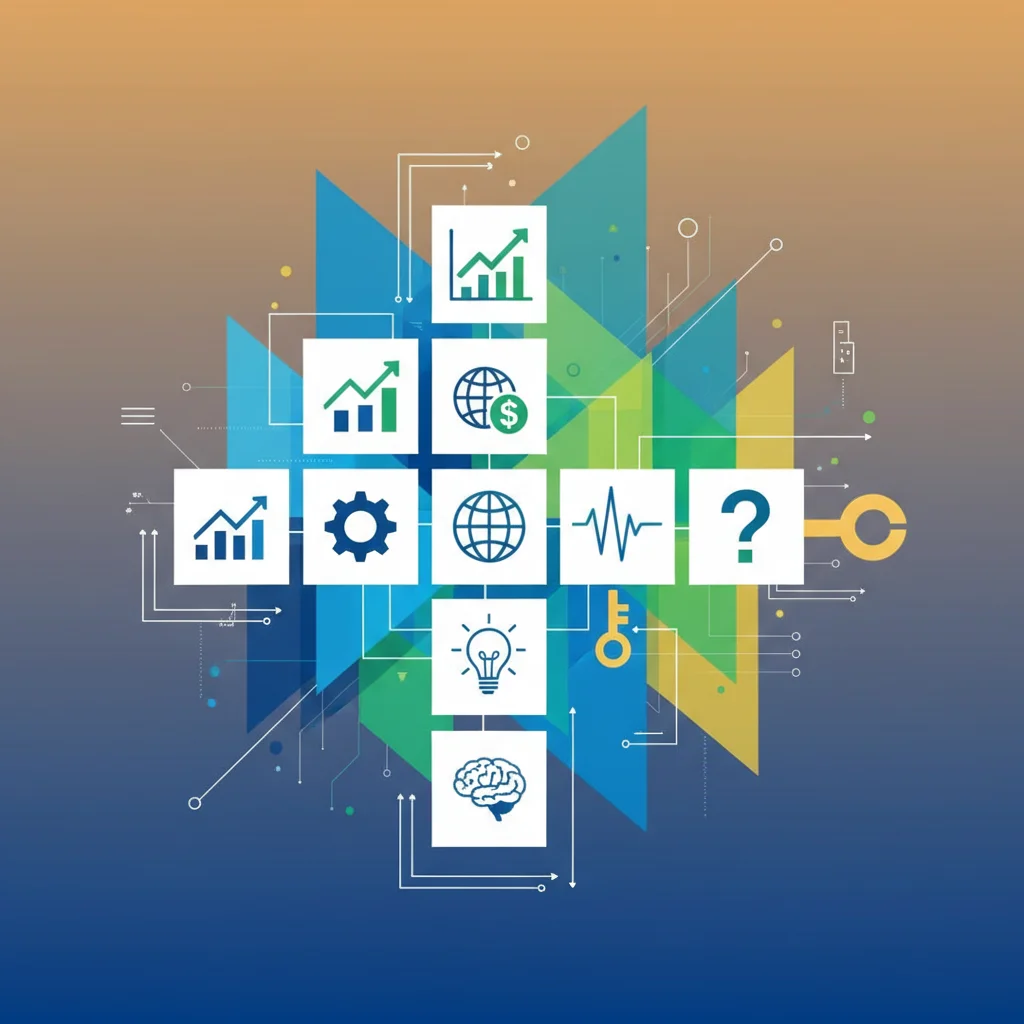
A crossword puzzle is not a collection of independent questions; it is a system. The answer to 1-Across directly influences the possibilities for 2-Down, 3-Down, and so on. A single incorrect entry can cause a cascade of errors, making entire sections of the puzzle unsolvable. This intricate dependency is a mirror image of our modern global economy.
Consider the relationship between central banking policy and the broader market. When a central bank, like the U.S. Federal Reserve, adjusts interest rates, it’s not an isolated event. This single “answer” sends ripples across the entire financial grid:
- Equity Markets: Higher rates can make borrowing more expensive for companies, potentially squeezing profit margins and impacting the stock market.
- Bond Markets: Existing bonds with lower yields become less attractive, affecting their market price.
- Currency Exchange: A rate hike can strengthen a nation’s currency, impacting international trade and the profitability of multinational corporations.
- Consumer Behavior: The cost of mortgages and loans increases, influencing spending and the housing market.
Just as a crossword solver must think several steps ahead, a savvy investor understands that no piece of financial news exists in a vacuum. A geopolitical event in one corner of the world can affect commodity prices globally, a breakthrough in financial technology can disrupt traditional banking, and a shift in consumer sentiment can redefine entire industries. The world’s economies are more interlinked than ever, with supply chains, capital flows, and policy decisions creating a complex web of cause and effect. A 2022 report by the International Monetary Fund highlighted how shocks in major economies, such as the US or China, have increasingly significant spillovers for emerging markets (source). To succeed, one must see the entire grid, not just the single clue in front of them.
Liquid Gold: How Tunisia's Olive Oil Boom is Reshaping its Economy and Global Markets
Deciphering the Clues: Fundamental vs. Technical Analysis
In the world of crosswords, clues come in two main flavors: straightforward definitions and cryptic wordplay. This duality finds a parallel in the two primary schools of thought in market analysis: fundamental and technical.
Fundamental Analysis is the “Straightforward Clue.” It involves examining the intrinsic value of an asset. An analyst using this approach looks at the “definition” of a company: its revenue, earnings, debt levels, management quality, and competitive landscape. They are trying to solve the clue, “What is this company actually worth?” This requires deep research into economic reports, industry trends, and corporate financial statements. It’s a long-term approach, based on the belief that the market will eventually recognize an asset’s true value, much like a straightforward clue has one correct, logical answer.
Technical Analysis is the “Cryptic Clue.” It doesn’t concern itself with a company’s balance sheet. Instead, it focuses on the puzzle of the market itself: stock charts, trading volumes, and price patterns. A technical analyst looks for anagrams, hidden meanings, and historical repetitions in market behavior to predict future movements. They believe that all the necessary information is already reflected in the price. This approach is more focused on market psychology and short-to-medium-term trading opportunities.
The most brilliant investors, like the most skilled crossword solvers, don’t limit themselves to one method. They understand that both are necessary. Fundamental analysis tells you what to buy, while technical analysis can help tell you when to buy. Ignoring one for the other is like trying to solve a cryptic crossword using only a dictionary—you have the pieces, but you’re missing the crucial context of the wordplay.
Below is a table comparing the shared traits of elite crossword solvers and strategic investors, illustrating the deep cognitive parallels between these two disciplines.
| Cognitive Trait | Application in Crossword Solving | Application in Financial Markets |
|---|---|---|
| Pattern Recognition | Identifying a specific clue-setter’s style or common wordplay tricks (e.g., anagrams, reversals). | Recognizing historical market cycles, chart patterns in trading, or recurring economic indicators. |
| Systemic Thinking | Understanding how filling in one word creates constraints and possibilities for intersecting words. | Analyzing how a change in interest rates (one “word”) will affect banking, technology, and consumer sectors (intersecting “words”). |
| Patience & Persistence | Sticking with a difficult clue, trying different approaches, and not giving up on the entire puzzle. | Adhering to a long-term investing strategy through market volatility, avoiding panic selling. |
| Attention to Detail | Noticing the subtle nuances in a cryptic clue, such as punctuation or a single letter that changes the meaning. | Scrutinizing the fine print in an earnings report or identifying subtle shifts in a company’s guidance. |
The Rise of Cryptic Clues: Navigating Fintech and Blockchain
If traditional stocks and bonds are the straightforward clues of the financial world, then emerging sectors like financial technology (fintech) and blockchain are the most esoteric cryptic clues. They don’t conform to old rules and require a new way of thinking. Concepts like Decentralized Finance (DeFi), non-fungible tokens (NFTs), and distributed ledger technology can seem like an entirely different language to the uninitiated.
Trying to evaluate a DeFi protocol using the same metrics as a traditional bank is a fool’s errand. It requires understanding new concepts like smart contracts, liquidity pools, and governance tokens. This is the ultimate test of a financial puzzle solver: the ability to learn a new set of rules and apply them to an unfamiliar grid. The global adoption of these technologies is no longer a niche interest; a recent study projected the global fintech market to reach nearly $700 billion by 2030, demonstrating its massive economic footprint (source).
Solving these “cryptic” clues requires intellectual curiosity and a willingness to look beyond conventional wisdom. Investors who took the time to understand the underlying technology of blockchain in its early days were better positioned to identify both the opportunities and the immense risks associated with the nascent crypto market.
The Sanctions Paradox: How Russian Elites are Paying Double for a Taste of Western Luxury
From Clues to Capital: Building a Resilient Portfolio
So, how do we translate this puzzle-solving mindset into a tangible investment strategy? It comes down to building a portfolio that is as robust and well-structured as a completed crossword grid.
1. Diversification is Your Grid Structure: Don’t put all your capital into solving one corner of the puzzle. A well-diversified portfolio spreads investments across different asset classes (stocks, bonds, real estate), geographies, and industries. If one section (e.g., the technology sector) faces a downturn, your other investments can provide stability, preventing your entire grid from collapsing due to one wrong answer.
2. Start with the “Anchor” Clues: In a tough crossword, you often start with the easiest, most obvious clues to get a foothold. In investing, these are your blue-chip stocks, index funds, and government bonds. These stable, reliable assets form the foundation of your portfolio, providing a framework from which you can tackle the riskier, more complex “clues.” A study from the American Association of Individual Investors found that portfolios with a disciplined asset allocation strategy consistently outperform those that are actively and erratically managed (source).
3. Re-evaluate and Erase: No one solves a difficult crossword without a few errors. The best solvers are willing to erase an answer that isn’t working. Similarly, investors must be willing to periodically review their portfolio and cut losses on investments that are no longer aligned with their thesis. Holding onto a losing position out of pride or stubbornness is a surefire way to fail.
The Walls Are Closing In: How a New Global Crypto Tax Crackdown Will Change Everything for Investors
Conclusion: The Never-Ending Puzzle
The global financial market is the most complex, high-stakes crossword ever devised. It has millions of players, the clues are written in the language of economics and human psychology, and the grid is constantly changing. Approaching it with the mindset of a dedicated puzzle solver—with curiosity, discipline, a respect for complexity, and a holistic perspective—can transform an intimidating challenge into an engaging intellectual pursuit.
It’s not about finding a magic formula or a single “correct” answer. It’s about embracing the process of inquiry, learning from your mistakes, and finding satisfaction in slowly but surely filling in the grid, one well-reasoned decision at a time. The next time you sit down with a puzzle, remember that the skills you are honing are the very same ones that can help you navigate the intricate and rewarding world of finance.