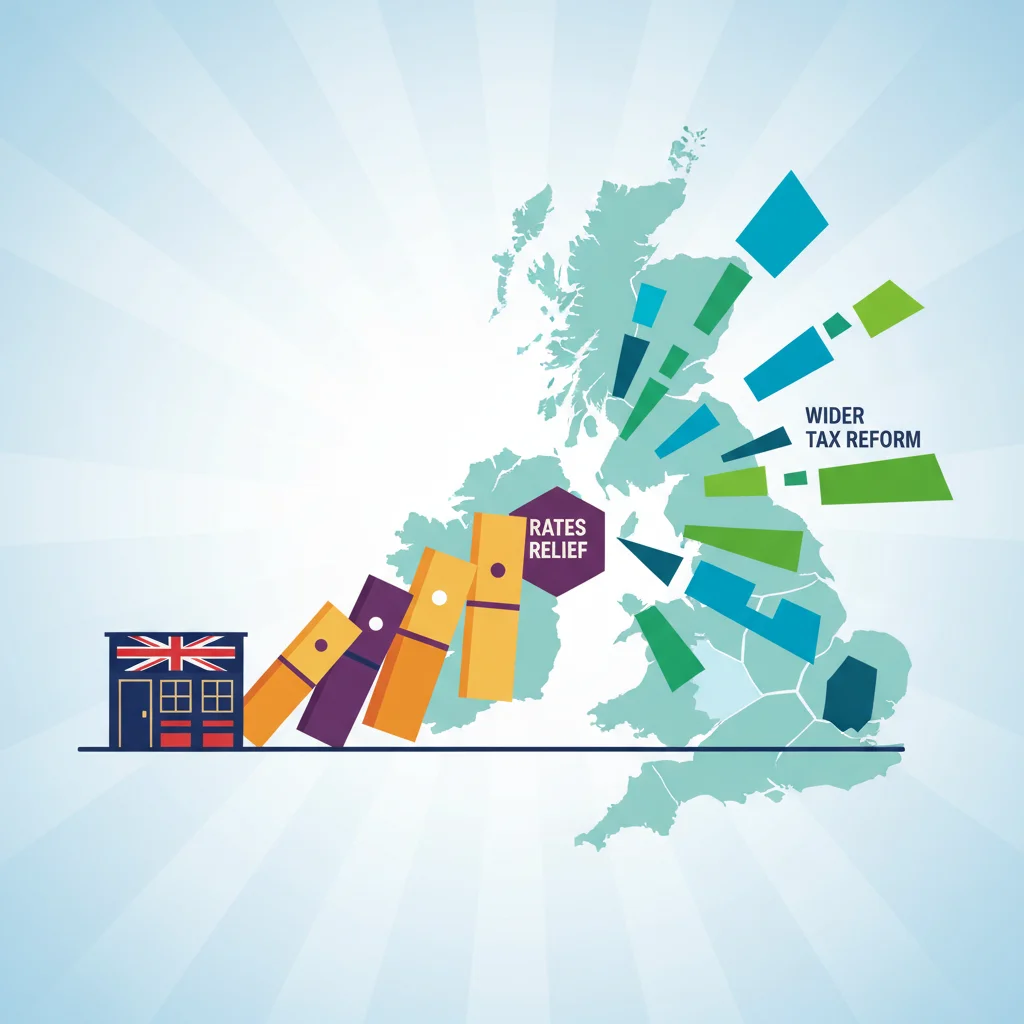
The Domino Effect: Why the UK’s Pub Rates Relief Is Igniting a Wider Call for Tax Reform
In the intricate world of UK finance and economic policy, a seemingly small decision can send powerful ripples across the entire business landscape. Recently, the government’s move to backtrack on planned increases to business rates for pubs was met with a sigh of relief from the hospitality sector. However, that relief was quickly overshadowed by a growing chorus of dissent from other corners of the high street. High street shops, pharmacies, and music venues are now asking a critical question: “What about us?”
This situation transcends a simple policy tweak; it exposes the deep-seated fractures in the UK’s commercial property tax system and raises fundamental questions about fairness, economic strategy, and the future of British town centres. For investors, business leaders, and anyone with a stake in the UK economy, understanding this domino effect is crucial for navigating the uncertain terrain ahead.
Deconstructing the Controversy: What Are Business Rates?
Before diving into the heart of the debate, it’s essential to understand the mechanism at its core: business rates. In essence, business rates are a tax on property used for non-domestic purposes, such as shops, offices, pubs, and factories. They are a significant source of funding for local government services, from waste collection to social care.
The calculation is based on the property’s “rateable value,” which is an estimate of its open market rental value on a specific date. This value is determined by the Valuation Office Agency (VOA). A “multiplier” (a figure set by the central government) is then applied to the rateable value to determine the final bill. This system, while straightforward in theory, has been a source of intense criticism for years, with many arguing it’s an outdated, inflexible tax that penalizes physical presence and fails to account for the modern digital economy.
The Phoenix of Finland: How Nokia Rose from the Ashes to Power the AI Revolution
The Tipping Point: A Lifeline for Pubs
The recent controversy was sparked when the government axed planned increases in business rates specifically for pubs. This decision was largely seen as a response to intense lobbying and a recognition of the unique pressures facing the sector, including soaring energy costs and changing consumer habits post-pandemic. Pubs are often considered vital community hubs, and the political will to protect them is strong. According to the BBC, this targeted relief was designed to support these cherished local institutions.
However, by singling out one sector for preferential treatment, the policy has inadvertently highlighted the struggles of many others who feel equally deserving of support. The move, intended as a targeted solution, has instead become a catalyst for a much broader conversation about systemic inequality in the UK’s business tax framework.
A Chorus of Discontent: The High Street’s Plea for Parity
The reaction from other sectors was immediate and unified. Retailers, already grappling with the rise of e-commerce and squeezed margins, argue that they are the anchor tenants of the high street and face identical, if not greater, pressures. The British Retail Consortium (BRC) has consistently campaigned for fundamental reform, stating that the current system places a disproportionate burden on physical stores. In fact, retail accounts for 5% of the UK economy but pays a staggering 25% of all business rates (source).
Similarly, independent pharmacies and live music venues have joined the call. Pharmacies serve as crucial frontline healthcare providers, while music venues are vital cultural assets that were decimated by pandemic-era lockdowns. They argue that their social and economic contributions are just as significant as those of pubs and that they are equally vulnerable to rising operational costs.
To better understand the arguments, let’s compare the challenges faced by these key sectors:
| Sector | Primary Challenges | Argument for Rates Relief |
|---|---|---|
| Pubs & Hospitality | High energy costs, supply chain inflation, changing consumer habits, significant staff shortages. | Serve as crucial community hubs, culturally significant, and faced extreme pandemic restrictions. |
| High Street Retail | Intense competition from e-commerce, low margins, high fixed costs (rent & rates), declining footfall. | Anchor of the high street ecosystem, major employer, disproportionately high tax burden compared to online rivals. |
| Music Venues | Thin profit margins, high upfront costs for acts, post-pandemic debt burden, noise and licensing regulations. | Critical for the UK’s creative economy and cultural identity, nurturing grassroots talent. |
| Pharmacies | NHS funding pressures, rising operational costs, role as frontline health services. | Provide essential public health services, reducing the burden on the wider NHS. |
Investment and Market Implications: Reading the Tea Leaves
For those involved in investing and market analysis, this policy debate is more than just political noise; it’s a key indicator of government direction and economic health. The uncertainty it creates has tangible consequences:
- Stock Market Volatility: The stock market reacts swiftly to such policy shifts. While pub chains and their suppliers might see a temporary boost, retail-focused REITs (Real Estate Investment Trusts) and the stocks of major high street brands may face downward pressure. Investors engaged in trading must now factor in a higher degree of political risk when assessing UK domestic-focused equities.
- Commercial Real Estate: The business rates system is a major determinant of commercial property valuations. A high rates burden can depress demand for physical retail space, impacting the portfolios of institutional and private investors. This debate could further dampen confidence in the high street property market, which is already navigating a difficult structural transition.
- Banking and Lending: The financial viability of thousands of small businesses is at stake. Banks and other lenders must assess the risk profiles of businesses in sectors that are not receiving relief. A wave of insolvencies on the high street would inevitably lead to an increase in loan defaults, impacting the banking sector’s balance sheets.
The Sanctions Paradox: How Russian Elites are Paying Double for a Taste of Western Luxury
The Path Forward: Can Technology Offer a Solution?
The outcry for fairness points towards a larger, more urgent need: a complete overhaul of the business rates system. The current model, based on periodic and often lagging property valuations, is ill-suited for a dynamic modern economy. This is where innovation in financial technology could play a transformative role.
Imagine a future system underpinned by fintech principles. Real-time data analytics could be used to create more fluid and responsive property valuations, adjusting for factors like local footfall, online sales data, and sector-specific economic headwinds. This would move away from the current cliff-edge revaluations that cause so much disruption. Some forward-thinking analysts even speculate on the long-term potential of blockchain technology to create a transparent, immutable ledger of property ownership and tax liability, reducing disputes and administrative costs. While still a nascent concept in public finance, such financial technology solutions offer a glimpse into a fairer and more efficient future.
Another frequently discussed alternative is an Online Sales Tax (OST). Proponents, including many major retailers, argue an OST would level the playing field between brick-and-mortar stores and their online-only competitors (source). The revenue generated could then be used to fund a significant reduction in business rates. However, this idea is also contentious, with critics warning it could stifle e-commerce growth and lead to higher prices for consumers.
Conclusion: A Crossroads for the UK Economy
The call from shops, pharmacies, and music venues to be included in the pub rates backtrack is not merely a plea for a handout. It is a symptom of a much deeper malaise within the UK’s system of business taxation. The government’s well-intentioned effort to support one sector has inadvertently thrown a harsh spotlight on the inequities and anachronisms of the entire framework.
For business leaders and investors, the key takeaway is that the status quo is becoming untenable. The pressure for fundamental reform is building, and the outcome will have profound implications for the structure of the UK economy, the profitability of entire sectors, and the future of our town and city centres. The debate is no longer about whether to help the pubs; it’s about how to build a tax system that is fair, modern, and fit for purpose for every business on the high street.

Related Posts

Beyond the Pub: Why the UK’s Business Rates Debate is a Bellwether for the Entire Economy

The Great Return: Why London’s Office Market Signals the End of the WFH Era