The AI Financial Advisor: Your Portfolio’s Best Friend or a Ticking Time Bomb?
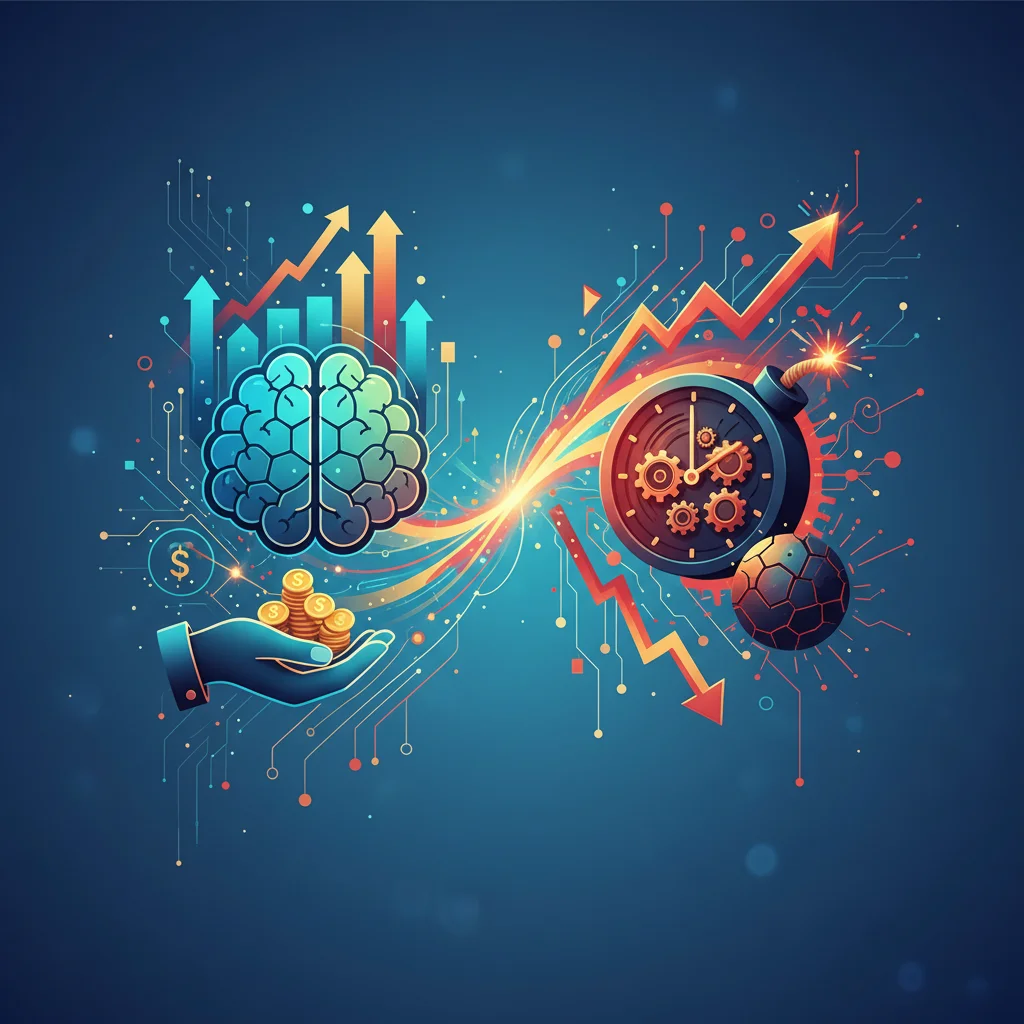
The world of finance is in the throes of an artificial intelligence revolution. From lightning-fast algorithmic trading to personalized robo-advisors, AI promises to democratize investing, optimize portfolios, and unlock unprecedented market insights. The allure is undeniable: an expert financial guide in your pocket, available 24/7, processing trillions of data points to give you the perfect stock tip. But as we race to integrate this powerful technology into the very heart of our economy, a critical question emerges: Do we truly understand the advice these algorithms are giving us?
A recent letter in the Financial Times by Sheila Hayman of the University of Cambridge raises a profound alarm. She notes that a large language model (LLM), when asked for an endorsement, will simply provide one, regardless of its validity or the consequences. The AI doesn’t “believe” in the candidate it endorses; it merely generates a statistically probable string of words based on its training data. This simple observation has staggering implications when translated from politics to portfolios. When a chatbot endorses a stock, is it a product of deep economic analysis, or is it just a sophisticated act of digital puppetry? The answer is critical for every investor, business leader, and regulator navigating the new landscape of financial technology.
This article delves beyond the hype to explore the hidden risks of relying on AI for financial counsel. We will dissect the fundamental flaws in current AI models, examine the systemic dangers they pose to the stock market, and provide a framework for harnessing their power responsibly.
The Rise of the Algorithmic Oracle: A New Era in Fintech
For decades, the world of high finance was an exclusive club. Access to sophisticated market analysis, complex trading strategies, and personalized investment advice was reserved for the wealthy. The first wave of fintech disrupted this model, with platforms like E-Trade and Robinhood bringing stock market access to the masses. Now, AI represents the next quantum leap.
Today’s financial technology tools, powered by machine learning and LLMs, offer capabilities that were once science fiction:
- Robo-Advisors: Automated platforms that build and manage investment portfolios based on an individual’s risk tolerance and financial goals, often for a fraction of the cost of a human advisor.
- Algorithmic Trading: AI systems that execute trades at superhuman speeds, capitalizing on fleeting market inefficiencies. According to research, the global algorithmic trading market is projected to reach over $31 billion by 2030.
- AI-Powered Research: Chatbots and analytics platforms that can summarize earnings reports, analyze market sentiment from news and social media, and forecast economic trends.
The promise is a more efficient, accessible, and data-driven financial ecosystem. However, this rapid integration of AI into core banking and investing functions is happening faster than our understanding of its limitations. The very code that promises to optimize our economy could also introduce new, unpredictable forms of risk.
The Billion-Dollar Typo: Why a Minor Correction Reveals a Major Truth About Finance
The Ghost in the Machine: When Financial AI Gets It Wrong
The core problem, as Hayman’s letter implies, is that AI models do not “understand” finance, economics, or investing in the human sense. They are masters of pattern recognition, not genuine comprehension. This leads to several critical vulnerabilities.
1. AI “Hallucinations”: Fabricating Financial “Facts”
In the world of AI, a “hallucination” is when a model generates information that is nonsensical or factually incorrect, yet presents it with complete confidence. Imagine asking an AI for the quarterly earnings of a company, and it confidently invents a figure because it seems statistically plausible. A 2023 Vanderbilt Law School analysis warns that such AI-generated misinformation could have serious implications for corporate governance and stock market integrity. An investor acting on this fabricated data could make a disastrous trading decision. In a world of automated trading, a single, widely-distributed AI hallucination could even trigger a market-wide sell-off before any human can intervene to fact-check it.
2. The “Black Box” Problem
Many advanced AI models are effectively “black boxes.” We can see the data that goes in and the recommendation that comes out, but we cannot always trace the exact logic or weighting of variables that led to the decision. This is a nightmare for financial compliance and risk management. If a robo-advisor puts a client’s life savings into a failing company, regulators will ask “Why?” If the answer is “because the algorithm decided to,” it’s simply not good enough. This lack of transparency makes it impossible to audit AI decisions, assign liability, or prevent the same mistake from happening again.
3. Ingrained Data Bias
AI models are trained on historical data. This means they inherit all the biases, irrationalities, and limitations of that data. An AI trained on 20 years of stock market data might be excellent at navigating conditions seen in the past but could be catastrophically unprepared for a novel “black swan” event like a global pandemic or a new kind of financial crisis. It might perpetuate historical biases, such as under-investing in emerging sectors or over-emphasizing tech stocks simply because they performed well in the training period.
Systemic Risks: From a Bad Tip to a Market Crash
The danger of a flawed AI recommendation is magnified exponentially when considering its potential to create systemic risk across the entire economy. A single investor losing money on a bad AI tip is a personal tragedy. An entire market destabilized by correlated AI behavior is a global crisis.
To understand the stakes, let’s compare the potential benefits and hidden risks of AI in key financial applications.
| AI Application in Finance | Potential Benefit | Hidden Systemic Risk |
|---|---|---|
| AI-Generated Investment Advice | Democratizes access to sophisticated financial planning and stock selection for retail investors. | If millions of users receive the same flawed “buy” signal from a popular fintech app, it could create an artificial asset bubble, vulnerable to a sudden crash. |
| Automated Algorithmic Trading | Increases market liquidity and efficiency by executing trades at microsecond speeds. | Herding behavior among AIs could lead to flash crashes, where algorithms react to each other in a feedback loop, causing prices to plummet in minutes for no fundamental reason. |
| AI-Powered Credit Scoring | Offers faster, potentially more objective lending decisions by analyzing thousands of data points. | Biased algorithms could systematically deny credit to entire demographics, exacerbating economic inequality and creating blind spots in the banking system’s risk models. |
| AI Analysis of Market Sentiment | Provides real-time insights into investor mood by scraping news and social media. | AIs could be manipulated by coordinated disinformation campaigns (e.g., fake news about a bank’s solvency), triggering panic and bank runs. |
The 2010 “Flash Crash,” where the Dow Jones Industrial Average plunged nearly 1,000 points in minutes due to the interaction of automated trading algorithms, was a stark preview of this reality. Today, with AI’s influence being far more widespread and complex, the potential for a similar, or even larger, event is a serious concern for regulators and central banking authorities.
The Boardroom in Your Basement: Why Your Flat's Management Could Be Your Biggest Financial Risk
Navigating the New Frontier: A Guide for Prudent Investing
The solution is not to abandon this transformative technology. The genie is out of the bottle, and the potential benefits of AI in finance are too significant to ignore. Instead, we need a paradigm shift in how we interact with it—moving from blind trust to critical, informed supervision.
For Investors:
- Be the CEO of Your Portfolio: Treat AI as a highly skilled but unvetted junior analyst. Use it to generate ideas, perform research, and analyze data, but the final investment decision must be yours.
- Verify, Then Trust: If an AI recommends a stock, do your own due diligence. Read the company’s financial statements, understand its business model, and seek a second opinion. Never invest based on a single, unverified recommendation.
- Understand the “Why”: If you are using a fintech platform, dig into its methodology. How does it determine its recommendations? What data does it use? If you can’t get a clear answer, that’s a major red flag.
For Business and Finance Leaders:
- Prioritize Transparency: Invest in Explainable AI (XAI). Building systems that can articulate the reasoning behind their decisions is not just good ethics; it’s a crucial competitive advantage and a defense against regulatory action.
- Implement “Human-in-the-Loop” Systems: For high-stakes decisions like large-scale trading or credit approval, ensure a qualified human expert has the final sign-off. AI should augment human judgment, not replace it.
- War-Game for Failure: Actively stress-test your AI systems. What happens if they are fed false information? How do they perform in extreme market volatility? Building resilience requires planning for the worst-case scenario.
Conclusion: From Artificial Intelligence to Augmented Wisdom
Sheila Hayman’s warning about a chatbot’s hollow endorsement serves as a powerful metaphor for the current state of AI in finance. We have built incredible machines that can mirror the language of financial analysis, but they lack the wisdom, accountability, and true understanding that must underpin any sound investment strategy.
Relying on an AI’s stock tip is like navigating a minefield with a map drawn by someone who has only read books about minefields but has never set foot in one. The map might look perfect, but it misses the crucial, real-world context. The future of finance, investing, and the global economy depends on our ability to embrace AI as a powerful tool while never abdicating our own judgment. The ultimate goal is not to create an artificial intelligence that can beat the market, but to use it to augment our own wisdom, making us better, smarter, and more responsible stewards of capital.