Beyond the Hype: MiniMax’s 60% IPO Surge and What It Means for Global AI
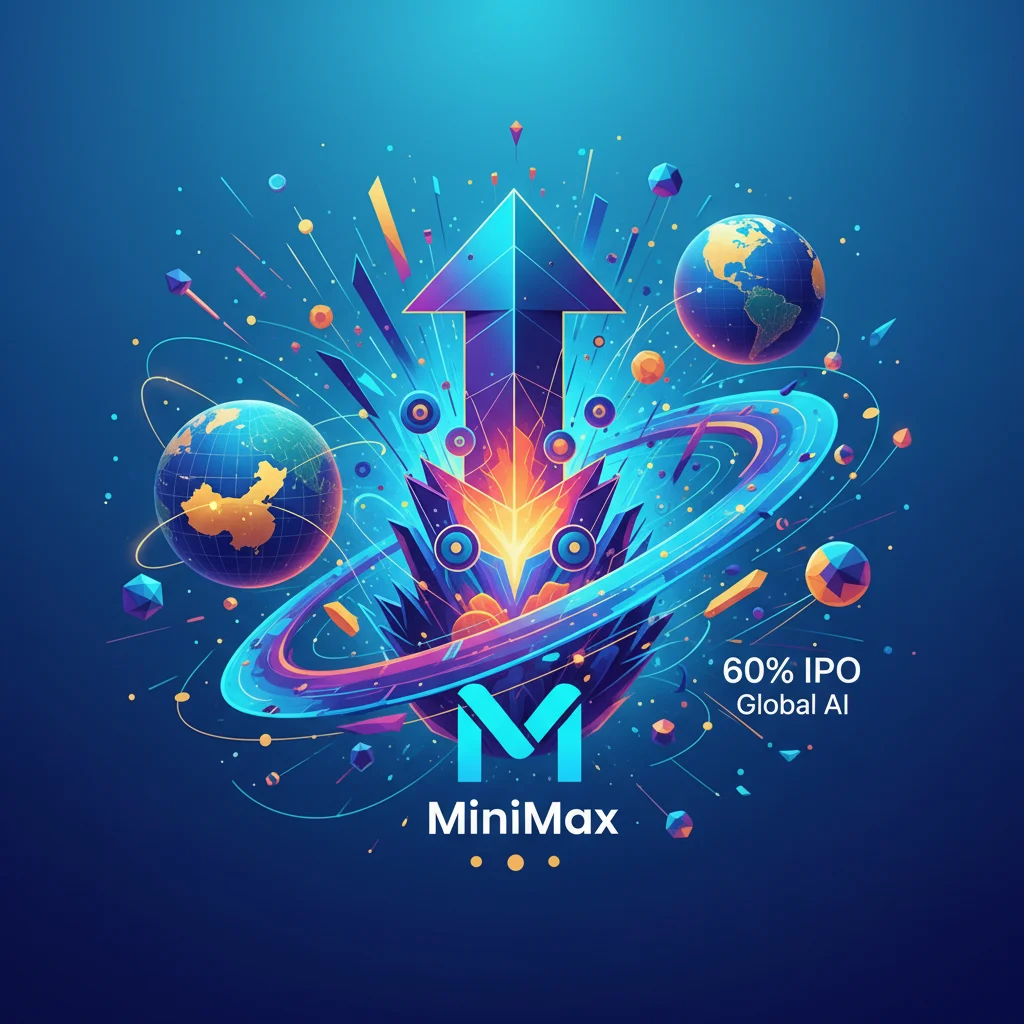
The world of artificial intelligence is no stranger to explosive growth, but even by its own dizzying standards, what happened last Friday was a seismic event. MiniMax, a key player in China’s rapidly expanding AI landscape and a direct rival to well-known names like DeepSeek, went public—and the market went wild. Shares for the large language model (LLM) developer skyrocketed, jumping more than 60 per cent on its first day of trading.
This isn’t just another tech IPO. It’s a loud and clear signal that the global AI race has a new, publicly-funded powerhouse. While Western headlines are often dominated by OpenAI, Google, and Anthropic, a parallel revolution has been brewing in China. MiniMax’s spectacular debut is the latest chapter in that story, representing a new wave of Chinese AI companies stepping out from behind the curtain and onto the world’s financial stage.
For developers, entrepreneurs, and tech professionals, this event is more than just a stock ticker. It’s a crucial indicator of market sentiment, a testament to the incredible pace of innovation, and a preview of the competitive dynamics that will shape the future of software, automation, and technology as a whole. So, let’s unpack who MiniMax is, why their IPO matters so much, and what it signals for the future of artificial intelligence.
Who Exactly is MiniMax? Unpacking the AI Unicorn
Founded in 2021, MiniMax might seem like a newcomer, but its pedigree is impressive. The company was started by alumni of SenseTime, one of China’s original AI giants, giving it a deep reservoir of talent and experience from day one. In a remarkably short period, MiniMax has carved out a significant niche for itself, securing backing from titans like Alibaba and Tencent and achieving a multi-billion dollar valuation even before its IPO.
But what does MiniMax actually do? Unlike some competitors focused solely on a “ChatGPT-killer,” MiniMax has pursued a multi-pronged strategy built on a foundation of proprietary tri-modal technology that can process text, voice, and visuals. This approach has led to a diverse product suite catering to both consumers and enterprises.
A Look at MiniMax’s Product Ecosystem
Their technology isn’t just theoretical; it powers a range of applications that are gaining serious traction:
- ABAB Series Foundational Models: This is the core of their operation. The ABAB models are a series of powerful LLMs that serve as the engine for all their other products. They are designed to be highly capable in conversation, logic, and memory, forming the bedrock of their machine learning prowess.
- Talkie App: This is their flagship consumer product. Talkie is an AI character interaction platform that allows users to create and chat with virtual companions. It showcases their model’s ability to handle engaging, long-form, and context-aware conversations, moving beyond simple Q&A. This app alone reportedly has tens of millions of users, demonstrating a strong product-market fit.
- Enterprise APIs and Cloud Services: For the B2B market, MiniMax offers its powerful models via a SaaS (Software as a Service) model. This allows other businesses to integrate MiniMax’s AI capabilities into their own products, from customer service automation to sophisticated data analysis tools. This is a critical revenue stream and a key part of their strategy to embed their technology across the industry.
This diversified approach—combining a popular consumer app with a robust B2B cloud offering—is a key differentiator. It creates a powerful feedback loop: the consumer app provides vast amounts of data to train and improve their models, which in turn makes their enterprise offerings more powerful and competitive.
From Battlefields to Bytes: Can the Defence Sector Win the War for Tech Talent?
The IPO Frenzy: A Competitive Landscape Heats Up
MiniMax’s successful IPO isn’t happening in a vacuum. It’s part of a broader, fiercely competitive “AI Spring” in China, where a handful of well-funded startups are vying for dominance. These companies, often referred to as the “new AI tigers,” are all racing to build the most powerful foundational models and capture market share.
To understand the significance of MiniMax’s public offering, it helps to see where they fit in this dynamic ecosystem. Below is a snapshot of the key players shaping China’s AI future.
| Company | Key Model/Product | Notable Investors | Key Differentiator |
|---|---|---|---|
| MiniMax | ABAB series, Talkie App | Alibaba, Tencent, Hillhouse Capital | Strong B2C and B2B model; tri-modal technology (text, voice, vision). |
| Zhipu AI | GLM series (ChatGLM) | Alibaba, Tencent, Meituan | Ties to Tsinghua University; strong focus on open-source and enterprise solutions. |
| Moonshot AI (Yuezhi Anmian) | Kimi Chat | Alibaba, Hongshan (Sequoia China) | Specializes in long-context window models, capable of processing up to 2 million Chinese characters. |
| Baichuan | Baichuan series | Alibaba, Tencent, Xiaomi | Founded by ex-Sogou CEO; focuses on both open-source and proprietary models. |
This intense competition is driving an incredible pace of development. The capital raised from an IPO gives MiniMax a formidable war chest to invest in the three things that matter most in AI: computing power (GPUs), top-tier talent, and extensive R&D. According to one report, training a state-of-the-art LLM can cost tens or even hundreds of millions of dollars, making access to public market capital a significant strategic advantage.
Implications for the Global Tech Industry
The rise of companies like MiniMax has profound implications that extend far beyond China’s borders. Here’s why everyone from a startup founder in Silicon Valley to a developer in Berlin should be paying attention.
1. A New Paradigm in Global Competition
For years, the narrative was that the U.S. held an insurmountable lead in foundational AI models. The success of MiniMax, Zhipu AI, and others challenges that assumption. We are now firmly in a multi-polar AI world. This competition can be a powerful engine for innovation, pushing all players to develop better, more efficient, and more creative AI solutions. However, it also raises concerns about technological fragmentation and the balkanization of the internet and its underlying technologies.
2. The Talent War Goes Global
The most critical resource in artificial intelligence isn’t data or even capital—it’s human talent. A successful IPO allows MiniMax to offer lucrative stock options, making them highly competitive in the global market for AI researchers, engineers, and product leaders. This intensifies the worldwide competition for the best and brightest minds in machine learning and software development.
3. New Opportunities for Developers and Businesses
For developers and entrepreneurs, the emergence of more high-quality foundational models is a massive boon. It means more choice, competitive pricing for API access, and a wider range of specialized capabilities. A business looking to build an AI-powered application is no longer limited to a handful of U.S.-based providers. They can now evaluate models from companies like MiniMax that may offer unique advantages in specific languages, modalities, or cost structures. This fosters a more resilient and diverse AI ecosystem. A recent study highlighted that the generative AI market is projected to reach $1.3 trillion over the next 10 years, and a diverse set of providers will be essential to realizing that potential.
The EV Throne Has a New Contender: How BYD's Master Plan is Dethroning Tesla
4. The Increasing Importance of Cybersecurity
As AI models become more integrated into critical business operations and software stacks, the attack surface for cyber threats expands. The proliferation of powerful, accessible AI APIs means that robust cybersecurity measures are more important than ever. Companies building on these platforms must prioritize security, data privacy, and model integrity to protect against misuse and manipulation. The race for AI dominance cannot come at the expense of security.
The 2026 Crystal Ball: Decoding the Tech Trends, Power Plays, and Wild Cards Shaping Your Future
The Road Ahead: Beyond the IPO Hype
MiniMax’s triumphant entry into the public markets is a milestone, but it’s the start of a marathon, not the finish line. The company, along with its rivals, faces the immense challenge of charting a path to profitability while continuing to innovate at a breakneck pace.
The journey will involve navigating complex technical hurdles, managing the astronomical costs of training next-generation models, and adapting to a constantly shifting regulatory and geopolitical landscape. Success will require more than just a great algorithm; it will demand a sustainable business model, a deep understanding of customer needs, and the agility to stay ahead in the most competitive technology race in human history.
For now, MiniMax’s IPO serves as a powerful reminder: the future of artificial intelligence is not being written in one country or by one company. It is a global story of ambition, competition, and relentless innovation. And it’s a story that is just getting started.