When the Cloud Goes Dark: What a Berlin Power Outage Teaches a Digital-First World
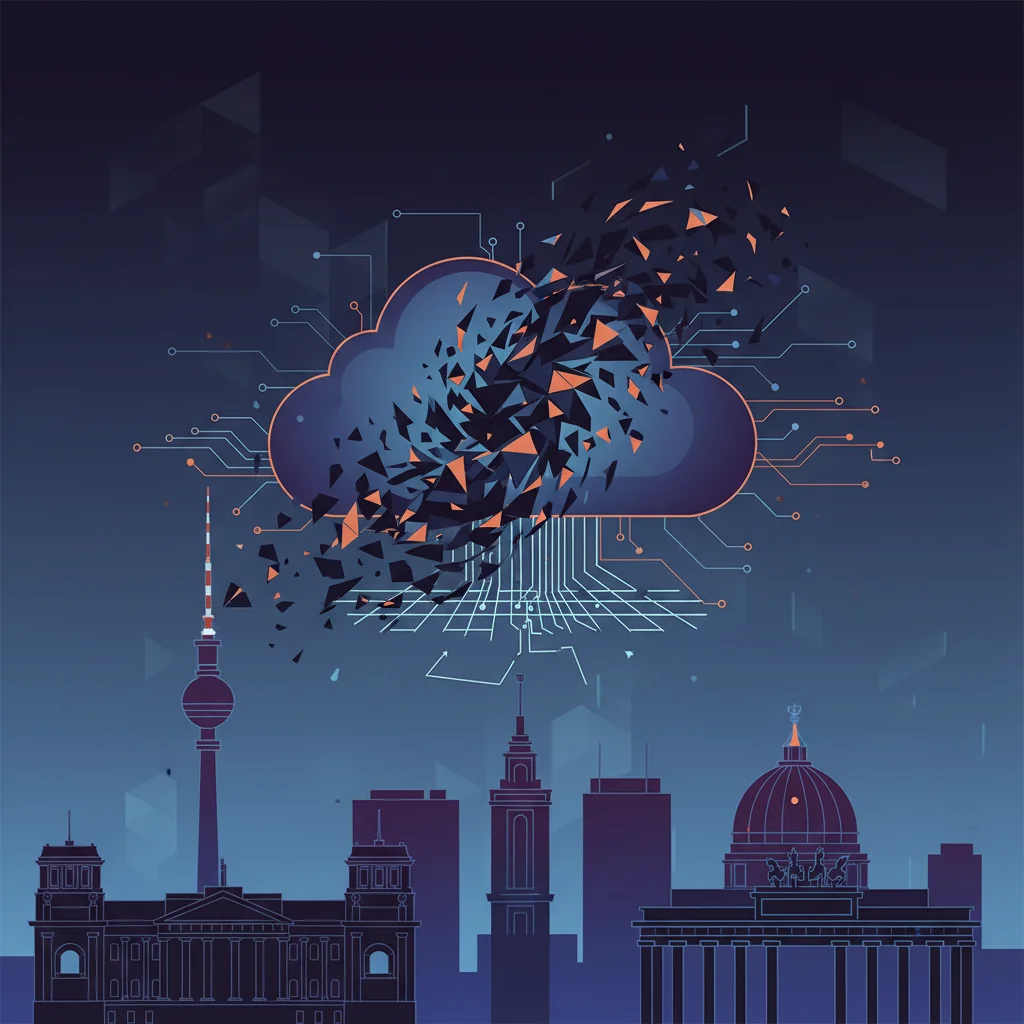
Imagine the heart of one of Europe’s most vibrant tech hubs suddenly plunged into darkness. Not a flicker of a server light, not a hum from a cooling fan. For tens of thousands in Berlin, this wasn’t a hypothetical scenario. It was a stark reality when an arson attack on a high-voltage pylon knocked out power, leaving a massive section of the German capital offline for days. The incident, which affected 30,000 households and around 2,000 companies, wasn’t just an inconvenience; it was a chilling reminder of a fundamental truth we often forget: our entire digital world, from the most sophisticated artificial intelligence to the simplest SaaS application, is built on a foundation of physical infrastructure that is alarmingly fragile.
For developers, tech professionals, and entrepreneurs, a story about a power outage might seem distant from the world of code, cloud computing, and venture capital. But the Berlin blackout is a critical case study. It exposes the single point of failure that underpins every line of programming, every data transaction, and every startup’s dream of scaling. When the power goes out, the cloud evaporates.
This isn’t just about Germany. It’s about San Francisco, London, Bangalore, and every other city where innovation thrives. It’s a wake-up call to re-examine our assumptions and ask a crucial question: are we building a resilient digital future, or just a beautiful glass house on shaky ground?
The Anatomy of a Digital Collapse
Let’s break down what happened. A deliberately set fire at the base of an electricity pylon in Berlin’s Köpenick district caused a cascading failure. While the immediate impact was on homes and local businesses, the ripple effect on the tech ecosystem is profound. Modern companies are not just tenants in an office building; they are nodes in a complex digital network that demands constant, uninterrupted power.
Consider the immediate consequences for a tech company or startup in the affected area:
- Productivity Grinds to a Halt: Without power, desktops, Wi-Fi, and servers go offline. Remote work is impossible if home internet is also down. Development sprints stop, customer support tickets go unanswered, and business operations cease.
- Data Center Dependencies: While major cloud providers have robust redundancy, many companies still rely on smaller, local data centers or on-premise servers for specific tasks. These are highly vulnerable to localized outages. The generators might kick in, but they have a finite fuel supply—a major concern in a multi-day outage (source).
- Supply Chain Disruption: The digital and physical supply chains are interwoven. A logistics company’s automated warehouse, a fintech’s transaction processing, or a SaaS company’s support infrastructure all rely on the local power grid.
The Berlin incident was caused by arson, but the trigger could easily have been a technical failure, a natural disaster, or a sophisticated cybersecurity attack targeting industrial control systems. The outcome is the same: the digital services we depend on are only as strong as the weakest link in their physical supply chain.
The Toxic Legacy in Our Code: What Tech Can Learn from a Hidden Disaster
From Fragile Grids to Intelligent Systems: A Tech-Driven Solution
Pointing out the problem is easy. Solving it is where the real innovation lies. This is where the skills of developers, data scientists, and tech entrepreneurs become not just valuable, but essential for our collective future. The vulnerabilities exposed in Berlin are precisely the problems that modern technology is uniquely equipped to solve. We can’t just build a better software stack; we need to help build a smarter physical stack.
Here’s how different areas of technology can transform our aging infrastructure into a resilient, intelligent network:
1. Artificial Intelligence and Predictive Maintenance
The current model for infrastructure management is largely reactive. We fix things when they break. AI and machine learning can flip this paradigm on its head. By deploying sensors across the grid—on transformers, power lines, and substations—we can collect vast amounts of data on temperature, vibration, load, and weather conditions. Machine learning models can then be trained to:
- Predict Failures: Identify patterns that precede equipment failure, allowing utility companies to perform maintenance before an outage occurs.
- Detect Anomalies: Instantly flag unusual activity, such as the precursor to a physical attack or a weather-related strain on the system.
- Optimize Load Balancing: Intelligently distribute power across the network to prevent overloads and improve efficiency, especially with the fluctuating input from renewable sources like wind and solar.
2. Automation and the Smart Grid
The “smart grid” is a term that’s been around for a while, but its implementation is more critical than ever. It’s about moving from a system of manual controls and slow response times to one of real-time, automated decision-making. The Berlin incident highlighted how a single point of failure can take down a huge area. A truly smart grid uses automation to create a self-healing network.
The table below illustrates the fundamental shift from a traditional grid to a smart, automated one.
| Feature | Traditional Power Grid | Smart Grid with Automation & AI |
|---|---|---|
| Fault Detection | Manual, slow, relies on customer reports. | Automated, real-time detection via sensors. |
| Outage Response | Manual dispatch of crews to physically reroute power. Hours or days to restore. | Automation software instantly isolates the fault and reroutes power around it. Minutes to restore for many customers. |
| Security | Primarily physical security (fences, locks). | Layered cybersecurity, physical sensor monitoring, and AI-driven threat detection. |
| Data Flow | One-way flow of power; minimal data. | Two-way flow of power and data, enabling real-time control and user participation. |
| Decision Making | Centralized, human-driven. | Decentralized, AI-assisted, and automated. |
The AI Tax: Why Your Next Gadget Could Cost 20% More
3. Enhanced Cybersecurity for Physical Infrastructure
The line between cyber and physical attacks is blurring. While the Berlin attack was physical, a hacker could achieve the same result by compromising the Industrial Control Systems (ICS) that manage the grid. This is a massive challenge and a huge opportunity for cybersecurity firms and startups. We need to apply the same zero-trust principles we use for our corporate networks to our critical infrastructure. This involves:
- Network Segmentation: Isolating critical control systems from business networks.
- Continuous Monitoring: Using specialized tools to monitor operational technology (OT) networks for malicious activity.
- Secure Programming: Ensuring the code that runs our infrastructure is built with security as a primary feature, not an afterthought.
The Call to Action for Tech Innovators
The Berlin blackout is a clear market signal. There is a pressing, global need for innovation in the infrastructure technology space. For entrepreneurs and startups, this is not just a challenge to be solved but a multi-billion dollar opportunity. The markets for grid monitoring software, predictive maintenance AI, drone-based inspection services, and OT cybersecurity are set to explode.
This is a chance to build companies that don’t just create another photo-sharing app but that form the bedrock of a more resilient society. It’s an opportunity to apply our skills in software development, AI, and automation to solve a problem that affects everyone, everywhere.
The future of tech is not just in the cloud; it’s also on the ground, ensuring the lights stay on so the cloud can exist in the first place. The events in Berlin were a stark warning, as the city’s mayor, Kai Wegner, noted the “enormous damage” caused by the attack (source). It’s a warning the tech world cannot afford to ignore. We have the tools and the talent to build a more robust future. It’s time to get to work.
The Great Reshuffle: AI Is Coming for 200,000 European Banking Jobs. Are You Ready?
The next time you push code, launch a service, or pitch your startup, take a moment to think about the invisible chain of pylons, wires, and transformers that makes it all possible. The resilience of that chain is now one of the most significant challenges—and greatest opportunities—in technology today.