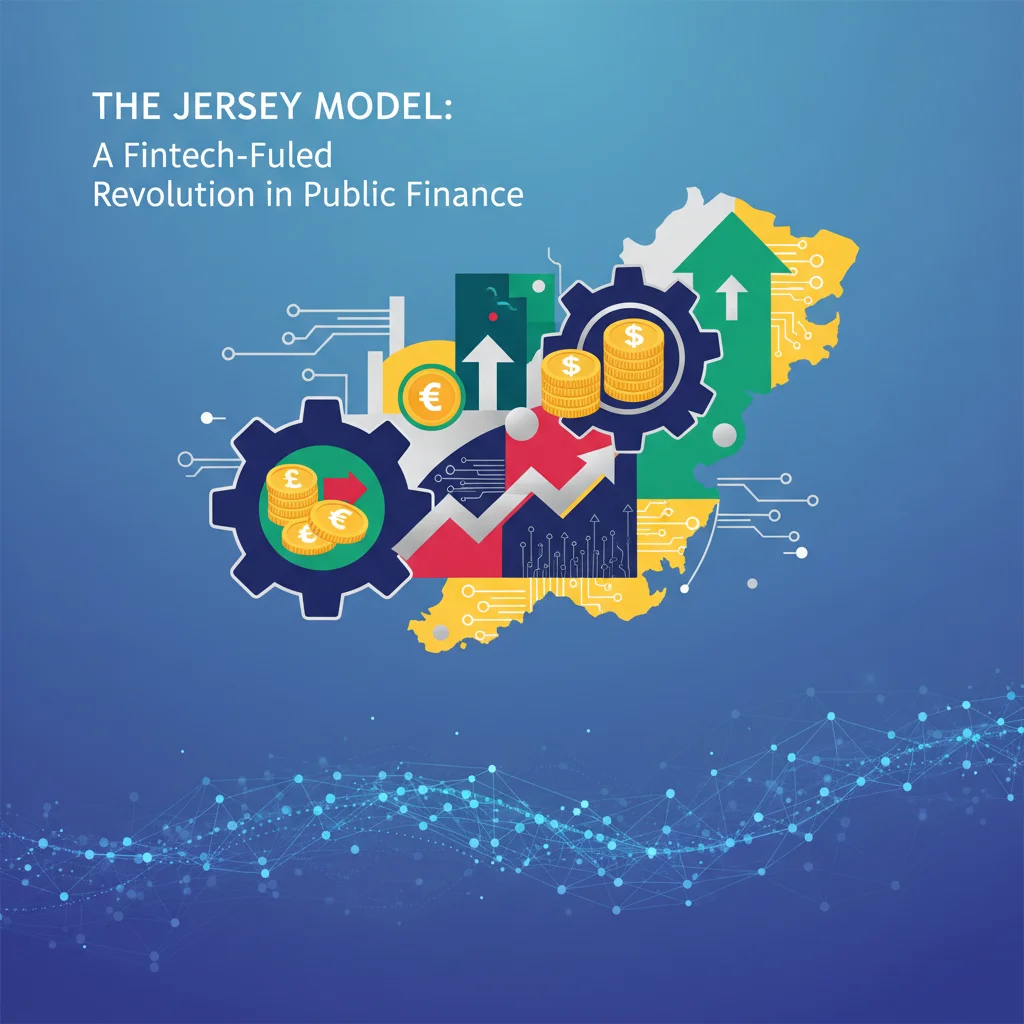
The Jersey Model: A Fintech-Fueled Revolution in Public Finance?
In the world of global finance, paradigm shifts often begin not with a bang, but with a quiet policy adjustment in an unexpected place. Recently, the island of Jersey, a British Crown Dependency known more for its robust banking sector than for radical social policy, made one such adjustment. The government announced a plan to simplify its childcare support system by making upfront payments directly to parents. A minister described the move as a way to give families “flexibility” (source). While this may seem like a minor local news story, for astute investors, finance professionals, and business leaders, it represents a powerful case study in a much larger, technology-driven transformation of public finance and its intersection with the private sector economy.
This single policy change, at its core, is an experiment in direct-to-consumer economic stimulus. It touches upon fundamental principles of economics, the evolving capabilities of financial technology (fintech), and the future of government-to-person (G2P) payments. What’s happening in Jersey is a microcosm of a global trend that could redefine how governments support citizens, how capital flows through an economy, and where new opportunities for investing and innovation will emerge.
Deconstructing the Direct Payment Model
To understand the significance of Jersey’s decision, it’s crucial to compare it with traditional models of social benefit distribution. Historically, governments have used two primary methods for subsidies like childcare:
- Provider-Side Subsidies: Funds are given directly to the service providers (e.g., childcare centers), who then offer services at a reduced rate.
- Tax Credits/Rebates: Financial relief is provided to individuals retrospectively, often through the annual tax filing process.
The direct payment model, however, fundamentally alters the flow of capital and decision-making power. By placing funds directly into the hands of parents, the government is treating them as active consumers rather than passive recipients of aid. This shift has profound implications for both social and economic outcomes.
The table below outlines the key differences between these approaches from a financial and economic perspective.
| Subsidy Model | Key Mechanism | Economic Impact | Advantages for Government & Finance Sector |
|---|---|---|---|
| Provider-Side Subsidy | Government pays service providers directly. | Stabilizes supply; can limit consumer choice and competition. Slower velocity of money. | Easier to track and audit a smaller number of providers. Less direct interaction with the public. |
| Tax Credits/Rebates | Individuals claim relief on taxes, often months after incurring the expense. | Delayed economic stimulus; creates liquidity challenges for low-income households. | Integrates with existing tax infrastructure; no new payment systems needed. |
| Direct Upfront Payments (Jersey Model) | Government transfers funds directly to individuals before or as the expense is incurred. | Empowers consumer choice, fosters competition among providers, and increases the velocity of money. | Requires robust digital payment infrastructure (a fintech opportunity); generates valuable economic data. |
The “flexibility” mentioned by the Jersey minister is, in economic terms, the empowerment of consumer choice. When parents have the capital in hand, they can shop for childcare based on quality, location, and specific needs, forcing providers to compete. This market-driven approach can lead to higher quality services and greater efficiency over time, a classic principle of free-market economics.
Liquid Gold: How Tunisia's Olive Oil Boom is Reshaping its Economy and Global Markets
The Macroeconomic Ripple Effect of Micro-Payments
A direct cash injection into the household budgets of working families does more than just pay for childcare. It has a measurable impact on the local economy, a phenomenon well-documented during the large-scale stimulus programs seen in the US and Europe post-2020. The core principle at play is the “marginal propensity to consume” (MPC).
Families who need childcare support are more likely to have a high MPC, meaning they will spend a larger portion of any additional income they receive. This spending doesn’t just go to the childcare provider; it flows to grocery stores, gas stations, and local businesses, creating a multiplier effect. This rapid circulation of money, known as the velocity of money, is a key driver of economic activity. According to the World Bank, efficient G2P payment systems are critical for both social protection and economic resilience, enabling governments to respond quickly during crises and support aggregate demand (source).
For investors, this is a crucial signal. Policies that increase the velocity of money and support consumer spending can have a direct impact on corporate earnings, particularly in the consumer discretionary and staples sectors. Watching for these policy shifts, even on a small scale like in Jersey, can provide leading indicators for broader trends that ultimately influence the stock market.
The Unseen Engine: Financial Technology’s Critical Role
Twenty years ago, a policy like Jersey’s would have been an administrative nightmare, involving paperwork, check processing, and significant potential for fraud and delay. Today, it is made possible by the silent, efficient engine of modern financial technology. The rise of digital banking, real-time payment rails, and secure digital identities is the backbone that enables such a direct and targeted approach to public finance.
This is where the worlds of public policy and fintech converge. Implementing a direct payment system requires:
- Digital Identity Verification: Securely confirming who is eligible to receive funds.
– Payment Infrastructure: A robust system for executing millions of small transactions quickly and cheaply, far beyond the capabilities of traditional banking.
– Data Analytics: The ability to track the flow of funds (while respecting privacy) to measure the policy’s economic impact and effectiveness.
Looking ahead, the next evolution in this space could very well involve blockchain technology. Imagine a system where payments are executed via smart contracts on a distributed ledger. This could offer unprecedented transparency, reduce administrative overhead to near-zero, and even allow for “programmable money”—funds earmarked for specific purposes, like verified childcare providers, blending the control of a provider-side subsidy with the flexibility of a direct payment. While still largely theoretical for public use, the exploration of Central Bank Digital Currencies (CBDCs) by nations worldwide signals a clear move in this direction.
Your 2026 Travel Portfolio: An Investor's Guide to Maximizing the ROI of Your Time Off
An Investor’s Guide to Policy-Driven Opportunities
So, how does a finance professional or business leader act on this information? The key is to move beyond the surface-level policy and analyze the underlying structural shifts it represents. No one is suggesting a trading strategy based on Jersey’s childcare regulations. Instead, this is about identifying a powerful, long-term trend.
The transition to direct G2P payments creates opportunities in several key sectors:
- Fintech and Payments: The most direct beneficiaries. Companies that build and manage the digital infrastructure for governments are a prime area for investment. This includes payment processors, digital identity verification firms, and cybersecurity companies that protect these critical systems.
- Data Analytics: The implementation of these programs generates a treasure trove of anonymized economic data. Companies that can analyze this data to provide insights into consumer behavior and economic health will be highly valuable.
- Consumer Sectors: As these policies put more disposable income into the hands of consumers with a high MPC, companies in the consumer staples and discretionary sectors stand to benefit. Analyzing the geographic and demographic targets of such programs can inform investment theses. Studies on the impact of childcare affordability often point to increased female labor force participation, which itself is a powerful economic driver (source).
The broader lesson is the increasing importance of monitoring public policy as a driver of market dynamics. In an era of active government intervention in the economy, understanding the direction of fiscal policy and the technological means of its implementation is no longer just for economists; it’s a critical component of any sophisticated investing strategy.
The Walls Are Closing In: How a New Global Crypto Tax Crackdown Will Change Everything for Investors
Conclusion: From a Small Island to a Global Blueprint
Jersey’s decision to provide upfront, direct childcare payments is far more than a simple administrative tweak. It is a clear signal of a future where the intersection of social policy, economics, and financial technology will create entirely new systems for distributing capital and stimulating economic growth.
By shifting from indirect subsidies to direct cash empowerment, this model champions market principles, leverages the power of fintech, and provides a real-time tool for economic management. For those in finance, banking, and the investment community, the message is clear: the way governments interact with their citizens’ financial lives is changing fundamentally. The companies that facilitate this change, the sectors that benefit from it, and the investors who recognize the trend early will be the ones who thrive in the economy of tomorrow.