The Cardboard Box Economy: Unpacking Hidden Value in the Foundations of Finance
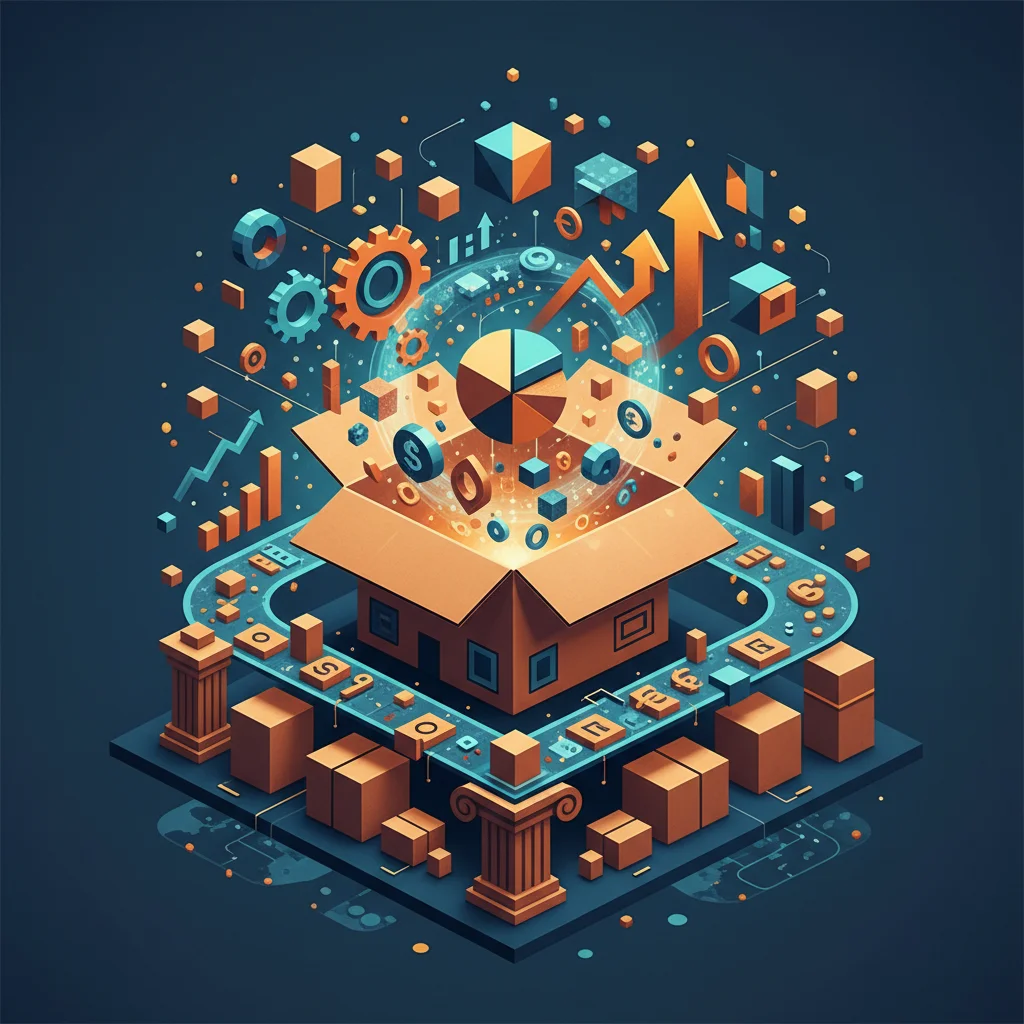
In a brief but thought-provoking letter to the Financial Times, a reader from Illinois pointed to sculpture made from cardboard as “another example of cardboard’s box of tricks.” This simple observation holds a profound metaphor for the world of finance, investing, and economics. We are often captivated by the complex, the novel, and the dazzling—the financial equivalent of a polished marble statue. We chase intricate trading algorithms, groundbreaking fintech applications, and esoteric asset classes, believing that sophistication is the sole path to value.
Yet, the humble cardboard box, a symbol of the mundane and utilitarian, reminds us of a powerful truth: extraordinary value can be sculpted from the simplest, most overlooked materials. The global economy is built upon foundations that, like cardboard, are often disregarded for their simplicity. But it is here, in these foundational elements, that true innovation and enduring wealth are often forged.
This article explores the “Cardboard Box Economy”—a framework for identifying the immense, often hidden, value within the unassuming cornerstones of finance and technology. We will dissect how basic principles have been transformed into revolutionary financial instruments, how simple technologies have become the bedrock of modern banking, and how investors and business leaders can train themselves to see the “sculpture” hidden within the “cardboard” of the everyday.
The Seduction of Complexity vs. The Endurance of Simplicity
The modern stock market often feels like a race towards ever-increasing complexity. Discussions are dominated by high-frequency trading, AI-driven predictive models, and labyrinthine derivative products. For many, the financial world seems to reward those who can navigate the most intricate systems. This creates a cognitive bias: we equate complexity with sophistication, and sophistication with higher returns. While innovation is crucial, this obsession can blind us to a more potent, reliable force: the power of compounding simplicity.
Consider the philosophy of Warren Buffett, one of history’s most successful investors. His approach is famously straightforward: buy wonderful companies at fair prices and hold them for the long term. This isn’t a complex algorithm or a secret formula; it’s a principle built on the “cardboard” of fundamental business analysis and patience. Yet, this simple idea, applied with discipline, has built a financial empire. The lesson is clear: the most robust strategies are often elegant in their simplicity, not their complexity.
In our economy, “financial cardboard” represents these foundational elements:
- Basic Economic Principles: The unwavering laws of supply and demand.
- Proven Business Models: Companies that solve a fundamental human need reliably and profitably.
– Foundational Technologies: The core protocols, databases, and infrastructure that underpin the digital world.
– Simple Investment Vehicles: Instruments that prioritize diversification and low costs over speculative glamor.
The genius lies not in reinventing these core components, but in finding novel ways to fold, cut, and combine them into something of far greater value.
From Humble Ledger to Global Revolution: The Blockchain Sculpture
For millennia, the ledger has been the ultimate piece of financial “cardboard.” A simple, sequential record of transactions—debits and credits—is the bedrock of accounting, banking, and commerce. It is functional, essential, and, for most of history, profoundly unexciting. Yet, from this humble concept, one of the most disruptive financial technologies of the 21st century was sculpted: blockchain.
At its core, a blockchain is just a new kind of ledger. But by making it decentralized, immutable, and transparent, its creators transformed a simple record-keeping tool into a revolutionary platform for trust. This “box of tricks” unlocks capabilities that are reshaping the financial industry:
- Decentralized Finance (DeFi): Recreating traditional banking services like lending and trading without intermediaries.
- Smart Contracts: Self-executing contracts with the terms of the agreement directly written into code.
- Asset Tokenization: Converting rights to an asset into a digital token on a blockchain, enabling fractional ownership and liquidity for illiquid assets like real estate.
The global blockchain market size, a direct descendant of the simple ledger, was valued at over USD 11 billion in 2022 and is projected to grow at a compound annual growth rate (CAGR) of 85.9% from 2023 to 2030, according to research from Grand View Research. This explosive growth wasn’t born from an entirely new invention, but from a radical reimagining of a foundational tool. It is a masterclass in seeing the sculptural potential within the financial world’s most basic materials.
Beyond the Delay: The Hidden Financial Shockwaves of the Eurostar Disruption
The Index Fund: Sculpting Trillions from Market Averages
If blockchain is a complex, modern sculpture, the index fund is a minimalist masterpiece. Before its inception, the prevailing wisdom in investing was that you needed a highly-paid, active fund manager to skillfully pick stocks—a complicated and expensive endeavor. The “cardboard” idea, championed by Vanguard’s John Bogle, was breathtakingly simple: “Don’t look for the needle in the haystack. Just buy the whole haystack.”
The index fund was born from this principle. Instead of trying to beat the market, it aims to match the performance of a major stock market index, like the S&P 500, by holding all the stocks within it. This approach transformed the investment landscape by leveraging two simple but powerful forces: diversification and low costs.
The table below illustrates the profound difference this simple shift in thinking makes for an investor’s long-term wealth.
| Feature | Typical Actively Managed Fund | Typical Index Fund |
|---|---|---|
| Strategy | Attempts to outperform the market through stock selection and market timing. | Seeks to match the performance of a specific market index. |
| Expense Ratio | Higher (often 0.75% – 2.00%+) to pay for research, analysis, and management. | Significantly lower (often 0.02% – 0.15%) due to passive management. |
| Turnover | High, leading to increased trading costs and potential tax inefficiencies. | Low, as it only buys/sells when the underlying index changes. |
| Long-Term Performance | The vast majority fail to consistently outperform their benchmark index after fees. | Reliably delivers market returns, minus minimal costs. |
This simple, “boring” idea has become a titan of the financial world. By 2021, assets in U.S. index-based equity mutual funds and ETFs had swelled to $10.7 trillion, according to the Investment Company Institute. The index fund is perhaps the ultimate example of financial sculpture: a revolutionary tool for wealth creation, crafted from the simple cardboard of diversification and cost-consciousness.
The Circular Economy: Turning Financial “Waste” into Assets
The metaphor of transforming cardboard comes full circle when we examine the rise of the circular economy and its intersection with finance. The traditional linear economic model—”take, make, dispose”—treats used materials as waste. The circular economy, however, sees these materials as feedstock for new products, turning waste into value. This exact principle is now being applied with incredible ingenuity in modern finance.
Financial innovators are finding “waste”—or previously unvalued or negative-value items—and sculpting them into new, tradable asset classes.
- Green Bonds: A simple bond is just a loan. A green bond sculpts this basic financial tool by earmarking the proceeds for climate and environmental projects. This adds a layer of purpose, attracting a new class of investors and turning a standard financial instrument into a tool for sustainable development. The annual green bond market is now a colossal force, with issuance reaching $578 billion in 2022 alone, as reported by the Climate Bonds Initiative.
- Carbon Credits: For a century, carbon emissions were a negative externality—a form of industrial “waste” with no market cost. Carbon markets have sculpted this liability into a tradable asset. A carbon credit represents the right to emit one tonne of CO2, creating a financial incentive for companies to reduce their emissions. This is financial alchemy: turning pollution into a market-based solution.
This approach represents a sophisticated understanding of value creation. It requires looking at the entire economic system and asking what is being overlooked or discarded, and then building the financial architecture to capture that latent value.
The 2025 Market Paradox: How a Year of Volatility Forged a Remarkable Rally
How to Spot Your Own “Cardboard Box” Opportunities
For investors, entrepreneurs, and business leaders, the key takeaway is to cultivate the ability to see beyond the surface. It requires a mindset shift away from chasing what is currently fashionable and towards understanding what is eternally fundamental. Here is a framework for identifying these opportunities:
| “Cardboard” Characteristics (The Foundation) | “Sculpture” Potential (The Opportunity) |
|---|---|
| Boring but Essential: It’s a “picks and shovels” business, providing a necessary good or service without glamor (e.g., waste management, data storage, payment processing). | New Application at Scale: Can technology or a new business model apply this essential service to a vastly larger market or make it exponentially more efficient? |
| A Foundational Principle: It’s a core concept, not a fleeting trend (e.g., trust, diversification, the time value of money, the need for insurance). | Modern Reimagining: Can this principle be embedded in a new technology (e.g., trust embedded in blockchain, diversification automated by an ETF)? |
| An Unmonetized Externality: It’s a cost or benefit that isn’t currently priced by the market (e.g., pollution, data privacy, social impact). | Market Creation: Can a financial instrument or platform be built to price and trade this externality, turning it into a new asset class? |
Conclusion: The Art of Seeing Value
The simple observation of art made from a cardboard box serves as a powerful reminder for anyone navigating the complexities of the modern economy. The greatest opportunities for growth, innovation, and wealth creation often do not come from the newest, shiniest object. They emerge from the creative and disciplined transformation of the simple, the foundational, and the overlooked.
From the ledger that gave birth to blockchain, to the principle of diversification that built the index fund, the evidence is clear: the most profound innovations are often sculptures carved from the most common materials. The challenge for all of us is to look past the packaging and see the potential within the box itself. In your industry, in your investment portfolio, and in your business strategy, what is the “cardboard” you’ve been ignoring? It may just be waiting to be sculpted into your greatest asset.