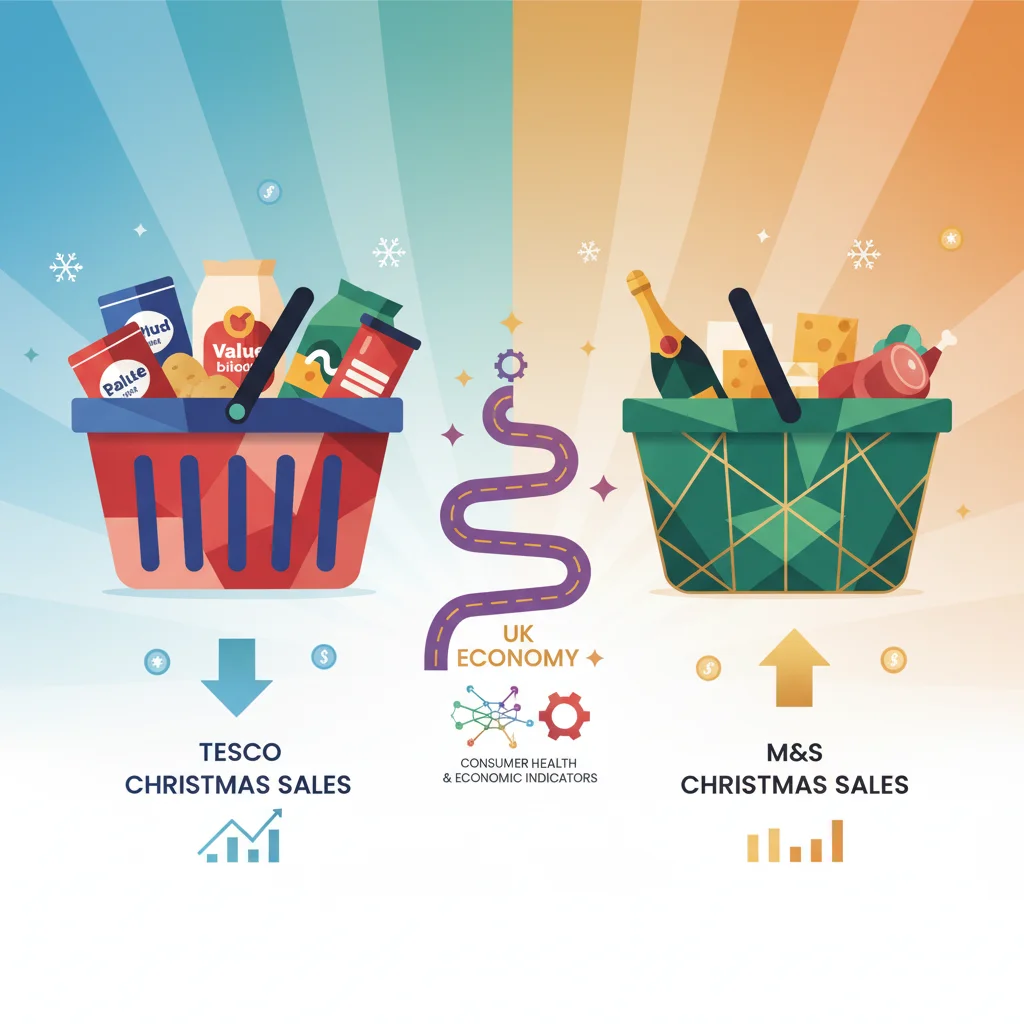
A Tale of Two Baskets: What Tesco & M&S Christmas Sales Reveal About the UK Economy
The festive season is more than just a time for celebration; for economists and investors, it’s a crucial litmus test for consumer health and the broader economy. The final quarter’s retail figures act as a powerful bellwether, and this year, the results from two of the UK’s high-street giants, Tesco and Marks & Spencer, paint a fascinating and complex picture. While both retailers toasted record-breaking food sales, a deeper dive into the numbers reveals a story of cautious consumers, strategic pivots, and significant implications for the future of retail, finance, and investing.
At first glance, the headlines suggest universal success. Shoppers filled their baskets, with both Tesco and M&S reporting a surge in demand for festive treats and premium groceries. However, the divergence in performance in non-food categories, particularly at M&S, provides a more nuanced narrative about where Britons are choosing—and able—to spend their money. This isn’t just a story about turkey and tinsel; it’s a macroeconomic snapshot that every investor, business leader, and finance professional should be dissecting.
The Great British Christmas Dinner: A Resounding Success
In an economic climate marked by persistent inflation and cost-of-living pressures, the strength in food sales was a welcome sign of resilience. Consumers, it seems, were determined to protect the Christmas dinner table, even if it meant cutting back elsewhere. This trend played out beautifully for both Tesco and M&S, albeit through different strategic lenses.
Tesco, the UK’s largest supermarket, demonstrated the power of its vast market share and value-focused proposition. The retailer reported that its UK sales rose by a robust 6.8% in the six weeks leading up to January 6th. This performance was driven by a combination of its premium “Finest” range, which saw sales jump by nearly 17%, and its consistent focus on price-matching discounters like Aldi through its “Aldi Price Match” campaign. This dual strategy allowed Tesco to capture spend from both budget-conscious shoppers and those looking to trade up for a special occasion, proving its adaptability in a complex market.
Meanwhile, Marks & Spencer continued its remarkable food renaissance, cementing its status as the go-to destination for affordable luxury. M&S Food posted an impressive 9.9% increase in like-for-like sales over the 13 weeks to December 30th. This stellar growth indicates that consumers are increasingly willing to “trade down” from expensive restaurant meals to premium home-dining experiences—a sweet spot that M&S dominates. The success of its festive food-to-order service and high-quality ready meals highlights a deep understanding of modern consumer desires for convenience without compromising on quality.
Below is a direct comparison of the headline food sales performance for the two retail giants:
| Retailer | Division | Like-for-Like Sales Growth | Reporting Period |
|---|---|---|---|
| Tesco | UK Food & General Merchandise | +6.8% | 6 weeks to Jan 6, 2024 |
| Marks & Spencer | Food | +9.9% | 13 weeks to Dec 30, 2023 |
These figures underscore a key theme in the current economy: spending is being consolidated into essential or emotionally significant categories. The Christmas meal is non-negotiable, and retailers who offered a compelling mix of value and quality were the clear winners.
The Sanctions Paradox: How Russian Elites are Paying Double for a Taste of Western Luxury
A Wrinkle in the Fabric: The Discretionary Spending Squeeze
While the food halls were buzzing, the story in the clothing and homeware aisles was far more complicated. This is where the pressure on household budgets becomes starkly apparent. M&S, which has been on a long and arduous journey to revitalise its non-food offerings, delivered a performance that was positive on the surface but revealed underlying weaknesses upon closer inspection.
M&S’s Clothing & Homeware division reported a sales increase of 4.8% over the same 13-week period. While any growth is commendable in the current climate, the company acknowledged this was below expectations and resulted in a slight decline in its market share. This suggests that while M&S is selling more, its competitors are growing even faster. The result highlights the immense challenge of selling discretionary items like jumpers, coats, and cushions when consumers are carefully monitoring their bank accounts. Factors such as a milder-than-usual autumn also likely delayed purchases of winter wear, further impacting sales.
This “split basket” phenomenon—where consumers splurge on food but pull back on fashion—is a critical indicator for the stock market. It signals that companies reliant on non-essential goods face a much tougher road ahead. The competition from fast-fashion e-commerce giants and the continued dominance of discounters create a pincer movement on mid-market players like M&S, making it difficult to maintain momentum.
The Investor’s Playbook: Decoding the Signals
For those involved in investing and trading, these results offer a treasure trove of insights that go far beyond a single quarter’s performance. They provide a forward-looking indicator of corporate strategy, economic health, and sector-wide trends.
Tesco: The Defensive Stalwart
Tesco’s results reinforce its position as a defensive stock. Its sheer scale, efficient supply chain, and multi-pronged strategy of catering to both budget and premium segments make it resilient during economic downturns. The success of its Clubcard loyalty program—a powerful data-gathering tool—gives it a significant edge in understanding and responding to customer behaviour. For an investor, Tesco represents stability and a deep moat in the fiercely competitive grocery sector. Its performance is a testament to solid operational execution and a clear understanding of its core market.
Marks & Spencer: The Turnaround Test
The M&S story is one of high stakes and potential. The phenomenal success of its food division, driven by a joint venture with Ocado, proves it can innovate and execute flawlessly. However, the persistent challenges in Clothing & Homeware remain the central question for its long-term valuation. The stock market has rewarded M&S for its progress over the past year, but these latest figures serve as a reminder that the turnaround is not yet complete. Investors will be watching closely to see if the brand can translate its food magic into its fashion aisles and truly reclaim its former glory. The path forward requires not just stylish products but a seamless integration of its digital and physical stores, a challenge where financial technology and data analytics will be paramount.
Liquid Gold: How Tunisia's Olive Oil Boom is Reshaping its Economy and Global Markets
The Macro View: Technology, Finance, and the Future of Retail
Looking beyond the individual companies, these results have profound implications for the intersection of retail, technology, and finance.
The modern retail battle is fought not just on price but on data. The sophisticated use of financial technology (fintech) in loyalty programs, payment processing, and inventory management is what separates the leaders from the laggards. Tesco’s Clubcard is essentially a fintech platform that drives personalized marketing and supply chain efficiency. Similarly, the entire e-commerce ecosystem, from digital checkout to BNPL options, relies on a robust partnership between retail and the banking sector.
Furthermore, the discipline of economics provides the framework for understanding these shifts. The concept of elasticity of demand is on full display: the demand for food is relatively inelastic (people have to eat), while the demand for new clothing is highly elastic (people can easily postpone these purchases). This fundamental economic principle is currently dictating the fortunes of the entire retail industry.
In the future, we may even see emerging technologies like blockchain play a greater role, particularly in ensuring supply chain transparency for premium food products, allowing a customer to trace their M&S Scottish salmon from farm to fork—a powerful tool for building brand trust.
The Walls Are Closing In: How a New Global Crypto Tax Crackdown Will Change Everything for Investors
Conclusion: A Cautious Optimism
The Christmas trading updates from Tesco and M&S are more than just numbers on a spreadsheet; they are a narrative of a nation navigating economic uncertainty. They show a consumer who is resilient, discerning, and highly strategic with their spending. The celebration of food and family remains protected, but the belt is being tightened on almost everything else.
For investors and business leaders, the key takeaway is the critical importance of a clear and compelling value proposition. Whether it’s the unbeatable value and convenience of a supermarket giant or the accessible luxury of a premium food hall, success lies in understanding and serving a specific customer need exceptionally well. As we move further into the year, the retailers who can adapt to this bifurcated consumer landscape, leverage technology, and maintain operational excellence will be the ones who not only survive but thrive.