Trump’s Venezuelan Oil Gambit: A Multi-Billion Dollar Opportunity or a Geopolitical Quagmire?
A Bold Claim with Global Implications
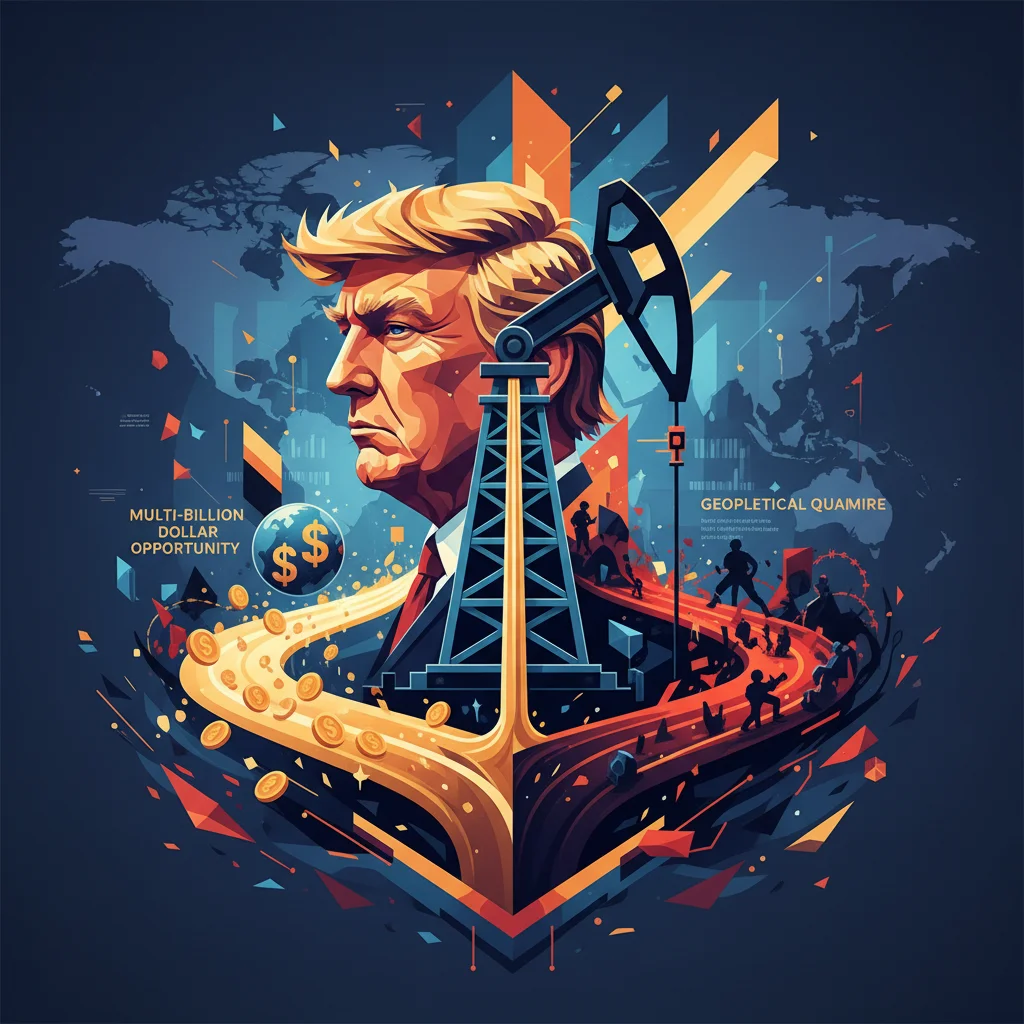
In a statement that sent ripples through the worlds of energy, finance, and geopolitics, former President Donald Trump recently claimed that Venezuela would be “turning over” as much as 50 million barrels of oil to the United States. He further suggested that American oil companies could be operational within the nation’s beleaguered oil fields in as little as 18 months. This assertion, while short on specifics, reopens a complex and high-stakes discussion about the future of Venezuela’s vast energy resources and its relationship with the U.S.
For investors, business leaders, and anyone tracking the global economy, this isn’t just political rhetoric. It’s a signal of a potential paradigm shift with the power to reshape energy markets, influence the stock market, and present both immense opportunities and significant risks. But to understand the true weight of this statement, we must look beyond the headline and delve into the intricate realities of Venezuela’s oil industry, the impact of international sanctions, and the monumental task of rebuilding a fallen energy giant.
The Paradox of Plenty: Venezuela’s Oil Conundrum
Venezuela’s situation is one of the great paradoxes in modern economics. The nation sits atop the world’s largest proven oil reserves, estimated at over 300 billion barrels, surpassing even Saudi Arabia. In theory, this geological wealth should translate into national prosperity and global influence. However, the reality is a stark contrast.
Decades of political instability, chronic mismanagement of the state-owned oil company Petróleos de Venezuela, S.A. (PDVSA), and a severe lack of investment in critical infrastructure have crippled the country’s production capabilities. Compounding these issues are the stringent U.S. sanctions, designed to pressure the ruling government, which have effectively isolated Venezuela from global finance and key markets. The result has been a catastrophic decline in output. From a peak of over 3 million barrels per day (bpd) in the late 1990s, production has plummeted to a fraction of that, hovering around 800,000 bpd in recent months, according to OPEC secondary sources.
This collapse has not only devastated the Venezuelan economy but has also removed a significant potential supplier from the global market, contributing to price volatility and shifting geopolitical alliances. Trump’s statement suggests a potential reversal of this trend, but the path forward is anything but simple.
The Cockroach Portfolio: Why Resilience Beats Unicorns in a Volatile Economy
To fully grasp the scale of the challenge and the opportunity, it’s helpful to visualize the data. The following table contrasts Venezuela’s immense potential with its current, diminished reality.
| Metric | Venezuela’s Status | Global Context & Comparison |
|---|---|---|
| Proven Oil Reserves | ~303 Billion Barrels | Largest in the world; surpasses Saudi Arabia (~297 Billion) |
| Peak Oil Production (1998) | ~3.5 Million Barrels per Day (bpd) | Comparable to major producers at the time |
| Recent Oil Production (2024) | ~800,000 bpd | A fraction of its potential; less than 1% of global supply |
| Required Investment for Recovery | Estimated $15-20 Billion per year for a decade | A monumental undertaking for the international banking and finance sector |
Unpacking the 18-Month Timeline: A Feat of Finance and Engineering
The suggestion that U.S. firms could be “up and running” in 18 months is ambitious, to say the least. The Venezuelan oil infrastructure—from drilling rigs and pipelines to refineries and export terminals—is in a state of advanced decay. Revitalizing it would require a massive capital injection, a stable political and legal framework to protect that investment, and a level of logistical coordination that would test even the world’s largest energy corporations.
Experts estimate that restoring Venezuela’s production to its former glory could require upwards of $250 billion in total investment over many years. This is not just a matter of turning on a switch. It involves:
- Infrastructure Overhaul: Repairing and replacing corroded pipelines, upgrading dilapidated refineries, and restoring power to oil fields.
- Technological Expertise: Much of Venezuela’s oil is extra-heavy crude, which is more difficult and costly to extract and refine. This requires specialized technology and expertise that has been absent for years.
- Human Capital: The collapse of PDVSA led to a mass exodus of skilled engineers, geologists, and technicians. Rebuilding this talent pool will take time.
- Navigating the Political Landscape: Any U.S. involvement would be contingent on a dramatic shift in U.S. policy and the establishment of a secure, transparent operating environment in Venezuela, free from the risk of expropriation.
The Ripple Effect: What This Means for the Economy and Your Investments
Should this scenario, however remote, begin to materialize, the impact on the global economy and financial markets would be profound. Investors and business leaders should be watching for several key developments:
1. The Impact on Oil Prices: The most immediate effect would be on the price of crude oil. The prospect of millions of barrels of Venezuelan crude eventually re-entering the market would exert downward pressure on prices. This would be a bearish signal for WTI and Brent crude futures, potentially offering relief at the gas pump for consumers but squeezing profit margins for existing producers. The dynamics of global economics suggest that even the *announcement* of a credible plan could impact futures trading long before the first barrel is even shipped.
2. The Stock Market Reaction: The energy sector of the stock market would see a significant reshuffling.
- Potential Winners: U.S. energy giants with the capital and expertise to operate in challenging environments (e.g., Chevron, ConocoPhillips) could see their stock prices rise on the news. Oilfield services companies (e.g., Halliburton, Schlumberger) would also be major beneficiaries, as they would be essential for the rebuilding effort.
- Potential Losers: Companies focused on higher-cost production, such as some U.S. shale producers, could face increased competition and lower prices, potentially impacting their profitability and stock performance.
China's Economic Engine Sputters Back to Life: A Real Recovery or a False Dawn?
3. Geopolitical Realignments: A U.S.-Venezuela rapprochement would fundamentally alter the geopolitical landscape. It could reduce the influence of Russia and China, who have become Venezuela’s primary economic and political backers. It would also shift the power dynamics within OPEC+, potentially reducing the influence of Saudi Arabia and Russia over global supply. This geopolitical chess game is a critical factor for any long-term investing strategy in the energy space.
4. The Role of International Banking: Structuring the financing for such a massive reconstruction effort would be a landmark undertaking for the world of international banking. It would require complex loan syndications, political risk insurance, and innovative financing vehicles to attract the necessary capital, all while navigating a delicate and evolving regulatory environment.
A High-Stakes Game of Risk and Reward
For now, Trump’s statement remains a speculative but tantalizing prospect. The path to realizing Venezuela’s oil potential is littered with obstacles that are as much political as they are technical. The history of the nation’s crisis is a testament to how quickly things can unravel.
However, investors and market analysts cannot afford to dismiss it entirely. The sheer scale of Venezuela’s reserves means that any change in its status is a market-moving event. The key is to differentiate between political posturing and tangible policy shifts. Any credible steps—such as the easing of sanctions, the establishment of a new legal framework for foreign investment, or initial agreements with major oil companies—would be powerful signals that the game is changing.
In conclusion, the potential re-emergence of Venezuela as a major oil producer represents one of the most significant “what ifs” in the global energy market today. It’s a long shot, fraught with risk, but the potential reward—for the companies involved, for the global economy, and for the long-suffering Venezuelan people—is immense. This is a story that sits at the nexus of finance, politics, and technology, and it’s one that every serious investor should be watching closely.