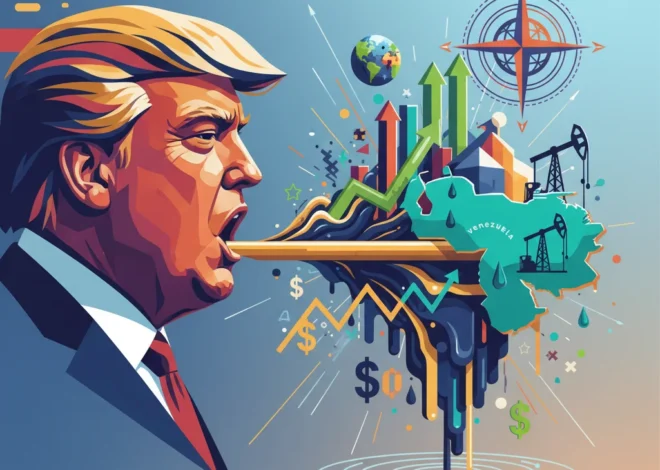
The Vulture’s Gamble: Inside the High-Stakes Hunt for Venezuela’s Trillion-Dollar Debt
Introduction: A Nation on the Brink, An Opportunity for the Bold
Venezuela, a nation once buoyed by the world’s largest proven oil reserves, now stands as a stark case study in economic collapse. Years of political turmoil, hyperinflation, and mismanagement under Nicolás Maduro have crippled its economy, leading to a humanitarian crisis and a colossal default on its international financial obligations. But where many see ruin, a select group of sophisticated investors sees a once-in-a-generation opportunity. In the opaque world of high-stakes finance, hedge funds are quietly amassing claims against the Venezuelan state, betting billions on the prospect of a political sea change that could turn seemingly worthless paper into a fortune.
This isn’t your average stock market play. This is the world of distressed debt, a high-risk, high-reward arena where fortunes are made and lost on the fate of nations. According to a report from the Financial Times, the total value of these unpaid claims is estimated to be a staggering $150 billion. As the geopolitical pressure on the Maduro regime intensifies, these financial hunters are positioning themselves for what could be one of the most complex and lucrative sovereign debt restructurings in modern history.
The Anatomy of a Default: How Venezuela’s Economy Imploded
To understand the current feeding frenzy, one must first grasp the scale of Venezuela’s economic implosion. For decades, the nation’s fortunes were inextricably linked to its state-owned oil giant, Petróleos de Venezuela, S.A. (PDVSA). When oil prices were high, cash flowed freely, funding social programs and enriching the political elite. However, a combination of falling oil prices, rampant corruption, and disastrous economic policies created a perfect storm.
The government and PDVSA had borrowed heavily on international markets, issuing billions in bonds to investors worldwide. As oil production plummeted and state revenues evaporated, Venezuela found itself unable to service this mountain of debt. In 2017, the country officially defaulted, sending shockwaves through the emerging markets and leaving bondholders with instruments worth mere pennies on the dollar. This default wasn’t just on bonds; it extended to a vast web of commercial debts, arbitral awards from nationalized companies, and other liabilities, creating a legal and financial quagmire of epic proportions.
The Brussels Effect: Why Europe's Tech Crackdown is a Game-Changer for Global Investors
Enter the “Vultures”: The Strategy of Distressed Debt Investing
The players now circling Venezuela’s debt are often pejoratively labeled “vulture funds,” but in the world of investing, they are known as distressed debt specialists. Their business model is conceptually simple but operationally complex: identify and purchase the debt of struggling or bankrupt entities—be they corporations or countries—at a steep discount. They then hold these assets, often for years, waiting for a “trigger event” that could lead to a recovery.
In the case of a sovereign default like Venezuela’s, the ultimate trigger is political change. These funds are not betting on Maduro’s economic policies; they are betting against his very survival. Their thesis is that any future, more moderate government recognized by the international community will be forced to negotiate with its creditors to regain access to global capital markets. When that day comes, the funds that bought bonds for 5 or 10 cents on the dollar could see them restructured for 30, 40, or even 50 cents, realizing astronomical returns. This requires immense patience, deep legal expertise, and a strong stomach for political risk—a hallmark of this specialized corner of the trading world.
A Tangled Web: Mapping Venezuela’s Mountain of Debt
The challenge for investors is the sheer complexity of Venezuela’s liabilities. The claims are not a single, uniform pile of debt but a messy tangle of different instruments with varying legal standings and recovery prospects. A successful strategy requires navigating this maze to identify the assets with the strongest legal claims.
Below is a simplified breakdown of the major categories of Venezuelan financial claims currently being traded in secondary markets.
| Type of Claim | Description | Key Holders | Potential Recovery Challenges |
|---|---|---|---|
| Republic of Venezuela Bonds | Sovereign debt issued directly by the national government. | Institutional investors, hedge funds, retail investors. | Subject to collective action clauses; restructuring requires broad creditor agreement. |
| PDVSA Bonds | Debt issued by the state-owned oil company. Some are backed by collateral like shares in its US subsidiary, Citgo. | Specialized distressed debt funds, institutional investors. | Legal battles over the validity of collateral (e.g., the PDVSA 2020 bond) and the “alter ego” theory linking PDVSA directly to the state. |
| Arbitral Awards | Legal judgments won by foreign companies (e.g., ConocoPhillips, Crystallex) whose assets were nationalized by the government. | The original companies, or funds that have purchased the claims. | Enforcing awards is difficult and involves trying to seize Venezuelan assets abroad, a legally complex and lengthy process. |
| Promissory Notes & Commercial Debt | Unpaid bills to suppliers, service providers, and trade finance loans from international banking institutions. | A wide array of commercial entities and financial firms. | Often have lower seniority in a restructuring compared to sovereign bonds, making recovery less certain. |
As one portfolio manager noted, “There’s a whole universe of claims… judgments, promissory notes, all sorts of defaulted debt” (source). The hunt is on for those claims with the strongest legal teeth, which could give their holders priority when a settlement eventually occurs.
The 50/50 Gamble: What the Eurostar Breakdown Reveals About Our Brittle Global Economy
The Political Endgame and the Role of Modern Finance
The entire investment thesis hinges on one critical factor: the end of the Maduro regime and the installation of a government that the United States and other Western powers are willing to do business with. U.S. sanctions are currently the biggest barrier, preventing most trading and settlement of Venezuelan debt. The hope among investors is that a political transition would lead to the lifting of these sanctions, paving the way for a formal debt restructuring process guided by the International Monetary Fund (IMF).
This is where modern financial technology could play a transformative role. The process of identifying, verifying, and trading these disparate claims is currently archaic and opaque. Could a fintech solution, perhaps leveraging blockchain technology, be used to create a transparent and immutable digital registry of all credible claims against Venezuela? Such a system could streamline the chaotic reconciliation process, reduce fraud, and create a more efficient marketplace for these assets. While not yet a reality, the potential for financial technology to bring order to the chaos of a sovereign debt workout is a compelling future application.
The U.S. government’s posture is the key variable. The prospect of a U.S.-led capture or removal of Maduro, however remote, is what fuels the most optimistic scenarios for these funds (source). Any signal from Washington about a potential path to lifting sanctions is scrutinized intensely by this niche community of investors.
Conclusion: The Ultimate Test of Political and Financial Risk
The hunt for Venezuelan debt is more than just a financial transaction; it’s a high-stakes bet on the geopolitical future of an entire nation. It represents the raw intersection of international law, politics, and finance, where investors are underwriting a potential political transition. For the funds involved, the risks are immense. A protracted stalemate, the consolidation of the Maduro regime, or a chaotic succession could render their holdings worthless for another decade or more.
However, the potential rewards are equally enormous. A successful restructuring could generate returns of several hundred percent, cementing the reputations and fortunes of the portfolio managers who made the right call. For the rest of us, the Venezuelan debt saga serves as a powerful real-world lesson in sovereign risk, the inner workings of the global financial system, and the profound impact that a country’s governance can have on its economic destiny. The vultures are circling, and whether they find a feast or a famine will depend entirely on the political winds of change in Caracas.

Related Posts
The $1.5 Trillion Gambit: Deconstructing the Economic Shockwaves of a Proposed US Defense Budget Overhaul
Beyond Sanctions: The US Takes Direct Control of Venezuela’s Oil Wealth