The PDVSA Gambit: Unpacking the Economic Fallout of U.S. Sanctions on Venezuelan Oil
In early 2019, the global financial and energy markets were jolted by a move that weaponized the U.S. dollar in a dramatic new way. The Trump administration, in a bid to oust Venezuelan President Nicolás Maduro, didn’t send troops; it sent shockwaves through the banking system. By imposing sweeping sanctions on Petróleos de Venezuela, S.A. (PDVSA), the state-owned oil and gas giant, the U.S. targeted the very heart of the Venezuelan economy. This wasn’t just a political maneuver; it was a high-stakes play in economic warfare, designed to sever Maduro’s financial lifelines and redirect the nation’s oil wealth to opposition leader Juan Guaidó.
This bold strategy had immediate and far-reaching consequences, extending from the trading desks in New York and London to the oil refineries on the U.S. Gulf Coast and the already struggling streets of Caracas. For investors, finance professionals, and business leaders, the event served as a stark reminder of how quickly geopolitical risk can reshape markets, disrupt supply chains, and create unprecedented challenges and opportunities. Understanding the mechanics and fallout of the PDVSA sanctions offers critical insights into the modern intersection of politics, energy, and international finance.
The Anatomy of Economic Warfare: How the Sanctions Worked
The sanctions imposed on PDVSA were not a simple trade embargo. They were a sophisticated financial blockade designed to paralyze the company’s ability to operate within the global financial system, which is overwhelmingly dominated by the U.S. dollar. The U.S. Treasury Department, led by then-Secretary Steven Mnuchin, announced that it would be blocking all PDVSA property and assets subject to U.S. jurisdiction. The core components of this financial assault included:
- Asset Freeze: An estimated $7 billion in PDVSA assets held in the United States were immediately frozen. This included everything from bank accounts to physical property.
- Payment Diversion: The sanctions mandated that any payments for Venezuelan oil from U.S. entities could not go to the Maduro government. Instead, they were to be routed to blocked accounts, theoretically to be held for a future government led by Juan Guaidó, whom the U.S. had recognized as the legitimate interim president.
- Prohibition on Transactions: U.S. persons and companies were prohibited from engaging in transactions with PDVSA. This effectively cut off Venezuela’s access to its single most important market for crude oil exports.
This strategy was a direct strike at the Venezuelan government’s primary source of hard currency. By controlling the flow of money, the U.S. aimed to starve the Maduro regime of the funds it needed to pay the military, import goods, and maintain its grip on power. It was a clear demonstration of how financial infrastructure and banking regulations can be wielded as potent tools of foreign policy.
PDVSA: The Collapsing Heart of a Petro-State
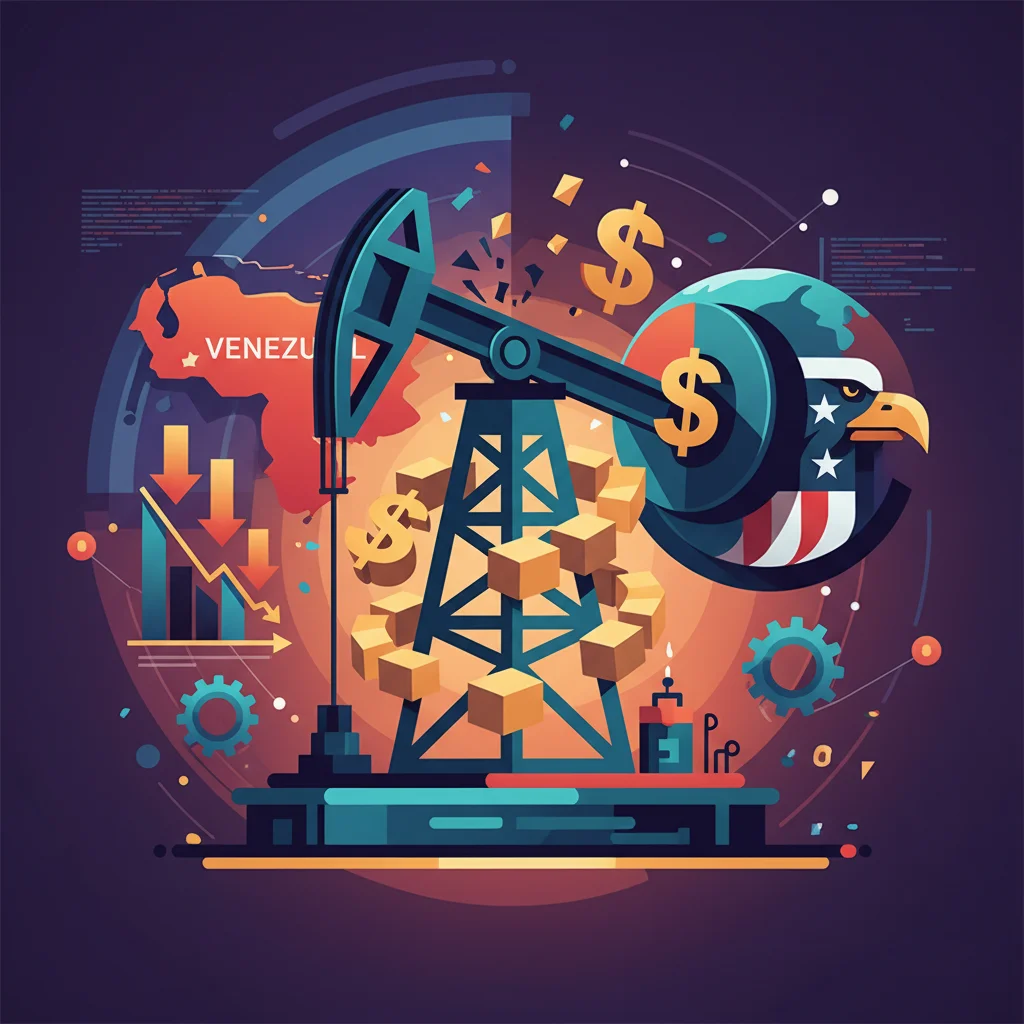
To grasp the magnitude of the U.S. sanctions, one must understand the central role of PDVSA in Venezuela’s economy. For decades, the nation’s vast oil reserves—the largest in the world—funded its government and social programs. PDVSA was the engine of the state. However, long before the 2019 sanctions, that engine was sputtering.
Years of mismanagement, systemic corruption, and a lack of investment in critical infrastructure had led to a catastrophic decline in oil production. Skilled engineers and workers had fled the country, and equipment had fallen into disrepair. The sanctions, therefore, were not imposed on a healthy, thriving enterprise, but on a national champion already on its knees. The goal was to deliver a final, decisive blow.
The following table illustrates the dramatic decline in Venezuela’s crude oil production in the years leading up to and following the 2019 sanctions, highlighting the pre-existing crisis that the sanctions exacerbated.
| Year | Average Crude Oil Production (Million Barrels per Day) |
|---|---|
| 2015 | 2.65 |
| 2016 | 2.37 |
| 2017 | 2.03 |
| 2018 | 1.51 |
| 2019 (Sanctions Imposed) | 0.91 |
| 2020 | 0.57 |
Data Source: U.S. Energy Information Administration (EIA) analysis of OPEC figures.
This precipitous drop showcases an economy in freefall. The 2019 sanctions accelerated this trend, making it nearly impossible for PDVSA to access the capital, technology, and markets needed to even maintain, let alone increase, its output.
The Great Crypto Recalibration: Why Wall Street's Arrival Will Define the Market by 2026
Global Shockwaves: The Ripple Effect on Markets and Trade
The decision to sanction PDVSA was not made in a vacuum. It sent immediate ripples across the global economy, impacting energy markets, shipping routes, and the balance sheets of major corporations.
1. The U.S. Refining Industry Scrambles
Ironically, one of the first sectors to feel the pain was a segment of the U.S. economy. Refineries along the U.S. Gulf Coast, such as those operated by Citgo (PDVSA’s U.S. subsidiary), Valero, and Chevron, had complex facilities specifically designed to process the heavy, sour crude that Venezuela produced. This crude was often cheaper than lighter varieties, and these refineries had invested billions to handle it. Suddenly, their primary feedstock was cut off. This forced a frantic search for alternatives, with refiners turning to Canada, Mexico, and Iraq to fill the gap. The disruption led to tighter margins and highlighted the supply chain vulnerabilities inherent in a globalized energy market.
2. The Impact on Oil Prices and Trading
The removal of a significant volume of heavy crude from the market put upward pressure on oil prices, particularly for specific grades. While the global oil market was relatively well-supplied at the time, preventing a massive price spike, the sanctions introduced a new layer of volatility and uncertainty. For traders, this geopolitical event became a key variable in their pricing models, affecting everything from futures contracts to the stock market valuations of energy companies. The “political risk premium” in oil trading became palpably higher.
XRP's High-Stakes Tug-of-War: Why Macroeconomic Forces Are Overpowering Crypto Hype
3. A Geopolitical Chess Match with Russia and China
Venezuela did not face the sanctions alone. For years, both China and Russia had extended billions of dollars in loans to the country, often structured as oil-for-loan agreements. These deals meant that a significant portion of Venezuela’s oil production was already earmarked to pay back these debts. The U.S. sanctions complicated these arrangements immensely, forcing Caracas, Moscow, and Beijing to devise new, often opaque, methods for shipping and payment to keep the oil—and the money—flowing. This deepened Venezuela’s reliance on U.S. adversaries and transformed the Caribbean into a new theater of great-power competition.
The Investment Fallout: Navigating Default and Political Risk
For the finance and investing community, the PDVSA saga has been a masterclass in political risk. Long before the 2019 sanctions, Venezuela and PDVSA bonds were the domain of high-risk, high-reward investors. The country had already defaulted on its debt in 2017, but many bondholders held on, hoping a change in government would lead to a restructuring and eventual repayment.
The sanctions threw these calculations into disarray. Key takeaways for investors include:
- The Complexity of Sanctioned Debt: Trading in Venezuelan bonds became a legal and ethical minefield. U.S. sanctions prohibited transactions in these securities, effectively freezing them in place for many investors. The question of who is the legitimate issuer of debt—the Maduro government or the Guaidó-led opposition—added another layer of unprecedented legal complexity.
- The Primacy of Geopolitics: The episode demonstrated that for certain emerging markets, geopolitical analysis is just as important as traditional financial analysis. The value of an asset can be wiped out overnight by a presidential decree or a Treasury Department ruling.
- Compliance as a Cornerstone of Modern Finance: Financial institutions, from global investment banks to small fintech payment processors, were put on high alert. They had to immediately update their compliance systems to screen for and block any transactions related to PDVSA. This highlighted the critical role that financial technology (RegTech) plays in enforcing international sanctions and the immense operational burden it places on the banking sector.
–
The situation underscored a fundamental lesson in modern investing: a deep understanding of economics must be paired with an equally deep understanding of the political forces that can upend any economic model.
Beyond Bitcoin: 3 Altcoins Poised for a Potential Breakout
Conclusion: An Unfinished Story of Power, Oil, and Finance
Years after the Trump administration’s “maximum pressure” campaign was launched, Nicolás Maduro remains in power. The sanctions succeeded in decimating the Venezuelan economy and its formal oil sector, but they failed to achieve their primary political objective of regime change. The humanitarian cost has been immense, contributing to hyperinflation, widespread shortages, and a massive refugee crisis.
The PDVSA gambit serves as a powerful case study in the modern application of economic power. It revealed the immense leverage the U.S. holds over the global financial system while also exposing the limits of that power in achieving specific political outcomes. For anyone involved in international business, finance, or investing, the lessons are clear: the world is a complex, interconnected system where a single political decision can trigger a cascade of economic consequences. Navigating this landscape requires not just financial acumen, but a keen awareness of the geopolitical currents that can, and will, continue to shape our world.