The Robots Are Clocking In: Why Hyundai’s Plan to Deploy Humanoids is a Glimpse into Our AI-Powered Future
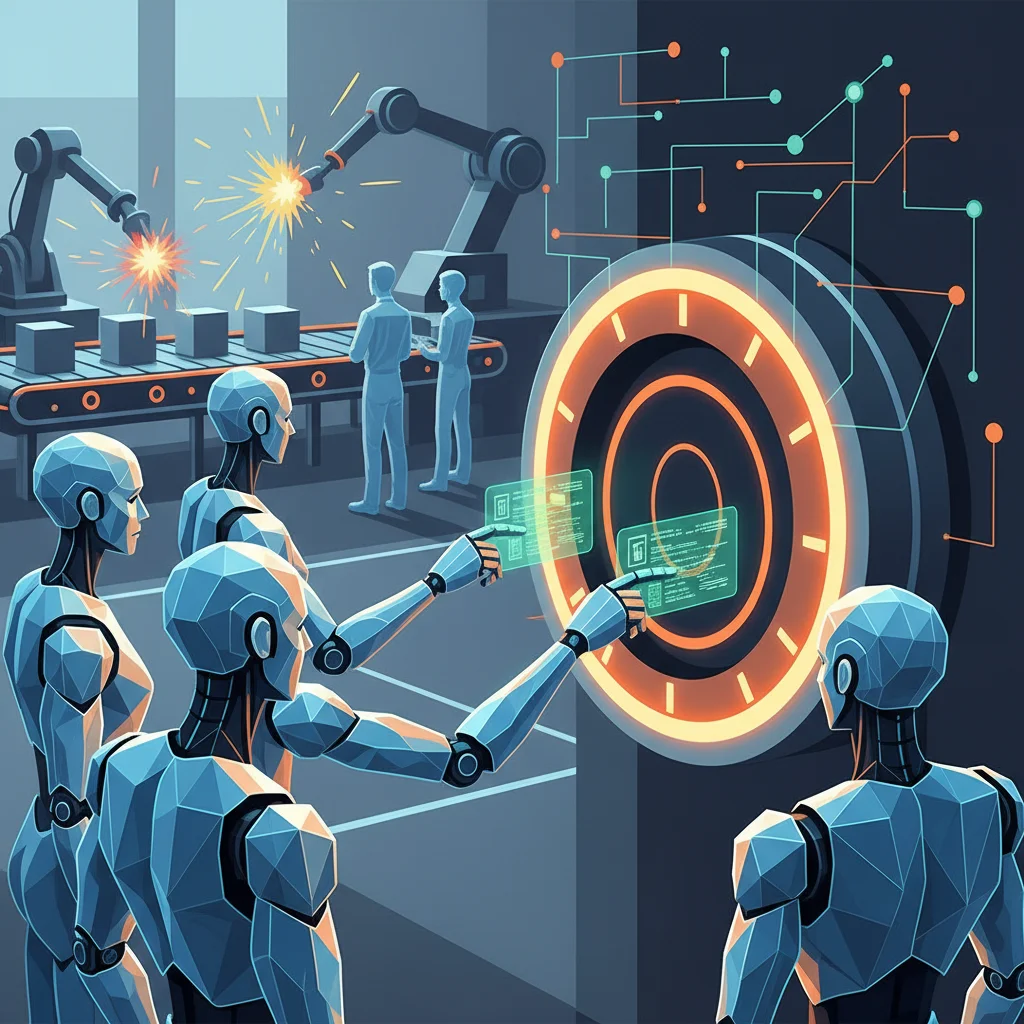
Picture a factory floor. It’s a symphony of organized chaos—sparks fly from welding arms, conveyor belts hum with perpetual motion, and human workers move with practiced precision. Now, add a new element to this scene: a bipedal, humanoid robot walking the line, picking up a component, and fitting it into place with near-human dexterity. This isn’t a scene from a sci-fi blockbuster; it’s the near future for one of Hyundai’s U.S. manufacturing plants.
In a move that signals a seismic shift in industrial automation, Hyundai has announced its intention to deploy humanoid robots on its factory floor. According to a report from the BBC, the automotive giant is set to integrate this next-generation technology into its production lines, marking one of the first major real-world applications of humanoid robots in a large-scale manufacturing environment. This isn’t just about adding another tool to the assembly line; it’s about fundamentally rethinking the intersection of labor, technology, and human-machine collaboration.
This development isn’t happening in a vacuum. It’s the culmination of years of relentless innovation in artificial intelligence, robotics, and advanced software engineering. For developers, entrepreneurs, and tech professionals, Hyundai’s move is a clear signal: the age of intelligent, adaptable automation is here, and it’s poised to redefine industries far beyond the automotive sector.
From Robotic Arms to Walking Co-Workers: A New Era of Automation
For decades, factory automation has been dominated by stationary robotic arms bolted to the floor. These machines are incredibly efficient at performing a single, repetitive task with superhuman speed and precision. They weld, they paint, they lift heavy objects—but their utility is confined to a highly structured, predictable workspace. They are powerful tools, but they lack one critical element: adaptability.
Humanoid robots represent a paradigm shift. By mimicking the human form, they are designed to operate in environments built for people. They can navigate cluttered spaces, climb stairs, open doors, and use tools designed for human hands. This versatility is made possible by Hyundai’s strategic acquisition of Boston Dynamics, the company famous for its viral videos of stunningly agile robots like Atlas. In 2021, Hyundai Motor Group acquired a controlling stake in Boston Dynamics for approximately $1.1 billion (source), a move that was less about building a car and more about building the future of mobility and labor.
The robots destined for Hyundai’s factory floors are the direct descendants of this groundbreaking research. They aren’t just programmed for a task; they are powered by sophisticated AI and machine learning algorithms that allow them to perceive their environment, make decisions, and learn from experience. This is the key differentiator that elevates them from simple machines to potential co-workers.
Your AI Companion Isn't Your Friend—It's a Product
The Tech Stack Powering the Robotic Revolution
Creating a robot that can walk, balance, and manipulate objects is a monumental hardware challenge. But the true magic lies in the invisible architecture of software, AI, and data processing that brings the machine to life. This complex ecosystem is where the real innovation is happening.
- Artificial Intelligence (AI) and Machine Learning (ML): The “brain” of the robot is a suite of AI models. Computer vision algorithms allow it to see and interpret its surroundings. Reinforcement learning models enable it to master complex tasks like grasping objects of varying shapes and sizes through trial and error in simulated environments. Natural Language Processing (NLP) could eventually allow for voice commands, making interaction more intuitive.
- Advanced Software and Programming: The control software is a masterpiece of modern programming. It must process data from hundreds of sensors (cameras, gyroscopes, force sensors) in real-time to maintain balance and coordinate movements. This isn’t a simple script; it’s a dynamic system that constantly adjusts to a changing world.
- Cloud and SaaS Integration: A single robot generates terabytes of operational data. This data is often offloaded to the cloud for heavy-duty processing, model training, and fleet-wide learning. A lesson learned by one robot in a simulation can be compiled into a software update and pushed to the entire fleet, much like a SaaS (Software-as-a-Service) platform. This shared intelligence model accelerates improvement at an exponential rate.
This convergence of technologies is what makes the current moment so exciting. It’s not just a robotics story; it’s an AI story, a cloud computing story, and a software engineering story all rolled into one.
Why a Humanoid Form? Comparing Next-Gen vs. Traditional Automation
A common question is: why go through the immense difficulty of building a bipedal robot when a simpler machine on wheels could do the job? The answer lies in flexibility and integration. Factories are designed for humans. A humanoid robot can slot into existing workflows without requiring a complete redesign of the facility.
Here’s a breakdown of how these new robots stack up against their traditional counterparts:
| Feature | Traditional Robotic Arms | Humanoid Robots |
|---|---|---|
| Flexibility | Low. Designed for a single, repetitive task in a fixed location. | High. Can be redeployed to different tasks and locations with software updates. |
| Mobility | None. Bolted to the floor or a fixed track. | High. Can navigate complex, human-centric environments (stairs, doorways). |
| Integration Cost | High initial cost for custom cages, fixtures, and line redesign. | Potentially lower, as it can integrate into existing human workflows. |
| Task Range | Narrow. Specialized for tasks like welding, painting, or heavy lifting. | Broad. Can perform a wide variety of tasks, including assembly, logistics, and inspection. |
| Core Technology | Pre-programmed kinematics and control loops. | AI-driven perception, machine learning for adaptation, dynamic balancing. |
However, framing this as a simple “robots vs. humans” conflict is a mistake. The more likely near-term reality is collaboration. These initial deployments will be pilots, focused on tasks that are dangerous, dirty, or ergonomically challenging for humans (the “3D jobs”). The immediate impact won’t be mass layoffs but a shift in the human workforce towards roles that require creativity, critical thinking, and robot supervision. The real question we should be asking is not “Will robots take our jobs?” but “How will we adapt our skills and education systems for a future where we work alongside intelligent machines?” This transition is the single greatest challenge and opportunity of the coming decade.
The Ripple Effect: Cybersecurity, Startups, and the Future of Work
Hyundai’s initiative is a catalyst, and its effects will reverberate far beyond the walls of its factory. This move creates both immense opportunities and significant new challenges.
One of the most critical considerations is cybersecurity. When your factory workforce is a network of sophisticated, cloud-connected robots, the attack surface expands dramatically. A malicious actor could potentially disrupt an entire production line, steal proprietary manufacturing data, or even cause physical harm by altering a robot’s programming. Securing these systems will become a top priority, creating a massive opportunity for cybersecurity firms specializing in IoT and operational technology (OT) security. The convergence of IT and OT is a frontier fraught with risk and reward.
Shaken, Not Stirred: Why the 007 Game Delay Is a Masterclass in Modern Tech Innovation
This new robotic ecosystem will also be a breeding ground for startups and entrepreneurs. An entirely new market will emerge for:
- Specialized AI Software: Startups will develop AI modules for specific tasks, like advanced quality inspection or delicate assembly, that can be sold on a SaaS basis to robot operators.
- Simulation Platforms: Companies will need robust virtual environments to train and test robots before deploying them, creating a demand for “digital twin” technology.
- Maintenance and Diagnostics: A new class of technicians will be needed to service these complex machines, supported by AI-powered diagnostic tools.
The successful deployment of humanoid robots in one major industry will inevitably lead to adoption in others. We can expect to see similar technology trialed in logistics warehouses, hospitals (assisting nurses), retail (stocking shelves), and even disaster response. According to a report by the International Federation of Robotics, robot installations in industrial settings are already at an all-time high, with over 553,000 new units installed in 2022 alone (source). The introduction of humanoids will only accelerate that trend.
Conclusion: The First Step on a Long Road
Hyundai’s plan to put humanoid robots to work is more than just a press release; it’s a declaration that the future we’ve long imagined is finally taking shape. It represents the point where decades of research in artificial intelligence, advanced software, and mechanical engineering converge into a practical, commercially viable application.
While the path ahead is filled with technical hurdles, ethical dilemmas, and societal adjustments, the direction of travel is clear. We are moving toward a world where intelligent machines are not just tools, but active participants in our economy and daily lives. For those of us in the technology sector, this isn’t a time for fear, but for preparation and engagement. The challenge is to build this future responsibly, ensuring that this incredible wave of innovation lifts all of us up.
Beyond the Bling: How Flawed Diamonds are Building the Future of Tech
The robots are clocking in for their first shift. The world of work will never be the same.