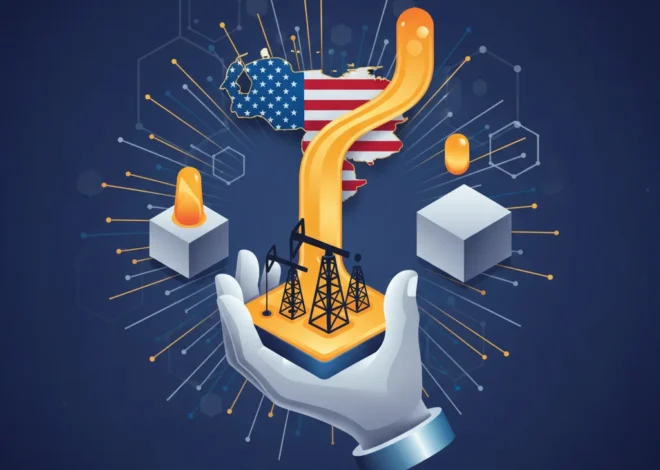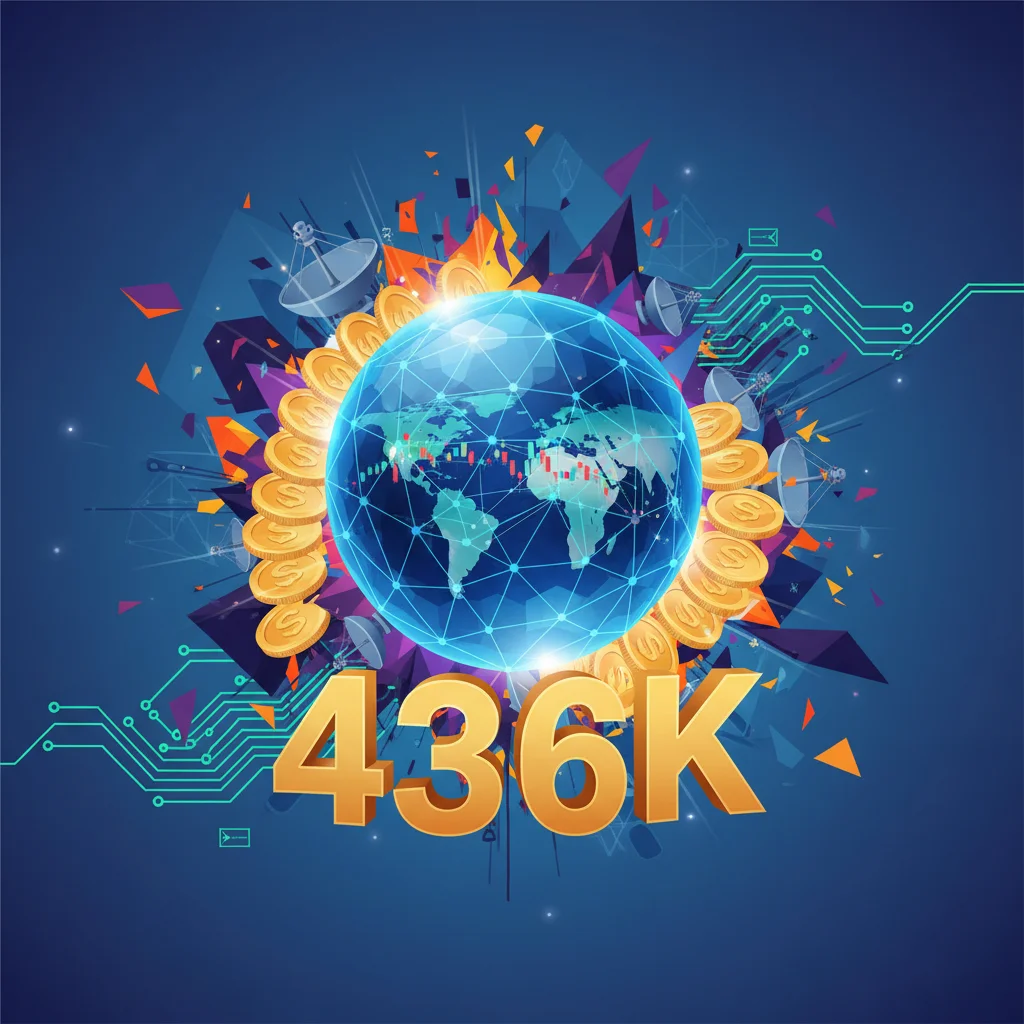
The $436,000 Geopolitical Bet: How Fintech Is Transforming Wall Street’s Crystal Ball
In the world of high-stakes finance, fortunes are often made on meticulously researched stock picks, complex derivatives, or shifts in the global economy. But what if you could make a fortune by betting directly on a political outcome? Recently, one anonymous user on a prediction market platform did just that, turning a $32,000 wager into a staggering $436,000 profit by correctly predicting the (then-rumored) capture of Venezuelan leader Nicolás Maduro. This single, audacious trade, reported by the BBC, peels back the curtain on one of the most disruptive forces in modern finance: the rise of decentralized prediction markets.
This isn’t just a story about a lucky bet. It’s a profound case study in how financial technology, or fintech, is creating new avenues for trading, information aggregation, and risk assessment that operate far outside the traditional realms of banking and the stock market. It raises critical questions about the nature of investing, the value of information, and the future of economic forecasting.
From Theory to Trading: Unpacking Prediction Markets
Before we delve deeper into this specific trade, it’s essential to understand the engine that powered it. What exactly is a prediction market? At its core, a prediction market is a speculative marketplace where users trade contracts based on the outcome of future events. Think of it as a stock market for events rather than companies.
Instead of buying shares of Apple or Tesla, you buy “shares” in an outcome. For example, a contract might be “Will Nicolás Maduro be in U.S. custody by December 31, 2024?”. If you believe the event will happen, you buy “Yes” shares. If you don’t, you buy “No” shares. The prices of these shares fluctuate between $0.01 and $0.99, reflecting the market’s collective belief in the probability of the event occurring. A price of $0.70 on a “Yes” share implies a 70% perceived probability.
The underlying principle is a powerful economic theory known as the “Wisdom of Crowds.” First popularized by James Surowiecki, the theory posits that a large, diverse group of people with access to different information is collectively smarter than any individual expert. As traders buy and sell based on their own knowledge, research, and intuition, the market price becomes a real-time, aggregated forecast. According to Investopedia, these markets can often produce remarkably accurate forecasts for everything from election results to economic indicators.
This event-driven form of trading is a radical departure from traditional investing, which is typically focused on the fundamentals of a company or the broader health of the economy.
The Halving Is No Longer the Main Event: How Institutional ETFs Are Rewriting Bitcoin's Future
The Blockchain Revolution in Speculative Trading
The market where the Maduro bet took place, Polymarket, isn’t just any prediction platform; it’s built on blockchain technology. This is a crucial detail that separates modern prediction markets from their predecessors. The integration of blockchain brings several game-changing elements to the world of finance and trading:
- Decentralization: Unlike a traditional brokerage or bank, these platforms operate on a decentralized network. This means there’s no single company controlling the funds or the market, which can increase transparency and reduce censorship risk.
- Transparency: Every transaction is recorded on a public ledger. While the user’s real-world identity is anonymous, their wallet address and the details of their trades (size, timing, price) are often visible to all, fostering a more open trading environment.
- Accessibility: Blockchain-based platforms are often global and operate 24/7. Anyone with an internet connection and a crypto wallet can participate, breaking down the geographical and institutional barriers that dominate traditional finance.
- Smart Contracts: Payouts are automated via smart contracts—self-executing code that automatically transfers funds to the winners once the event’s outcome is verified. This removes counterparty risk, the danger that the other side of your trade will fail to pay up.
This fusion of economics and cutting-edge financial technology is creating a parallel financial ecosystem, one that is more agile, global, and, in some ways, more raw than the established stock market.
Comparing a New Frontier with an Old Guard
To truly grasp the paradigm shift, it’s helpful to see how these new platforms stack up against the traditional stock market. The following table highlights some of the key differences:
| Feature | Prediction Markets (Blockchain-based) | Traditional Stock Market |
|---|---|---|
| Asset Traded | Contracts on the outcome of future events (e.g., elections, economic data, geopolitical events) | Shares of ownership in publicly traded companies (stocks), bonds, and ETFs |
| Basis of Value | Collective belief and probability of an event’s occurrence | Company performance, earnings, market sentiment, and macroeconomic factors |
| Regulatory Oversight | Often operates in a gray area; subject to scrutiny from bodies like the CFTC | Heavily regulated by government agencies like the SEC |
| Accessibility | Global, 24/7 access, typically requiring a crypto wallet | Restricted by brokerage hours, national borders, and requires a traditional bank/brokerage account |
| Core Technology | Blockchain, smart contracts, cryptocurrencies | Centralized legacy banking and trading systems |
Alpha, Information Asymmetry, and Geopolitical Risk
For investors and finance professionals, the key question is whether these markets offer a genuine edge, or “alpha.” In the Maduro case, the trader placed their $32,000 bet just before the news broke, suggesting they may have had access to superior information or possessed an exceptional ability to analyze disparate, publicly available intelligence. This is a classic example of information asymmetry—where one party in a transaction has more or better information than the other.
While insider trading is illegal in the stock market, the rules in decentralized prediction markets are far less defined. The winning trader could have been anyone from a well-connected political insider to a brilliant open-source intelligence (OSINT) analyst who connected the dots from flight tracking data, social media whispers, and obscure news reports. This is where prediction markets become more than just a betting platform; they are a powerful tool for pricing geopolitical risk.
A corporation looking to expand into a volatile region could consult prediction markets to gauge the risk of political instability. An insurance company could use the data to price risk more accurately. This represents a new frontier in financial technology, turning qualitative risks into quantifiable data points.
The Unavoidable Collision with Regulation
As these markets grow in popularity and influence, they are inevitably attracting the attention of regulators. The U.S. Commodity Futures Trading Commission (CFTC) has historically taken a cautious, and often prohibitive, stance. In 2023, the CFTC filed a lawsuit against Polymarket, alleging that the platform was offering illegal off-exchange event-based binary options contracts. The case resulted in a settlement and a fine, forcing the platform to temporarily block U.S.-based users from trading on certain markets.
The regulatory concern centers on several key issues:
- Gambling vs. Investing: Regulators struggle to classify these instruments. Are they legitimate hedging and risk-assessment tools, or are they simply a new form of online gambling?
- Market Integrity: How can these markets be protected from manipulation by individuals with deep pockets or malicious intent?
- Public Interest: The CFTC has argued that some contracts, particularly those related to political assassinations or terrorism, are “contrary to the public interest” and should not be traded.
The future of prediction markets, especially in major economies like the United States, will depend heavily on navigating this complex regulatory landscape. Proponents argue that with the right framework, they could be integrated into the mainstream financial system as a powerful new asset class for hedging and speculation.
The Future of Trading and Information
The $436,000 bet on Maduro’s downfall is more than a sensational headline. It is a glimpse into a future where finance is more decentralized, information is priced in real-time by a global crowd, and the lines between investing, economics, and geopolitics are completely intertwined.
For investors and business leaders, these developments cannot be ignored. While direct participation may be too risky for many, the data generated by these markets could become an invaluable source of alternative intelligence. For the fintech industry, it represents a bold experiment in creating new financial instruments and platforms. As this technology matures and the regulatory path becomes clearer, prediction markets could evolve from a niche corner of the crypto world into a mainstream tool for understanding and navigating our increasingly complex and uncertain world. The crystal ball of finance is no longer on Wall Street; it’s being built, line by line, on the blockchain.

Related Posts

The Taxman Cometh… With an API: Why a UK Tax Change Is a Gold Rush for AI and SaaS Startups
The $1.5 Trillion Gambit: Deconstructing the Economic Shockwaves of a Proposed US Defense Budget Overhaul