The Trillion-Dollar Gamble: Can Trump Unlock Venezuela’s Oil Fortune?
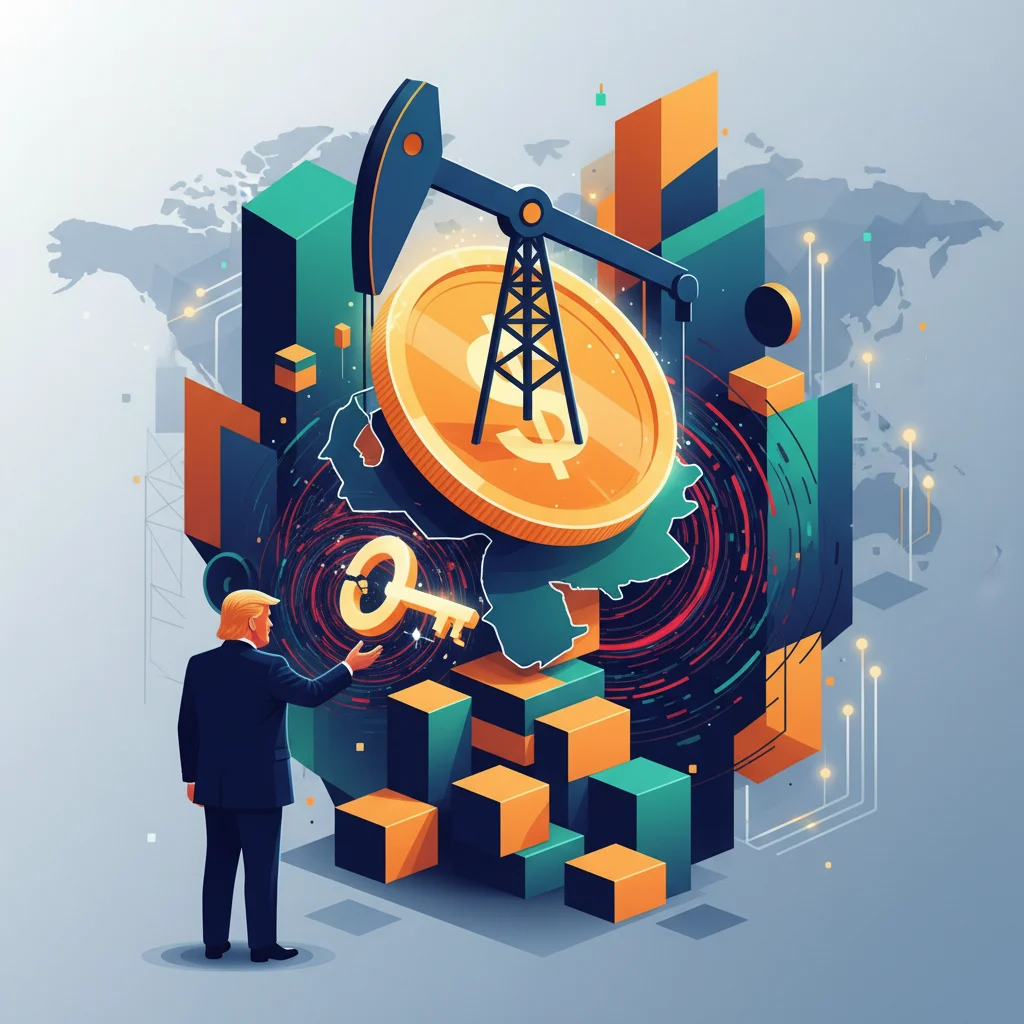
In the high-stakes world of global geopolitics and finance, few statements carry as much weight as a former—and potentially future—U.S. President outlining a plan to reshape the global energy map. Donald Trump’s recent declaration that American oil firms would invest billions to ramp up oil production in Venezuela is more than just a headline; it’s a seismic proposition that could redefine energy markets, challenge geopolitical alliances, and present a monumental, high-risk/high-reward scenario for the world of investing.
The proposal, briefly mentioned in a BBC report, suggests a dramatic pivot in U.S. foreign policy towards the beleaguered South American nation. For investors, finance professionals, and business leaders, this isn’t just about oil. It’s about sovereign risk, the future of the U.S. dollar’s dominance in energy trading, and the intricate dance between capital and political will. But is this audacious plan a masterstroke of economic diplomacy or a dangerous foray into one of the world’s most volatile political landscapes? Let’s drill down into the complexities.
The Paradox of Plenty: Venezuela’s Buried Treasure
To understand the magnitude of Trump’s proposal, one must first grasp the Venezuelan paradox. The nation sits atop the world’s largest proven oil reserves, estimated at over 300 billion barrels, surpassing even Saudi Arabia. This geological gift should have made it one of the wealthiest countries on the planet. Instead, it has become a case study in economic collapse.
Decades of political instability, nationalization of private assets, chronic mismanagement of the state-owned oil company PDVSA, and crippling U.S. sanctions have decimated its production capabilities. Once a powerhouse producing over 3 million barrels per day (bpd) in the late 1990s, Venezuela’s output has plummeted. As of early 2024, production hovered around a mere 800,000 bpd, a shadow of its former self.
The infrastructure—refineries, pipelines, and ports—is in a state of advanced decay, requiring an injection of capital so massive that only the world’s largest energy corporations and financial institutions could even contemplate it. This is the daunting reality that any U.S. investment plan would face.
The Silent Crash: How Japan's Demographic Crisis Will Reshape the Global Economy
Below is a simplified look at the staggering decline in Venezuela’s oil output over the years, illustrating the scale of the challenge.
| Year | Approximate Crude Oil Production (Million Barrels Per Day) | Key Events |
|---|---|---|
| 1998 | 3.1 | Hugo Chávez elected president. |
| 2008 | 2.3 | Post-nationalization era, beginning of decline. |
| 2016 | 2.2 | Economic crisis deepens under Nicolás Maduro. |
| 2019 | 0.8 | U.S. imposes heavy sanctions on PDVSA. |
| 2023 | 0.7-0.8 | Slight recovery amid temporary sanctions relief. |
Source: Data compiled from reports by the U.S. Energy Information Administration (EIA) and OPEC.
Deconstructing the Plan: More Than Just Drilling
Revitalizing Venezuela’s oil sector isn’t as simple as sending in American roughnecks and equipment. It would require a multi-faceted strategy that ventures deep into the realms of international law, finance, and diplomacy.
- Sanctions Relief: The primary hurdle is the complex web of U.S. sanctions targeting Maduro’s government and PDVSA. A Trump administration would need to dismantle or significantly modify these sanctions to allow U.S. companies like Chevron and ExxonMobil to operate legally and, more importantly, to repatriate profits.
- Capital Investment: Experts estimate that restoring Venezuela’s production to its former glory would require an investment of $250 billion or more over a decade. This capital would be needed for everything from drilling new wells and repairing pipelines to modernizing refineries and dredging oil terminals. Securing this level of financing from the private sector and international banking institutions would require iron-clad legal and political guarantees.
- Political & Legal Framework: American companies will not risk billions in a country with a history of expropriation without a stable, predictable legal framework. This would likely involve negotiating Production Sharing Agreements (PSAs) or other investment models that protect their assets and ensure a fair return—a major concession for a government historically committed to state control.
The Global Chessboard: Ripples Across the Market
The successful execution of such a plan would send shockwaves through the global energy market and the broader stock market. The re-entry of 2-3 million barrels per day of Venezuelan crude would fundamentally alter the supply-demand equation.
- Impact on OPEC+: The cartel, led by Saudi Arabia and Russia, has painstakingly managed production cuts to stabilize prices. A surge of non-OPEC (but formerly OPEC-founding member) oil from Venezuela could undermine these efforts, potentially leading to a price war or forcing the group to make deeper cuts. This would create significant volatility in oil trading markets.
- Geopolitical Realignment: For years, Russia and China have been Venezuela’s primary economic and political lifelines, extending loans in exchange for oil and gaining a strategic foothold in America’s backyard. A U.S.-led revival of Venezuela’s oil industry would directly challenge their influence, potentially reorienting Caracas back towards a Western economic orbit.
- U.S. Energy Security: Proponents would argue that bringing Venezuelan heavy crude back online would benefit U.S. Gulf Coast refineries, which are specifically designed to process it. This could reduce American reliance on more distant and potentially less stable sources of heavy oil, bolstering domestic energy security.
Audit Overhaul: Is the SEC Loosening the Leash on Corporate Watchdogs?
An Investor’s Minefield: Weighing Risk and Reward
For the finance community, the central question is whether the potential reward justifies the colossal risk. A clear-eyed assessment reveals a stark dichotomy.
Below is a high-level comparison of the potential upsides versus the significant downsides for any company or investor considering this venture.
| The Bull Case (Potential Rewards) | The Bear Case (Immense Risks) |
|---|---|
| Access to the world’s largest, low-cost oil reserves. | Extreme political and sovereign risk; potential for future nationalization. |
| Potentially astronomical ROI if political stability is achieved. | Massive upfront capital expenditure with a very long payback period. |
| First-mover advantage in a reopened, major oil province. | Dilapidated infrastructure requiring complete overhaul. |
| Positive impact on energy company valuations and the stock market. | Severe ESG (Environmental, Social, Governance) concerns. |
| Alignment with potential U.S. foreign policy goals. | Uncertainty over the durability of any political agreement. |
The core of the matter lies in political stability. Without a credible, long-term assurance that contracts will be honored and assets will be safe, Venezuela remains largely “un-investable” for Western firms. The history of the global oil industry is littered with cautionary tales of foreign companies caught in the crossfire of domestic politics.
Conclusion: A Bold Vision Facing a Harsh Reality
Donald Trump’s proposal to revitalize Venezuela’s oil industry with American capital is the epitome of a high-stakes geopolitical gambit. It offers a tantalizing vision: restoring a failed state’s primary industry, lowering global energy prices, boosting the American economy, and checking the influence of rivals like China and Russia. It’s a move that speaks directly to the core principles of economics—unlocking undervalued assets for mutual benefit.
However, the path from vision to reality is a minefield of political instability, legal uncertainty, and immense financial risk. It would require not only a change in the White House but a fundamental change in Caracas, along with a bulletproof international agreement that can withstand political shifts on all sides. For now, investors and business leaders should watch this space closely. The rhetoric is powerful, but the reality on the ground in Venezuela remains one of the most complex and challenging in modern finance. The potential for a trillion-dollar reward is there, but it is guarded by a dragon of geopolitical risk that has yet to be slain.