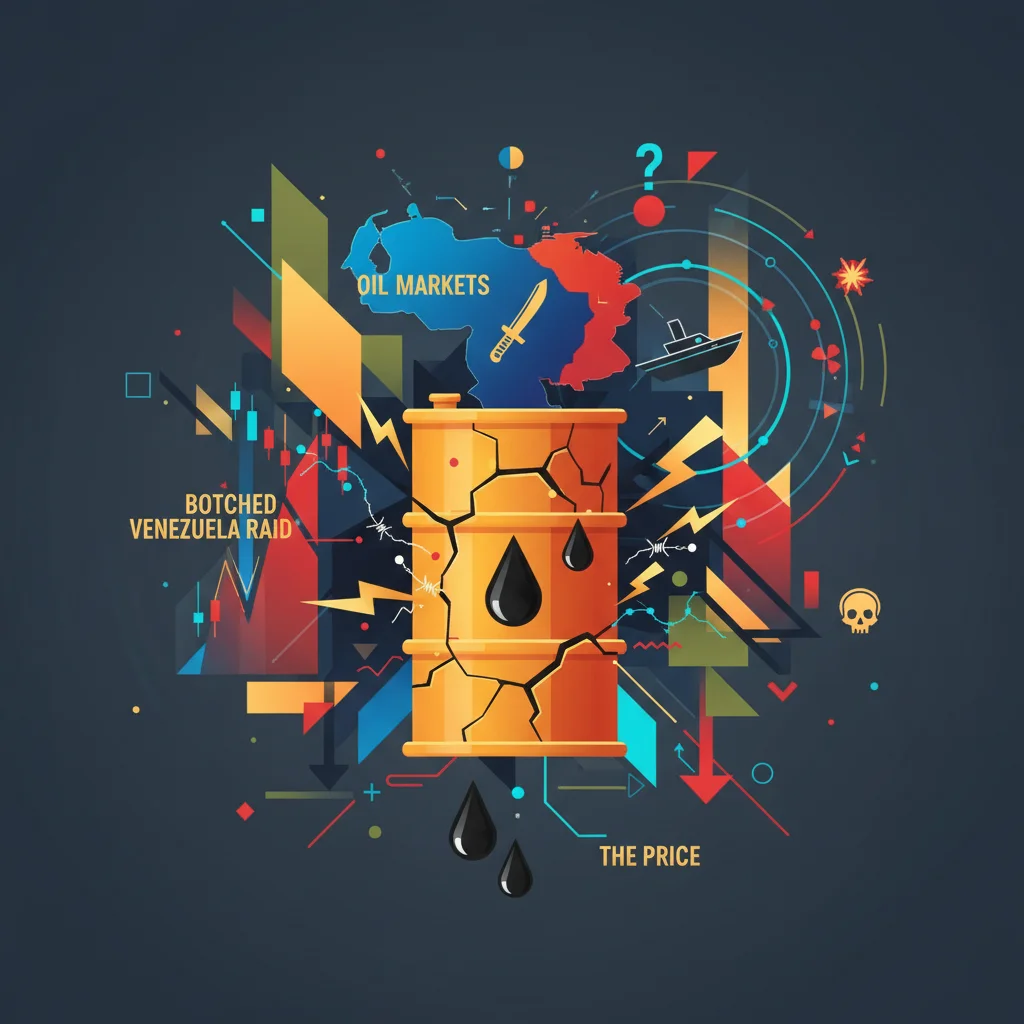
The Price of a Coup: Geopolitical Risk, Oil Markets, and the Botched Venezuela Raid
In the world of high-stakes finance and investing, risk is a constant companion. Analysts build complex models to price in market volatility, economic downturns, and policy shifts. But some risks defy easy quantification. They are the black swans, the geopolitical earthquakes that can reshape markets overnight. In May 2020, one such event unfolded on the shores of Venezuela—a bizarre, cinematic, and ultimately disastrous attempt to capture a head of state, offering a stark lesson in the unpredictable nature of geopolitical risk and its profound implications for the global economy.
Dubbed “Operation Gideon,” the plan was as audacious as it was ill-fated. A small contingent of mercenaries, including two former U.S. Green Berets, launched a seaside raid with the goal of infiltrating the capital, seizing President Nicolás Maduro, and spiriting him away to the United States. The operation, orchestrated by a Florida-based security firm called Silvercorp USA, was not a covert CIA mission but a privatized endeavor that collapsed in spectacular fashion. According to the Financial Times, the attacks targeted military, transport, and communication sites in Caracas and along Venezuela’s northern coast, but were swiftly and brutally neutralized by Maduro’s forces.
For investors, business leaders, and financial professionals, this story is more than just a geopolitical curiosity. It is a masterclass in risk assessment, a cautionary tale about the stability of emerging markets, and a window into the powerful forces that influence commodity prices, international banking, and the broader global economy.
The Economic Tinderbox: Why Venezuela Was a Target
To understand the motivation behind such a high-risk operation, one must first grasp the catastrophic state of Venezuela’s economy. Once one of Latin America’s wealthiest nations, blessed with the world’s largest proven oil reserves, the country has been ravaged by years of economic mismanagement, corruption, and crippling U.S. sanctions. The results have been devastating:
- Hyperinflation: The national currency, the bolívar, became virtually worthless, leading to an economic environment where traditional banking and finance ceased to function for ordinary citizens.
– Economic Collapse: GDP has plummeted, leading to widespread poverty, food shortages, and a mass exodus of millions of Venezuelans.
– Financial Isolation: Severe U.S. sanctions have effectively cut Venezuela off from the global financial system, making international trade and investment nearly impossible.
This economic collapse created a fertile ground for dissent and intervention. The promise of a post-Maduro Venezuela—one where sanctions are lifted, oil production is revitalized, and the economy is reopened to international investing—was a powerful lure. A successful regime change could have unlocked immense value, not just for the Venezuelan people, but for multinational corporations, particularly in the energy sector. The failure of Operation Gideon, however, ensured that the country’s economic paralysis would continue, keeping its vast oil wealth largely off the global market and reinforcing its status as a pariah state in the world of international finance.
The Elephant in the Room: Could a UK Return to the EU Customs Union Redefine its Economic Future?
Anatomy of a Failure: Operation Gideon’s Key Flaws
The operation’s collapse can be attributed to a series of critical failures in planning, intelligence, and execution. Understanding these is crucial for any leader or investor assessing high-stakes ventures in volatile regions. Below is a breakdown of the stated plan versus the grim reality.
| Operational Aspect | The Plan (As Envisioned by Organizers) | The Reality (What Actually Happened) |
|---|---|---|
| Infiltration | A stealthy amphibious landing on the Venezuelan coast, followed by a swift advance on Caracas. | The landing party was immediately intercepted by local fishermen and Maduro’s security forces, who were apparently tipped off. |
| Force Size & Capability | A small but highly-trained force of mercenaries, including elite U.S. veterans, to lead a popular uprising. | An underfunded and poorly equipped group of around 60 men (source), easily overpowered by the Venezuelan military. |
| Element of Surprise | A covert operation that would catch the Maduro regime completely off guard. | The plan was widely known in some circles and had been infiltrated by Maduro’s intelligence agents long before it launched. |
| Outcome | Capture President Maduro, trigger a regime change, and claim a multi-million dollar reward. | Multiple attackers were killed, and the rest, including the two Americans, were captured and paraded on state television. |
The Ripple Effect: Why a Failed Raid in Venezuela Matters for Global Finance
While the boats never made it far from the shore, the ripples from Operation Gideon were felt across the interconnected worlds of finance, economics, and international policy. For the savvy investor or business leader, the takeaways are critical.
1. The Geopolitical Risk Premium in Commodity Trading
Venezuela sits on an ocean of oil. A successful coup would have undoubtedly led to a phased lifting of sanctions and a gradual return of Venezuelan crude to the global market. This would have increased global supply, potentially driving down oil prices—a major event for the world of commodity trading. The operation’s failure did the opposite: it reinforced Maduro’s grip on power and guaranteed that Venezuelan oil infrastructure would continue to crumble, keeping that supply offline indefinitely. This event serves as a stark reminder that the price of oil is not just a function of supply and demand economics, but is heavily influenced by the stability—or instability—of producer nations. The risk of sudden political upheaval in key regions adds a permanent “risk premium” to energy prices, a factor every investor in the sector must consider.
2. Investing in Emerging Markets: A Lesson in Due Diligence
The allure of emerging markets is the potential for exponential growth. However, this potential comes with heightened risk. Operation Gideon is a textbook case of the extreme political volatility that can exist beneath the surface. For any fund or company considering investing in a politically unstable nation, this story underscores the absolute necessity of deep, on-the-ground intelligence and a sober assessment of political realities. It’s not enough to analyze a country’s balance sheet; one must also understand its power structures, its internal conflicts, and the potential for “black swan” events. The failure highlights how quickly a situation can deteriorate, wiping out investments and creating untenable operational risks.
The Ramen Principle: What a Noodle Bar Can Teach Us About Core Asset Investing
3. The Future of Banking and Financial Technology in Failed States
Venezuela’s traditional banking system is in ruins. In its place, a chaotic, dollarized black market economy has emerged, with many citizens turning to cryptocurrencies as a store of value against hyperinflation. This desperate environment, while tragic, provides a glimpse into potential use cases for financial technology. In a post-conflict or post-sanctions scenario, rebuilding a nation’s financial infrastructure from scratch would be a monumental task. This is where technologies like blockchain could, in theory, play a role in creating transparent, secure systems for property rights, payments, and banking. While Operation Gideon failed to create such a scenario, it forces us to consider how fintech could be a critical tool in the economic reconstruction of failed states, representing a long-term, high-risk, but potentially high-reward investment frontier.
Conclusion: A Cautionary Tale for a Volatile World
The audacious attempt to capture Nicolás Maduro was a military and intelligence disaster. Yet, its true legacy may be the lessons it offers to the global financial community. It demonstrates that the world is more unpredictable than ever, and that the intersection of private capital, military ambition, and political desperation can create explosive outcomes. For anyone involved in finance, from the individual trader watching the stock market to the CEO of a multinational corporation, Operation Gideon is a powerful reminder: the most important risks are often the ones that cannot be found in a spreadsheet. Understanding the human and political dynamics shaping the global landscape is no longer an ancillary skill—it is essential for navigating the turbulent economic waters of the 21st century.
The Week in Review: 5 Critical Market Signals and What They Mean for Your Portfolio

Related Posts
Geopolitical Chess: Why a Squeeze on Venezuela’s Oil Has China—and Global Investors—on Edge

The Billion-Dollar Phantom: How an Alleged Crime Lord’s Arrest Exposes the Dark Side of Global Finance