The 2026 Tech Tremor: How EU Regulation and a Potential Trump Return Could Reshape the Global Economy
Introduction: A Perfect Storm on the Horizon
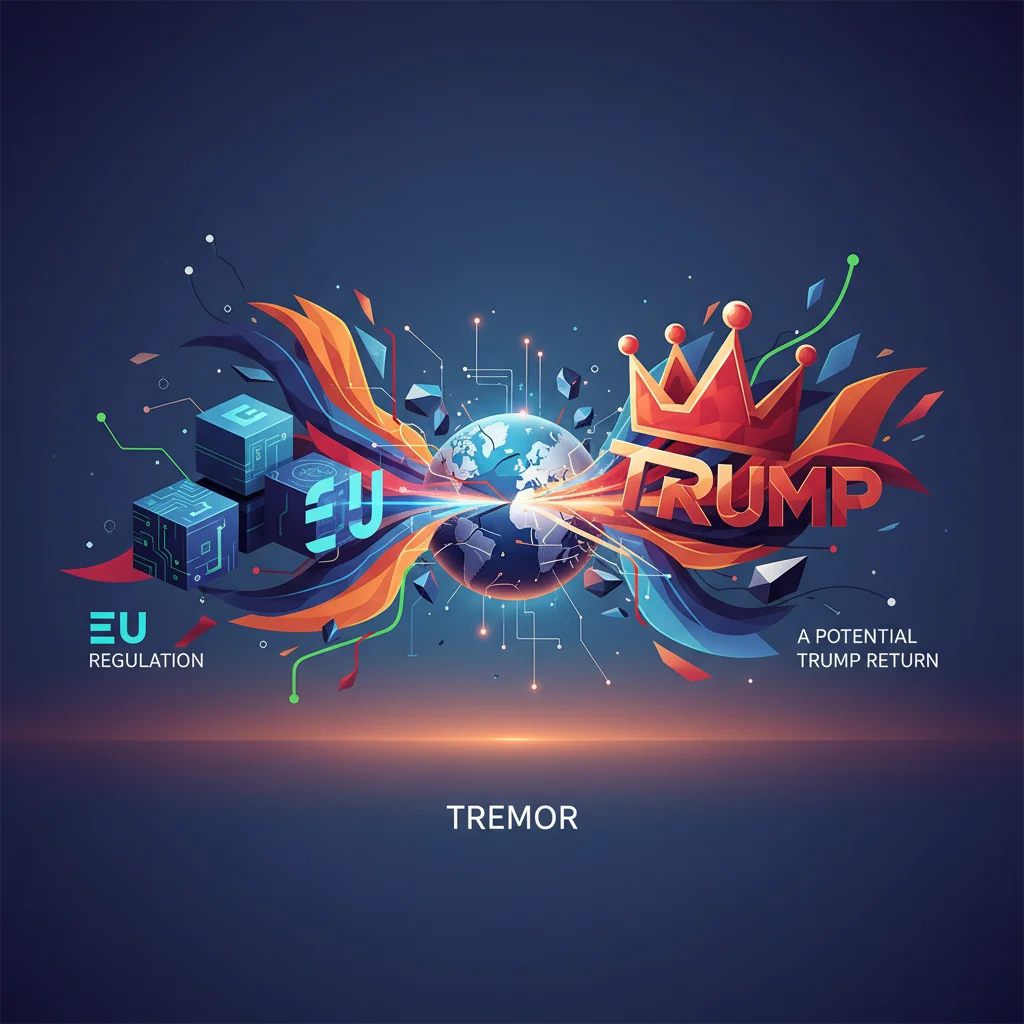
In the intricate world of global finance and technology, tectonic plates are shifting. A convergence of stringent regulation, immense corporate power, and volatile geopolitics is setting the stage for a monumental showdown in 2026. On one side stands the European Union, armed with its landmark digital rulebook and ready to enforce it with unprecedented rigor. On the other, the titans of American technology—Google, Meta, Apple, and X—face a new era of accountability. And looming over this entire scenario is the wildcard of a potential second U.S. presidency for Donald Trump, who has already warned of swift retaliation against what he perceives as a targeted assault on American industry. For investors, business leaders, and anyone involved in the global economy, the coming years are not just a matter of compliance; they are a critical test of strategy, resilience, and foresight.
This isn’t merely a story about privacy settings or app store fees. It’s a high-stakes drama with trillion-dollar implications for the stock market, international trade, and the very architecture of the digital world. As Brussels prepares to flex its regulatory muscle, the decisions made in boardrooms and government halls will echo through every corner of the financial landscape, from venture capital investing in disruptive fintech to the stability of transatlantic banking relationships.
The EU’s Regulatory Arsenal: Deconstructing the DMA and DSA
At the heart of this conflict are two powerful pieces of EU legislation: the Digital Markets Act (DMA) and the Digital Services Act (DSA). While they sound similar, they target different aspects of the digital ecosystem. Understanding their distinction is crucial for grasping the full scope of the challenge facing Big Tech.
The Digital Markets Act (DMA): Rewriting the Rules of Competition
The DMA is the EU’s answer to the immense power wielded by “gatekeeper” platforms. It’s a proactive, ex-ante regulation designed to foster competition rather than just punishing anti-competitive behavior after the fact. Its core mission is to prevent giants like Apple and Google from using their dominant positions to stifle smaller rivals.
Key mandates of the DMA include:
- Interoperability: Forcing messaging services like WhatsApp and iMessage to work with smaller competitors.
- Ending Self-Preferencing: Prohibiting companies like Google from prioritizing their own services (e.g., Google Shopping, Google Flights) in search results.
- Open App Ecosystems: Requiring gatekeepers like Apple to allow third-party app stores and alternative payment systems, a move with massive implications for financial technology and app developers.
For the fintech sector, the DMA could be a watershed moment. For years, innovation in mobile payments has been constrained by Apple’s tight control over the iPhone’s NFC chip. The DMA aims to break open this “walled garden,” potentially unleashing a new wave of competition in the payments and banking space.
The Circular Economy's Hidden Engine: How Second-Hand Fashion is Reshaping Global Finance
The Digital Services Act (DSA): A New Sheriff for Online Content
If the DMA is about fair markets, the DSA is about safe online spaces. It imposes strict obligations on platforms regarding content moderation, user transparency, and the removal of illegal goods, services, and content. The larger the platform, the stricter the rules. For “Very Large Online Platforms” (VLOPs) like Meta’s Facebook, Google’s YouTube, and X, the DSA mandates:
- Risk Assessments: Regular analysis of how their platforms could spread disinformation or harm public safety.
- Transparency: Clear disclosure on how their content recommendation algorithms work and providing users with options that are not based on profiling.
- Data Access: Granting vetted researchers access to platform data to study systemic risks.
The compliance burden is immense, requiring sophisticated systems and significant investment. But the penalties for failure are even greater, underscoring a fundamental shift in how regulators view platform responsibility.
To clarify the stakes, here is a breakdown of the regulatory frameworks and their potential financial penalties:
| Legislation | Primary Goal | Key Targets | Maximum Fine (for non-compliance) |
|---|---|---|---|
| Digital Markets Act (DMA) | Ensure fair and contestable digital markets | Anti-competitive practices, self-preferencing, “walled gardens” (e.g., app stores, payment systems) | Up to 10% of global annual turnover; 20% for repeat offenses (source) |
| Digital Services Act (DSA) | Create a safer online environment | Illegal content, disinformation, algorithmic transparency, user safety | Up to 6% of global annual turnover (source) |
Investors should be wary of viewing this as just another cost of doing business. The real risk lies in forced structural changes. Imagine Apple’s App Store revenue stream being fundamentally diluted or Google’s search business being forced to give equal prominence to competitors. The second-order effects on the stock market could be profound. Furthermore, the geopolitical angle cannot be overstated. A trade war sparked by these regulations would introduce a level of systemic risk to the global economy not seen in years, impacting everything from supply chains to currency trading. This is a slow-motion collision, and 2026 is the year we’ll feel the impact.
The Trump Wildcard: When Regulation Becomes a Geopolitical Weapon
The EU’s regulatory push is set to mature just as the United States could see a dramatic political shift. Donald Trump has been explicit in his view that the EU’s actions are a thinly veiled attempt to hobble America’s most successful companies. He has reportedly threatened to impose retaliatory tariffs on European goods, particularly targeting iconic industries like the automotive sector. This transforms a regulatory dispute into a full-blown economic and geopolitical crisis.
A transatlantic trade war would have devastating consequences. The interconnectedness of the U.S. and EU economies means that tariffs from one side would trigger a tit-for-tat response, creating a vicious cycle of protectionism. This would disrupt global supply chains, increase consumer prices, and inject a massive dose of uncertainty into financial markets. For an economy already grappling with inflation and geopolitical instability, such a conflict could be a tipping point.
The core of the issue is a fundamental disagreement on corporate sovereignty and regulatory reach. The EU argues it has the right to regulate any company operating within its borders. A potential Trump administration, however, sees this as an extraterritorial overreach designed to benefit European competitors. This clash of ideologies sets the stage for a conflict where economics and national pride are inextricably linked.
The £800 Million Stitch: Unraveling the Financial Threads of the Bayeux Tapestry's UK Journey
Navigating the Fallout: An Investor’s Guide to the New Digital Order
For those involved in investing and finance, this complex landscape presents both significant risks and unique opportunities. A passive approach is no longer viable; active analysis and strategic positioning are essential.
Risk Factors to Monitor:
- Direct Financial Penalties: Fines reaching into the tens of billions of dollars could materially impact quarterly earnings and lead to sharp declines in stock prices.
- Forced Business Model Adaptation: The DMA’s requirements could permanently alter the profitability of key segments like app stores and digital advertising. This is a long-term valuation risk that the market may not have fully priced in.
- Litigation and Compliance Costs: The legal battles and the cost of re-engineering platforms to comply with these regulations will be a significant and ongoing drain on resources.
- Macroeconomic Headwinds: A trade war would create broad market volatility, impacting not just tech stocks but the entire stock market. Portfolios exposed to international trade, particularly European luxury and automotive brands, would be at high risk.
Potential Opportunities on the Horizon:
- Emerging Tech and Fintech: The DMA’s goal is to create a more level playing field. This could be a golden era for smaller, innovative tech companies and fintech startups that can now compete more fairly in areas like digital payments, messaging, and e-commerce. Venture capital may pivot towards these newly empowered challengers.
- European Tech Sector: With Big Tech on the defensive, European technology firms may find new opportunities to gain market share within the EU’s single market.
- Compliance and RegTech: A new industry is emerging around helping companies navigate these complex regulations. Firms specializing in regulatory technology (“RegTech”) and data privacy are poised for significant growth. Some are even exploring how blockchain technology could be used to create transparent, auditable compliance trails.
The Elephant in the Room: Could a UK Return to the EU Customs Union Redefine its Economic Future?
Conclusion: The End of an Era, The Beginning of a New Game
The period leading up to 2026 will be defined by escalating tension between regulatory ambition and corporate power. The EU is determined to forge a new digital constitution, one that prioritizes fairness and safety over unchecked growth. American tech giants, long accustomed to setting the rules themselves, must now learn to play on a field designed by others. The potential for a populist U.S. administration to turn this regulatory battle into an economic war adds a layer of unprecedented geopolitical risk.
For the financial world, this is more than just a sector-specific issue. It is a paradigm shift that will influence global capital flows, redefine risk models, and create a new generation of winners and losers. Investors, executives, and policymakers who understand the deep interplay between financial technology, regulation, and geopolitics will be best positioned to navigate the tremor that is coming. The digital world as we know it is being reshaped, and the aftershocks will be felt across the entire global economy for years to come.