Solving the Market: Why Successful Investing is Like Conquering the FT Crossword
Every morning, thousands of astute minds across the globe open the Financial Times, not just for the market-moving headlines, but for a different kind of challenge: the daily crossword. On the surface, it’s a simple pastime—a grid of black and white squares waiting to be filled. Yet, for those of us immersed in the world of finance, this humble puzzle serves as a powerful and surprisingly accurate metaphor for the art and science of modern investing.
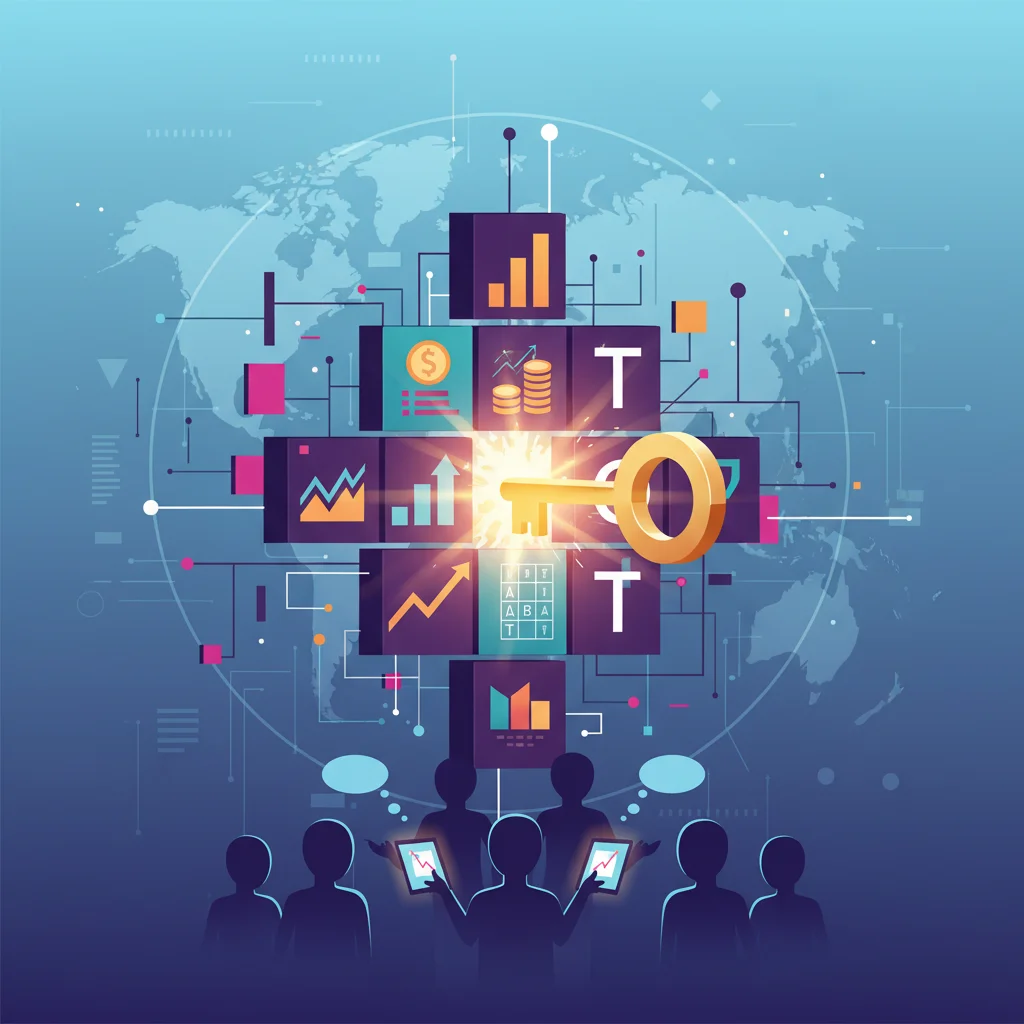
Navigating the complexities of the global economy is not unlike staring at a blank crossword grid. You are presented with a series of cryptic clues (economic data, earnings reports, geopolitical events) and an interconnected structure (the global market). Your goal is to fill in the blanks, creating a coherent picture from seemingly disparate pieces of information. Success in both domains requires more than just knowledge; it demands pattern recognition, strategic thinking, and the mental fortitude to navigate uncertainty. Let’s explore how the discipline of a crossword master mirrors the mindset of a successful investor or business leader in today’s intricate financial landscape.
Deciphering the Clues: The Art of Financial Analysis
A cryptic crossword clue is a masterclass in misdirection. The surface reading is almost never the correct path. A clue like “Sounds like a charge for a small boat” (Answer: TARIFF) requires you to think laterally, breaking down the words and sounds to uncover the true meaning. This is the daily work of a financial analyst. An earnings report isn’t just a set of numbers; it’s a narrative filled with clues about a company’s health, strategy, and future prospects.
Simply looking at the headline revenue growth is the surface reading. The real “solve” comes from digging deeper:
- Analyzing the Footnotes: Just as a crossword solver scrutinizes every word of a clue, an investor must dissect the footnotes of a financial statement. This is where companies disclose accounting methods, off-balance-sheet liabilities, and other critical details that can completely change the investment thesis.
- Understanding Macroeconomic Context: A clue in a crossword doesn’t exist in a vacuum; it relates to the other words in the grid. Similarly, a company’s performance must be viewed through the lens of broader economics. Is the central bank raising interest rates? Are supply chains under pressure? These external factors are part of the puzzle. The field of economics provides the rules of the game, helping us understand how inflation, employment, and policy decisions will influence the stock market.
- Fundamental vs. Technical Analysis: Some crossword solvers are methodical, focusing on definitions and wordplay (fundamental analysis). Others look for patterns in the grid, using checked letters to guess answers (technical analysis). Great investors use a blend of both, understanding a company’s intrinsic value while also paying attention to market sentiment and price action.
The global market for analytical services is booming, with investors demanding deeper insights. In fact, the financial analytics market is projected to grow significantly, reaching over $11 billion by 2027, driven by the need to decipher these increasingly complex clues (source).
Ethereum's Coiled Spring: Is a Major Price Breakout Looming Near the ,000 Mark?
The Interconnected Grid: Systemic Risk and the Global Economy
The true beauty of a crossword puzzle lies in its interconnectedness. Solving 1-Across provides the first letter for 1-Down, 2-Down, and 3-Down, making subsequent clues easier to solve. This elegant dependency is a perfect illustration of the global financial system. No asset, company, or country operates in isolation. A decision made by the Federal Reserve in Washington D.C. can cause immediate ripples in the currency markets of Southeast Asia, which in turn affects the cost of goods for European manufacturers.
This interconnectedness is the source of both opportunity and systemic risk. A savvy investor understands these connections. For example, they might see that rising energy prices (a clue) will not only impact oil and gas stocks but will also increase operational costs for airlines and logistics companies, while potentially boosting the prospects of renewable energy firms. The 2008 financial crisis was a brutal lesson in interconnectedness, where the collapse of the subprime mortgage market in the U.S. (one corner of the puzzle) cascaded through the global banking system, freezing credit markets and triggering a worldwide recession.
To illustrate this concept, consider how a single economic event can create a domino effect across various sectors.
| Initial Event (The “Clue”) | Direct Sector Impact | Secondary Ripple Effect |
|---|---|---|
| Central Bank Raises Interest Rates | Banking: Higher net interest margins, potentially higher profits. Real Estate: Increased mortgage costs, cooling housing demand. | Technology: Growth stocks become less attractive as future earnings are discounted at a higher rate. Consumer Discretionary: Reduced consumer spending power due to higher debt servicing costs. |
| Breakthrough in AI Chip Technology | Semiconductors: Massive revenue growth for the innovating company and its direct suppliers. | Cloud Computing: Lower costs and higher performance for data centers. Fintech: Enhanced capabilities for algorithmic trading and fraud detection. Automotive: Acceleration of autonomous driving development. |
| Geopolitical Conflict Disrupts Shipping Lane | Logistics & Shipping: Skyrocketing container prices and insurance premiums. | Retail: Supply chain delays and increased cost of goods, leading to inflation. Manufacturing: Production halts due to missing components, impacting earnings. |
The Black Squares: Navigating Unknowns and Black Swan Events
What about the parts of the crossword you can’t fill in? The black squares are fixed, unchangeable parts of the grid. They represent the structural unknowns, the inherent uncertainties in the market. You cannot write in them; you must work around them. In investing, these are the “Black Swan” events—unpredictable, high-impact occurrences that are beyond the scope of normal expectations. Think of the global pandemic in 2020 or the sudden collapse of a major financial institution.
A novice investor might be paralyzed by these black squares, seeing only risk. A seasoned professional, however, builds a portfolio that is resilient to them. This is the principle of diversification. By not concentrating all your capital in a single stock or sector, you ensure that a negative event in one area—a black square popping up unexpectedly—doesn’t wipe out your entire grid. Technologies like blockchain are, in a sense, an attempt to “erase” some of these black squares by introducing trust and transparency into transactions, reducing counterparty risk that has historically been a major source of systemic fragility.
The financial impact of such events can be staggering. The 2008 crisis is estimated to have wiped out over $10 trillion in global stock market value, a stark reminder of what’s at stake when the grid collapses (source).
Solving the Market: An Investor's Guide to Thinking Like a Crossword Master
The ‘Aha!’ Moment: Breakthroughs in Financial Technology
Every crossword enthusiast lives for the ‘Aha!’ moment—the instant a stubbornly opaque clue suddenly becomes clear, often unlocking an entire section of the puzzle. In the world of finance and investing, these breakthroughs are frequently driven by financial technology, or fintech.
For decades, investment analysis was a laborious, manual process. Today, AI and machine learning algorithms can scan millions of data points—from satellite imagery of retail parking lots to the sentiment of social media posts—to find clues that human analysts might miss. This is the ultimate puzzle-solving assistant. Algorithmic trading platforms execute complex strategies in microseconds, capitalizing on fleeting market inefficiencies. In fact, algorithmic trading now accounts for a massive portion of stock market volume, with some estimates putting it at over 70% in developed markets (source).
This technological arms race is redefining what it means to be a successful investor. The ‘Aha!’ moment is no longer just about a brilliant insight; it’s about having the right tools to find that insight faster and more reliably than the competition. From robo-advisors that automate portfolio management for the general public to sophisticated quantitative hedge funds, fintech is providing new ways to solve the market’s oldest puzzles.
Conclusion: The Finished Grid
Completing a challenging crossword puzzle provides a deep sense of satisfaction. It’s the triumph of order over chaos, of logic over ambiguity. Similarly, a well-constructed investment portfolio is a thing of beauty—a coherent strategy executed with discipline, designed to weather uncertainty and achieve a long-term goal.
The markets will always present us with new puzzles, with clues more cryptic than any newspaper could devise. But by adopting the mindset of a master solver—by analyzing clues with depth, understanding the interconnected grid, respecting the unknown black squares, and leveraging the best tools available—we can turn a daunting challenge into a rewarding pursuit. The next time you see a crossword, remember the parallels to the world of finance. The principles that lead to a finished grid are the very same that lead to a successful investment journey.
Solving the Market's Matrix: What a Crossword Puzzle Reveals About Modern Investing