The Price of Noise: Why Incomprehensible Politics is a Hidden Tax on Your Investments
We’ve all been there. You turn on the news to hear a minister or central banker deliver a crucial update on the economy. You listen intently, hoping for clarity, for a signal that can help inform your business or investment decisions. Instead, you’re met with a torrent of jargon, vague platitudes, and carefully constructed sentences that seem designed to say everything and nothing at once. You’re left more confused than when you started. This experience is so common it has become a political trope, but what if it’s more than just an annoyance? What if this communication breakdown is a tangible, systemic risk to our financial wellbeing?
A recent, powerfully concise observation in the Financial Times summed up the situation in the UK perfectly: “The UK government keeps putting out messages but no one is listening because they are incomprehensible.” This isn’t just a critique of public relations; it’s a diagnosis of a problem that has profound implications for the economy, the stock market, and the world of finance. When official communication becomes noise, uncertainty becomes the default setting. And in the world of investing and economics, uncertainty is an acid that corrodes confidence, stalls progress, and erodes value.
This post will unpack the real-world cost of this political “noise.” We will explore how ambiguous language translates into economic stagnation, why the stock market punishes unclear policy, and what investors and business leaders can do to navigate a landscape where the most important messages are lost in translation.
The Anatomy of Ambiguity: Decoding Political Jargon
Before analyzing the impact, it’s crucial to understand what this “incomprehensible” communication looks like. It typically falls into three categories: technical jargon, undefined platitudes, and strategic ambiguity.
- Technical Jargon: Terms like “fiscal drag,” “output gap,” or “quantitative tightening” are used without adequate explanation, creating an information barrier between policymakers and the public they serve. While precise in economics, they are alienating to a broader audience, including many business owners and investors.
- Undefined Platitudes: Sweeping, positive-sounding phrases like “levelling up,” “unlocking potential,” or “building a high-wage, high-skill economy” dominate speeches. Without concrete, measurable policies attached, they are meaningless, offering no clear direction for capital allocation.
- Strategic Ambiguity: Sometimes, the lack of clarity is intentional. A government might be vague about future tax changes or regulatory frameworks to avoid immediate backlash or to keep its options open. However, this strategy often backfires by creating a prolonged state of paralysis.
–
–
To illustrate the disconnect, consider the difference between typical political messaging and the clear information the market craves:
| Political Jargon / Platitude | Plain English / Market-Relevant Information |
|---|---|
| “We are committed to fiscal responsibility and will manage our borrowing in a sustainable way.” | “We will reduce the national debt-to-GDP ratio to below 80% within five years by capping departmental spending growth at 1% annually.” |
| “Our plan is to unlock growth across the country through our levelling up agenda.” | “We are launching a £10 billion fund for infrastructure projects in the North, focused on transport and digital connectivity, with the first projects breaking ground in Q3.” |
| “We will ensure a competitive tax environment for businesses to thrive.” | “Corporation tax will be held at 25% for the next three fiscal years, and we will introduce a new 150% capital allowance for investment in green technology.” |
The first column creates uncertainty; the second provides the clarity needed for financial modeling, investment planning, and effective trading strategies. The gap between the two is where economic friction and financial risk are born.
The Price of Prestige: Unpacking the Financial Risk in Luxury's 'Made in Italy' Scandal
The Economic Fallout: How Uncertainty Freezes Capital
An economy doesn’t run on policy alone; it runs on confidence. When business leaders and consumers are uncertain about the future, they stop spending and investing. Incomprehensible government communication is a primary driver of this uncertainty.
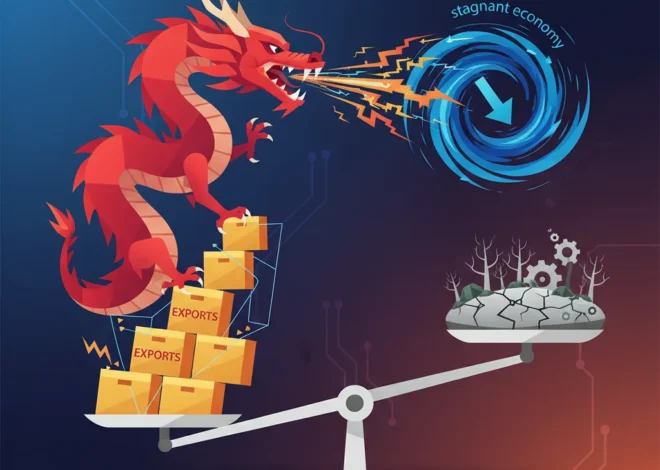
Imagine you are the CEO of a manufacturing firm considering a £50 million factory expansion. Your decision depends on future tax rates, energy costs, trade rules, and the overall health of the economy. If the government’s industrial strategy is a collection of vague slogans and its tax policy is hinted at but never confirmed, you are likely to delay that investment. The risk of the unknown outweighs the potential reward. Now, multiply that decision across thousands of businesses, and you have a recipe for economic stagnation.
This isn’t theoretical. Studies consistently show a strong negative correlation between policy uncertainty and business investment. For instance, analysis from the Bank of England has shown that the uncertainty surrounding Brexit led to a significant, sustained drop in UK business investment. While Brexit is an extreme example, the principle applies to day-to-day governance. A constant stream of ambiguous messaging creates a “low-grade” but persistent uncertainty that acts as a drag on the entire economy.
The Stock Market’s Verdict: Volatility as a Tax
If the broader economy catches a cold from uncertainty, the stock market gets the flu. Markets are forward-looking discounting machines; they try to price in all available information to predict future corporate earnings. When the information is unclear or unreliable, the machine breaks down. The result is not a smooth, efficient market, but a volatile, reactive one.
A vague statement from a Chancellor about “reviewing” a tax on the banking sector can wipe billions off bank valuations in minutes. A confusing message on energy policy can send utility and oil stocks into a tailspin. This volatility is, in effect, a tax on investing. It increases risk premiums, making it more expensive for companies to raise capital. It also triggers algorithmic trading programs, which can amplify small movements into major market swings based on keyword analysis of political speech, whether the nuance is understood or not.
The infamous “mini-budget” of September 2022 serves as a stark case study. The policies themselves were radical, but the market’s catastrophic reaction was exacerbated by a communication vacuum. The lack of independent forecasts, detailed explanations, or a clear long-term vision created a crisis of credibility. Investors weren’t just reacting to the policies; they were reacting to the chaos and incomprehensibility of their delivery (source). The market punished the noise as much as the substance.
The Quant Who Broke the World: Robert McNamara's Cautionary Tale for Modern Finance and Leadership
The New Frontier for Finance and Technology
This environment of persistent ambiguity creates both challenges and opportunities for the financial technology sector. On one hand, the “garbage in, garbage out” principle has never been more relevant. Sophisticated economic models are only as good as the data and assumptions they are fed. When policy assumptions are built on a foundation of vague political statements, the models’ outputs become less reliable.
On the other hand, a whole new sub-sector of fintech is emerging to tackle this very problem. Natural Language Processing (NLP) and AI are being deployed to:
- Analyze Sentiment: Quantify the tone (hawkish, dovish, confident, uncertain) of political speeches and press conferences.
- Track Policy Promises: Create databases that track what politicians say versus what they actually implement, generating a “credibility score.”
- Identify Keywords: Alert traders to the inclusion or omission of specific words in central bank statements, which can signal subtle shifts in policy.
While these tools are powerful, they are a reactive solution to a fundamental problem. They are an attempt to build a better translator, when what the world of finance and investing truly needs is for the original speakers to be clearer. The reliance on such financial technology highlights the growing chasm between political communication and the data-driven needs of the modern economy.
Actionable Strategy: How to Invest in an Age of Noise
For investors, business leaders, and finance professionals, waiting for politicians to become master communicators is not a viable strategy. Instead, the focus must be on building resilience and adapting to the environment.
- Diversify Beyond a Single Political Risk: The most potent hedge against the incomprehensible whims of one government is global diversification. Ensure your portfolio or business interests are not overly exposed to the policy environment of a single country.
- Focus on Corporate and Sector Fundamentals: Look past the daily political noise and focus on what you can analyze: a company’s balance sheet, its market position, its management team, and the long-term trends affecting its sector. Strong companies with solid fundamentals are best equipped to weather periods of political uncertainty.
- Demand a “Clarity Premium”: When evaluating investments, actively discount companies that are heavily reliant on government contracts or subsidies, or those in sectors prone to sudden regulatory shifts. Conversely, assign a premium to businesses with predictable, non-political revenue streams.
- Leverage Technology, But with Skepticism: Use the fintech tools available to monitor political sentiment, but do not trade on them blindly. Use them as one of many inputs into a broader, fundamentals-based investment thesis. The OECD’s work on the economic cost of uncertainty provides a solid framework for understanding these risks (source).
Political Fault Lines & Market Tremors: Why Investors Can't Ignore America's Partisan Divide
In conclusion, the simple observation that no one is listening to incomprehensible political messages is one of the most important and overlooked truths in modern finance. This communication failure is not a soft, abstract problem. It is a hard, quantifiable risk that suppresses investment, fuels market volatility, and ultimately acts as a hidden tax on economic growth and personal wealth. For those in finance, investing, and business, the challenge is clear: we must learn to find the faint signal of substance within the overwhelming noise of politics, while simultaneously demanding a higher standard of clarity from those whose words have the power to move markets and shape our economic future.