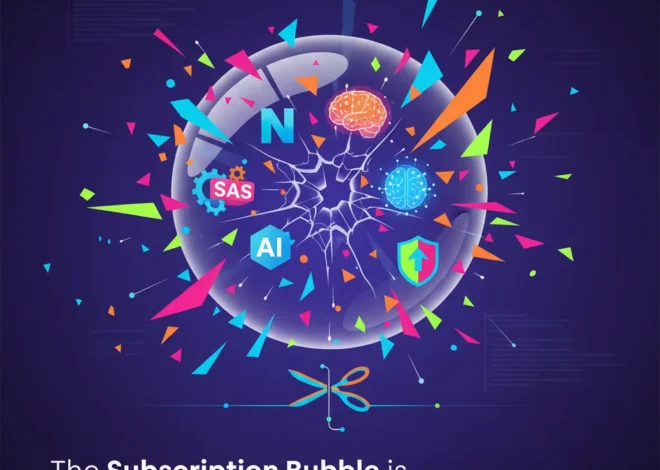
The AI Gold Rush: Navigating the Boom, the Bubble, and the Tectonic Shift Ahead
If you’re in the tech world, you can feel it. There’s a palpable sense of whiplash—a dizzying acceleration that makes last year’s roadmap look like a historical artifact. This isn’t just another trend or a new buzzword. The generative artificial intelligence boom we’re living through is a fundamental, ground-shaking platform shift, the kind that comes around once a decade, if we’re lucky. It’s on par with the dawn of the internet, the rise of mobile, and the dominance of the cloud. And it’s happening at a speed that’s both exhilarating and terrifying.
The core of this transformation isn’t just about creating clever chatbots or generating images from text prompts. It’s about the emergence of a new foundational layer in the technology stack. For decades, we built software on operating systems, then on the web, then in the cloud. Now, AI is becoming that next essential layer. Every application, every workflow, and every piece of software is being re-evaluated through the lens of AI. The question is no longer “Should we use AI?” but “How will we survive if we don’t?”
But as this revolution unfolds at a breakneck pace, the cracks are beginning to show. A recent analysis from the Financial Times warns that if the boom continues its “blistering pace through 2026, the stresses could start to show” (source). In this deep dive, we’ll unpack what this tectonic shift means for developers, entrepreneurs, and established tech giants. We’ll explore the mounting pressures on the SaaS industry, identify the early winners, and ask the billion-dollar question: Are we building the future or just inflating the next big bubble?
The Great SaaS Squeeze: Adapt or Become a Relic
For the last fifteen years, the Software-as-a-Service (SaaS) model has been the undisputed king of the tech industry. Predictable revenue, sticky customers, and cloud-based delivery created empires. But the AI platform shift is posing an existential threat to incumbents who are slow to adapt.
The challenge comes from two fronts: nimble, AI-native startups building from the ground up, and the tech giants (Microsoft, Google, Amazon) embedding powerful AI capabilities directly into their core platforms. This leaves traditional SaaS companies in a precarious position. Simply bolting on a generative AI feature via an API call isn’t enough to secure their future. Customers are beginning to expect “AI-first” experiences, not “AI-added” features.
This creates a fundamental divide in the software world. Here’s a look at the two competing approaches:
| Attribute | AI-Native Startups | Incumbent SaaS (AI-Added) |
|---|---|---|
| Architecture | Built around AI models from day one. Data pipelines, UI, and workflows are optimized for AI. | Legacy architecture with AI features integrated, often through API calls to third-party models. |
| User Experience | Often conversational, predictive, and proactive. The AI is the core interface. | Traditional UI with new AI buttons or features. The AI assists the existing workflow. |
| Advantage | Agility, no technical debt, potential for true innovation and category disruption. | Existing customer base, distribution channels, brand recognition, and vast proprietary datasets. |
| Disadvantage | Must fight for market share, lack of distribution, high burn rate for compute power. | Technical debt, slower development cycles, cultural resistance to change, risk of being outmaneuvered. |
The pressure is immense. Incumbents have the distribution and the data, but AI-native startups have the architectural advantage and speed. The fear is that if a legacy SaaS provider doesn’t deeply integrate AI, they risk becoming a “dumb” data layer that a smarter, AI-driven application simply sits on top of, ultimately stealing the customer relationship and the value.
Level Up: Why the UK is Betting £12 Billion on AI and Video Games
While AI-native startups have the architectural edge, the incumbents’ massive, proprietary datasets are their ultimate moat. An AI is only as good as the data it’s trained on. The real winners might not be the startups with the slickest models, but the established players who can successfully leverage their unique data to create highly specialized, valuable AI systems.
However, the elephant in the room is the staggering cost. Training and running large-scale machine learning models requires an astronomical amount of computing power, a resource controlled by a handful of cloud providers. This creates a dependency that could stifle true innovation, favoring well-funded startups and tech giants who can afford the “compute tax.” The indie developer who built an app in their garage feels like a relic of a bygone era. The barrier to entry for foundational AI is now measured in billions, not thousands.
Racing Towards 2026: The Looming Stress Fractures
The pace of this revolution is unprecedented. The time between a research paper’s publication and its implementation in a commercial product has shrunk from years to months, sometimes weeks. This relentless acceleration, while driving incredible innovation, is putting the entire ecosystem under strain. The FT’s suggestion that stresses could emerge by 2026 is not just speculation; it’s a logical conclusion based on several emerging trends:
- Infrastructure Bottlenecks: The global demand for high-end GPUs, like Nvidia’s H100s, has created a massive shortage. Cloud providers are spending billions to build out data centers, but they can’t keep up. This scarcity of compute power is a very real ceiling on growth.
- The Capital Arms Race: The investment flowing into AI is staggering. Microsoft’s multi-billion dollar investment in OpenAI and Google’s own massive R&D spending are just the tip of the iceberg. This creates a hyper-competitive environment and raises questions about whether current valuations are sustainable, drawing parallels to the dot-com bubble (source). When capital is cheap and hype is high, discipline can wane.
- The Talent Crisis: There is a severe shortage of skilled AI/ML engineers, researchers, and data scientists. Companies are paying astronomical salaries to attract top talent, making it incredibly difficult for smaller companies and non-tech industries to compete. This talent crunch slows down product development and widens the gap between the haves and the have-nots.
- Emerging Security Threats: As AI becomes more integrated into critical systems, it opens up new vectors for attack. Adversarial attacks on machine learning models, data poisoning, and the use of AI for sophisticated phishing campaigns are growing concerns. This places an enormous burden on cybersecurity teams to keep pace with a rapidly evolving threat landscape.
These pressures are interconnected. The talent crisis drives up costs, the capital arms race fuels the hype, and it all puts more strain on a limited infrastructure. The system can only stretch so far before something has to give.
The New Kings: Who’s Winning the AI Gold Rush?
In any gold rush, the people who consistently make money are the ones selling the picks and shovels. The AI boom is no different. While the ultimate winners at the application layer are still being decided, a clear hierarchy of power has already emerged in the foundational layers.
Here’s a breakdown of the key players who are capitalizing on this tectonic shift:
| Player Category | Why They’re Winning | The Inherent Risk |
|---|---|---|
| The “Picks & Shovels” (Nvidia) | They design the essential GPUs that power nearly all advanced AI training and inference. Their hardware is the bedrock of the entire revolution. | Heavy reliance on a single supplier creates a bottleneck. Competitors (AMD, Intel, custom silicon from cloud giants) are racing to catch up. |
| The “Landlords” (Cloud Providers) | AWS, Microsoft Azure, and Google Cloud rent out the massive compute infrastructure and offer managed AI services, capturing value from every AI company. | Massive capital expenditure is required to stay competitive. They are in a constant arms race for performance and efficiency. |
| The “Explorers” (AI-Native Startups) | Companies like OpenAI, Anthropic, and Cohere are defining the frontier of what’s possible with foundational models. They attract top talent and massive investment. | Extremely high burn rates, an unclear path to long-term profitability, and intense competition from both each other and the tech giants. |
| The “Integrators” (Established Giants) | Microsoft, Google, and Apple are embedding AI deeply into their existing ecosystems (operating systems, search, productivity software), reaching billions of users instantly. | Cannibalizing existing profitable businesses (e.g., AI in search) and navigating the innovator’s dilemma without alienating their massive user base. |
The Road Ahead: Disruption or Destruction?
We are in the chaotic, exhilarating early days of a new technological epoch. The AI upheaval shows no signs of slowing down. It’s a moment of incredible opportunity for automation, creativity, and scientific discovery. For developers, it means learning new skills in programming for AI systems. For entrepreneurs, it means finding the white space that the giants have missed. For tech leaders, it means making high-stakes bets that will define their companies’ futures.
The comparison to past platform shifts is apt, but the velocity of this one is in a class of its own. The stresses on infrastructure, capital, and talent are real and growing. Whether this leads to a temporary bubble-burst and consolidation or a more sustained period of transformative growth remains to be seen. But one thing is certain: standing still is not an option. The AI tsunami is here, and the only choice is whether to build a vessel to ride the wave or risk being swept away by the current.
FIFA's Grand Return: How Netflix and AI are Rebooting the World's Biggest Sports Game

Related Posts
Nvidia’s Shock Move: Is the AI Chip Giant Acquiring a Rival… or Just Its Brains?
From Assembly Lines to Agile Sprints: Why Big Auto is Learning to Code Like a Startup