The Great Financial Crossword: Decoding the Intersections of Investing, Fintech, and the Global Economy
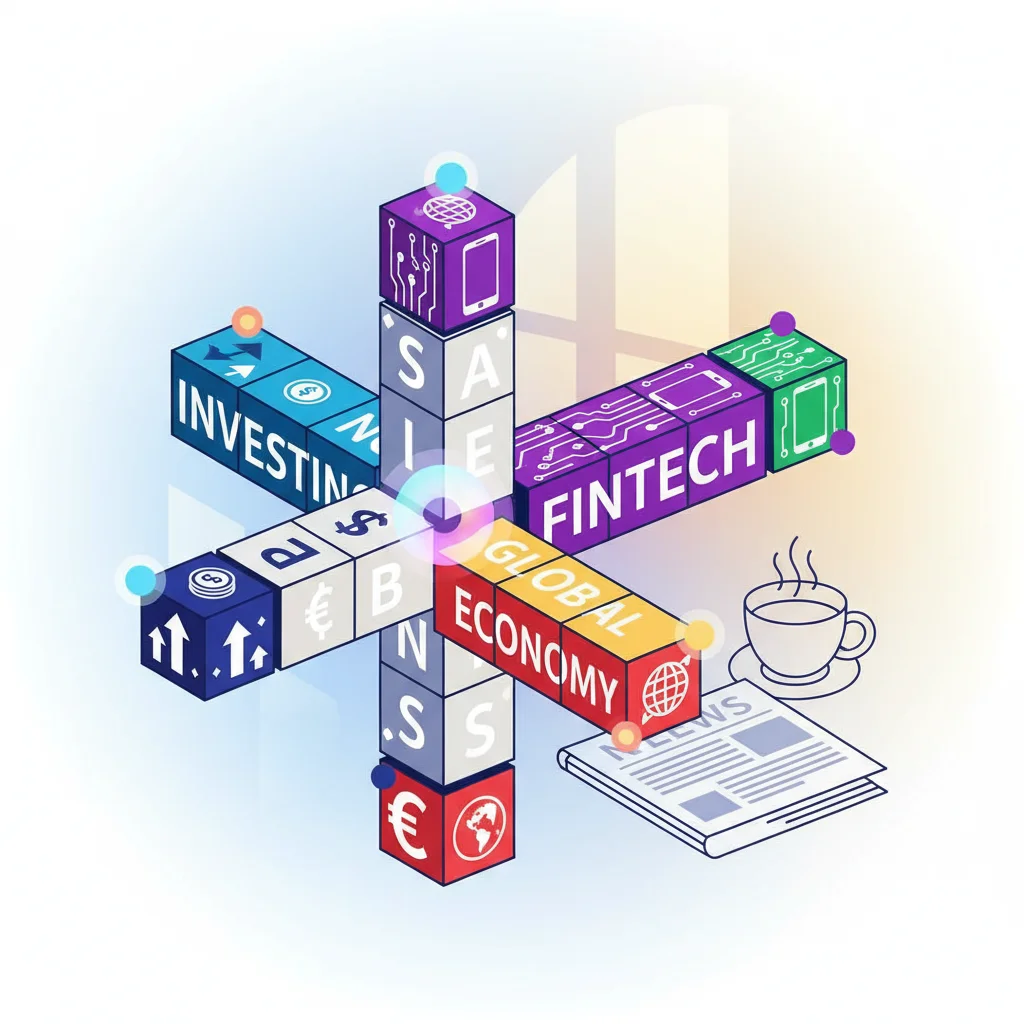
Every morning, millions of people begin their day with a ritual: a cup of coffee and a crossword puzzle. It’s a mental warm-up, a challenge of connecting disparate clues to form a cohesive, interlocking whole. An answer for 1-Across might provide the crucial first letter for 2-Down, revealing a new pattern and bringing clarity to the entire grid. The modern global economy operates much like this complex puzzle. It’s a vast grid of interconnected forces, where a change in monetary policy in Washington (a 15-letter “across” clue) can directly influence the valuation of a fintech startup in Singapore (a 7-letter “down” clue).
To truly understand the landscape of modern finance, investing, and financial technology, we can no longer look at concepts in isolation. We must think like a crossword solver, recognizing that every element—from the stock market’s daily fluctuations to the slow, methodical creep of inflation—is part of a larger, interconnected system. This article will explore the key “clues” shaping our financial world, examining the major horizontal forces and the vertical technological disruptors, and most importantly, how they intersect to create the complex economic picture of today.
The Horizontal Grid: Macroeconomic Forces Shaping the Board
The “across” clues in our financial crossword are the broad, sweeping forces that affect every sector and every investor. These are the macroeconomic trends and policy decisions that set the rules of the game and define the overall economic environment. Understanding them is fundamental to any sound financial strategy.
Clue: A Persistent Pressure on Purchasing Power (9 Letters) – INFLATION
For the better part of a decade, inflation was a dormant economic concept for many in the developed world. However, recent years have seen it roar back to the forefront of financial discourse. Driven by a confluence of factors including supply chain disruptions, shifts in consumer demand, and expansive fiscal policies, rising inflation has forced a global reckoning. Central banks, from the U.S. Federal Reserve to the European Central Bank, have responded with aggressive interest rate hikes, a move designed to cool the economy. According to the International Monetary Fund, while global inflation is easing, it remains a persistent challenge that continues to shape monetary policy worldwide. For investors, this clue changes everything, devaluing cash holdings and forcing a re-evaluation of asset allocation in the stock market to favor assets that can outperform rising prices.
Clue: The Global Game of Power and Policy (11 Letters) – GEOPOLITICS
No financial model can accurately predict a sudden trade dispute or military conflict, yet these events are powerful drivers of the global economy. Geopolitical shifts—from trade tariffs between major economic blocs to conflicts that disrupt critical shipping lanes—create uncertainty and volatility in trading. These events can sever supply chains, trigger sanctions that reshape banking networks, and cause capital to flee from regions perceived as unstable. A single headline can send commodity prices soaring or cause a currency to tumble, demonstrating how interconnected our global financial system has become. This makes understanding geopolitics not just a matter for diplomats, but a crucial variable for risk management in any investment portfolio.
Decoding the Economy: What the Financial Times Crossword Teaches Us About Modern Investing
The Vertical Grid: Technological Disruptors Dropping In
While macroeconomic forces stretch across the board, the “down” clues represent the powerful, often disruptive, forces of technology. These innovations are creating new industries, redefining old ones, and fundamentally changing how we interact with money. This is the domain of financial technology, or fintech.
Clue: Reshaping How We Bank and Pay (7 Letters) – FINTECH
The traditional banking model, once an unassailable institution, is facing unprecedented disruption. Fintech companies have unbundled banking services, offering slick, user-friendly applications for everything from payments and lending to investing and budgeting. This revolution in financial technology has lowered barriers to entry, reduced fees, and forced legacy institutions to innovate or risk becoming obsolete. The difference between the old and new guards is stark, highlighting a fundamental shift in consumer expectations.
This table illustrates the practical differences between traditional banking and modern fintech solutions:
| Feature | Traditional Banking | Modern Fintech |
|---|---|---|
| Account Opening | In-person visit, lengthy paperwork, several days | Online/in-app, digital verification, minutes |
| Customer Service | Branch hours, phone call centers with long waits | 24/7 chat support, AI-powered bots, extensive FAQs |
| Loan Approval | Slow, manual underwriting, relies on traditional credit scores | Automated, AI-driven decisions, uses alternative data |
| Investment Options | Often requires a financial advisor and high minimums | Fractional shares, robo-advisors, low-to-no minimums |
| Transparency | Complex fee structures, hidden charges | Simple, transparent pricing, often fee-free |
Clue: A Decentralized Ledger of Trust (10 Letters) – BLOCKCHAIN
Initially synonymous with cryptocurrencies like Bitcoin, blockchain technology’s potential extends far beyond digital currencies. At its core, blockchain is a secure, transparent, and immutable digital ledger. This has profound implications for the world of finance and beyond. In banking, it can streamline cross-border payments, reducing them from days to minutes. In trading, it enables the tokenization of real-world assets like real estate or art, making them more liquid and accessible. A 2021 survey by Deloitte found that nearly 80% of finance industry leaders believed digital assets would be important to their respective industries in the coming years, signaling a major institutional shift toward adopting blockchain technology.
Where Clues Intersect: The Synergy of Finance and Technology
The true genius of a crossword puzzle lies in its intersections, where a single letter serves two words simultaneously. Similarly, the most significant developments in the modern economy are happening where the macro “across” clues meet the technological “down” clues.
Intersection: Inflation (Across) & Fintech (Down)
As inflation erodes the value of savings sitting in traditional low-yield bank accounts, consumers are increasingly turning to fintech platforms. These services offer high-yield savings accounts, access to low-cost indexed funds, and tools for micro-investing, empowering individuals to protect their purchasing power in ways that were previously inaccessible. Fintech isn’t just a convenience; it’s becoming a critical tool for financial resilience in an inflationary environment.
Intersection: Regulation (Across) & Blockchain (Down)
The rise of blockchain and digital assets has created a massive challenge for regulators worldwide. How do you apply century-old securities laws to a decentralized, borderless technology? This intersection is a hotbed of activity, with governments and financial authorities attempting to strike a delicate balance. They aim to protect consumers and ensure financial stability without stifling the innovation that blockchain promises. The outcome of these regulatory battles, such as the ongoing debate around cryptocurrency ETFs by the SEC (source), will be a defining factor in the future of the digital economy.
The Canary in the Coal Mine: Why a Banned Weight-Loss Ad Is a Major Red Flag for Investors
Completing the Puzzle: Navigating the Future of Finance
The global financial crossword is not one you solve once and frame on the wall. It’s a dynamic puzzle, with new clues being written every day by innovators, policymakers, and global events. A breakthrough in quantum computing could render current cryptography obsolete, while a new trade agreement could redraw the map of global commerce overnight.
Success in this environment—whether as an investor, a business leader, or simply an informed citizen—no longer comes from mastering a single domain. It requires a multidisciplinary approach. It requires understanding that the decisions made by a central banker (economics) are inextricably linked to the code being written by a software developer (financial technology), and both can be upended by geopolitical tensions half a world away. The key is not to have all the answers, but to be skilled at reading the clues, understanding their connections, and adapting as the puzzle continues to evolve.