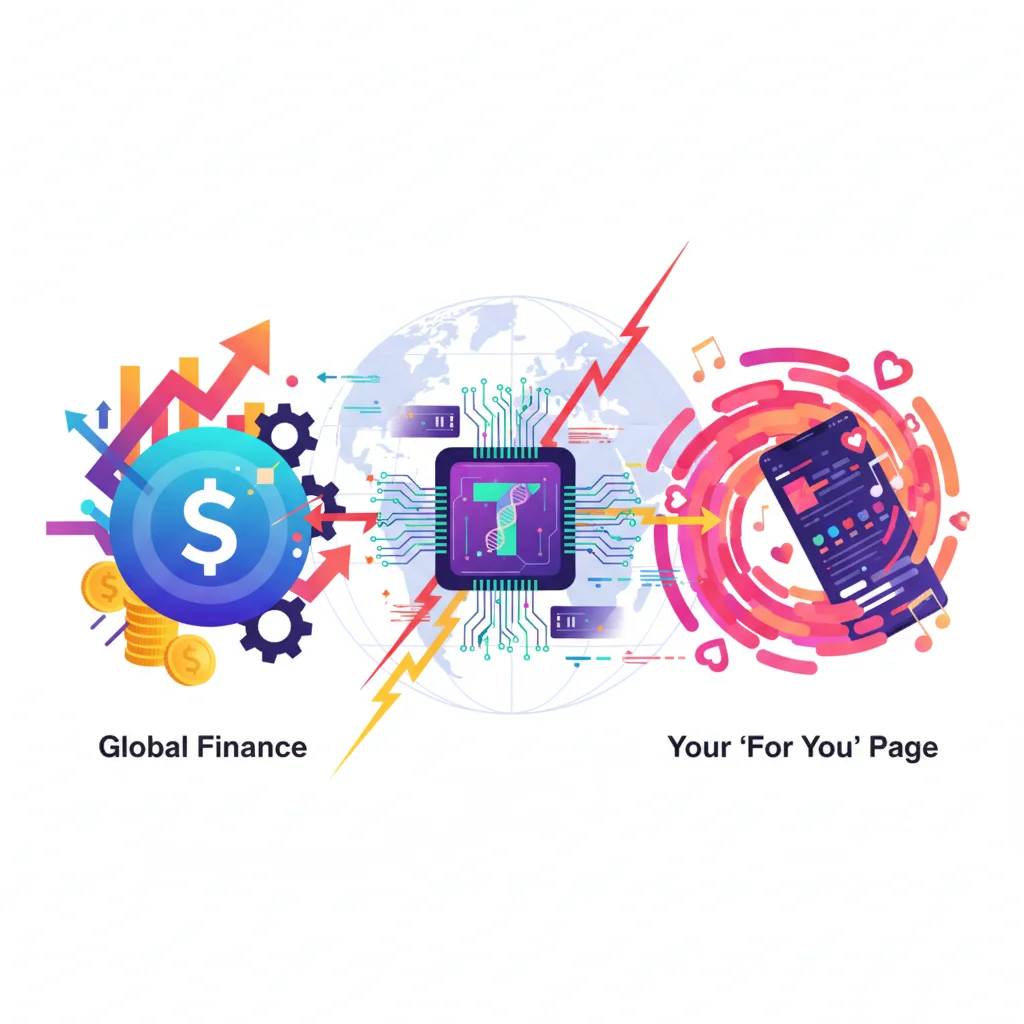
The TikTok Deal: A High-Stakes Game for Global Finance, Technology, and Your “For You” Page
In the intricate dance of modern geopolitics, few stories encapsulate the collision of technology, national security, and the global economy quite like the saga of TikTok. What began as a platform for viral dance challenges and short-form video content has morphed into a focal point of international tension, forcing a high-stakes negotiation with profound implications for users, investors, and the very structure of the internet. The proposed deal, aimed at appeasing U.S. national security concerns, is far more than a simple corporate restructuring; it’s a landmark case study in the future of cross-border investing, data sovereignty, and digital commerce.
At its core, the controversy stems from TikTok’s ownership by the Chinese tech giant ByteDance. U.S. officials have long voiced concerns that the Chinese government could compel ByteDance to hand over sensitive data on American users or manipulate the app’s powerful recommendation algorithm to serve its own interests. As the BBC’s Asia business correspondent highlights, the central question remains frustratingly opaque: what kind of experience will emerge for TikTok’s 150 million American users from the crucible of this geopolitical standoff? The answer to that question will send ripples through the stock market, redefine risk for international investors, and set a powerful precedent for the future of global financial technology.
The Anatomy of “Project Texas”: A Technological Fortress or a Gilded Cage?
The proposed solution, codenamed “Project Texas,” is an ambitious and unprecedented attempt to digitally cordon off TikTok’s U.S. operations. This isn’t just about moving servers to American soil; it’s a comprehensive plan to create a standalone entity, TikTok Global, with U.S. tech giant Oracle serving as a “trusted technology partner.” Under this plan, all U.S. user data would be stored exclusively in Oracle’s cloud infrastructure, and Oracle’s personnel would be responsible for vetting the app’s source code and algorithm updates to ensure they are free from backdoors or malicious manipulation.
Oracle’s role is pivotal. The company, a titan in enterprise software and cloud computing, is essentially being tasked with building a digital fortress around the U.S. version of TikTok. This move is a strategic masterstroke for Oracle, repositioning it at the center of the national conversation on data security—a critical component of the modern banking and fintech sectors. According to a statement from Oracle, the company is “100% confident in our ability to deliver a highly secure environment to TikTok and ensure data privacy for TikTok’s American users” (source). The plan involves a dedicated U.S. Data Security (USDS) division, managed independently and scrutinized by third-party auditors, to oversee all data and content moderation functions.
To further complicate and Americanize the deal, retail behemoth Walmart also entered the picture as a commercial partner, aiming to integrate its e-commerce and payment capabilities into the platform. This highlights the immense commercial stakes, transforming a social media app into a powerful engine for digital commerce and a new frontier for trading and retail.
The proposed ownership structure for the new entity, TikTok Global, has been a subject of intense negotiation. While the exact percentages have shifted, an early framework provides a clear picture of the deal’s financial architecture.
Below is a breakdown of the initial proposed ownership structure for TikTok Global, illustrating the blend of international and domestic interests at play.
| Entity | Proposed Stake in TikTok Global | Primary Role & Strategic Interest |
|---|---|---|
| ByteDance | ~80% (initially) | Retains majority ownership and control of the core algorithm, the app’s “secret sauce.” |
| Oracle | 12.5% | Trusted technology partner, securing U.S. user data and source code. A major cloud services contract. |
| Walmart | 7.5% | E-commerce and retail integration partner, aiming to tap into TikTok’s vast, young user base. |
| U.S. Investors (e.g., Sequoia, General Atlantic) | Existing stakes in ByteDance | Protecting their significant investment and ensuring the company’s continued growth and potential IPO. |
Note: This structure is based on initial proposals and has been subject to regulatory review and change. Source for ownership stakes.
The 2027 Crypto Countdown: Is the UK's Ambitious Plan a Game-Changer or a Gamble?
The Financial Fallout: Ripple Effects on the Stock Market and Global Investing
For finance professionals and investors, the TikTok deal is a watershed moment that reshapes the landscape of geopolitical risk. The immediate impact on the stock market was clear: shares of Oracle (ORCL) and Walmart (WMT) reacted to every twist and turn of the negotiations. For Oracle, the deal represented a potential windfall—a massive cloud contract and a public relations coup that positioned it as a guardian of American data. For Walmart, it was a bold leap into the creator economy, a market projected to be worth nearly half a trillion dollars by 2027 (source).
However, the long-term implications for investing are far more profound. This episode has introduced a new, potent variable into the valuation of any company with significant cross-border operations, particularly between the U.S. and China: regulatory decapitation. The risk that a foreign government can, by executive order, threaten the viability of a company’s operations in a major market is now a tangible factor that must be priced into investment models. This uncertainty impacts everything from venture capital funding for startups with global ambitions to the portfolio strategies of institutional investors.
The affair also casts a long shadow over the future of international M&A and public offerings. A potential IPO for TikTok Global on a U.S. exchange was a key part of the deal, promising a massive payday for its backers. Yet, the entire process underscores how political whims can derail even the most lucrative financial maneuvers. This will force a re-evaluation of the political and regulatory due diligence required for any major cross-border transaction, fundamentally altering the calculus of global economics.
The Price of Instability: Deconstructing the Economic Shockwaves of a Global Tragedy
The User Conundrum: Will TikTok Still Be TikTok?
Beyond the boardrooms and government chambers, the most pressing question for millions is whether the app they love will fundamentally change. The “For You” Page is renowned for its almost psychic ability to serve up relevant content, a feat of machine learning that has left competitors scrambling. But what happens when this algorithm is subjected to external oversight by Oracle?
There are several potential scenarios:
- A Degraded Algorithm: If the U.S. entity is cut off from the real-time innovations and global data inputs of ByteDance’s core engineering team, the algorithm’s performance could stagnate. The “magic” might fade, leading to a less engaging user experience and a potential exodus of creators and users to rival platforms.
- Altered Content Moderation: A U.S.-managed moderation team will inevitably bring different cultural and political sensitivities to bear. Content that is permissible on the global version of TikTok might be restricted in the U.S., and vice versa. This could create a culturally sanitized or politically biased version of the platform, altering the free-wheeling nature that made it a global phenomenon.
- Innovation Gridlock: The need for every line of code to be vetted by a third party could create significant delays in rolling out new features. In the fast-paced world of social media, this friction could be a fatal disadvantage, allowing more agile competitors to out-innovate TikTok.
A New Digital World Order: Precedents for Blockchain, Fintech, and Beyond
The TikTok deal is not an isolated incident. It is a harbinger of a new era of digital geopolitics. We are moving away from a world where technology platforms were largely borderless and towards one where data and digital services are treated as strategic national assets. This trend of “data nationalism” has massive implications for the future of the global economy.
This centralization of control and data within national borders is, ironically, what technologies like blockchain were designed to counteract. While not a direct solution for a social media app, the principles of decentralization, transparency, and user-owned data offer a philosophical counterpoint to the world being forged by deals like “Project Texas.” The desire for trustless systems, a cornerstone of both cryptocurrency and many emerging fintech platforms, is a direct response to the trust deficit between nations and corporations that lies at the heart of the TikTok dispute.
Ultimately, the TikTok saga forces a reckoning. It demonstrates that the global flow of data, capital, and innovation can no longer be taken for granted. For investors, it’s a stark reminder that geopolitical analysis is as crucial as financial analysis. For business leaders, it’s a signal to build more resilient, and perhaps more localized, supply chains for digital services. And for users, it’s a glimpse into a future where the apps on your phone may look and feel different depending on which side of a border you’re on. The deal’s final form remains uncertain, but the questions it has raised will define the intersection of technology and the global economy for decades to come.
UK Housing Correction: Decoding the £2,000 Price Drop and What It Means for Your Investments

Related Posts
Investing in Russia: The Ultimate Moral Hazard in Modern Finance

The Kingmaker’s Gambit: How One Man’s Political Strategy Could Reshape Israel’s Investment Landscape