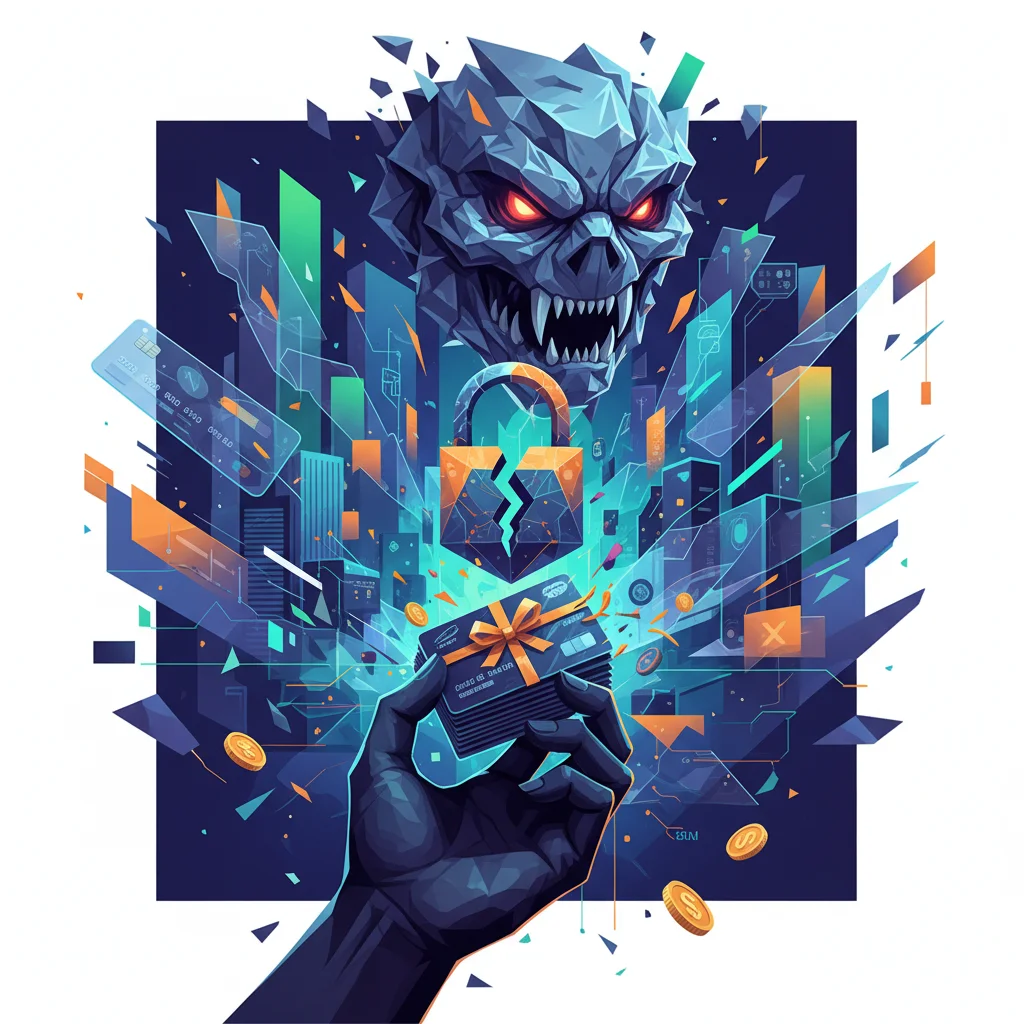
The Shadow Economy of Plastic: How Gift Card Scams Threaten Modern Finance
In the bustling world of modern commerce, the humble gift card stands as a pillar of convenience—a simple, effective tool for gifting and personal budgeting. Yet, beneath this veneer of simplicity lies a burgeoning shadow economy, one that leverages these plastic and digital tokens to siphon millions from unsuspecting victims. Authorities are sounding the alarm on a significant increase in gift card-related fraud, a trend that poses a quiet but potent threat to consumers, businesses, and the very fabric of trust in our financial systems. This isn’t just petty theft; it’s a sophisticated, global enterprise with profound implications for the future of finance, investing, and financial technology.
The core issue, as highlighted in a recent BBC report, is the escalating use of gift cards as an untraceable and irreversible form of payment for fraudsters. What makes them the perfect vehicle for illicit transactions? It’s a combination of anonymity, speed, and ubiquity. Unlike a bank transfer or credit card payment, a gift card transaction leaves a minimal data trail, is nearly impossible to reverse, and can be quickly converted into cash or goods on a global scale. This analysis will dissect the mechanics of this pervasive threat, explore its ripple effects across the economy, and examine how the world of fintech is racing to respond.
The Anatomy of a Multi-Million Dollar Deception
To understand the scale of the problem, one must first grasp the methodology. Gift card scams are not born from sophisticated hacking but from masterful psychological manipulation. Scammers create scenarios of intense urgency or immense opportunity, short-circuiting their victims’ rational judgment. The common threads are pressure, fear, and the promise of a reward.
The playbook typically involves one of several narratives:
- Impersonation Scams: A fraudster poses as a representative from a government agency (like the IRS or Social Security Administration), a utility company, or a well-known tech corporation (like Apple or Microsoft). They claim the victim owes back taxes, has a virus on their computer, or is facing imminent legal action. The “only” way to resolve the issue immediately is by purchasing gift cards—often from specific brands like Google Play, Target, or Steam—and reading the numbers over the phone.
- Prize and Lottery Scams: Victims are informed they’ve won a major prize but must first pay a “processing fee” or “tax” using gift cards. The promise of a large windfall clouds their judgment, making them susceptible to the unusual payment request.
- Romance Scams: Scammers build emotional relationships with victims online over weeks or months. Once trust is established, they fabricate an emergency—a medical crisis, a travel problem, a business deal gone wrong—and request help in the form of gift cards, playing on the victim’s emotional investment.
The financial toll is staggering. According to the Federal Trade Commission (FTC), consumers reported losing a staggering $245 million to gift card payment scams in the first nine months of 2023 alone. This represents a significant portion of the overall fraud landscape and underscores the method’s devastating effectiveness.
The Billion-Dollar Handover: Deconstructing the Art and Impact of a CEO's Exit
Economic Tremors: Beyond the Individual Victim
While the primary impact is on the individual’s finances, the cumulative effect of this fraud sends tremors through the wider economy, affecting banking, retail, and even the stock market. For investors and business leaders, ignoring this trend is a critical oversight.
First, consider the reputational damage to the retailers whose cards are most frequently used. When brands like Apple, Google, and Walmart become synonymous with fraud, it erodes consumer trust. This forces companies to invest heavily in security infrastructure, fraud detection algorithms, and customer education campaigns—costs that ultimately impact their bottom line. For anyone analyzing a company’s stock, understanding its vulnerability and response to such systemic risks is a crucial part of due diligence. A sudden spike in fraud-related losses or a major news story about a brand’s role as a fraud vehicle can directly influence investor sentiment and trading activity.
Second, this form of fraud represents a significant drain on the legitimate economy. The millions of dollars funneled through gift cards are not being reinvested in goods and services that drive economic growth. Instead, they are transferred into a global black market, funding other criminal activities. This disrupts the normal flow of capital and complicates economic modeling and forecasting. From an economics perspective, it’s a parasitic drag on consumer spending and financial stability.
The Fintech Arms Race: Can Technology Provide a Solution?
The proliferation of gift card fraud presents a direct challenge to the financial technology sector. How can an industry built on secure, transparent transactions combat a threat that thrives in the shadows of anonymity? The response is a multi-front “arms race” between innovators and criminals.
Current countermeasures primarily involve data analytics. Banks and financial institutions use sophisticated AI and machine learning models to detect unusual purchasing behavior, such as a customer suddenly buying thousands of dollars in gift cards when they have no history of doing so. This can trigger an alert or a temporary hold on the account. Retailers are also implementing point-of-sale warnings and training cashiers to spot the red flags of a potential victim—a customer on the phone, appearing distressed, and buying an unusual quantity of cards.
Looking ahead, more advanced fintech solutions are being explored. One of the most discussed, and often misunderstood, technologies is **blockchain**. While cryptocurrencies on public blockchains are themselves used in scams due to their pseudonymity, the underlying distributed ledger technology could, in theory, offer a solution. Imagine a future where digital gift cards are issued as unique tokens on a private, permissioned blockchain controlled by the retailer. Every transaction, from issuance to redemption, would be immutably recorded. This would eliminate the anonymity that scammers rely on, making the flow of funds traceable. Of course, this introduces challenges related to privacy and implementation, but it represents a potential technological pivot away from the current, vulnerable system.
This highlights a core tension in financial technology: the constant trade-off between user convenience, privacy, and security. The current gift card system is convenient but insecure. A blockchain-based system could be secure but might be seen as less convenient or an invasion of privacy. Finding the right balance is the central task for the next generation of banking and payment platforms.
The Silent Portfolio Killer: Is Your Email Etiquette Sabotaging Your Career in Finance?
To put the gift card issue in context, it’s helpful to compare it to other payment methods favored by criminals. Each has its own profile of risk and reward for the fraudster.
Here is a comparative analysis of common payment methods used in financial scams:
| Payment Method | Anonymity Level | Reversibility | Speed of Transfer | Common Scam Types |
|---|---|---|---|---|
| Gift Cards | High | Nearly Impossible | Instantaneous (once numbers are provided) | Impersonation, Tech Support, Romance Scams |
| Wire Transfers | Low to Medium | Very Difficult / Impossible | Fast (minutes to hours) | Business Email Compromise, Real Estate Scams |
| Cryptocurrency | Medium (Pseudonymous) | Impossible | Fast (minutes) | Investment Scams, “Pig Butchering,” Ransomware |
| P2P Payment Apps | Low | Difficult (often requires bank intervention) | Instantaneous | Marketplace Scams, “Accidental” Payment Scams |
This table illustrates why gift cards hold a unique and dangerous position. They combine the high anonymity and irreversibility of cryptocurrency with the accessibility and perceived legitimacy of mainstream retail, a truly toxic combination that the FBI’s Internet Crime Complaint Center (IC3) frequently warns about.
Actionable Strategies for a Safer Financial Future
Combating this pervasive threat requires a coordinated effort from all stakeholders in the financial ecosystem.
- For Investors and Business Leaders: The prevalence of gift card fraud should be a key performance indicator for risk management in the retail and tech sectors. When evaluating a company, ask about their anti-fraud initiatives, their collaboration with law enforcement, and their budget for customer security education. These are no longer peripheral concerns; they are central to long-term brand stability and financial health.
- For Finance Professionals: Bankers, financial advisors, and accountants are on the front lines. Educating clients, particularly vulnerable populations like the elderly, about these scams is a crucial service. Be trained to recognize the signs—such as a client making a large, unusual cash withdrawal and mentioning a “government agency” or a “prize”—and know how to intervene appropriately.
- For the General Public: The single most effective defense is awareness. Understand that no legitimate organization—not the IRS, not Apple, not your local police department—will ever demand payment in the form of gift cards. Treat your gift cards like cash, and never share the numbers on the back with someone you don’t know and trust. If a request feels urgent, unusual, or too good to be true, it is almost certainly a scam.
The Price of a Parcel: Deconstructing Evri's Business Model and Its Economic Fallout
In conclusion, the rise of gift card scams is far more than a collection of unfortunate individual stories. It is a systemic issue that reveals deep vulnerabilities in the intersection of psychology, commerce, and technology. It challenges our notions of secure value exchange and forces a necessary evolution in our approach to consumer protection. As our economy becomes increasingly digital, the battle against these forms of fraud will define the next chapter of trust in financial services. The solution will not be found in a single piece of technology or a single regulation, but in a resilient, educated, and vigilant society that understands how to navigate the complex landscape of modern finance.

Related Posts
AI’s Billion-Dollar Safety Net: How Insurance is Taming the Risk of Automated Decisions
The Billion-Dollar Question: Revolut, Its Staff, and a Share Scheme Tax Showdown