The $4.75 Billion Power Play: Why Alphabet is Buying an Energy Company to Fuel the AI Revolution
We’re living through a Cambrian explosion of artificial intelligence. From chatbots that write poetry to algorithms that design life-saving drugs, the pace of innovation is staggering. But behind the sleek interfaces of ChatGPT, Gemini, and Midjourney lies a ravenous, and largely invisible, appetite for one of the world’s most fundamental resources: energy.
Every complex query, every stunning image generated, and every line of code written by an AI model requires a colossal amount of computational power. This computation happens in sprawling data centers packed with thousands of specialized chips, all of which consume electricity on an industrial scale. As the AI race heats up, the tech giants are realizing that their biggest bottleneck might not be a lack of programming talent or a shortage of data, but a finite supply of clean, reliable power.
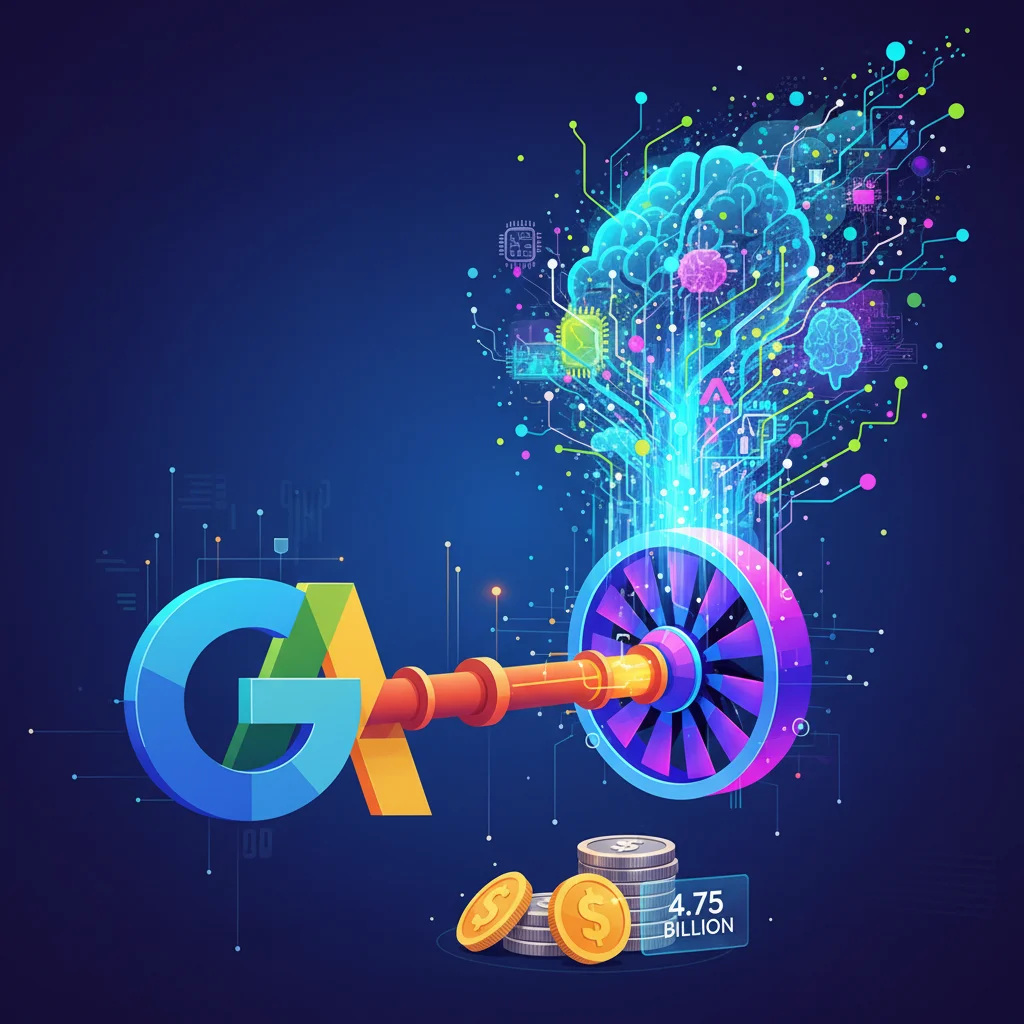
This brings us to a headline that might seem unusual at first glance but is a profound signal of the future: Alphabet, Google’s parent company, has agreed to acquire renewable energy developer Intersect Power for a staggering $4.75 billion. This isn’t just another corporate acquisition; it’s a tectonic shift in how the world’s leading technology companies view their infrastructure. It’s a direct admission that to lead the future of software and AI, you must first control the power that makes it all possible.
The Unseen Engine: AI’s Insatiable Thirst for Energy
To truly grasp the significance of this deal, we need to understand the physics and economics of modern artificial intelligence. Training a large language model (LLM) like Google’s Gemini is one of the most energy-intensive computational tasks ever undertaken by humanity. It involves feeding petabytes of data through massive neural networks for weeks or even months on end.
The International Energy Agency (IEA) has sounded the alarm on this trend. Their analysis projects that electricity consumption from data centers, AI, and cryptocurrencies could double by 2026. To put that in perspective, the total demand would be roughly equivalent to the entire electricity consumption of Japan (source). The AI sector alone is projected to consume at least ten times its 2023 demand within that timeframe.
Let’s look at how AI’s energy needs stack up against more familiar benchmarks. The following table provides a rough comparison of annual electricity consumption across different scales.
| Entity | Estimated Annual Electricity Consumption (TWh) |
|---|---|
| Typical U.S. Household | ~0.00001 TWh |
| Bitcoin Network (2023) | ~120-150 TWh |
| Google’s Global Operations (2022) | 22.28 TWh |
| Projected AI Sector Demand (IEA 2026 High-Case) | ~1,000 TWh |
As the table illustrates, the energy footprint of AI is poised to dwarf even that of notoriously power-hungry sectors like cryptocurrency. For a company like Google, whose entire business—from Search to Cloud to its AI ambitions—runs on data centers, securing a massive, predictable, and clean energy supply is no longer a “nice-to-have” ESG initiative. It’s a fundamental issue of business continuity, cost control, and competitive advantage.
The UK's New Digital Nanny: Is AI-Powered Nudity Blocking a Solution or a Slippery Slope?
Beyond PPAs: The Strategic Shift to Owning the Power Plant
For years, big tech companies have addressed their energy needs and climate goals through Power Purchase Agreements (PPAs). In a PPA, a company agrees to buy electricity from a renewable energy project at a fixed price over a long term, which helps finance the project’s construction. Google has been a pioneer in this space, but this acquisition of Intersect Power signals a strategic evolution.
Why the change? A PPA is essentially a financial contract for energy credits. Owning the asset outright provides a much deeper level of control and integration. This move is about vertical integration for the AI era. By owning the power generation, Alphabet can:
- Guarantee Supply: They are no longer just a customer in the energy market; they are a producer. This insulates them from market volatility and ensures their data centers have the power they need, when they need it.
- Optimize for 24/7 Clean Energy: Google has an ambitious goal to run its operations on 100% carbon-free energy, 24/7, by 2030 (source). Intersect Power specializes in solar and, crucially, battery storage. This combination is key to providing consistent power even when the sun isn’t shining, a critical step toward achieving that 24/7 goal.
- Control Costs: By owning the generation assets, Alphabet can lock in its energy costs for decades, protecting its cloud and AI businesses from the unpredictable price swings of global energy markets. This cost stability is a massive competitive advantage for their Cloud and SaaS offerings.
- Drive Innovation: Owning both the energy source and the energy consumer allows for unprecedented levels of automation and optimization. They can develop sophisticated software to manage energy flow, shifting computational loads to times of peak renewable generation and using their own infrastructure as a testbed for new grid-management technologies.
I predict we are at the beginning of a massive trend. Expect to see Microsoft, Amazon, and Meta make similar, multi-billion-dollar moves to acquire or build their own generation assets. The era of simply buying renewable energy credits to offset consumption is ending. The new era is about owning the entire stack, from the solar panel to the software-as-a-service (SaaS) application.
However, this raises profound questions. What are the cybersecurity implications of a company that manages global data also controlling a significant piece of the power grid? This convergence of critical infrastructure creates new, complex threat vectors that will require a complete rethinking of security protocols. The line between tech company and utility is blurring, and the regulatory and security frameworks need to catch up—fast.
The Ripple Effect: What This Means for Developers, Startups, and You
A multi-billion-dollar deal between a tech behemoth and a power company might feel distant, but its implications will ripple through the entire tech ecosystem.
For Developers and Data Scientists: The energy cost of computation is about to become a much more visible metric. Efficient programming will no longer just be about speed and performance; it will be about sustainability and cost. Expect to see cloud platforms expose more granular data on the carbon intensity of a given API call or machine learning job. Writing lean, optimized code and designing less computationally intensive models will become a sought-after skill. The world of MLOps will increasingly incorporate “GreenOps.”
For Startups: For startups building AI-native products, the cost of compute is often their single largest expense. This deal could be a double-edged sword. On one hand, Google Cloud’s potential for more stable and predictable pricing could be a major draw. On the other, the sheer scale of investment required to secure one’s own power supply raises the barrier to entry, further entrenching the dominance of the tech giants. This could force startups to focus on innovation in algorithmic efficiency to compete.
TikTok's Ticking Clock: The High-Stakes Tech Chess Match for Its US Future
For the Tech Industry: This acquisition is a wake-up call. It redefines what it means to be a hyperscale tech company. The future belongs to those who can master both the digital and physical worlds. This will spur a wave of innovation in areas like battery technology, smart grid software, data center cooling, and energy-aware workload scheduling. The intersection of artificial intelligence and energy management is set to become one of the most exciting and well-funded fields in technology.
Squaring the Circle: A Sustainable Future for an Energy-Hungry Technology
There’s an inherent paradox at the heart of the AI revolution. Artificial intelligence holds immense promise for solving some of the world’s most pressing challenges, including climate change—by optimizing power grids, discovering new materials for batteries, and modeling climate impacts. Yet, the technology’s own environmental footprint is a growing concern.
Alphabet’s acquisition of Intersect Power is a direct attempt to resolve this conflict. It’s a statement that says, “We believe the benefits of AI are too great to ignore, so we will invest whatever it takes to scale this technology in a way that aligns with our sustainability goals.” It’s an aggressive move to build a green foundation for a power-hungry future.
Of course, this isn’t a silver bullet. Questions remain about the water consumption of data centers, the environmental impact of manufacturing solar panels and batteries, and whether this level of corporate control over critical infrastructure is healthy. But it is an undeniable, concrete step toward decoupling the growth of AI from the growth of carbon emissions.
The Delivery Hero Dilemma: When a Tech Giant's Growth Engine Sputters
In the end, this $4.75 billion transaction is far more than a line item on Alphabet’s balance sheet. It’s a blueprint for the future of technology infrastructure. It demonstrates that the most advanced software of the 21st century is fundamentally dependent on building the most advanced clean energy systems. The race for AI dominance will be won not just in the cloud, but on the vast solar farms and battery arrays that will power our intelligent future.

Related Posts

AI’s Billion-Dollar Safety Net: How Insurance is Taming the Risk of Automated Decisions

The Ellison Playbook: Can a Brutal 20-Year-Old Software Takeover Strategy Conquer Hollywood?