Meta’s Llama: A Stroke of Branding Genius or a Costly AI Joke?
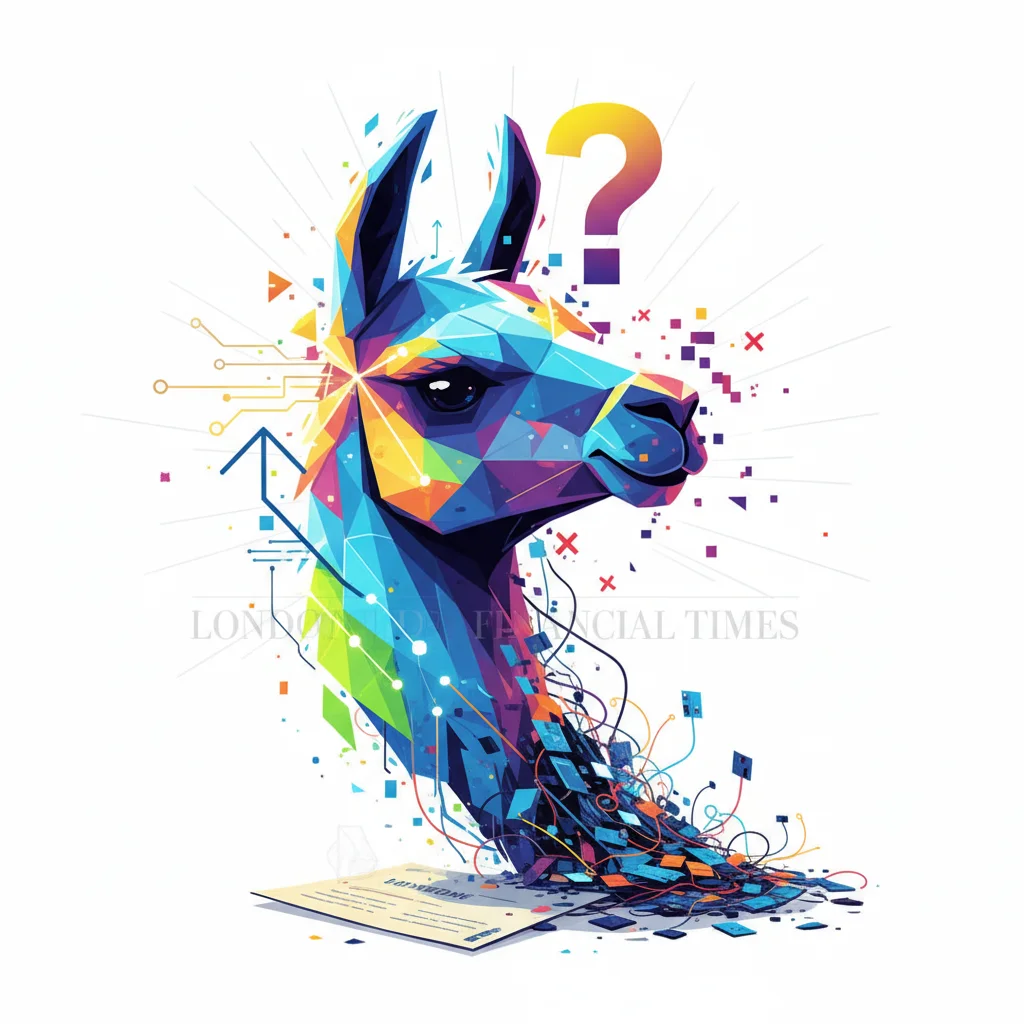
It began with a simple, almost poetic observation in a letter to the Financial Times. The title, penned by a reader from London, read: “What an apt name for Meta’s new AI model!” This single sentence, dripping with implied irony, opens a fascinating rabbit hole into the high-stakes world of corporate branding, artificial intelligence, and its seismic impact on the global economy. The model in question is Llama, Meta’s powerful series of large language models (LLMs). But why “apt”? Because llamas, the Andean pack animals, are famously known for one particular, rather unpleasant behavior: spitting.
This observation isn’t just a clever joke. It’s a profound commentary on the central paradox of the AI revolution. For investors, business leaders, and anyone navigating the turbulent waters of modern finance, it poses a critical question: In the multi-trillion-dollar race for AI dominance, does a name that winks at the technology’s biggest flaw—its tendency to “hallucinate” or spit out nonsense—represent a fatal misstep or a brilliant, calculated risk?
The Rise of the Llama: Meta’s Open-Source Gambit
Before dissecting the name, it’s crucial to understand the beast. Llama, and its more powerful successors Llama 2 and Llama 3, are not just another set of AI models. They represent Meta’s strategic counter-attack against the perceived dominance of closed-source models like OpenAI’s GPT series and Google’s Gemini. By releasing its Llama models under a relatively permissive, open-source license, Meta has armed a global army of developers, researchers, and startups with a powerful tool that can be freely modified and built upon. This move has been hailed as a significant democratization of AI technology, potentially accelerating innovation across countless sectors.
This open-source approach has profound implications for the financial technology (fintech) sector. While large institutions can afford to license expensive, proprietary models, smaller, more agile fintech startups can leverage Llama to build innovative solutions—from hyper-personalized financial advisors to sophisticated fraud detection systems—without exorbitant upfront costs. According to a report from Andreessen Horowitz, open-source models are not only catching up to their closed-source counterparts in performance but are often “more flexible, more customizable, and more efficient.” This strategy positions Meta not just as a product company but as a foundational pillar of the new AI-driven economy, a move that has been closely watched on the stock market.
Beyond the Bottom Line: How Europe's New Reporting Rules Are Redefining Global Finance
A Name’s Double Meaning: Genius Branding or Corporate Gaffe?
This brings us back to the name. In the sanitized, acronym-heavy world of big tech, “Llama” stands out. It’s quirky, memorable, and organic. But the “spitting” connotation is impossible to ignore, especially when AI’s biggest public trust issue is its propensity for “hallucinations”—the industry term for when a model generates false, nonsensical, or biased information with complete confidence.
The Case for a Gaffe: Acknowledging the Flaw?
From a risk management perspective, the name seems almost reckless. For a company like Meta, which has spent years battling controversies over misinformation and content moderation, why choose a name that so easily analogizes to the spewing of falsehoods? Every time Llama makes a public error, the headlines write themselves: “Meta’s Llama Spits Out Inaccurate Data.” For sectors like banking and trading, where accuracy is paramount, this association could foster deep-seated distrust. An AI used for market analysis or loan applications cannot afford to “spit”; the consequences could be catastrophic. This perceived unreliability could slow adoption and create a ceiling on its enterprise value, impacting Meta’s long-term investing thesis.
The Case for Genius: Disarming with Honesty
Conversely, the name could be a masterstroke of post-modern branding. In a world weary of corporate platitudes, “Llama” is refreshingly honest. It subtly acknowledges the technology’s imperfections, disarming critics by beating them to the punch. The name says, “We know this isn’t perfect yet, but we’re building it in the open with you.” This humility can build a different kind of trust—one based on transparency rather than a pretense of perfection. Furthermore, the name is approachable. It demystifies the technology, making it sound less like a dystopian super-intelligence and more like a helpful, if occasionally stubborn, tool. This branding is crucial for driving widespread adoption beyond the tech elite and into the mainstream consumer and business markets.
The AI Branding Arms Race: A Comparative Analysis
Meta’s choice becomes even clearer when viewed in the context of its competitors. The branding strategies in the AI space are diverging, reflecting different corporate philosophies and market strategies. This landscape has a direct impact on how these technologies are perceived, valued, and adopted within the financial world and beyond.
Here is a brief comparison of the naming strategies of major AI players:
| Model/Company | Naming Strategy | Perceived Vibe | Implications for Finance & Investing |
|---|---|---|---|
| Meta Llama | Quirky / Animal | Approachable, Community-driven, Imperfect | Appeals to open-source developers and fintech startups; may face trust hurdles in conservative banking sectors. |
| OpenAI GPT-4 | Technical / Acronym | Authoritative, Scientific, Complex | Builds confidence through a perception of technical superiority; seen as a premium, reliable choice for enterprise trading and analysis tools. |
| Google Gemini | Mythological / Aspirational | Powerful, Dual-natured (multi-modal), Grandiose | Aims to project immense capability and versatility, positioning itself as a foundational pillar of the future economy. |
| Anthropic Claude | Human-like / Personable | Safe, Ethical, Conversational | Focuses on building trust and safety, a key selling point for regulated industries looking to mitigate AI risk. (source) |
This table illustrates that a name is more than just a label; it’s the first step in building a narrative. That narrative is critical for attracting talent, securing partnerships, and, most importantly, convincing the market of a multi-billion dollar valuation.
The Surveillance Premium: How America's Watchful Eye Creates a Haven for Investors
Implications for the Future of Finance and Technology
The Llama saga is a microcosm of the broader challenges and opportunities AI presents to the financial industry. The tension between its immense power and its inherent unreliability is the central drama of our time.
For fintech innovators, open-source models like Llama are a godsend, lowering the barrier to entry for creating sophisticated financial products. We can expect a Cambrian explosion of AI-powered apps for budgeting, investing, and lending. However, for established institutions in banking and asset management, the “spitting” problem is an existential risk. A flawed AI recommendation could lead to massive losses or severe regulatory penalties. A study by the Stanford Institute for Human-Centered Artificial Intelligence found that even state-of-the-art models can exhibit significant bias and generate incorrect information, highlighting the need for “robust oversight” (source) before deployment in critical systems.
This is where emerging technologies may intersect. Could a blockchain-based ledger be used to create an immutable audit trail for an AI’s decisions and data sources? This could provide the transparency and accountability needed to build trust, effectively creating a system to verify what the Llama has “eaten” before it “spits.” The fusion of AI and blockchain could be the next frontier in building secure and trustworthy financial technology.
The Bank of England's £800 Billion Tightrope: Why a Policy Misstep Could Shake the UK Economy
Conclusion: More Than Just a Name
The seemingly trivial observation in a letter to the editor reveals a profound truth: in the age of AI, every detail matters. The name “Llama” is a bold, self-aware branding decision that encapsulates Meta’s entire open-source strategy. It embraces imperfection as a feature of open development, builds a memorable and approachable brand, and manages expectations in a field rife with hype.
For those in finance, investing, and business leadership, this is a crucial case study. It demonstrates that the path to AI integration is not just a technical challenge but also a psychological and narrative one. Building trust with consumers, markets, and regulators is as important as building powerful algorithms. Whether Llama’s name ultimately proves to be a masterstroke or a misstep, it has forced a vital conversation about transparency, risk, and the very human challenge of how we learn to trust our powerful, yet flawed, artificial creations.

Related Posts

The Trillion-Dollar AI Illusion: Why Open Source is About to Pop the AI Bubble
Trump’s AI Gambit: How a Pro-Tech Stance Could Reshape the US Economy and Investment Landscape