The Unquantifiable Asset: How a Fast-Food Owner’s Goodwill Translates into Hard Financial Returns
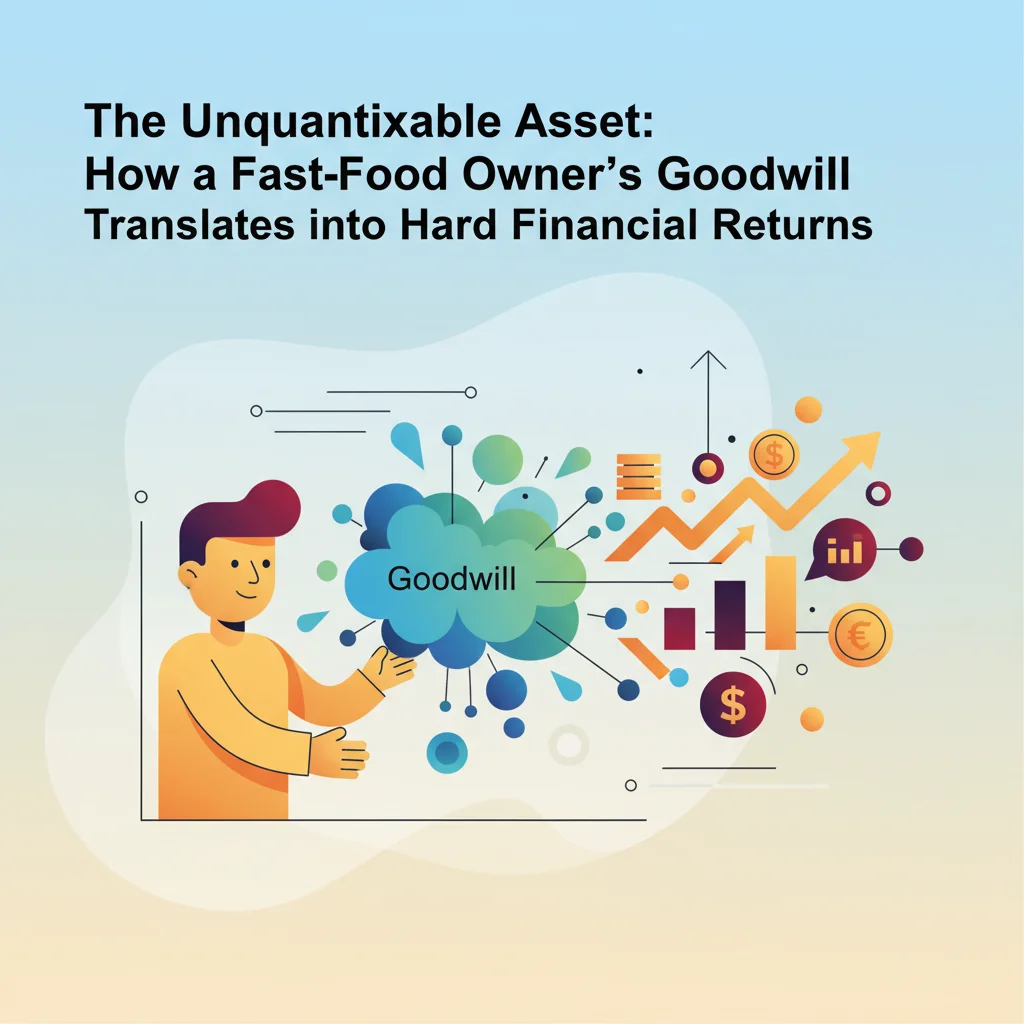
In a world dominated by high-frequency trading, complex financial instruments, and a relentless focus on quarterly earnings, it’s easy to overlook the fundamental drivers of long-term value. We scrutinize balance sheets, analyze cash flow statements, and build intricate models to predict stock market movements. Yet, one of the most powerful, albeit unquantifiable, assets is often generated far from Wall Street. It’s forged in the heart of a community, as demonstrated by Arfan Mohammed, the owner of Sizzlers Fastfood. His recent initiative to personally deliver 1,000 Christmas gifts to local children is more than a heartwarming story; it is a profound case study in the economics of goodwill and a masterclass in building sustainable brand equity.
For investors, finance professionals, and business leaders, this act of local philanthropy might seem trivial in the grand scheme of the global economy. However, to dismiss it is to miss a critical lesson about the very nature of modern capitalism. This single act of kindness provides a powerful lens through which we can analyze stakeholder capitalism, the “S” in ESG investing, and the tangible financial returns of authentic corporate social responsibility (CSR).
The Economics of Intangible Value: Goodwill Beyond the Ledger
In accounting, goodwill is an intangible asset that arises when one company acquires another for a price greater than the fair market value of its tangible and identifiable intangible assets. It represents non-physical assets like brand reputation, customer loyalty, and strong community relationships. While accounting rules have a specific definition, Mr. Mohammed is generating a far more potent, “unrecorded” form of goodwill. This is not an asset that can be neatly entered into a spreadsheet, yet its impact on the bottom line is undeniable.
Consider the direct financial implications:
- Reduced Customer Acquisition Cost (CAC): A story like this is marketing gold. It generates positive word-of-mouth and local media coverage that paid advertising simply cannot buy. The trust and loyalty it builds within the community translate into repeat business and a fiercely loyal customer base, drastically lowering the cost of acquiring and retaining customers.
- Increased Employee Morale and Retention: Employees want to work for companies they are proud of. A leader who invests in their community is often one who also invests in their people. This fosters a positive work environment, reducing employee turnover and the associated costs of hiring and training.
- Enhanced Brand Resilience: In an economic downturn, consumers cut back on discretionary spending. However, businesses with deep community roots are often the last to be cut from a household’s budget. This emotional connection creates a “moat” around the business, making it more resilient to fluctuations in the broader economy.
This micro-example highlights a macro-truth: the most durable competitive advantages are often human-centric. In an era where consumers are increasingly conscious of corporate values, authentic community engagement is no longer a “nice-to-have”; it is a core component of a sound business and investing strategy.
The Brussels Effect in Reverse: Is Europe's Regulatory Empire Stifling Its Own Economy?
A Practical Demonstration of Stakeholder Capitalism
For decades, the dominant theory in Western finance, championed by economist Milton Friedman, was shareholder primacy—the idea that a company’s sole social responsibility is to increase its profits for its shareholders. However, a competing and increasingly influential theory is stakeholder capitalism, which posits that a company must create value for all its stakeholders: customers, employees, suppliers, and the community, not just its shareholders. The belief is that by serving the entire ecosystem, the company creates more sustainable long-term value for everyone, including shareholders.
Mr. Mohammed’s actions are a textbook, albeit unintentional, execution of stakeholder theory. By investing directly in the well-being of his community (a key stakeholder), he strengthens his business’s social license to operate. This contrasts sharply with the impersonal, top-down philanthropic efforts of many large corporations, which can feel detached and performative. According to a 2022 study by PwC, 87% of consumers say they will be more likely to buy from a company that they trust. Trust is the currency of stakeholder capitalism, and it’s earned through consistent, authentic actions, not just press releases.
For those analyzing the stock market, identifying companies that genuinely practice stakeholder capitalism can be a powerful indicator of long-term health. These are often businesses with lower volatility, stronger brand loyalty, and a more resilient customer base, making them attractive long-term investments.
Scaling Authenticity: Can Financial Technology Bridge the Gap?
While the personal touch of a local business owner is difficult to replicate, the principles behind it can inform the strategies of larger organizations, especially with the aid of modern financial technology. The challenge is to use technology not to replace the human element, but to enable and amplify it at scale.
Here’s how emerging technologies could play a role:
- Fintech for Hyper-Local Giving: Fintech platforms can empower large companies to decentralize their charitable efforts. Imagine a corporate portal that allows regional managers to allocate a CSR budget to verified local charities, or a customer-facing app that rounds up purchases to support a school in that specific store’s zip code. This uses technology to facilitate local impact, rather than directing all funds to a single, large national charity.
- Blockchain for Transparency: One of the biggest criticisms of corporate philanthropy is the lack of transparency. Where does the money actually go? Blockchain technology offers a potential solution by creating an immutable, transparent ledger. A company could record its donations on a public blockchain, allowing customers and investors to trace the funds from the corporate account directly to the end recipient, drastically increasing trust and accountability. This level of transparency could become a new standard in corporate governance.
The following table contrasts the traditional, “analog” CSR model with a technologically-enabled approach, highlighting the trade-offs between authenticity and scale.
A Comparative Analysis of CSR Models
| Attribute | “Analog” Local Model (e.g., Sizzlers Fastfood) | Tech-Enabled Scaled Model |
|---|---|---|
| Mechanism | Direct, personal action by owner/employees. | Fintech platforms, corporate foundations, automated donations. |
| Key Strength | High authenticity and emotional impact. | Broad reach, efficiency, and data-driven allocation. |
| Primary Challenge | Limited scale and reach. | Perceived as impersonal or performative; risk of “greenwashing.” |
| Impact on Brand | Builds deep, resilient local loyalty. | Builds broad brand awareness and appeals to ESG investors. |
| Verification | Word-of-mouth and local media. | Blockchain ledgers, third-party audits, impact reports. |
Ultimately, the future may lie in a hybrid model where technology facilitates and verifies giving, but the decisions and connections remain fundamentally human and local.
Japan's Banking Shake-Up: Why a .4 Billion IPO Could Unleash a Merger Frenzy
The Ripple Effect on the Broader Economy
The impact of a thriving, socially-conscious local business extends far beyond its own revenue. This is the essence of the local multiplier effect, a core concept in economics. When a business like Sizzlers Fastfood succeeds, it doesn’t just enrich its owner. It creates a positive ripple effect:
- Job Creation: The business employs local residents, providing stable income.
- Supply Chain Support: It purchases goods and services from other local businesses (e.g., food suppliers, accountants, maintenance services), injecting capital into the local ecosystem.
- Increased Tax Base: A profitable business contributes corporate, payroll, and property taxes, which fund public services like schools, infrastructure, and emergency services.
This localized economic activity is the bedrock of a stable national economy. It creates resilient communities that are less susceptible to shocks from global markets. From a banking perspective, a business with such deep community integration and a loyal customer base represents a lower credit risk. It has a proven, sustainable model that is less volatile than a business competing solely on price. The principles of sound trading and investing often involve identifying companies with a durable competitive advantage, and as this case shows, that advantage can be as simple as being a trusted and valued member of a community. Research from the U.S. Small Business Administration confirms that small businesses are vital engines of economic growth, creating the majority of net new jobs. Supporting them is not just a social good; it is an economic imperative.
The Bo Diddley Beat: Rock's Original Blockchain and the Economics of a Foundational Rhythm
Conclusion: The Ultimate Long-Term Investment
The story of Arfan Mohammed and his 1,000 Christmas gifts is a powerful reminder that the most sophisticated financial models and investment theses must ultimately account for human behavior, trust, and community. In our pursuit of alpha and market-beating returns, we must not forget the foundational elements that create lasting value.
For business leaders, the lesson is to view community engagement not as an expense, but as a strategic investment in the company’s most valuable intangible asset: its reputation. For investors and finance professionals, it is a call to look beyond the numbers and identify the companies that are building genuine, sustainable relationships with their stakeholders. In the final analysis, the principles that make a local takeaway shop successful—trust, service, and community—are the very same principles that underpin the most resilient and successful enterprises on the global stage. True wealth isn’t just measured in dollars; it’s measured in the positive impact one has on the world, an investment that always pays dividends.