The Affordability Paradox: Why a Strong Economy Feels So Expensive
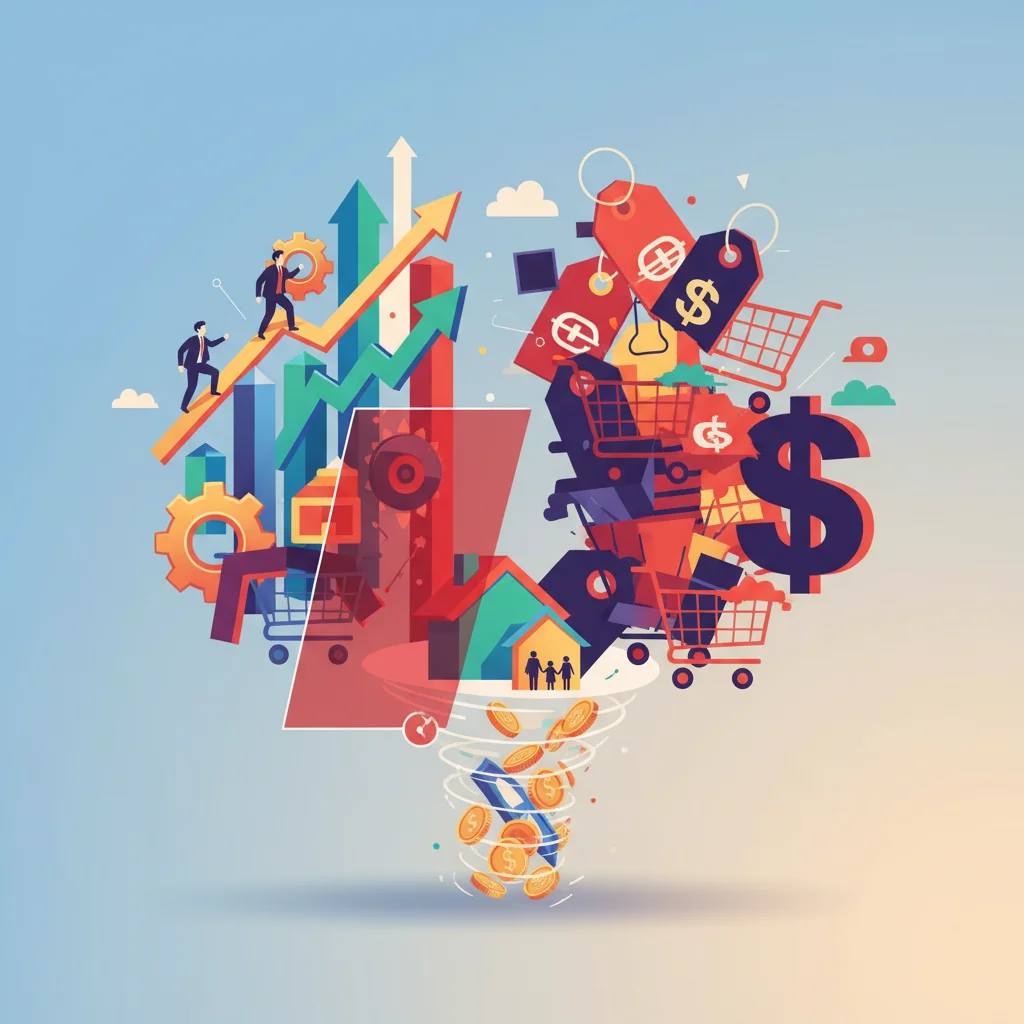
On the surface, the American economy presents a picture of robust health. Unemployment is near historic lows, GDP growth has defied recession forecasts, and the stock market continues to show surprising resilience. By these traditional metrics, everything seems to be on the right track. Yet, for millions of households across the country, this macroeconomic success story feels like a work of fiction. The reality on the ground is defined by a single, pervasive word: affordability.
This growing chasm between official economic data and the lived financial experience of everyday citizens is the defining paradox of our time. It’s a phenomenon some have dubbed a “vibe-cession”—a period where public sentiment is deeply pessimistic despite positive indicators. The core of this disconnect lies in the relentless pressure on household budgets. While the rate of inflation may be cooling, the cumulative price hikes of the past few years have become a permanent feature of the economic landscape, fundamentally altering the cost of living. This article delves into the layers of the affordability crisis, exploring its root causes, its political ramifications, and its profound implications for the worlds of finance, investing, and business strategy.
A Tale of Two Economies: The Data vs. The Daily Grind
To understand the current sentiment, one must appreciate the two conflicting narratives at play. On one hand, the “Bidenomics” narrative points to a string of legitimate economic victories. The labor market has remained remarkably tight, and wage growth has, in recent months, started to outpace inflation. The broader economy has successfully navigated the post-pandemic turbulence without tipping into the widely predicted recession.
However, this positive narrative crumbles when faced with the weekly grocery bill or the monthly mortgage statement. The stark reality is that the cost of essential goods and services has surged dramatically. According to analysis from the Financial Times, Americans are grappling with a cost-of-living crisis that statistics alone fail to capture. The psychological weight of paying significantly more for the same basket of goods erodes any sense of financial progress, even if one’s paycheck has also increased. This isn’t just about numbers; it’s about the feeling of running faster just to stay in the same place.
The core issue is the stickiness of high prices. While inflation may have slowed from its peak of over 9%, this simply means prices are rising less quickly—not that they are returning to previous levels. The price of a used car, a gallon of milk, or a month’s rent is now set at a new, much higher baseline, and household budgets have had to permanently adjust.
Deconstructing the Squeeze: Inflation, Interest Rates, and Income
The affordability crisis is not the result of a single factor but a confluence of powerful economic forces. At the forefront is the lingering impact of the highest inflation in four decades, compounded by the very medicine used to treat it: aggressive interest rate hikes by the Federal Reserve.
The Federal Reserve’s campaign to tame inflation involved rapidly increasing the federal funds rate, which in turn drove up the cost of borrowing across the entire economy. While necessary to cool an overheating economy, this policy had a direct and painful impact on consumers. The dream of homeownership drifted further out of reach as mortgage rates soared, and the cost of financing a car or carrying a credit card balance ballooned. In essence, the solution to one affordability problem (inflation) created another (high borrowing costs).
To illustrate the tangible impact on household expenses, consider the price changes for key items over the past few years.
Table: The Shifting Cost of American Life
| Expense Category | The Challenge | Impact on Households |
|---|---|---|
| Housing | Mortgage rates have more than doubled from their pandemic-era lows, reaching two-decade highs. Rental prices also remain stubbornly elevated in many markets. | The monthly cost of purchasing a median-priced home has become prohibitive for a huge segment of the population, trapping more people in the rental market and driving up demand. |
| Automobiles | Supply chain disruptions led to a spike in both new and used car prices. Combined with higher auto loan rates, the total cost of ownership has surged (source). | A reliable car, essential for most American families, now represents a much larger portion of the monthly budget, squeezing out other discretionary spending. |
| Food & Groceries | Food prices experienced some of the most significant and visible increases. While the rate of food inflation has slowed, grocery bills remain substantially higher than they were three years ago. | This is a non-negotiable expense that directly impacts a family’s sense of financial wellbeing and is a constant reminder of the higher cost of living. |
| Energy | Gasoline and utility prices have been volatile, contributing to budget uncertainty and directly impacting transportation and home heating/cooling costs. | Higher energy costs act as a tax on almost all economic activity, raising business expenses and directly hitting consumer wallets. |
The Political Fallout and the Battle for Narrative
When kitchen-table economics feels this strained, the consequences inevitably spill over into the political arena. The affordability crisis has become a potent political weapon, creating a significant challenge for the incumbent administration.
The 2023 elections in Virginia served as a clear warning shot. As the Financial Times article highlights, Republicans successfully framed the election around cost-of-living concerns, a message that resonated with voters and helped them secure key victories. This demonstrates that regardless of who is technically responsible for global inflation, voters often hold the party in power accountable for the financial pressure they feel.
This has also fueled the debate around “greedflation”—the idea that corporations have used the cover of inflation to expand their profit margins beyond what their own cost increases would justify. While the extent of its impact is a subject of intense debate among economists, the narrative has gained traction with a public looking for explanations for rapidly rising prices. This sentiment puts pressure on both policymakers and corporate leaders to address perceptions of unfairness in the economy.
The Unseen ROI: Why Your Travel Attire is a Strategic Financial Decision
Navigating the Paradox: Implications for Finance and Investing
For investors, business leaders, and finance professionals, understanding the nuances of the affordability paradox is crucial for navigating the road ahead. The disconnect between macro data and consumer sentiment creates both risks and opportunities.
Investment Strategy:
The current environment favors a focus on value and necessity.
- Consumer Staples vs. Discretionary: Companies providing essential goods and services (staples) are likely to show more resilient demand than those selling high-end, discretionary items. Investors may find stability in sectors that cater to budget-conscious consumers.
- The Rise of Private Labels: As households tighten their belts, major retailers with strong private-label brands stand to benefit. This is a key trend to watch in the retail sector.
- Financial Technology (Fintech) Solutions: The demand for tools that help consumers manage their finances is soaring. Fintech companies focused on budgeting, automated savings, debt management, and accessible trading platforms are well-positioned for growth. While advanced concepts like blockchain promise long-term disruption, the immediate need is for practical financial technology that helps people stretch their dollars further.
Business Leadership:
For business leaders, the focus must be on delivering clear value.
- Pricing Power and Strategy: Companies that can’t justify their price points will lose customers. The era of across-the-board price hikes is over; the new environment demands strategic pricing based on a clear value proposition.
- Employee Compensation: In a tight labor market where affordability is the top concern for employees, competitive wages and benefits are not just perks—they are essential for attracting and retaining talent. Businesses must factor the real cost of living into their compensation strategies.
The banking sector also sits at a critical juncture. As the Federal Reserve potentially pivots its interest rate policy, the landscape for lending, saving, and investing will shift once again. The ability of banks to offer competitive products for savers and affordable credit for borrowers will be a key determinant of success.
Beyond the Ticker: Why Hedge Funds Are Getting Their Hands Dirty in Physical Commodities
Conclusion: The Enduring Challenge of a High-Cost World
The word “affordability” has transcended simple economics to become the defining social and political issue of our time. It encapsulates the frustration of a population that sees positive headlines about the economy but feels left behind in their own financial lives. The disconnect is not an illusion; it is a complex reality born from the scars of high inflation, the painful side effects of monetary tightening, and the slow, grinding nature of wage adjustments.
Looking ahead, the central challenge for policymakers, business leaders, and investors will be to bridge this gap. For the economy to feel as good as it looks on paper, the benefits of growth must translate into tangible relief for household budgets. Until then, the affordability paradox will continue to shape consumer behavior, influence election outcomes, and define the American economic experience.

Related Posts
Economic Titans Clash: Wolf and Krugman on Power, Plutocracy, and the Future of Your Portfolio
The “Merry Christmas Baby” Portfolio: Timeless Lessons on Investing, Economics, and Enduring Value