High Seas Standoff: How a US Intercept of Venezuelan Oil Shakes Global Finance and Your Portfolio
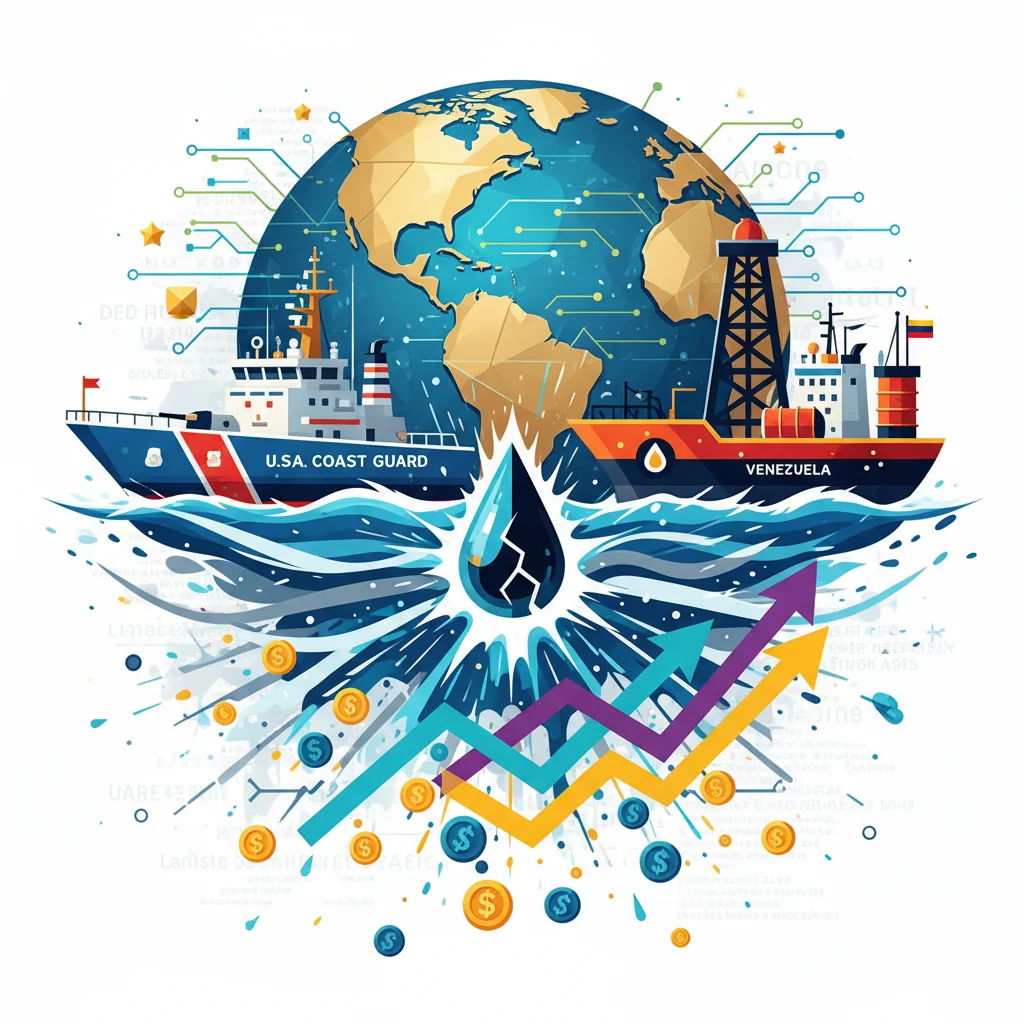
In the vast, sun-drenched expanse of the Caribbean, a tense drama is unfolding that extends far beyond the horizon. It’s a scene straight out of a geopolitical thriller: a US Coast Guard vessel, cutting through the waves, boards a commercial oil tanker. The cargo? Venezuelan crude, a commodity at the very heart of an intense economic and political struggle. This incident, as reported by the Financial Times, marks the second such interception under a heightened pressure campaign against the government of Nicolás Maduro. But this is more than just a maritime police action; it’s a critical signal to the global markets, a stress test for international law, and a stark reminder of how quickly geopolitics can impact the world of finance, investing, and the global economy.
For investors, finance professionals, and business leaders, ignoring these events is a luxury we can’t afford. The ripples from this single boarding spread across the entire financial ecosystem, touching everything from oil futures and the stock market to the complex world of compliance in international banking and the innovative, often-illicit, applications of financial technology. Understanding the ‘why’ behind this high-stakes chess match is crucial to navigating the volatile waters of today’s interconnected world.
The Geopolitical Backdrop: A Nation on the Brink
To grasp the significance of a tanker being boarded, we must first look at Venezuela. Once a prosperous oil-producing nation and a founding member of OPEC, the country has been mired in a severe economic and humanitarian crisis for years. Hyperinflation, widespread shortages, and a political schism have crippled its infrastructure and society. The United States, along with dozens of other nations, does not recognize Nicolás Maduro as the legitimate president, citing a fraudulent 2018 election. Instead, they recognize the opposition leader Juan Guaidó.
This political stance has been backed by a powerful economic weapon: sanctions. The U.S. has imposed a series of punishing sanctions primarily targeting Venezuela’s state-owned oil company, Petróleos de Venezuela, S.A. (PDVSA). The goal is simple and direct: to choke off the primary revenue stream funding the Maduro regime. According to the U.S. Energy Information Administration (EIA), these sanctions have dramatically accelerated the decline of the country’s oil output, which was already suffering from years of mismanagement and underinvestment.
This strategy, often termed a “maximum pressure” campaign, forces the Venezuelan government to find clandestine ways to get its oil to market. This involves a shadow fleet of aging tankers, complex ownership structures registered in obscure jurisdictions, and ship-to-ship transfers in the dead of night to disguise the origin of the cargo. The US Coast Guard’s interception is a direct challenge to this illicit supply chain.
Venezuela's High-Stakes Election: A Political Gambit with Global Economic Consequences
Sanctions, Oil, and Economic Warfare
Economic sanctions are a cornerstone of modern foreign policy, but their effects are complex and far-reaching. By preventing PDVSA from using the U.S. dollar or interacting with the American financial system, the sanctions effectively lock Venezuela out of the mainstream global economy. This has a cascading effect on oil trading worldwide.
Below is a simplified look at the decline of Venezuelan oil production, a stark illustration of the combined impact of internal mismanagement and external pressure.
| Year | Approximate Crude Oil Production (Million Barrels Per Day) | Key Events & Context |
|---|---|---|
| 2013 | 2.9 | Nicolás Maduro assumes presidency. |
| 2015 | 2.6 | Global oil price crash begins to strain the Venezuelan economy. |
| 2017 | 2.0 | First major U.S. financial sanctions imposed on the Venezuelan government (source). |
| 2019 | 1.0 | U.S. imposes sweeping sanctions on PDVSA after contested election. |
| 2020 | 0.5 | Production plummets amidst sanctions, pandemic, and infrastructure collapse. |
Note: Figures are approximate and compiled from various sources including OPEC and EIA reports for illustrative purposes.
This dramatic production collapse removes a significant amount of heavy crude oil from the global market. While other producers can often fill the gap, these disruptions create volatility. For commodity traders and energy investors, this geopolitical risk premium is a constant factor in their calculations, influencing everything from spot prices to long-term investment decisions in the energy sector of the stock market.
The FinTech Frontier: A Double-Edged Sword in Sanctions
The struggle at sea is mirrored by an equally intense, though less visible, conflict in the digital realm. The worlds of fintech and international banking have become the primary battlefield for enforcing and evading sanctions.
Enforcement Through Financial Technology
Modern financial institutions are on the front lines. They invest billions in sophisticated Anti-Money Laundering (AML) and Know Your Customer (KYC) systems. This advanced financial technology uses artificial intelligence and machine learning to scan millions of transactions in real-time, flagging any activity potentially linked to sanctioned entities like PDVSA. They analyze complex ownership structures, track payment origins, and cross-reference data against constantly updated government blacklists. The cost of failure is astronomical, with fines for non-compliance reaching into the billions.
Evasion Through Blockchain and Crypto
On the other side, sanctioned actors are exploring new technologies to circumvent this dragnet. Cryptocurrencies, built on blockchain technology, offer a potential pathway to move value outside the traditional, dollar-denominated banking system. While the transparency of public blockchains like Bitcoin can make it easier to trace illicit funds, privacy-focused coins and mixing services are often employed to obscure the money trail. This creates a new challenge for regulators and a new area of risk and opportunity within the digital asset space.
This technological arms race is transforming the very nature of economics and statecraft. The ability to track a barrel of oil is no longer just about satellite imagery of tankers; it’s about tracking the corresponding flow of digital value across the globe.
The Playboy of the Western Market: A Timeless Lesson on Hype, Bubbles, and Investor Psychology
Implications for Investors and Business Leaders
So, why does a single tanker in the Caribbean matter to someone managing a retirement portfolio or a corporate supply chain? The implications are profound and direct.
For the Investor:
- Geopolitical Risk is Not Abstract: This event is a tangible example of how geopolitical tensions can inject immediate volatility into the markets. It directly impacts oil prices, which in turn affects inflation, consumer spending, and corporate earnings across numerous sectors. An investing strategy that ignores geopolitics is incomplete.
- Sector-Specific Impacts: The energy sector is the most obvious casualty or beneficiary. Instability can drive up prices, benefiting producers in stable regions. However, it also impacts transportation (shipping and airline stocks), industrials, and any business with significant energy costs.
- Currency Fluctuations: Sanctions and oil price swings can cause significant shifts in currency markets, particularly for oil-exporting nations. This affects the returns on international investments.
For the Business Leader:
- Supply Chain Due Diligence: The incident highlights the critical importance of knowing your entire supply chain. A company that unknowingly charters a vessel with ties to a sanctioned entity faces enormous legal and reputational risk.
- Compliance is Non-Negotiable: The reach of U.S. secondary sanctions is long. Even non-U.S. companies can be penalized for “materially assisting” a sanctioned entity. This necessitates robust compliance departments and a deep understanding of the global regulatory landscape.
- Counterparty Risk: In international trading and finance, you must be certain of who you are doing business with. The use of shell companies and complex legal structures to hide ownership is rampant in sanctions evasion, making thorough counterparty risk assessment essential.
The table below summarizes key risk factors stemming from such geopolitical events that market participants should monitor.
| Risk Category | Specific Factor to Monitor | Potential Market Impact |
|---|---|---|
| Commodity Price Volatility | Brent/WTI Crude Oil Futures | Sharp price increases can fuel inflation and hurt consumer sectors. |
| Equity Market Risk | Energy Sector ETFs (e.g., XLE) and Shipping Stocks | Increased volatility and potential for short-term gains or losses. |
| Regulatory & Compliance Risk | Updates from OFAC and other regulatory bodies | Increased compliance costs and legal risks for internationally-exposed firms. |
| Currency Risk | USD vs. currencies of other oil producers (e.g., CAD, NOK) | Fluctuations impacting international trade and investment returns. |
The Silent Landlord: How Outdated Taxes Are Brewing a Crisis for Britain's Pubs
Conclusion: The Interconnected World
The boarding of a single oil tanker in the Caribbean is far more than a news headline. It is a microcosm of the 21st-century global landscape, where the levers of power are as much financial and technological as they are military. It demonstrates the intricate web connecting geopolitics, energy markets, the global economy, and the very architecture of our international banking system.
For those of us in the world of finance and investing, these events serve as a crucial lesson: the world is complex and deeply interconnected. A political decision made in Washington can capsize a portfolio in Tokyo or disrupt a supply chain in Frankfurt. Staying informed, understanding the underlying dynamics, and appreciating the multifaceted nature of risk are no longer optional—they are the essential tools for navigating the turbulent seas of the modern market.