TikTok’s Digital Iron Curtain: How ByteDance Averted a US Ban and Redefined Global Tech
It was the tech saga that had us all on the edge of our seats: a geopolitical chess match with a viral video app at its center. For years, Washington and TikTok’s parent company, ByteDance, were locked in a high-stakes standoff over national security concerns, threatening to pull the plug on the app for its 150 million American users. The drama seemed destined for a dramatic finale: a forced sale or an outright ban. But in a stunning turn of events, a deal has been struck, ending years of uncertainty. ByteDance has signed agreements to overhaul its US operations, a move that could rewrite the rules for global technology companies.
This isn’t just about dance challenges and viral trends. This is a story about data, sovereignty, and the intricate web of trust in our digital age. It’s about the monumental effort to build a digital fortress around US user data, a project so ambitious it has its own codename: Project Texas. So, what exactly did ByteDance agree to, and what does this landmark deal mean for the future of software, cloud computing, and innovation in an increasingly fragmented world?
The Heart of the Matter: Why Was the US Government So Concerned?
To understand the solution, we first need to grasp the problem. The US government’s concerns weren’t about the content on TikTok itself, but rather the data behind it and the algorithm that serves it. The core fear, voiced by officials from both the Trump and Biden administrations, was that the Chinese government could compel ByteDance, a Beijing-based company, to hand over sensitive data on American citizens or use the platform’s powerful recommendation engine to push propaganda.
These concerns were handled by the Committee on Foreign Investment in the United States (CFIUS), an inter-agency body that reviews the national security implications of foreign investments. For years, CFIUS has been scrutinizing ByteDance’s 2017 acquisition of Musical.ly, the app that merged to become the TikTok we know today. The central question was whether a company subject to Chinese law could be a trusted steward of American data. This long-running saga culminated in a stark ultimatum: divest your US operations or face a ban.
Project Texas: A Multi-Billion Dollar Digital Fortress
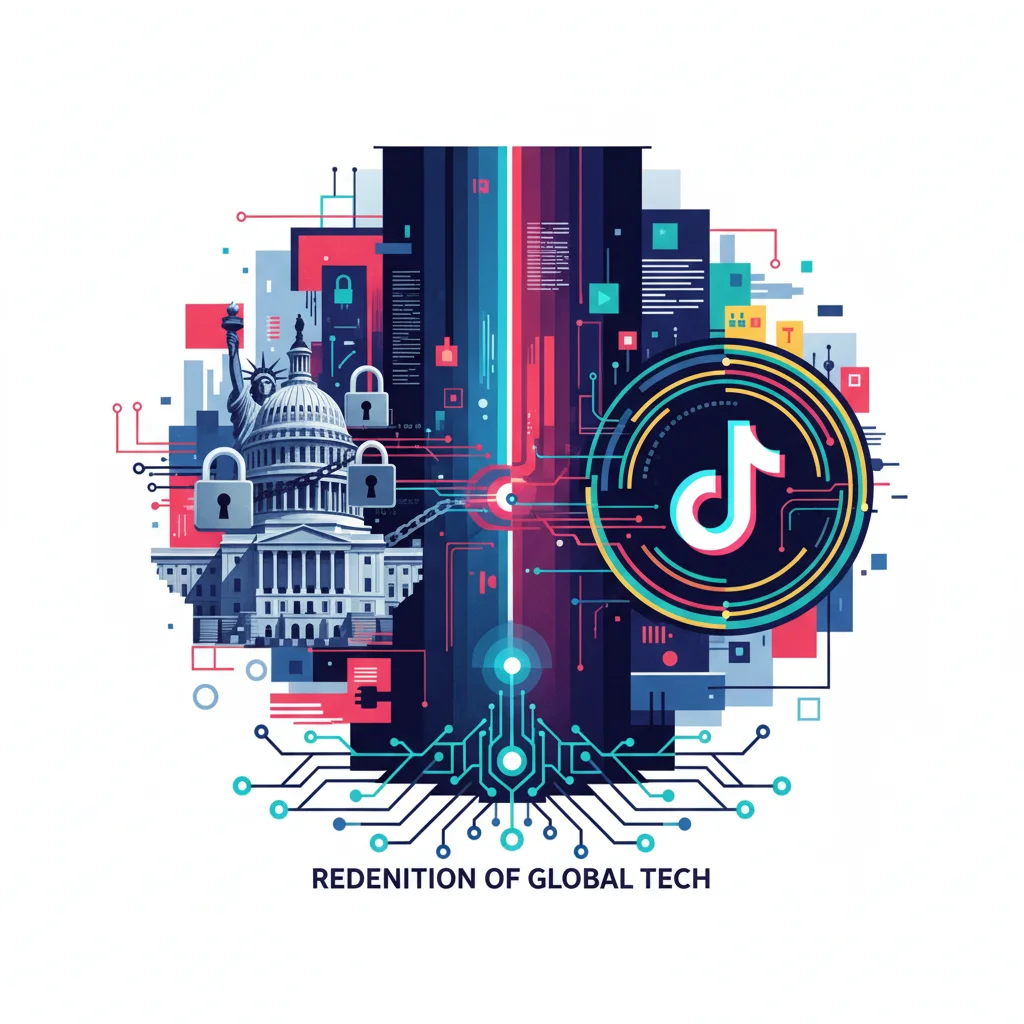
Instead of a sale, ByteDance proposed a radical and costly alternative: Project Texas. This isn’t just a new server farm; it’s a comprehensive restructuring of TikTok’s US operations designed to create a digital airlock between American user data and the rest of ByteDance’s global infrastructure. According to a Reuters report, this initiative is estimated to cost upwards of $1.5 billion to implement.
The plan involves a multi-layered approach to cybersecurity and data governance, with American tech giant Oracle playing a pivotal role. Here’s a breakdown of the key components:
- Cloud Infrastructure Isolation: All new US user data is now being routed to and stored within Oracle’s domestic cloud infrastructure. The goal is to eventually delete American user data from ByteDance’s non-US servers, creating a secure data enclave on American soil.
- Third-Party Auditing: Oracle will be responsible for vetting TikTok’s powerful recommendation AI and content moderation algorithms. This means Oracle’s engineers will have unprecedented access to the source code to ensure it hasn’t been manipulated and that the software is functioning as intended.
- Independent Oversight: A new, independent entity called TikTok US Data Security Inc. will be established to oversee all data security and content moderation decisions. This board will be composed of vetted, independent security experts who report to CFIUS, creating a layer of American-led governance.
To visualize the magnitude of this operational shift, consider the before-and-after of TikTok’s data management:
| Operational Aspect | Previous Model | Project Texas Model |
|---|---|---|
| Primary Data Storage | ByteDance servers in Virginia and Singapore | Dedicated Oracle Cloud infrastructure in the US |
| Data Access | Controlled by ByteDance global teams, including in China | Managed by a dedicated, US-based security team |
| Algorithm & Code Review | Internal ByteDance process | Vetted by a trusted third party (Oracle) |
| Oversight & Governance | ByteDance corporate structure | Independent US-based board reporting to CFIUS |
This shift represents a monumental undertaking in corporate restructuring, driven entirely by geopolitical and cybersecurity pressures. It’s a transition from a global, unified tech stack to a geographically balkanized one.
Reddit vs. Australia: The High-Stakes Legal Battle Over AI, Privacy, and the Future of the Internet
The Algorithm in the Spotlight: Can You Truly Vet an AI?
While data storage is a critical piece of the puzzle, the real crown jewel is TikTok’s recommendation algorithm. This sophisticated piece of machine learning is what makes the app so “sticky.” It’s a black box of programming that learns user preferences with terrifying accuracy, serving up a never-ending, personalized stream of content.
The US government’s fear was that this powerful tool for engagement could be subtly tweaked to become a tool for influence. Under the new agreement, Oracle’s role as a code auditor is paramount. They will essentially act as a gatekeeper for the software that runs the US version of the app. Every line of code, every update to the artificial intelligence model, will be scrutinized to ensure there are no backdoors or hidden features that could be exploited.
This raises fascinating questions for the developer community. How do you audit an algorithm that is constantly learning and evolving? It’s not just about static code; it’s about the data it’s trained on and the emergent behaviors of the system. This process will likely require advanced automation and continuous monitoring, setting a new precedent for algorithmic transparency and accountability.
However, skeptics argue that a determined state actor could still find ways to exert influence. The lines of communication between ByteDance’s Chinese and US teams can’t be severed completely without crippling the business. The core AI research and development will still largely happen in China. The fundamental challenge remains: you can move the data and vet the code, but can you truly isolate an operation from its parent company’s influence? This deal is less of a final solution and more of a continuously monitored, high-stakes experiment in corporate governance. The success of this model will be a bellwether for the future of the global internet. Will we see more “digital Burlin Walls” like this, or is this a one-off solution for a unique situation?
The Ripple Effect: A New Blueprint for Global Tech?
The TikTok-ByteDance agreement is more than just a corporate restructuring; it’s a potential blueprint for how technology companies will navigate a world fracturing along geopolitical lines. The implications for tech professionals, entrepreneurs, and developers are profound.
- The Rise of Data Localization: The era of seamless, global data flows may be ending. This deal powerfully reinforces the trend of “data localization,” where nations demand that their citizens’ data be stored and processed within their borders. For SaaS companies and cloud providers, this means a future of building region-specific infrastructure, a complex and expensive proposition that could stifle innovation for smaller players.
- Geopolitics as a Code-Level Concern: Developers and software engineers may now need to consider the geopolitical implications of their work. The practice of “code auditing” by third parties or government agencies could become more common for companies operating in sensitive sectors or from “high-risk” countries. This adds a new layer of complexity to the software development lifecycle.
- A Chilling Effect on Cross-Border M&A: This entire saga began with CFIUS’s review of a past acquisition. For startups looking for a global exit, the landscape has changed. Any deal involving a US company and a foreign entity, particularly from China, will now face extreme scrutiny regarding data handling, AI models, and corporate governance. The price of admission to the US market has just gone up.
This situation highlights the growing tension between the internet’s borderless design and the very real borders of national interest. The technical and logistical hurdles that ByteDance is jumping through with Project Texas could become a standard operating procedure for other global firms.
The Billion Collapse: Do Kwon, the Terra/Luna Crash, and a Cautionary Tale for Tech Innovators
The Road Ahead: An Uneasy Truce
The agreements signed by ByteDance represent an uneasy truce, not a final peace treaty. The deal averts the immediate crisis of a ban, which would have sent shockwaves through the creator economy and the tech industry. As a BBC source notes, this ends years of efforts by Washington to force a sale. However, the implementation of Project Texas will be a long and arduous process, subject to continuous government oversight.
For everyone in the tech ecosystem, from the solo developer to the multinational CEO, this is a defining moment. It underscores that in the 21st century, the biggest challenges to innovation may not be technical, but political. The ability to build secure, transparent, and trustworthy systems that can operate across political fault lines will be the key to success. TikTok may have dodged a ban, but it has walked into a new reality—one where the cloud has borders, code has a passport, and the algorithm is always under watch.
The AI Regulation War: Trump's Order Pits Federal Power Against State Control

Related Posts
The TikTok Deal: How a Geopolitical Showdown Redefined Cloud, AI, and Cybersecurity
Beyond the Ban: How TikTok’s New Deal Rewrites the Rules for AI, Cloud, and Global Tech