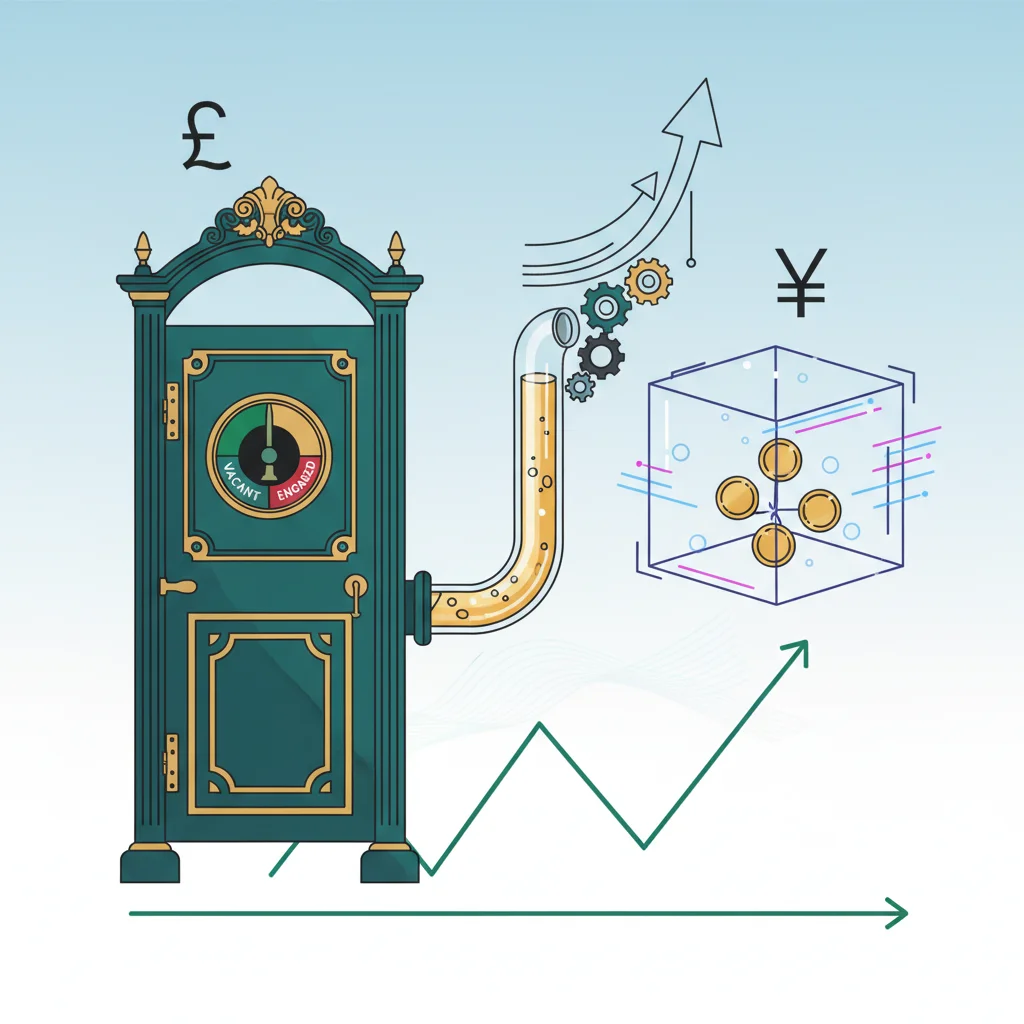
The Toilet Indicator: What Victorian Loos and Japanese Glass Boxes Can Teach Us About Modern Investing
The Unlikely Barometer of Economic Health
What if the most insightful indicator of a nation’s economic trajectory and investment potential wasn’t found in stock market tickers or GDP reports, but in the design of its public restrooms? It’s a provocative thought, yet one with surprising historical and contemporary relevance. In a recent letter to the Financial Times, Professor Laura Vaughan of UCL’s Bartlett School of Architecture drew a fascinating line from the robust, civic-minded designs of Victorian public conveniences to the technologically advanced, transparent toilets featured in Wim Wenders’ film, Perfect Days. This seemingly niche observation is, in fact, a powerful metaphor for a core principle of successful long-term investing and economic strategy: the immense, often overlooked value of foundational infrastructure.
For today’s investors, finance professionals, and business leaders, the lesson is profound. The way a society designs, funds, and maintains its most basic public amenities offers a clear signal about its priorities, its social cohesion, and its capacity for future growth. It reveals a commitment to the public good that underpins a stable and prosperous economy. From Victorian sanitation to modern financial technology, the architecture of trust and accessibility is the bedrock upon which fortunes are built. This is the story of how the humble loo can help us understand the future of finance, the stock market, and the global economy.
The Victorian Blueprint: Investing in the Invisible
The Victorians were masters of long-term, foundational investment. While we remember the era for its grand railways and sprawling factories, its most impactful contribution to the economy may have been subterranean: the sewer system. As Professor Vaughan alludes, the Victorians understood that public health was not a social expense but an economic necessity. Before these sanitation projects, cities like London were plagued by diseases like cholera, which decimated the workforce and crippled economic activity. According to a report by the World Health Organization, every dollar invested in basic sanitation yields a return of over five dollars in reduced healthcare costs and increased productivity (source).
The Victorian public convenience was an extension of this philosophy. These structures were often ornate, built with durable materials like cast iron and glazed brick, and designed to instill a sense of civic pride and safety. They represented a direct investment in the productivity of the populace. A healthy, mobile workforce is an efficient workforce. By providing clean, accessible facilities, they enabled commerce, extended the viable workday, and made urban centers more livable and, therefore, more profitable.
This historical example offers a direct parallel to modern economics. Countries and companies that invest in the “unseen” infrastructure—be it public health, digital literacy, or robust cybersecurity—are building a more resilient and productive foundation. For investors, this is a crucial signal. A company that prioritizes employee well-being and invests in robust internal systems is often a more stable long-term bet than one that focuses solely on flashy, front-end products. Similarly, an economy that invests in its foundational infrastructure is better positioned to weather economic storms and attract sustainable investment. The Victorian loo wasn’t just a toilet; it was a critical piece of financial technology for its time, lubricating the gears of the industrial economy.
The Price of Silence: Are We Paying Non-Executive Directors Too Much to Agree?
The Modern Metaphor: From Transparent Loos to Transparent Ledgers
Professor Vaughan’s letter pivots from the cast-iron certainty of the Victorians to the startling modernity of the transparent toilets in Shibuya, Tokyo, designed by Shigeru Ban. These glass boxes become opaque when a user locks the door. This innovative design solves a key user problem: it allows one to see if the facility is occupied and if it is clean before entering. At its core, it’s an architecture of trust, using technology to create transparency and, paradoxically, enhance a feeling of security.
This is a perfect metaphor for the challenges and opportunities facing the modern financial industry, particularly in the realm of fintech and blockchain. The financial system, for many, is an opaque black box. The inner workings of banking, trading, and the stock market are complex and often mistrusted. This lack of transparency creates friction, discourages participation, and can lead to systemic risks. Financial technology aims to solve this.
Consider the parallels:
- Transparency Builds Trust: Just as the transparent toilet allows a user to verify its state before committing, blockchain technology offers an immutable, transparent ledger. It allows participants in a transaction to verify its legitimacy without relying on a central, often opaque, intermediary. This has profound implications for everything from supply chain finance to stock market trading settlements.
– Usability Drives Adoption: The Victorian loo was successful because it was a practical solution to a real problem. The Shibuya toilet is a viral sensation because its design is intuitive and solves a modern anxiety. Similarly, the most successful fintech platforms are not necessarily the most technologically complex, but the most user-friendly. A seamless banking app or an intuitive trading platform that demystifies the investment process will always win over a clunky, jargon-filled alternative.
– Security Through Smart Design: The glass toilet’s security feature—turning opaque upon locking—is a function of its design. In the digital economy, security cannot be an afterthought. The best financial technology bakes security into its very architecture, using principles like zero-trust networks and end-to-end encryption to protect assets and data. This is a far more robust approach than simply adding layers of security to a flawed foundation.
This design-led approach to building trust is a critical lesson for business leaders. Whether you are in banking, asset management, or any other industry, your “public toilet”—the most basic, essential touchpoint for your customer—reveals everything about your company’s values and its long-term viability.
The Red Shoes Dilemma: Navigating Ambition, Risk, and Sacrifice in Modern Finance
Quantifying the ROI of Foundational Investment
The argument for investing in foundational, often “boring,” infrastructure over chasing speculative trends can be seen in the long-term economic data. While headline-grabbing tech IPOs dominate financial news, the slow, steady compounding of value from infrastructure improvements often delivers more widespread and sustainable economic benefits. A study from the International Monetary Fund (IMF) found that increasing public infrastructure investment by 1% of GDP can boost GDP by as much as 2.7% and create millions of jobs.
Let’s compare two investment philosophies using our central metaphor as a guide. One focuses on the “façade”—the flashy, highly visible projects. The other focuses on the “plumbing”—the essential, underlying systems.
| Investment Philosophy | Examples | Short-Term Impact | Long-Term ROI & Economic Impact |
|---|---|---|---|
| “Façade-First” Investing | Speculative tech stocks, luxury real estate developments, marketing-heavy product launches with weak fundamentals. | High media visibility, potential for rapid stock market gains, generates excitement and buzz. | Often volatile and unsustainable. Can create economic bubbles. Does little to improve baseline productivity or resilience of the broader economy. |
| “Plumbing-First” Investing | Sanitation and water systems, universal broadband access, financial literacy programs, upgrading a company’s core banking software, investing in robust cybersecurity. | Low visibility, slower initial returns, often requires significant capital expenditure and patience from investors. | Creates a foundation for sustainable growth. Increases workforce productivity, reduces systemic risk, builds public trust, and unlocks new avenues for commerce and innovation. High, compounding returns for the entire economy. |
The data is clear: while less glamorous, investing in the “plumbing” is the most effective strategy for long-term, resilient economic growth. It’s the ultimate value investing approach, applied at a macroeconomic scale.
The Investor’s Takeaway: Read the Signs
The journey from a Victorian urinal to a Japanese glass box is more than an architectural curiosity; it’s a masterclass in investment strategy. For the finance professional, the business leader, and the everyday investor, the implications are both simple and profound.
First, learn to identify and value foundational infrastructure. When analyzing a company, look past the quarterly earnings and examine the quality of its core systems, its employee satisfaction, and its investment in research and development. When evaluating a country or market, look at the quality of its public goods—its infrastructure, education, and legal systems. These are the leading indicators of long-term stability and growth potential.
Second, embrace the principle of transparency in your own endeavors. In an age of rampant misinformation, trust is the most valuable currency. Whether you are building a fintech app, managing a client’s portfolio, or leading a company, prioritizing clear, honest communication and transparent processes will build a loyal following and a durable competitive advantage.
Finally, have the courage to be a “plumbing-first” investor. Resist the siren song of short-term speculative trends and focus on assets and companies with strong foundations, clear utility, and a commitment to solving real-world problems. The greatest returns, both financial and societal, come not from chasing the next shiny object, but from ensuring the pipes are clean, the foundation is solid, and the doors—whether opaque or transparent—are open to all.
The £1.9 Billion Void: Deconstructing the UK's COVID Fraud and its Economic Aftermath

Related Posts
Beyond the Billions: Deconstructing the UK’s £11.7bn Borrowing Surge and Its Ripple Effect on the Economy

The Great Christmas Migration: What Holiday Travel Reveals About the Economy, Investing, and Fintech