The TikTok Deal: How a Geopolitical Showdown Redefined Cloud, AI, and Cybersecurity
The Deal That Almost Wasn’t: A New Blueprint for Global Tech?
Remember the summer of 2020? Amidst global uncertainty, a digital drama of epic proportions was unfolding. The main character? TikTok, the viral video app that had taken the world by storm. The antagonist? The U.S. government, citing national security concerns and threatening an outright ban. For weeks, the tech world held its breath, speculating on a forced sale to a U.S. giant like Microsoft or Walmart. It seemed like a straightforward, if dramatic, conclusion.
Then came the twist. In a move that surprised many, TikTok’s Chinese parent company, ByteDance, announced it would not be selling its U.S. operations. Instead, it brokered a complex partnership that created a new U.S.-based entity, TikTok Global. According to the Financial Times, this deal would see U.S. tech giant Oracle and investors like Silver Lake and MGX take a stake in a new data security joint venture. ByteDance, however, would retain control of the core of its business—the thing that makes TikTok, well, TikTok.
This wasn’t just a corporate maneuver; it was a landmark event that drew a new map for how global technology companies might navigate the treacherous waters of geopolitics. It’s a story about more than just an app; it’s about the future of the cloud, the sovereignty of data, the power of artificial intelligence, and the intricate dance of international cybersecurity.
Deconstructing the Deal: More Than Just a Partnership
To understand the significance of this arrangement, we need to look beyond the headlines. This wasn’t a simple acquisition. It was the creation of a sophisticated, hybrid structure designed to appease U.S. regulators while allowing ByteDance to protect its most valuable asset.
Here’s a breakdown of the key players and their strategic motivations in this high-stakes game:
| Player | Role in the Deal | Primary Motivation |
|---|---|---|
| ByteDance (TikTok’s Parent) | Majority Owner of TikTok Global | Retain control of its core intellectual property: the recommendation algorithm. Avoid a forced sale and maintain its global footprint. |
| Oracle | Minority Investor & “Trusted Technology Partner” | Secure a massive, high-profile cloud infrastructure client. Position itself as a leader in secure, sovereign SaaS and cloud solutions, gaining a major win in the cloud wars. |
| U.S. Investors (Silver Lake, etc.) | Minority Investors | Gain a financial stake in one of the world’s fastest-growing social media platforms, with the deal structure providing a layer of political and regulatory insulation. |
| U.S. Government | Deal Broker/Approver | Address national security concerns by ensuring U.S. user data is stored and managed on U.S. soil by a U.S. company, and gain oversight into the platform’s operations. |
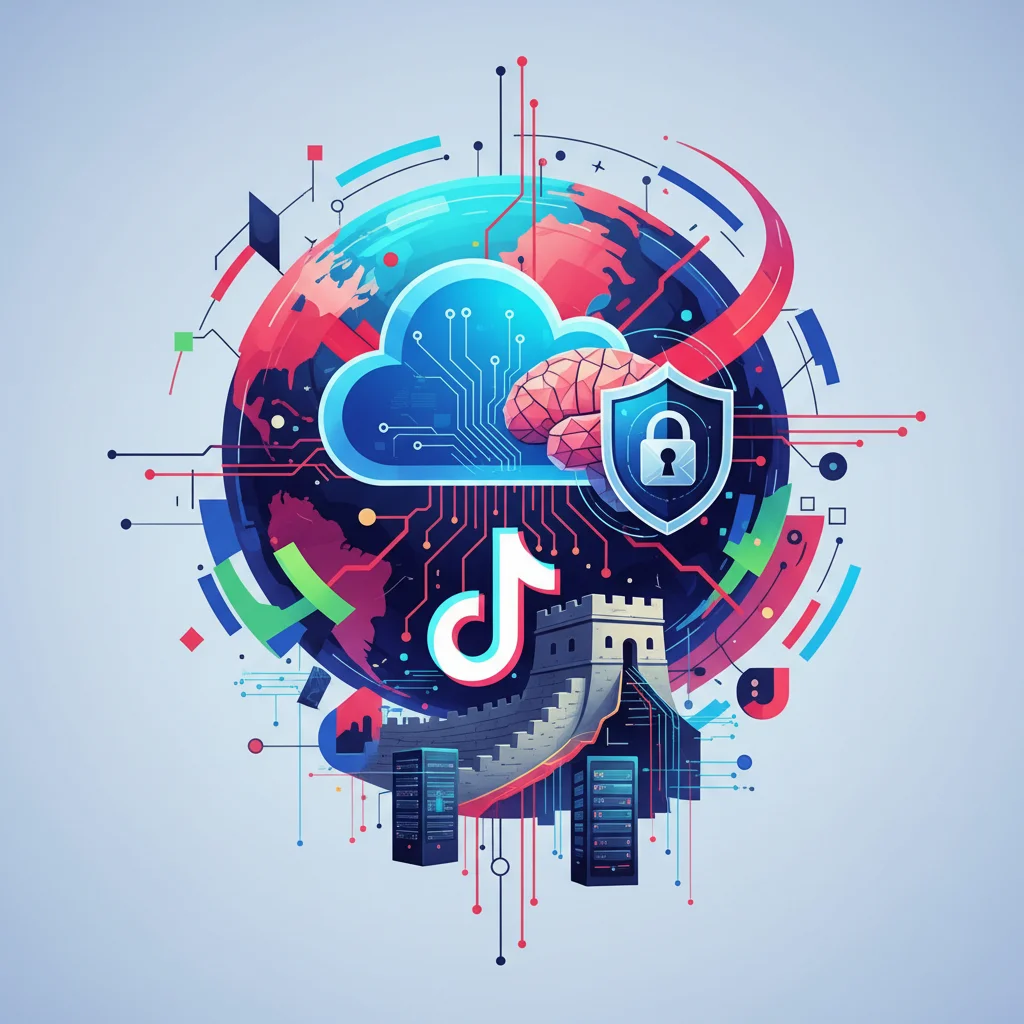
The centerpiece of this deal is Oracle’s role. They weren’t just writing a check; they became the technological custodians of TikTok’s U.S. operations. All U.S. user data would be migrated to and managed on Oracle’s cloud infrastructure. This move was designed to create a digital fortress around American data, with Oracle’s cybersecurity expertise acting as the gatekeeper. The idea was to sever the data pipeline that U.S. officials feared led directly back to ByteDance’s servers in China.
The New Titans: Why TIME Magazine's Nod to AI's Architects is a Defining Moment for Our Future
The Secret Sauce: Why the AI Algorithm Was Non-Negotiable
So, why did ByteDance fight so hard to avoid a full sale? The answer lies in two words: the algorithm. TikTok’s uncanny ability to serve you an endless, hyper-personalized stream of content you didn’t even know you wanted to see isn’t magic; it’s one of the most sophisticated pieces of consumer-facing artificial intelligence on the planet.
This recommendation engine is the “core business” that ByteDance refused to part with. It’s a complex system built on years of machine learning development, constantly refining itself with every swipe, like, and share from its billion-plus users. This algorithm is not just a feature; it’s the entire product. To sell it would be to give away the crown jewels, the result of immense investment in software engineering and data science.
For developers and entrepreneurs, this is a critical lesson. In the modern tech landscape, your most valuable asset is often not your user base or your brand, but the underlying AI and automation that create your unique user experience. Protecting that intellectual property is paramount, and ByteDance provided a masterclass in doing just that, even under immense political pressure.
Implications for the Broader Tech Ecosystem
The ripples from the TikTok-Oracle deal extend far beyond social media. This event offers crucial insights and warnings for everyone in the tech industry, from solo developers to enterprise startups and established giants.
1. The Rise of the Sovereign Cloud
The concept of a “sovereign cloud”—a cloud infrastructure that resides within a specific country’s borders and is subject to its laws—is now front and center. Oracle’s role as the “trusted technology partner” is the blueprint. This creates a massive opportunity for cloud providers who can guarantee data residency and compliance with local regulations. For developers and tech professionals, this means that programming and architecting applications with data localization in mind is no longer an edge case; it’s becoming a core requirement for any globally ambitious software project. A source familiar with the deal highlighted that this structure was key to satisfying national security reviews.
The AI Regulation War: Trump's Order Pits Federal Power Against State Control
2. Geopolitics as a Service (GaaS)
For entrepreneurs and startups, the TikTok saga is a stark reminder that your go-to-market strategy must now include a geopolitical risk assessment. Where is your data hosted? Who are your investors? What is the nationality of your parent company? These questions are no longer just for the C-suite of multinational corporations. A startup with aspirations for a global user base must now consider a modular architecture that allows for regional data partitioning from day one. This adds complexity but is essential for long-term resilience.
3. Cybersecurity’s New Frontier
The deal places an unprecedented focus on supply chain security for software. It’s not enough to secure the data; you have to secure the code that processes it. The challenge for TikTok Global and Oracle is to continuously verify that the machine learning models and application updates coming from ByteDance are free from malicious code or data-exfiltration functions. This will require a new level of transparent, automated auditing and continuous monitoring, pushing the boundaries of cybersecurity and DevSecOps. The demand for professionals who understand both intricate programming and international compliance is set to explode.
Reddit vs. Australia: The High-Stakes Legal Battle Over AI, Privacy, and the Future of the Internet
A Precedent Set, An Uncertain Future
The TikTok-Oracle deal was a masterstroke of corporate diplomacy, a solution born from a geopolitical standoff. It allowed all parties to walk away with a version of victory. The U.S. government could claim it had secured American data. Oracle landed a marquee cloud customer and a major PR win. And ByteDance, most importantly, kept its AI-powered soul intact.
But this complex compromise is not a silver bullet. It’s a fragile truce in an ongoing global tech cold war. It raises as many questions as it answers about the future of a connected world. Can a Chinese-owned algorithm truly be firewalled from U.S. data? Will this model of forced partnerships stifle innovation and create a fragmented internet? The deal, brokered under the Trump administration, set a precedent that continues to influence international tech policy. As nations increasingly view technology through the lens of national security, the lessons learned from this saga will be a critical guide for the next generation of builders, innovators, and leaders in the tech world.

Related Posts
TikTok’s Digital Iron Curtain: How ByteDance Averted a US Ban and Redefined Global Tech
Beyond the Ban: How TikTok’s New Deal Rewrites the Rules for AI, Cloud, and Global Tech