The €300 Billion Dilemma: Using Frozen Russian Assets to Fund Ukraine
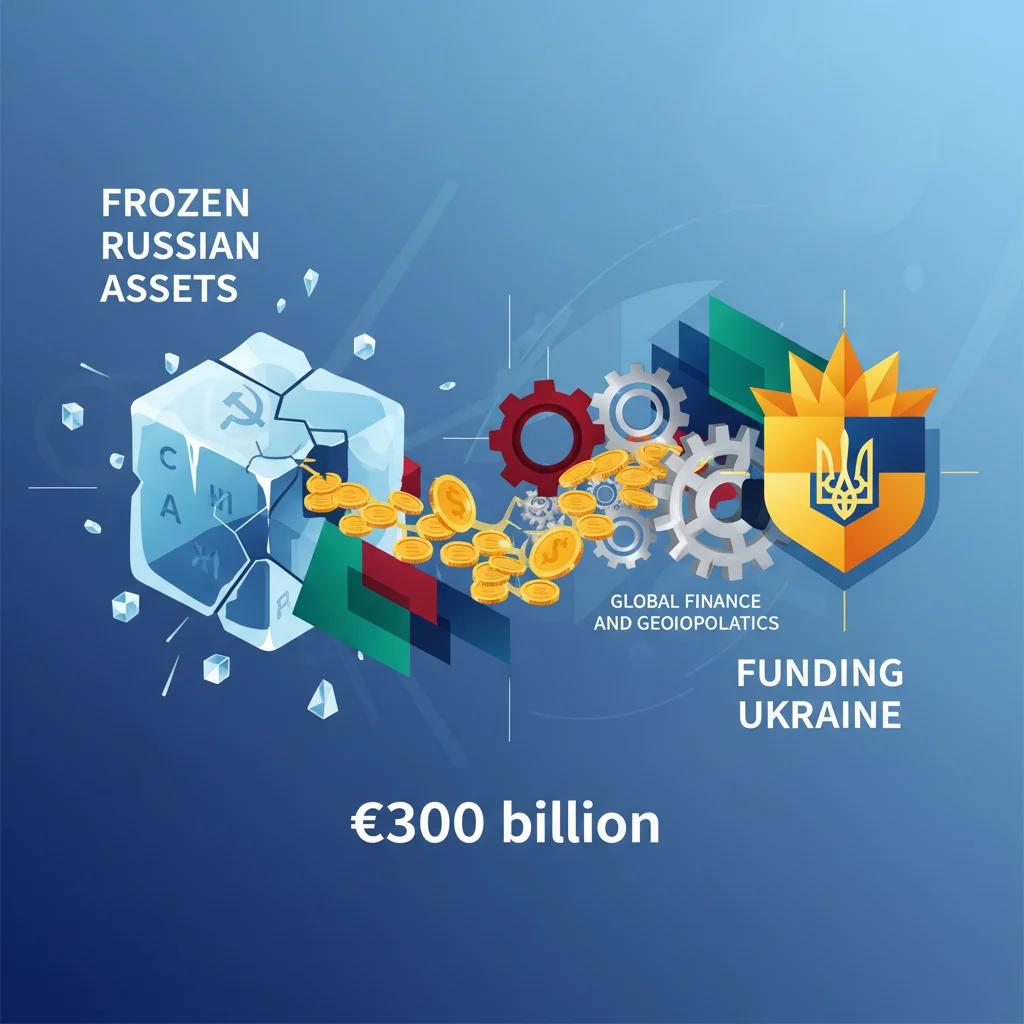
In the complex theater of global finance and geopolitics, a new and audacious strategy is taking center stage. Western nations, led by the G7 and the European Union, are grappling with a monumental question: Can the nearly €300 billion in frozen Russian sovereign assets be leveraged to fund Ukraine’s defense and reconstruction? This isn’t just a matter of financial engineering; it’s a move that could redefine the rules of economic warfare, international law, and the very stability of the global financial system.
The proposal, born from a desire to make Russia pay directly for the devastation it has wrought, has moved from the fringes of policy debate to the core of transatlantic discussions. While the moral imperative seems clear to many, the path forward is a legal and economic minefield. As one US official bluntly put it to the Financial Times, “So we’re counting on the EU to launder some Russian assets for us” (source). This stark statement captures the tension at the heart of the issue: the pursuit of justice for Ukraine against the long-standing principles that underpin the global economy.
For investors, finance professionals, and business leaders, understanding this debate is crucial. The decisions made in Brussels and Washington in the coming months will not only impact the war in Ukraine but could also send shockwaves through the world of international finance, affecting everything from the stability of reserve currencies to the calculus of geopolitical risk in investment portfolios.
Understanding the Assets: What Does “Frozen” Really Mean?
When Russia launched its full-scale invasion of Ukraine in February 2022, Western nations responded with an unprecedented wave of sanctions. A key component was the immobilization, or “freezing,” of Russian Central Bank assets held in their jurisdictions. It’s vital to distinguish this from outright confiscation.
Freezing assets means that Russia cannot access or move these funds. However, the ownership technically remains with the Russian state. The assets, mostly held in the form of securities and cash, are sitting in accounts at Western financial institutions. Seizing or confiscating assets would involve a legal transfer of ownership from Russia to another entity, such as a fund for Ukraine—an act with virtually no modern precedent for sovereign central bank assets.
A significant majority of these assets—over €200 billion—are held within the European Union, with a large portion concentrated at a single institution: Euroclear. Based in Belgium, Euroclear is a central securities depository (CSD) that acts as a clearinghouse for financial transactions, a critical piece of plumbing in the global banking and trading system. This geographic concentration places the EU, and the Euro, at the center of the economic and legal fallout of any decision.
Drax's Power Play: Why an Energy Giant's Move into Data Centres is a Game-Changer for Investors
The Two Paths Forward: Windfall Profits vs. Full Confiscation
The debate has coalesced around two primary options, each with a vastly different risk profile. The EU has championed a more cautious approach, while some voices in the US have pushed for a more aggressive strategy.
Here’s a breakdown of the two main proposals currently under consideration:
| Feature | Option 1: Taxing the “Windfall Profits” (EU-Favored) | Option 2: Full Asset Seizure (US-Favored) |
|---|---|---|
| Mechanism | The frozen assets (e.g., bonds) mature and are reinvested. The interest and profits from these reinvestments are considered a “windfall.” The EU proposes to tax these profits at a near-100% rate and transfer the revenue to Ukraine. | The principal of the frozen assets (the entire €300 billion) would be legally confiscated and transferred to a fund for Ukraine’s reconstruction and military aid. |
| Estimated Funds | Approximately €3-5 billion per year. | A one-time sum of nearly €300 billion. |
| Legal Risk | Lower. It avoids touching the sovereign principal. Proponents argue it’s a tax on unexpected profits earned by a private entity (like Euroclear), not a seizure of state property. | Extremely high. It directly challenges the principle of sovereign immunity, a cornerstone of international law, and would likely trigger decades of legal challenges from Russia. |
| Economic Risk | Moderate. Could still be viewed by other nations as a step towards seizure, potentially causing some unease among foreign reserve managers. | Severe. Could trigger a crisis of confidence in the Euro and US Dollar as reserve currencies, prompting countries like China and Saudi Arabia to diversify their holdings away from the West. |
| Potential Retaliation | Russia would likely retaliate legally and could seize remaining Western corporate assets within its borders. | Massive retaliation is almost certain, including the seizure of all Western assets in Russia and potential cyberattacks on financial infrastructure. |
The Legal Quagmire and Economic Dominoes
The primary obstacle to seizing the principal is international law. There is no clear precedent for confiscating the central bank reserves of a sovereign state, even one waging an illegal war. Legal scholars are divided, with some arguing that such a move could be justified as a “countermeasure” under international law, while others warn it would be seen as a violation of sovereignty, setting a dangerous precedent.
The economic ramifications are equally daunting. The global financial system operates on a foundation of trust. Nations across the world hold vast reserves in foreign currencies—primarily the US Dollar and the Euro—because they are considered stable, liquid, and, most importantly, safe. Seizing Russia’s assets would shatter this perception of safety. It sends a message that reserve assets are not sacrosanct but are subject to the political whims of the host country.
This could trigger a slow but steady exodus from Western currencies by nations wary of falling afoul of US or EU foreign policy in the future. The impact on the stock market and broader investing climate would be one of heightened geopolitical risk, forcing a re-evaluation of sovereign debt and currency holdings. Russia has already threatened severe retaliation, with President Vladimir Putin signing a decree allowing for the temporary seizure of US assets in Russia in response to any American move to confiscate its funds (source). This tit-for-tat escalation could spiral, harming Western companies and investors with remaining exposure in Russia.
The Great Unwinding: Why Global Economics, Not Hype, Is Dictating Bitcoin's Next Move
Financial Technology: The Enabler and the Escape Route
This entire situation is a testament to the power of modern financial technology. The interconnectedness of the global banking system, facilitated by fintech platforms and clearinghouses like Euroclear, is what made the rapid freezing of these assets possible. Digital records and electronic trading allow for the swift identification and immobilization of vast sums with a few keystrokes—a powerful tool of economic statecraft.
However, this same technology presents a potential escape route. The fear of asset seizure could accelerate research and development into alternative financial systems that exist outside of Western control. This includes:
- BRICS Payment Systems: Nations like China and Russia are already developing alternatives to the SWIFT messaging system. A move to seize assets would pour fuel on this fire.
- Central Bank Digital Currencies (CBDCs): Nations may explore bilateral CBDC arrangements to facilitate trade and bypass the dollar-denominated system.
- Blockchain and Cryptocurrency: While still volatile, the appeal of decentralized, censorship-resistant assets like Bitcoin or private blockchains could grow for state actors looking to shield a portion of their wealth from sanctions.
The economics of this new era will be shaped by how nations respond to the weaponization of traditional finance.
A Precedent-Setting Decision Awaits
The G7 and EU are at a crossroads. The pressure to provide Ukraine with the resources it needs to survive is immense and morally compelling. Using the aggressor’s own funds to pay for the damage is a politically potent idea. Yet, the risks are profound. A misstep could undermine the Euro, destabilize the global financial order, and create a precedent that could be used against Western nations in the future.
The current consensus appears to be coalescing around the more conservative “windfall profits” approach, providing a modest but steady stream of funding to Ukraine while attempting to keep the Pandora’s Box of sovereign asset seizure closed. But the debate is far from over. As the war drags on and Ukraine’s financial needs grow, the calls to take the “nuclear option” will undoubtedly get louder. For anyone involved in finance, investing, or international business, this is one of the most important stories to watch. The outcome will write a new chapter in the playbook of global economics and power.