The £32 Christmas Dinner: A Barometer for the Global Economy and Your Portfolio
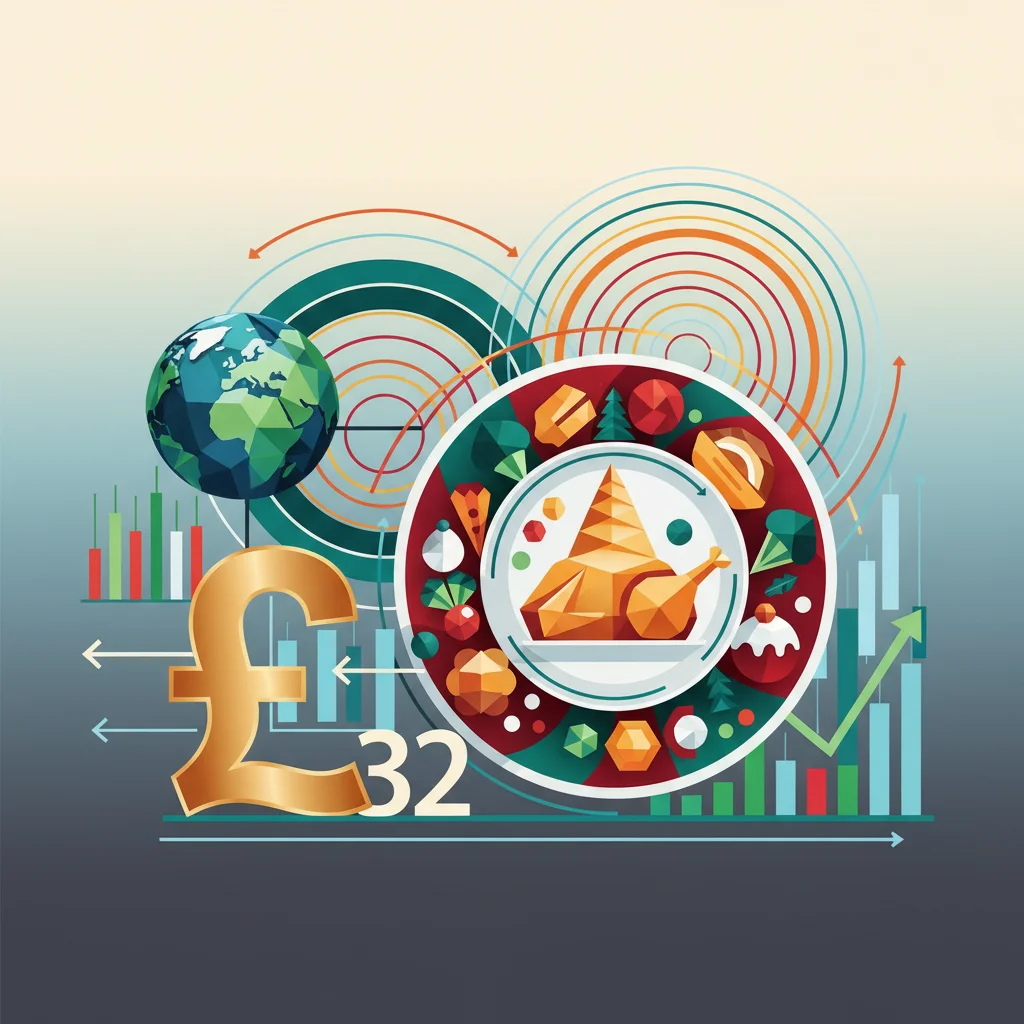
The festive season often brings with it a comforting sense of tradition, but this year, many are facing a less-than-welcome guest at the dinner table: inflation. A seemingly simple holiday meal has become a stark indicator of complex economic pressures. According to research conducted for the BBC, the cost of a typical turkey dinner has climbed to approximately £32.45, a figure that, while seemingly modest, tells a powerful story about the state of our economy.
For the average consumer, this is a tangible pinch on the holiday budget. For investors, finance professionals, and business leaders, however, this price tag is more than just a number—it’s a critical data point. It serves as a real-world reflection of macroeconomic trends, supply chain vulnerabilities, and the persistent challenges facing central banking institutions. In this analysis, we will deconstruct the cost of this festive meal, connecting the price of potatoes and poultry to the intricate worlds of finance, investing, and the future of our economic landscape.
Deconstructing the Dinner Plate: A Microeconomic Analysis
To understand the broader implications, we must first examine the individual components. The rising cost isn’t due to a single factor but a confluence of specific pressures affecting each item on the menu. This granular view reveals the fragility of our modern supply chains and the diverse forces at play.
Let’s break down the typical cost increases for key Christmas dinner items, illustrating where the pressures are most acute.
| Dinner Component | Primary Cost Driver | Economic Implication |
|---|---|---|
| Turkey | Avian flu outbreaks, rising feed costs (grain) | Commodity market volatility, agricultural supply shocks |
| Potatoes & Vegetables | High energy prices (for greenhouses/storage), labor shortages | Energy price dependency, tight labor market impact |
| Pigs in Blankets | Increased pork processing costs, post-Brexit labor issues | Regulatory impacts on trade, wage inflation |
| Christmas Pudding | Global ingredient prices (sugar, dried fruit), transportation costs | Global shipping logistics, foreign exchange fluctuations |
The price of the turkey, the centerpiece of the meal, has been significantly impacted by widespread avian flu, which has reduced supply across Europe. This is a classic microeconomic example of a supply shock leading to higher equilibrium prices. Similarly, the cost of vegetables like carrots and sprouts has been driven up by soaring energy prices, which are a critical input for farming, storage, and transportation. According to a report from the Office for National Statistics (ONS), food and non-alcoholic beverage inflation has been a major contributor to the overall Consumer Price Index (CPI), highlighting that what we see in the supermarket is a direct feed into national economic data.
These individual price hikes collectively create a significant burden on household finances, but their importance extends far beyond the kitchen. They are the frontline indicators that central banks and financial analysts monitor obsessively. A Warning Shot: Unpacking the UK's Unexpected 0.1% Economic Contraction
The Macroeconomic Ripple Effect: From Supermarket to Stock Market
The £32 dinner is a microcosm of the persistent inflationary pressures that have defined the post-pandemic economy. For institutions involved in banking and finance, this “sticky” inflation presents a formidable challenge. Central banks, like the Bank of England, are tasked with maintaining price stability, typically around a 2% target. When the cost of a basic meal component like a bag of potatoes surges, it signals that inflation is deeply embedded in the system.
This has direct consequences for the stock market and investing strategies:
- Monetary Policy: Persistently high food inflation forces central banks to maintain higher interest rates for longer. This policy tool is designed to cool the economy by making borrowing more expensive, thereby reducing demand. For investors, this means lower corporate earnings forecasts (as debt becomes more costly) and potentially suppressed stock market valuations.
- Sector Performance: High inflation differentiates market winners and losers. Companies in the consumer staples sector (supermarkets, food producers) may be able to pass on higher costs to consumers, protecting their margins. Conversely, consumer discretionary sectors (luxury goods, hospitality) often suffer as households cut back on non-essential spending to afford basics like their Christmas dinner. This dynamic heavily influences trading decisions and portfolio allocation.
- Bond Markets: Inflation is the primary enemy of fixed-income investors. Rising inflation erodes the real return of bonds, causing their prices to fall. The data gleaned from grocery receipts directly influences the yield curve and the complex world of bond trading.
The study of economics teaches us that consumer sentiment is a powerful force. When the public feels the pinch on a culturally significant event like Christmas dinner, it can dampen overall economic confidence, leading to reduced spending and slower GDP growth. Therefore, this single price point becomes a key piece of the puzzle for anyone trying to forecast the future direction of the economy.
Can Technology Carve a Path to a Cheaper Turkey?
In an environment of sustained cost pressures, businesses and consumers are increasingly looking to technology for solutions. The fields of financial technology (fintech) and blockchain, often associated with high-finance and digital currencies, have practical applications that could address the very issues driving up our food prices.
Here’s how emerging technologies could play a role:
- Supply Chain Transparency with Blockchain: One of the core problems is the opacity of global supply chains. A blockchain-based ledger could provide an immutable record of a product’s journey from farm to table. This would increase efficiency, reduce waste (a major cost component), and help quickly identify bottlenecks or contamination, as seen in the avian flu crisis. For a complex product like a Christmas pudding with global ingredients, this could be transformative.
- Fintech for Smarter Hedging: Agricultural producers are exposed to immense price volatility in feed, fuel, and fertilizer. Modern fintech platforms offer more accessible and sophisticated financial tools for hedging these risks. By locking in prices for future inputs, farmers can achieve greater cost stability, which can then be passed on to consumers. This brings complex trading instruments, once the preserve of large corporations, to smaller producers.
- Efficient Payments and Banking: Cross-border payments and trade finance are notoriously slow and expensive, adding costs at every step. Financial technology is streamlining these processes, reducing transaction fees and delays for importers and exporters of festive goods. This lowers the base cost of bringing products to market.
While these technological solutions are not a silver bullet, they represent a fundamental rewiring of the infrastructure that underpins our economy. Investing in the financial technology sector is, in many ways, an investment in solving these foundational economic inefficiencies. Venezuela's Oil Paradox: A Trillion-Dollar Asset on the Brink of Collapse
Actionable Insights for Investors and Business Leaders
Understanding the economics of a Christmas dinner is an academic exercise unless it informs strategy. So, what are the key takeaways for decision-makers?
A recent analysis from the Financial Times noted that consumer goods companies with strong brand loyalty are better positioned to navigate inflationary periods. This “pricing power” is now a key metric for investors.
For your consideration:
| Audience | Strategic Consideration |
|---|---|
| Investors | Re-evaluate sector allocation. Consider overweighting consumer staples and healthcare, which are less sensitive to economic downturns. Scrutinize companies’ debt levels, as higher interest rates will pressure those with weak balance sheets. Look for opportunities in logistics and technology companies solving supply chain issues. |
| Business Leaders | Invest in technology to enhance supply chain visibility and cost management. Focus on operational efficiency to absorb rising input costs without alienating customers. Explore dynamic pricing models and review supplier contracts to build in more resilience against price shocks. |
| Finance Professionals | Update economic models to account for higher baseline inflation and increased volatility. Stress-test credit portfolios against scenarios of prolonged high interest rates and reduced consumer spending. The era of cheap money is over; risk management is paramount. |
The key is to move from a reactive to a proactive stance. The warning signs are not in complex financial derivatives; they are on the supermarket shelves. Beyond the Picket Line: What a Guinness Strike Reveals About the Global Economy and Your Portfolio
Conclusion: A Festive Feast of Economic Indicators
The humble Christmas dinner has served up a rich platter of economic insights. Its rising cost, as highlighted by the BBC’s research, is far more than a seasonal inconvenience. It is a powerful, tangible indicator of the interlocking challenges of supply chain disruption, geopolitical instability, and the subsequent policy responses from the world of central banking.
For anyone involved in finance, investing, or business leadership, the lesson is clear: the most potent economic signals are often found in the everyday experiences of consumers. By understanding the journey of a turkey from farm to fork, we gain a clearer perspective on the forces shaping our stock market, our economy, and the strategic decisions we must make to navigate a complex and uncertain future. The next time you analyze a company’s earnings report or a central bank’s inflation forecast, remember the £32 dinner—it might just be the most important economic model you consider all year.

Related Posts
Black Friday’s Cold Shoulder: Why a UK Retail Slump Is a Major Red Flag for the Economy and Investors
An Economic Christmas Carol: Is a Bank of England Rate Cut the Ghost of Growth Yet to Come?