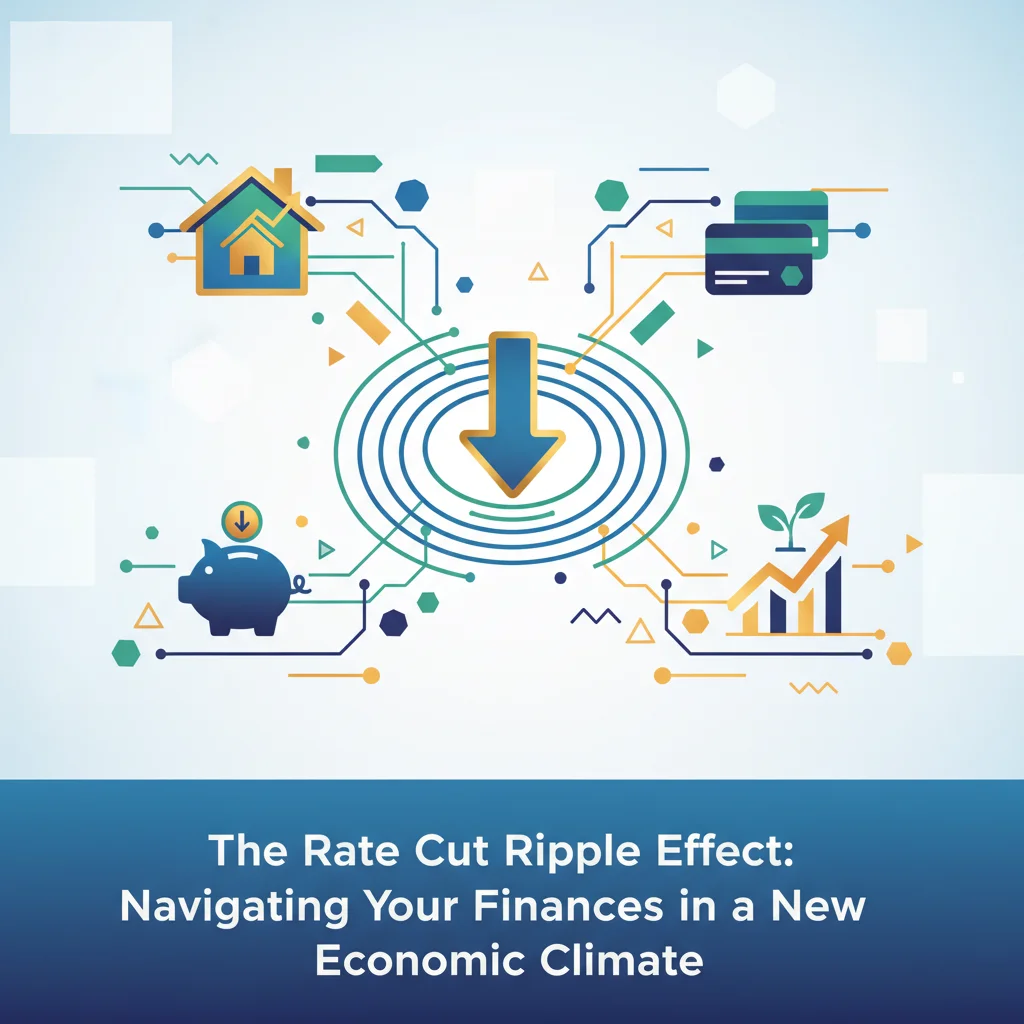
The Rate Cut Ripple Effect: Navigating Your Finances in a New Economic Climate
The Financial Tides are Turning: What an Interest Rate Cut Means for You
In the complex world of finance, few announcements carry as much weight as a change in the central bank’s interest rate. For millions in the UK, the Bank of England’s base rate is more than just a number discussed by economists; it’s a powerful lever that directly influences the cost of borrowing and the reward for saving. As whispers of a potential interest rate cut grow louder, a critical question emerges for households, investors, and business leaders alike: How will this shift impact my financial world?
The base rate, currently held at a 16-year high of 5.25% (source), acts as the foundational cost of money in the economy. It’s the rate at which the Bank of England lends to commercial banks, creating a ripple effect that touches everything from mortgages and personal loans to savings accounts and investment returns. Understanding this mechanism is the first step toward strategically navigating the changing economic landscape. This article will dissect the multifaceted impact of an interest rate cut, offering a comprehensive guide to what it means for your mortgage, your savings, and the broader investing environment.
Deconstructing the Decision: Why Does the Bank of England Cut Rates?
Before diving into the direct consequences, it’s crucial to understand the ‘why’. Central banks don’t alter interest rates on a whim. A decision to cut rates is a deliberate act of monetary policy, typically aimed at stimulating a sluggish economy. The primary goal is to make borrowing cheaper. When businesses can borrow at a lower cost, they are more likely to invest in new equipment, expand operations, and hire more staff. Similarly, when consumers face lower borrowing costs for large purchases like homes and cars, they are encouraged to spend, boosting overall economic activity.
This move is often a response to falling inflation. When the rate of price increases slows and approaches the central bank’s target (typically around 2%), the high interest rates previously used to combat inflation are no longer necessary. A rate cut signals confidence that inflation is under control and that the focus can shift towards promoting economic growth. This intricate dance between controlling inflation and fostering growth is at the very heart of modern economics and central banking.
The Mortgage Maze: A Tale of Three Borrowers
For most people, the most significant and immediate impact of a base rate change is felt through their mortgage. However, not all mortgages are created equal. The effect of a rate cut depends entirely on the type of mortgage you have.
Let’s explore the different scenarios:
1. The Tracker Mortgage Holder: Immediate Relief
If you have a tracker mortgage, your interest rate is directly linked to the Bank of England’s base rate, plus a fixed percentage. For example, your rate might be “Base Rate + 0.75%”. For these borrowers, a rate cut is unequivocally good news. When the base rate falls, your monthly payment will decrease almost immediately at your next payment review. According to the BBC, around 1.5 million homeowners are on tracker or variable-rate deals that follow the Bank of England’s rate.
2. The Standard Variable Rate (SVR) Borrower: A Cautious Outlook
An SVR is the default interest rate a lender charges after an initial deal (like a fixed or tracker rate) ends. While SVRs tend to move in the same direction as the base rate, lenders are not obligated to pass on the full cut. They may choose to pass on only a portion of it, or delay the reduction, to improve their own profit margins. Borrowers on an SVR should monitor their lender’s announcements closely but may not see the full benefit of a central bank cut.
The Trillion-Dollar Paradox: How China's Economic Woes Fueled a Record Trade Surplus
3. The Fixed-Rate Mortgage Holder: No Immediate Change
The vast majority of mortgage holders are on fixed-rate deals, where the interest rate is locked in for a set period, typically two, three, or five years. For these individuals, a base rate cut will have no immediate impact on their monthly payments. Their rate is fixed until their term expires. However, the cut is highly relevant for those whose fixed-rate deal is ending soon. A lower base rate will translate into more competitive remortgaging offers, potentially allowing them to lock in a significantly lower rate for their next term.
To illustrate the potential impact, let’s consider a hypothetical £200,000 mortgage over a 25-year term following a 0.25% interest rate cut.
| Mortgage Type | Interest Rate (Before Cut) | Interest Rate (After Cut) | Monthly Payment Change | Annual Savings |
|---|---|---|---|---|
| Tracker (Base + 1%) | 6.25% | 6.00% | – £30 | – £360 |
| SVR (Variable) | 7.50% | ~7.25% (Lender Discretion) | ~ -£32 | ~ -£384 |
| Fixed-Rate | 4.50% | 4.50% | £0 (No Change) | £0 (Until Remortgage) |
*Note: Figures are illustrative and actual savings will vary based on loan amount, term, and specific product details.
The Other Side of the Coin: The Saver’s Dilemma
For every borrower who celebrates a rate cut, there is a saver who feels the sting. The same mechanism that lowers loan costs also reduces the returns on savings. When the Bank of England cuts its rate, commercial banks and building societies quickly follow suit by reducing the interest rates they offer on savings accounts, ISAs, and other cash-based products.
Over the past couple of years, savers have finally enjoyed a period of meaningful returns on their cash holdings after more than a decade of near-zero rates. A rate cut marks the end of this honeymoon. The impact will be felt most keenly by:
- Retirees: Many rely on interest from their savings to supplement their pension income. A rate cut directly reduces their disposable income.
- First-Time Buyers: Those diligently building a deposit will find their savings grow more slowly, making the path to homeownership slightly longer.
- The Risk-Averse: Individuals who prefer the safety of cash over the volatility of the stock market will see their purchasing power erode more quickly, especially if inflation remains stubbornly above the new, lower savings rates.
This environment forces a re-evaluation of financial strategy. Savers may need to consider moving further up the risk spectrum to achieve their financial goals, potentially exploring corporate bonds, dividend-paying stocks, or other investment vehicles. This highlights the critical importance of financial literacy and tailored investment advice in a dynamic economic climate.
Decoding the Global Economy: Fed's Rate Cut, Ukraine's Future, and Europe's Industrial Gambit
The Macro View: Broader Impacts on the Stock Market and Economy
The effects of an interest rate cut extend far beyond personal finance, influencing the entire economic ecosystem and the behavior of the stock market.
Corporate Health and the Stock Market
Lower interest rates are generally seen as a positive for the stock market. Here’s why:
- Cheaper Debt: Companies with significant debt on their balance sheets benefit from lower interest payments, which can boost profitability and, consequently, their stock price.
- Stimulated Investment: As mentioned, lower borrowing costs encourage companies to invest in growth projects, signaling future expansion and potential for higher earnings.
- Discounted Cash Flow (DCF): In financial modeling, a company’s value is often calculated by projecting its future cash flows and “discounting” them back to the present value. A lower interest rate (the discount rate) makes future earnings more valuable today, which can justify higher stock valuations.
- Relative Attractiveness: When savings accounts and government bonds offer lower returns, the potential for higher returns from equities becomes more attractive to investors, driving capital into the stock market.
Sectors like technology, consumer discretionary, and real estate, which are sensitive to economic cycles and borrowing costs, often perform well in a rate-cutting environment. However, the banking sector can face pressure on its net interest margin—the difference between what it pays on deposits and earns on loans.
The Economy at Large
From a macroeconomic perspective, the goal of a rate cut is to create a virtuous cycle. Lower rates lead to more consumer spending and business investment, which creates jobs, increases wages, and drives overall economic growth. It can also have an impact on the currency. Typically, a rate cut makes a country’s currency less attractive to foreign investors seeking higher returns, which can cause its value to fall. A weaker pound, for instance, makes UK exports cheaper and more competitive abroad but makes imports more expensive for domestic consumers.
Powering Down Profits: How Guernsey's Energy Crisis Reflects a Global Economic Challenge
Actionable Strategies for a New Rate Reality
So, how should you position yourself? Your strategy depends on your financial situation.
- For Homeowners: If you’re on a tracker mortgage, enjoy the lower payments. If your fixed deal is ending within the next 6-12 months, start shopping around for a new rate now to lock in a favorable deal. If you’re on an SVR, actively look to remortgage to a more competitive product.
- For Savers: If you have a lump sum you don’t need immediate access to, consider locking in a fixed-rate savings bond or ISA now, before rates fall further. For long-term goals, it may be time to reassess your risk tolerance and explore a diversified investment portfolio that includes assets beyond cash.
- For Investors: A rate cut can be a tailwind for the stock market, but volatility is always a risk. Review your portfolio to ensure it’s aligned with your long-term goals. Consider whether you have adequate exposure to sectors that may benefit from lower rates and economic stimulus. This is a moment for strategic trading and portfolio rebalancing, not reactive panic-selling or FOMO-buying.
Conclusion: The Dawn of a New Financial Chapter
An interest rate cut by the Bank of England is not just a headline; it’s a fundamental shift in the financial landscape. It represents a pivot from a policy of restraint to one of stimulus, bringing both opportunities and challenges. For borrowers, it signals a period of welcome relief. For savers, it demands a more proactive and potentially adventurous approach to managing their capital. For investors, it alters the calculus of risk and reward, potentially favoring equities and growth assets.
Ultimately, navigating this new chapter requires understanding, foresight, and a clear-eyed assessment of your own financial position. By comprehending the intricate connections between central bank policy, the banking sector, the broader economy, and your personal balance sheet, you can make informed decisions that not only weather the changes but capitalize on them for a more secure financial future.

Related Posts

The Great Cool-Down: What November’s Inflation Report Means for the Economy, Your Investments, and the Future of Finance
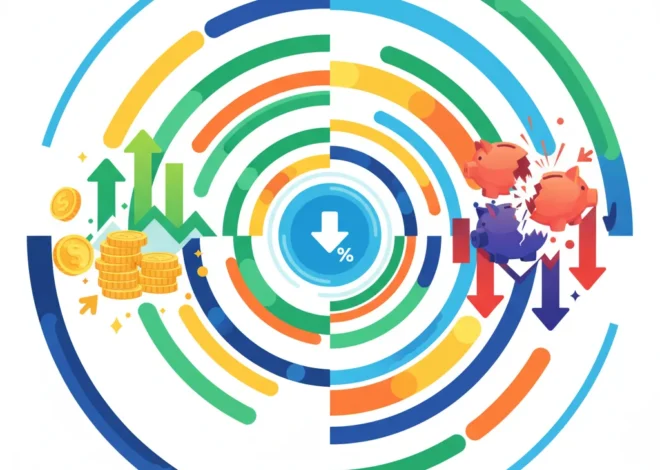
The Rate Cut Ripple Effect: A Deep Dive into the Winners and Losers