The Financial Crossword: Decoding the Language of the Global Economy
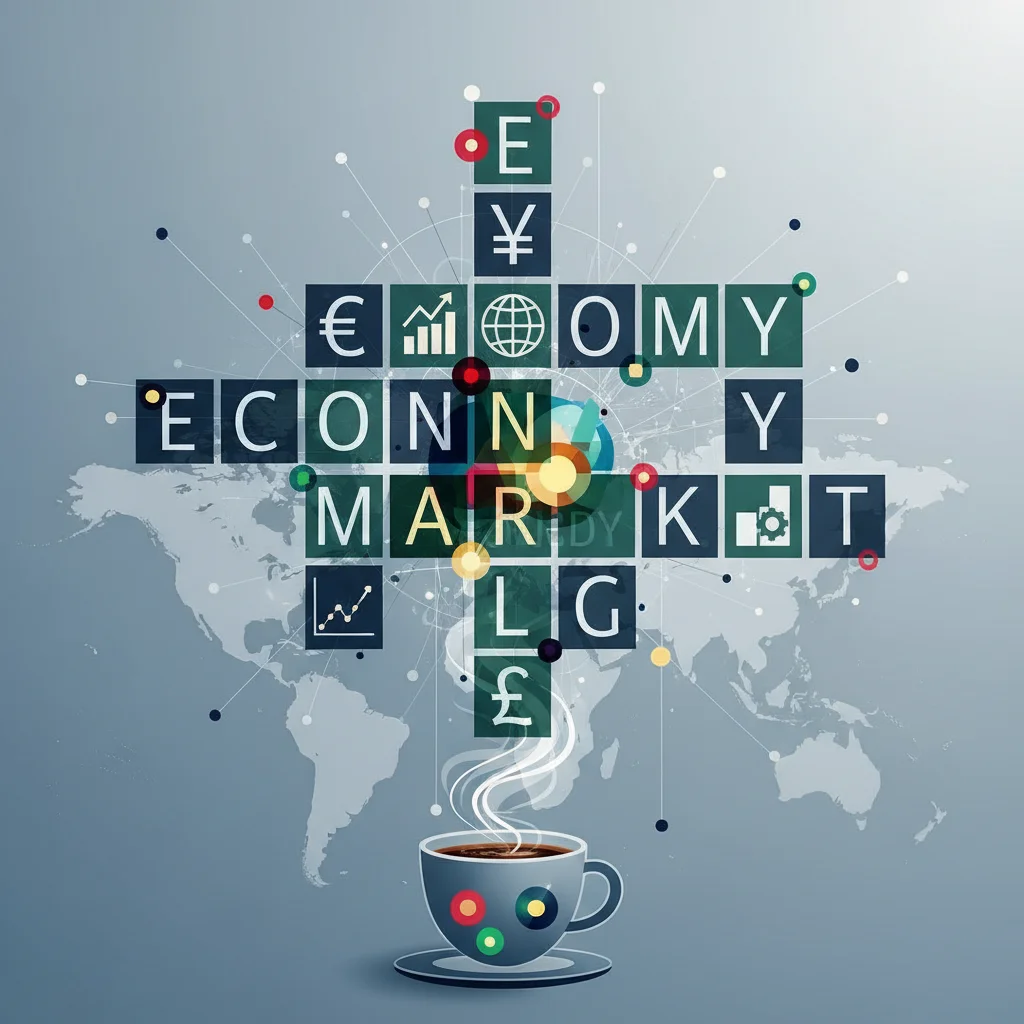
Every morning, enthusiasts around the world settle in with a cup of coffee and a fresh crossword puzzle, like the one recently published by the Financial Times. It’s a captivating challenge of logic, vocabulary, and interconnected thinking. A single correct answer can unlock a cascade of others, gradually revealing a complete and coherent picture from a series of cryptic clues.
In many ways, the world of finance is the ultimate crossword puzzle. It’s a vast grid of intersecting concepts, where macroeconomic trends (the “across” clues) influence individual investment strategies (the “down” clues). For the uninitiated, the terminology can seem as cryptic as any puzzle’s most fiendish clue. Words like “quantitative easing,” “derivatives,” and “yield curve” can feel like a foreign language. Yet, just like a crossword, once you begin to understand the language and the rules, a clear picture emerges—one that empowers you to make smarter decisions about your money and your future.
This article will serve as your guide to solving the financial crossword. We’ll decipher the key clues across the board, from the grand sweep of the global economy to the nuances of modern investing, fintech, and the ever-evolving world of blockchain technology. By the end, you’ll not only understand the terms but also see how they connect to form the bigger picture of your financial well-being.
The “Across” Clues: Understanding the Macroeconomic Landscape
The long, horizontal answers in a crossword often set the theme for the entire puzzle. In finance, these are the macroeconomic forces that shape the environment for everyone, from multinational corporations to individual investors. Understanding these concepts is fundamental to grasping the context in which all financial activity occurs.
1. Economy (GDP, Inflation, and Interest Rates)
The state of the economy is the most critical “across” clue. It’s typically measured by Gross Domestic Product (GDP), which represents the total value of all goods and services produced over a specific time period. A growing GDP signals an expanding economy, while a shrinking one indicates a recession.
Closely linked to this is inflation—the rate at which the general level of prices for goods and services is rising, and subsequently, purchasing power is falling. Central banks, like the U.S. Federal Reserve, combat high inflation by raising interest rates. This makes borrowing money more expensive, which tends to cool down economic activity. For instance, the U.S. saw the annual inflation rate peak at 9.1% in June 2022, prompting a series of aggressive interest rate hikes (source). These decisions have a domino effect on everything from mortgage rates to corporate earnings and the stock market.
2. The Stock Market (Indices and Cycles)
The stock market is a reflection of the economy, but it’s also a powerful force in its own right. It’s where investors buy and sell ownership stakes in public companies. We often hear about market indices like the S&P 500 or the Dow Jones Industrial Average. These aren’t single stocks but baskets of stocks that provide a snapshot of the market’s overall health and direction. When you hear “the market is up,” it usually means one of these major indices has risen in value.
The market moves in cycles, broadly defined as bull and bear markets. A bull market is a period of rising stock prices and investor optimism, while a bear market is characterized by falling prices and widespread pessimism. Recognizing which phase of the cycle we’re in helps investors manage expectations and adjust their strategies accordingly.
The “Down” Clues: Navigating Personal Investing and Trading
If macroeconomics provides the horizontal framework, the “down” clues are the specific actions and instruments you can use to build your financial future. These are the vertical entries that intersect with the broader trends, representing your personal stake in the game.
1. Investing Fundamentals (Asset Classes and Diversification)
At its core, investing is about putting your money to work to generate more money. This is achieved through various asset classes, each with its own risk and return profile. Below is a simplified look at some of the most common investment vehicles:
| Asset Class | Description | Typical Risk Level | Potential Return |
|---|---|---|---|
| Stocks (Equities) | Ownership share in a public company. | High | High |
| Bonds (Fixed Income) | A loan made to an entity (corporate or government) in return for interest payments. | Low to Medium | Low to Medium |
| ETFs (Exchange-Traded Funds) | A basket of assets (like stocks or bonds) that trades on an exchange like a single stock. | Varies (Low to High) | Varies (Low to High) |
| Real Estate | Physical property or funds that invest in property. | Medium | Medium to High |
The most crucial principle here is diversification. Just as you wouldn’t bet on a single word to solve a crossword, you shouldn’t put all your money into a single stock or asset class. Spreading your investments across different categories helps mitigate risk if one particular area performs poorly.
2. Trading vs. Investing
While often used interchangeably, trading and investing represent different approaches. Investing is typically long-term, focused on buying and holding assets with the expectation they will grow in value over years or decades. Trading, on the other hand, is a short-term strategy focused on profiting from frequent price fluctuations. Traders may hold assets for days, hours, or even minutes, relying on technical analysis (chart patterns) or short-term news events to make decisions.
The Fed's Triple Play: Decoding the Latest Interest Rate Cut and What It Means for Your Money
The Modern Puzzle: Fintech, Banking, and Blockchain
The financial crossword of the 21st century includes a whole new section filled with clues related to financial technology. These innovations are rewriting the rules of banking, payments, and even the nature of money itself.
1. Fintech: The Digital Disruption of Finance
Fintech refers to any technology used to improve or automate financial services. If you’ve ever used a mobile banking app, sent money via Venmo or PayPal, or applied for a loan online, you’ve used fintech. This revolution is making financial services more accessible, efficient, and user-friendly. Companies are leveraging data and AI to offer personalized financial advice, automated investment platforms (robo-advisors), and faster payment systems. The global fintech market is a testament to this shift, with projections showing it could reach a market size of nearly $700 billion by 2030, according to a report by Grand View Research.
2. Blockchain: The Ultimate Cryptic Clue
Perhaps no term is more intimidating than blockchain. At its simplest, a blockchain is a decentralized, distributed, and immutable digital ledger. Think of it as a shared notebook that everyone can see but no single person can change without consensus. This technology is the foundation for cryptocurrencies like Bitcoin and Ethereum.
However, its potential extends far beyond digital currencies. Industries are exploring blockchain for its ability to create trust and transparency in complex systems. In finance, it could revolutionize stock trading by enabling near-instantaneous settlement of transactions (a process that currently takes two days), reduce fraud in supply chains, and create new forms of digital assets. While still an emerging field, understanding the basics of blockchain is becoming essential for any forward-looking investor. A 2021 survey by Deloitte found that 76% of executives believe digital assets will be a strong alternative to, or replacement for, fiat currencies in the next 5–10 years, highlighting the technology’s growing importance.
Not QE? Decoding the Fed's Multi-Billion Dollar Move to Calm Wall Street's Plumbing
Solving Your Personal Financial Puzzle
So, how do you put all these pieces together to complete your own financial picture? The answer is the same way you finish a crossword: one clue at a time, with a clear strategy.
- Build Your Vocabulary: The first step is financial literacy. You don’t need to be an expert in economics, but you should understand the basics of budgeting, saving, debt, and investing.
- Identify Your Goals: What are you solving for? Retirement? A down payment on a house? Financial independence? Your goals will determine your investment timeline and risk tolerance.
- Start Filling in the Grid: Begin with small, consistent actions. Set up an automatic savings plan. Open a retirement account. Make your first small investment in a diversified ETF. Each action is like filling in a word—it builds momentum and makes the next step clearer.
- Review and Adapt: The economy and your own life circumstances will change. Periodically review your financial plan to ensure it’s still aligned with your goals. The puzzle is dynamic, not static.
The world of finance, with its complex jargon and volatile markets, can feel like an exclusive club. But it’s not an unsolvable mystery. It’s a puzzle with rules, a language, and a logic that can be learned. By understanding how the big “across” clues of the economy connect with the personal “down” clues of your own financial choices, you can move from being a spectator to an active participant, confidently filling in the squares of your own prosperous future.