From Battlefield to Production Line: The Ukrainian Startup Exporting War-Tested AI Drone Tech to Germany
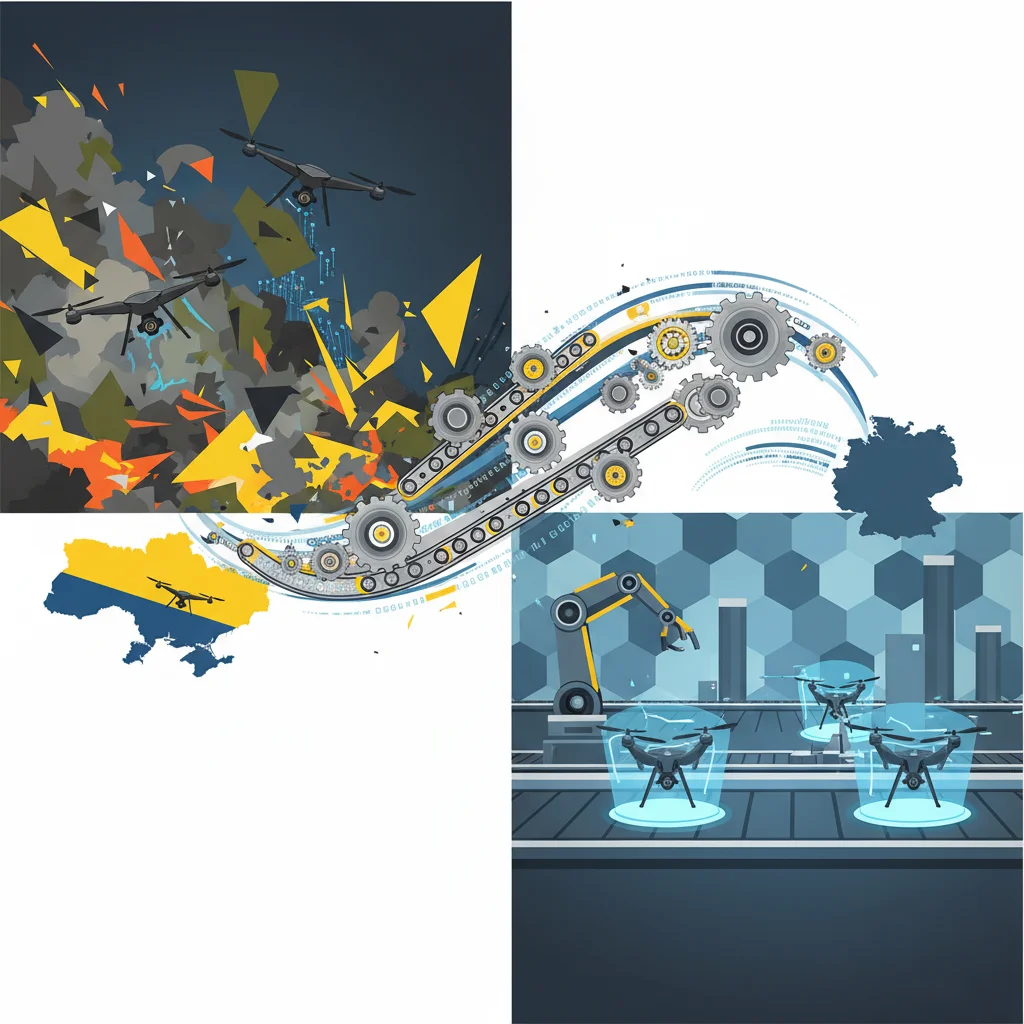
In the world of tech, we often talk about startups being “forged in the fire” of market competition. But what happens when that fire is literal? In an astonishing display of resilience and innovation, a Ukrainian initiative is not just surviving a war—it’s scaling its technology onto the global stage. A new partnership between Ukraine’s Frontline initiative and German manufacturer Quantum Systems is set to move the production of advanced reconnaissance drones from the embattled fields of Ukraine to state-of-the-art facilities in Germany.
This isn’t just a story about manufacturing. It’s a landmark moment that sits at the intersection of geopolitics, artificial intelligence, and the changing face of the global startup ecosystem. It’s a testament to how crisis can accelerate innovation, creating battle-hardened technology that is now in demand by the world. Let’s break down what this partnership means for the future of software, automation, and international tech collaboration.
Innovation Under Fire: The Genesis of a Partnership
For years, Ukraine has been a rising star in the global tech scene, known for its deep pool of programming talent and thriving outsourcing industry. The full-scale invasion in 2022, however, created an existential pressure cooker. Local engineers, developers, and entrepreneurs were forced to pivot their skills towards national defense, leading to an explosion in military-tech (mil-tech) innovation.
Frontline, a charity-backed initiative, emerged from this environment. It wasn’t just about building hardware; it was about creating smarter, more effective systems. The drones developed and refined in Ukraine aren’t off-the-shelf models. They are sophisticated platforms whose software has been continuously updated based on real-world, high-stakes feedback. This iterative development cycle, driven by immediate operational needs, is something peacetime R&D labs can only dream of.
The challenge, however, has always been scale and security. Manufacturing complex hardware amidst constant aerial threats is a monumental task. To truly scale up production and reach new markets, Frontline needed a partner with industrial-grade manufacturing capabilities in a secure location. Enter Quantum Systems, a Munich-based leader in aerial intelligence drones.
A Symbiotic Alliance: Software Meets Hardware
This partnership is a classic case of symbiotic value creation, where each party brings a critical, complementary piece to the puzzle. Frontline provides the intellectual property (IP)—the “brains” of the operation—while Quantum Systems provides the industrial muscle.
Here’s a closer look at what each side contributes:
| Frontline (Ukrainian Initiative) | Quantum Systems (German Manufacturer) |
|---|---|
| Core Contribution: Battle-tested software and operational IP for the Vector reconnaissance drone. | Core Contribution: Advanced manufacturing facilities, hardware engineering, and a secure production environment. |
| Key Expertise: Rapid software development, AI/ML algorithms for data analysis, and real-world cybersecurity protocols against electronic warfare. | Key Expertise: Precision engineering, supply chain management, quality control, and navigating international export regulations. |
| Strategic Goal: Scale production, secure the supply chain, and generate revenue to fund further innovation and support the war effort. | Strategic Goal: Integrate cutting-edge, field-proven technology, expand product offerings, and solidify its position as a leader in European defense tech. |
This collaboration aims to produce hundreds of advanced Vector reconnaissance drones, with a target of reaching an annual output of up to 500 units. By moving production to Germany, the partnership not only boosts volume but also opens doors to new export markets, including other NATO countries looking to modernize their own surveillance capabilities.
The Billion Question: Is a Netflix-Warner Bros. Merger a Tech Titan or a Monopoly in the Making?
The AI and Software Edge: More Than Just a Flying Camera
To truly appreciate the significance of this deal, we need to look beyond the drone’s physical frame. The real innovation lies in the software, which is powered by sophisticated artificial intelligence and machine learning algorithms.
Modern reconnaissance drones are essentially flying data centers. They collect vast amounts of information, and the key to their effectiveness is the ability to process that data in real-time to provide actionable intelligence. This is where the Ukrainian software excels:
- AI-Powered Automation: The drones utilize AI for autonomous navigation, allowing them to execute complex missions with minimal human intervention. This automation is crucial in environments where communication links can be jammed or severed.
- Machine Learning for Analysis: Onboard and cloud-based ML models can analyze video feeds to automatically identify and classify objects of interest. This drastically reduces the cognitive load on human operators and speeds up the decision-making cycle.
- Robust Cybersecurity: Operating in a contested airspace means facing constant threats from electronic warfare, including GPS spoofing and signal jamming. The software has been hardened against these attacks, incorporating advanced encryption and counter-jamming protocols—a level of cybersecurity born from necessity.
- SaaS-like Agility: The software development process mirrors the agile, continuous deployment model of a modern SaaS company. New threats emerge, and within days or weeks, software patches and updates are pushed to the fleet to counter them. This is a world away from the years-long development cycles of traditional defense contracting.
This emphasis on software and AI is what makes the technology so valuable. The hardware can be replicated, but the intelligent, adaptive software—refined by thousands of hours of real-world operational experience—is the unique IP that Quantum Systems is gaining access to.
This Frontline-Quantum deal is a blueprint for the future. It demonstrates that the most potent innovations may no longer come from pristine R&D labs, but from dynamic, high-pressure environments where failure has immediate consequences. The key takeaway for entrepreneurs and tech professionals is that a deep understanding of a user’s most critical problem—in this case, a matter of national survival—is the ultimate catalyst for groundbreaking technology. This also raises fascinating questions about the future of tech transfer. Will we see more “battlefield-to-boardroom” technology pipelines? And what are the ethical frameworks needed to manage this new paradigm of rapid, conflict-driven innovation? The answers will shape the tech landscape for years to come.
The Bigger Picture: Strategic Implications for Tech and Defense
The impact of this deal extends far beyond the two partners. It signals several major shifts in the global technology and defense landscape.
First, it highlights the strategic importance of a decentralized and resilient tech supply chain. By diversifying production into the EU, Ukraine is not only protecting its technological assets but also integrating itself more deeply into Europe’s industrial base. For Germany and the EU, it’s an opportunity to onshore the production of critical technology, reducing reliance on non-allied nations for key defense components. The German government’s support for this venture, including financial backing, underscores this strategic priority (source).
Beyond the Headlines: The Tech Revolution Behind a Potential B Netflix-Warner Bros. Merger
Second, it’s a powerful case study for entrepreneurs on a global scale. It shows that even in the most challenging circumstances imaginable, a startup (or in this case, a startup-like initiative) can create world-class technology and successfully execute an international scaling strategy. The model of licensing battle-tested IP to an established manufacturer is a brilliant go-to-market strategy that could be replicated in other sectors.
Finally, this partnership blurs the lines between military and civilian technology. The AI, automation, and data analysis capabilities perfected in these drones have enormous potential for non-military applications. Imagine using this technology for:
- Disaster Response: Quickly assessing damage after earthquakes or hurricanes.
- Precision Agriculture: Monitoring crop health with unparalleled accuracy.
- Infrastructure Inspection: Autonomously inspecting bridges, pipelines, and power lines.
This “dual-use” potential means that the innovation driven by this conflict could ultimately yield significant benefits for the wider civilian economy.
Code of Silence: The Terrifying Cost of Speaking Truth to Power in Tech
A New Era of Innovation
The collaboration between Frontline and Quantum Systems is more than a business deal; it’s a symbol of a new era. It’s an era where agile, software-driven startups are setting the pace of innovation in sectors once dominated by legacy giants. It’s an era where geopolitical necessity can forge powerful technological alliances, and where the human spirit of ingenuity can shine brightest in the darkest of times.
This story is a powerful reminder that the next great leap in innovation might not come from a garage in Silicon Valley, but from a workshop in Kyiv. As this Ukrainian-German partnership takes flight, the world will be watching—not just for the drones it produces, but for the new model of global tech collaboration it represents.